
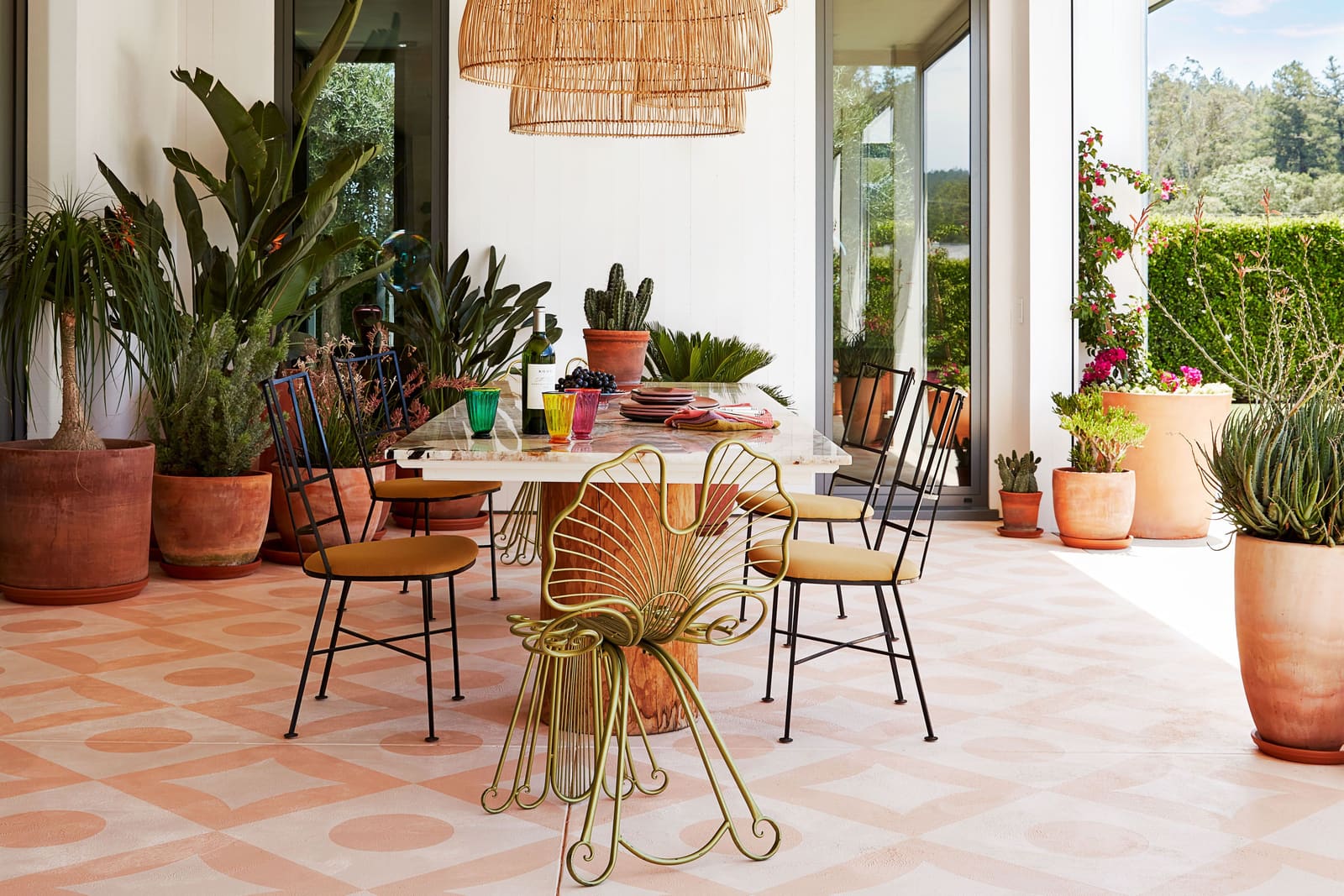
The Blurring Threshold
We've watched the boundary between interior and exterior dissolve over the past decade, a phenomenon accelerated by pandemic-era living but rooted in something more fundamental: architects and homeowners alike have begun treating patios, terraces, and gardens as legitimate square footage rather than seasonal afterthoughts. The material culture supporting this shift has matured in parallel. Where outdoor upholstery once meant choosing between beige or slightly darker beige in a handful of striped polyesters, today's offerings include Sunbrella acrylics, Perennial fabrics, and Insideout Performance textiles that rival interior-grade materials in both tactility and chromatic range.
This evolution reflects a broader rethinking of how we program outdoor space. Mandy Cheng, whose AD100 practice has long championed the integration of landscape and architecture, notes that clients increasingly request furnishings that can withstand weather without sacrificing the comfort or aesthetic rigor they expect indoors. Aista Sobouti, who leads landscape design at Marmol Radziner, emphasizes the importance of timelessness in material selection, a principle that steers designers toward natural substrates like teak and concrete that age gracefully rather than merely deteriorate.
Modular Systems and the Case for Flexibility
Sectional seating has emerged as the dominant typology for larger patios, and for good reason. Modular configurations allow homeowners to adapt furniture layouts to shifting social needs: a sprawling arrangement for entertaining, a more intimate cluster for quiet mornings. The Article Lubek outdoor sectional, constructed from solid acacia with steel reinforcement and polyester upholstery, exemplifies this approach. Its low-slung profile and generous proportions recall the poolside lounges of midcentury hotels, yet the material palette is calibrated for year-round exposure, including snow and UV bombardment.
For more constrained footprints, the Neighbor Terra loveseat offers a study in restraint. Its aluminum frame and Sunbrella cushioning are rendered in monochromatic tones that defer to surrounding hardscape, whether stone tile or wood decking. The design is part of a larger modular family, permitting incremental expansion as spatial needs evolve. This kind of adaptability is increasingly valued in urban contexts where outdoor square footage is at a premium and multi-functionality is non-negotiable.
Material Matters: Teak, Concrete, and Wicker
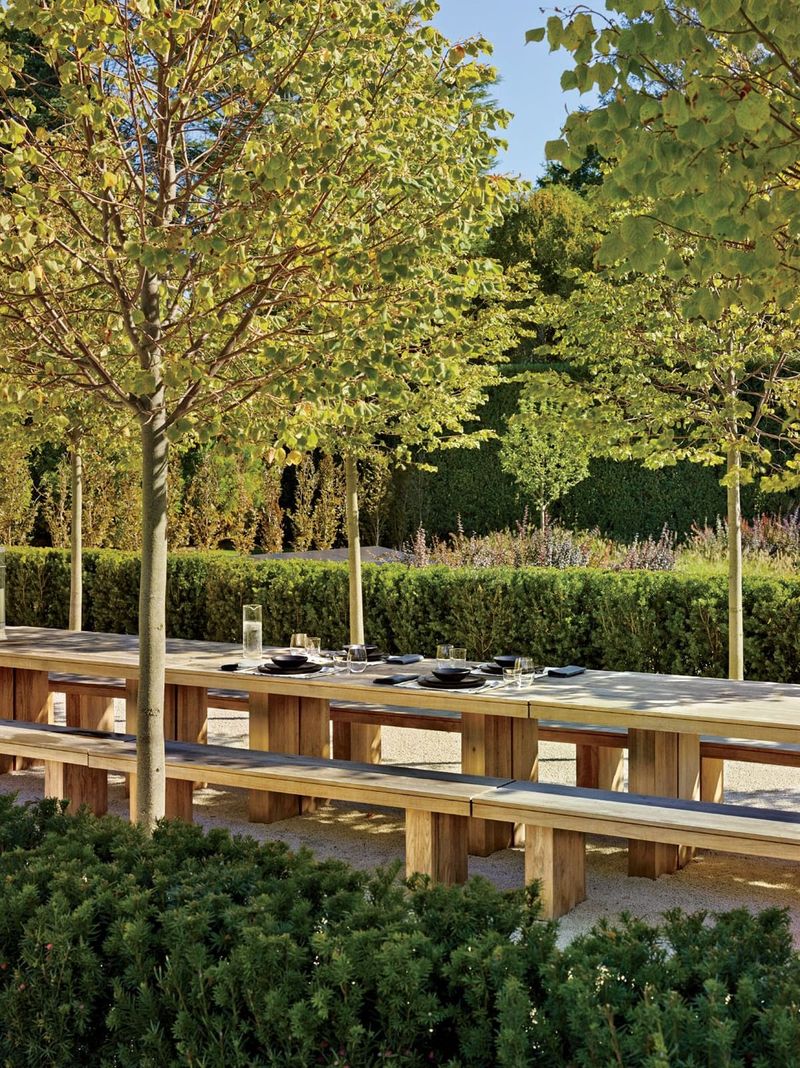
Teak remains the gold standard for outdoor furniture frames, prized not only for its inherent resistance to moisture and insect damage but also for the silvery patina it develops over time. This natural weathering process, which transforms warm honey tones into cooler grays, aligns with contemporary preferences for materials that visibly age rather than degrade. The Outer teak and aluminum dining set, which seats eight and features an expandable table, demonstrates how the wood can be paired with powder-coated metal to achieve both structural integrity and a casually elevated aesthetic. The combination recalls precedents in Scandinavian design, where mixed-material palettes emphasize honesty of construction.
Concrete, meanwhile, has found renewed favor as a substrate for outdoor tables. Joe Raboine, director of residential hardscapes at Belgard, has observed that concrete's cool-toned neutrality complements the minimalist vocabulary prevalent in contemporary landscape architecture. The Pebble coffee table, designed by Leanne Ford for Crate & Barrel, softens the material's typically austere geometry with rounded edges and an organic footprint. At 129 pounds, the table is decidedly immobile, a quality that can be read as either a limitation or a virtue depending on one's tolerance for rearrangement.
All-weather wicker, often constructed from synthetic polyethylene or resin, continues to serve as a lighter-weight alternative to wood and metal. The Serena & Lily Pacifica lounge chair pairs wicker with an aluminum base and fade-resistant cushions, a combination that has reportedly held up well over multiple seasons of poolside use. The material's visual warmth and tactile give make it particularly suited to coastal or tropical settings, where a softer aesthetic feels contextually appropriate.
The Sculptural Turn in Occasional Furniture
Outdoor coffee tables have become vehicles for sculptural expression, freed from the constraints that govern interior pieces by their inherent durability. Concrete lends itself to bold, monolithic forms, as seen in Crate & Barrel's collaborations with designers like Leanne Ford. These pieces function as anchors within a seating arrangement, their mass providing both physical and visual stability. The trend toward brutalist or biomorphic silhouettes in outdoor tables mirrors a broader appetite for statement furniture that can hold its own against expansive sky and foliage.
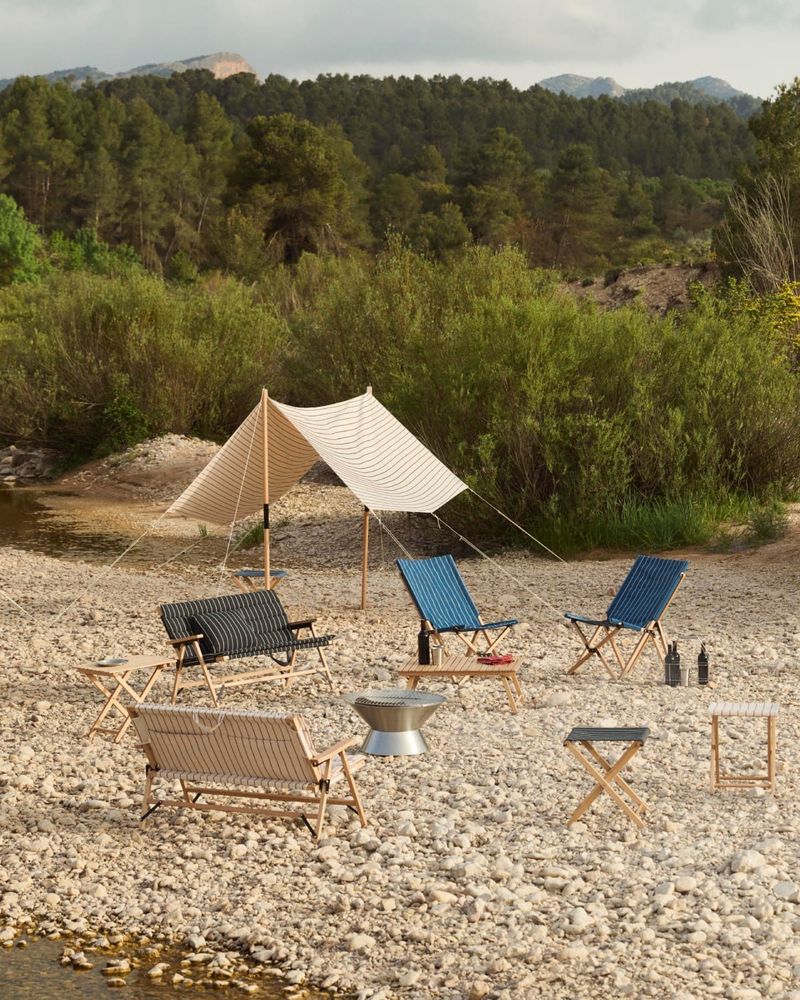
Side tables and accent pieces, by contrast, often prioritize portability and versatility. Convertible designs, such as the Snow Peak Home & Camp Lantern, blur the line between furniture and equipment, appealing to users who value objects that can migrate between contexts. This ethos of multi-functionality reflects a pragmatic strain in contemporary design thinking, one that privileges adaptability over specialization.
Upholstery and the Performance Fabric Revolution
The leap forward in outdoor textiles cannot be overstated. Sunbrella, Perennial, and proprietary blends like Arhaus's InsideOut Performance Fabrics have effectively erased the tactile gap between interior and exterior upholstery. These materials resist fading, mildew, and staining while offering a hand that rivals cotton or linen. The Arhaus Sonoma daybed, upholstered in polyester and polypropylene fibers derived from recycled plastics, illustrates how sustainability concerns are being woven into material innovation. Mesh bottom panels on the cushions facilitate drainage, a pragmatic detail that extends the useful life of the piece.
Color options have expanded in tandem. Where outdoor fabric palettes once skewed toward safe neutrals, brands like Neighbor now offer saturated hues that would have been unthinkable a decade ago. This chromatic confidence reflects a willingness to treat outdoor spaces with the same design intentionality typically reserved for interiors, a shift that Mandy Cheng has noted among her clients.
Textiles Underfoot: The Case for Outdoor Rugs
Outdoor rugs serve a dual function: they define spatial zones within larger patios or decks, and they introduce pattern and texture to environments dominated by hard surfaces. Synthetic materials like recycled polyester, used in the Thatcher rug by Sarah Sherman Samuel for Lulu and Georgia, mimic the look of natural fibers while offering superior moisture resistance. The basketweave texture and plaid-check pattern evoke a picnic aesthetic, a deliberate nod to the casual, convivial atmospheres many homeowners seek in their outdoor rooms.
That said, these rugs are not impervious. They tolerate ambient humidity and the occasional spill, but prolonged exposure to standing water or heavy rain can compromise their integrity. This limitation underscores a broader truth about outdoor furnishings: even the most advanced materials require some degree of stewardship, whether that means seasonal storage, regular cleaning, or strategic placement under covered areas.
Lighting as Architectural Element
Outdoor lighting has evolved from purely functional necessity to an expressive medium in its own right. Portable lanterns, such as the stainless steel design from Snow Peak, offer flexibility in how illumination is deployed across a terrace or garden. Their convertible forms, which can be hung, stood, or carried, reflect a contemporary preference for objects that resist rigid categorization. The soft glow these fixtures emit avoids the harshness of overhead lighting, creating pockets of ambiance that encourage lingering.
Fixed lighting, meanwhile, can be integrated into hardscape or furniture itself. String lights, once relegated to festive occasions, have been reappraised as a permanent layer of atmospheric lighting, their delicate filaments softening the architectural geometry of pergolas and trellises.
Precedents and Parallels
The current enthusiasm for outdoor living spaces recalls earlier moments in architectural history when the line between interior and exterior was deliberately porous. Alvar Aalto's Villa Mairea, with its flowing spatial sequences and extensive use of natural materials, remains a touchstone. More recently, the work of designers like Jamie Bush and architect William Hefner has demonstrated how a cohesive color scheme and consistent material language can extend the visual logic of interiors into the landscape, creating a seamless experiential continuum.
Maggie Gyllenhaal's brownstone, which features carved teak elements in both the bathroom and outdoor areas, exemplifies how a single material can serve as a leitmotif across different contexts, lending coherence to an otherwise eclectic material palette. This kind of intentional repetition is a strategy we've seen deployed effectively in residential projects where budgets allow for custom detailing.
Practicalities: Assembly, Maintenance, and Longevity
Even the most beautifully designed outdoor furniture is only as good as its execution and upkeep. Modular sectionals like the Article Lubek and Neighbor Terra arrive in multiple boxes and require assembly, though most manufacturers have streamlined this process to the point where a single person can complete it in an afternoon. Teak pieces benefit from periodic oiling if one wishes to preserve their original color, though many owners prefer to let the wood weather naturally. Concrete tables, while virtually indestructible, can stain if spills are not promptly addressed, particularly with acidic substances like citrus juice or wine.
Cushions equipped with mesh bottom panels or quick-dry foam cores dry faster after rain, but covering furniture during inclement weather remains the most effective way to extend its lifespan. This is particularly true for pieces with metal frames, where prolonged moisture exposure can lead to corrosion despite powder-coating.
The Economics of Outdoor Furnishing
Quality outdoor furniture represents a significant investment, with sectionals often exceeding two thousand dollars and dining sets reaching well into five figures. This cost reflects not only the materials and construction techniques required to withstand weather but also the design labor involved in creating pieces that are as visually compelling as their indoor counterparts. Brands like Outer, Neighbor, and Arhaus have positioned themselves at the intersection of durability and aesthetics, appealing to homeowners who view outdoor spaces as extensions of their interior design ethos rather than separate, lesser domains.
Sales and promotional periods can offer meaningful savings, sometimes up to 25 percent off, making these pieces more accessible without compromising on quality. For those working within tighter budgets, prioritizing a few anchor pieces, such as a well-made sofa or dining table, and supplementing with more affordable accessories, can yield a cohesive look without the full financial outlay.
Looking Ahead
The trajectory is clear: outdoor living spaces will continue to gain parity with interiors in terms of design attention and material investment. As climate patterns shift and urban density increases, the ability to carve out usable, comfortable outdoor space will become an even more valuable amenity. Innovations in fabric technology, sustainable material sourcing, and modular design systems will likely accelerate, driven by both consumer demand and regulatory pressures around environmental impact.
We expect to see further experimentation with hybrid materials, such as bio-based composites that combine the performance characteristics of synthetics with the environmental profile of natural fibers. Furniture that incorporates integrated technology, from built-in speakers to solar-powered lighting, may also gain traction, though the risk of obsolescence in tech-enabled objects remains a valid concern for designers who prioritize longevity.
What remains constant is the desire to extend the rituals of interior life, dining, lounging, reading, into the open air. The best outdoor furniture facilitates this translation without fanfare, receding into the background of experience even as it shapes the possibilities of how we inhabit the threshold between built and natural environments.
Photo: Laura Resen
Save this story. A free account keeps your reading list and the 07:00 email in one place.
CREATE FREE ACCOUNT →SIGN IN