
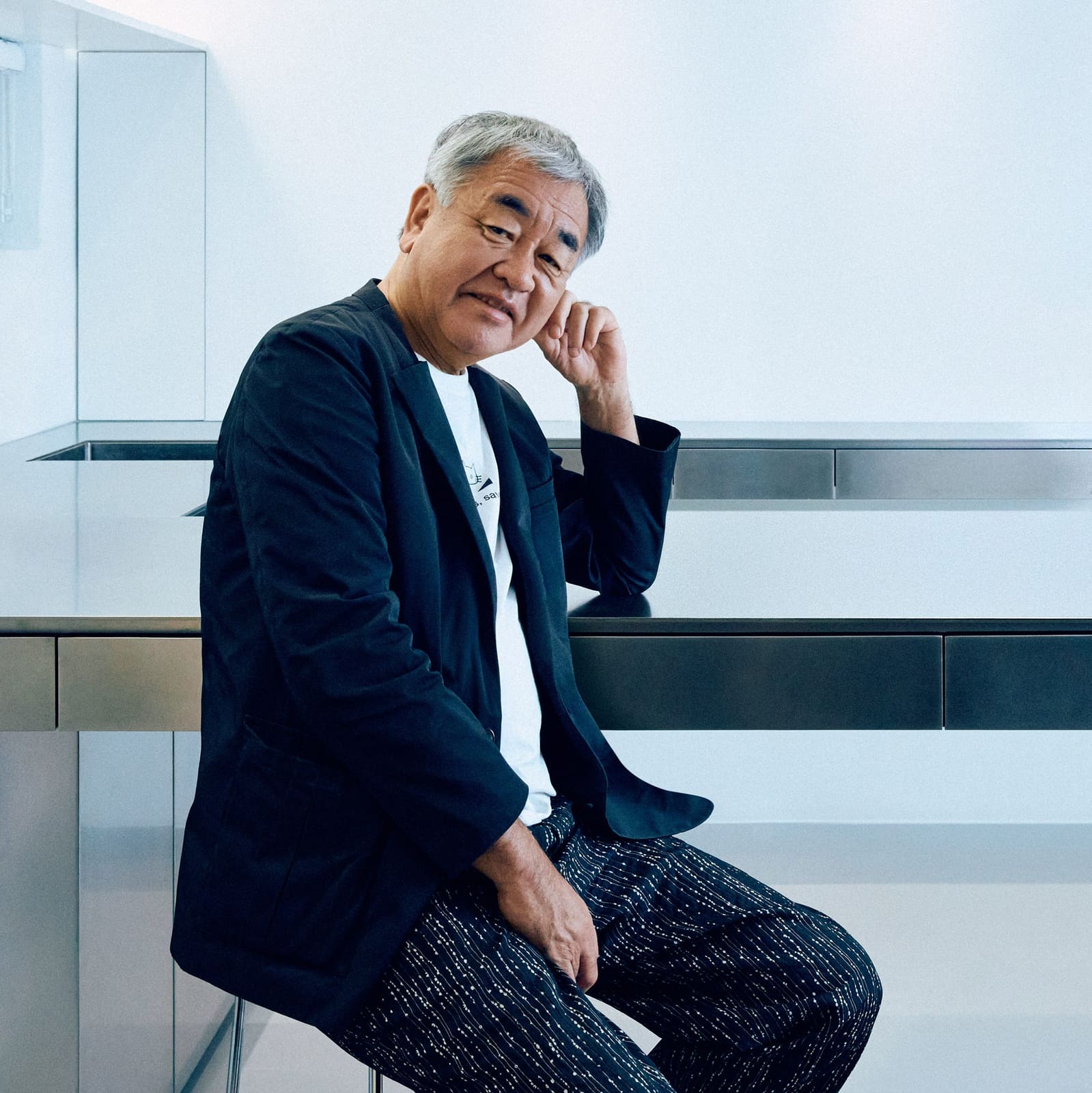
A Career Measured in Pursuit, Not Projects
Kengo Kuma describes himself as a long-distance runner, and the metaphor reveals more than modesty. Where many architects build legacies through signature forms or technical innovation, the founder of Kengo Kuma & Associates has spent over thirty years refining a single animating question: how can architecture restore the bond between people and the environments they inhabit? The Créateurs Design Association & Awards has now recognized that sustained inquiry, naming Kuma the recipient of the Andrée Putman Lifetime Achievement Award for 2027.
The honor, determined by CDA members rather than open submission, represents the organization's highest recognition. It was established to commemorate French designer Andrée Putman, whose own work bridged tradition and contemporary expression. In selecting Kuma, the jury acknowledged not a single landmark but the cumulative weight of a practice that spans continents and building typologies, all unified by a commitment to material sensitivity and environmental integration.
The Philosophy Behind the Forms
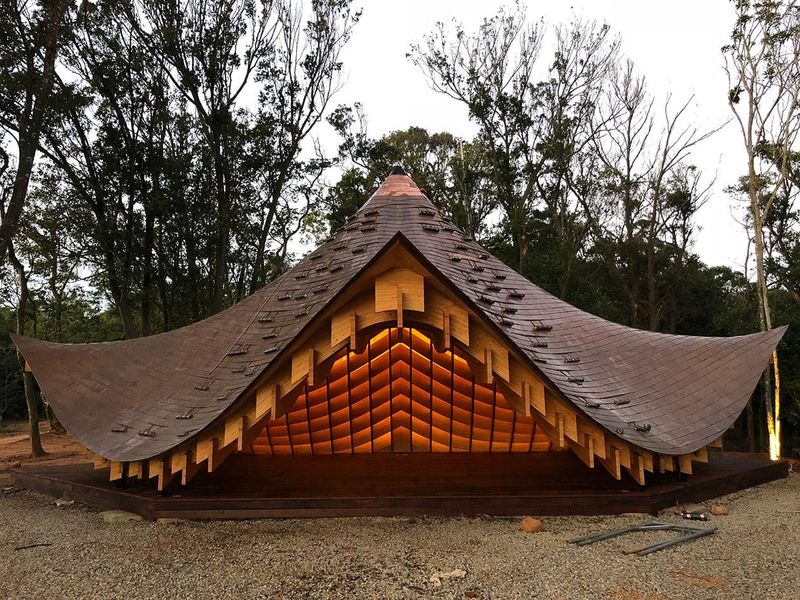
Kuma's approach resists the sculptural assertiveness that defined much late-twentieth-century architecture. Instead, his buildings tend toward dissolution, using timber screens, stone lattices, and modular systems that fragment mass and invite natural light, air, and vegetation into dialogue with interior space. This is architecture that seeks to recede rather than dominate, to frame landscape rather than compete with it.
The strategy has precedents in traditional Japanese construction, where post-and-beam structures and permeable boundaries blur the distinction between inside and outside. But Kuma has translated these principles into a contemporary idiom, applying them to museums, stadiums, civic infrastructure, and commercial projects across Asia, Europe, and North America. The result is a body of work that feels both regionally grounded and globally legible, a balancing act few practices achieve at scale.
From Tokyo to Dundee
Two recent projects illustrate the range and consistency of Kuma's method. The Japan National Stadium in Tokyo, completed for the postponed 2020 Olympics, employs over 47,000 cubic meters of timber sourced from all 47 Japanese prefectures. The material choice was deliberate: wood moderates temperature, absorbs sound, and ages visibly, creating a structure that responds to climate and time. The roof design incorporates natural ventilation, reducing reliance on mechanical cooling in a city known for oppressive summer heat.
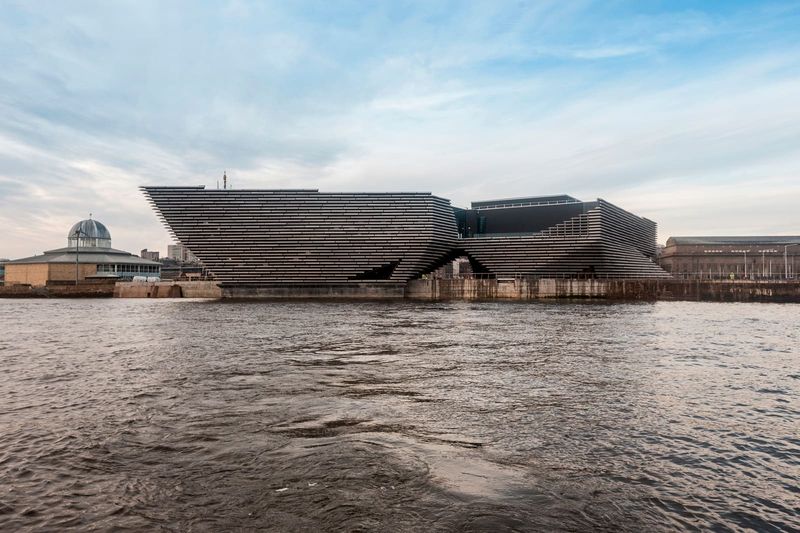
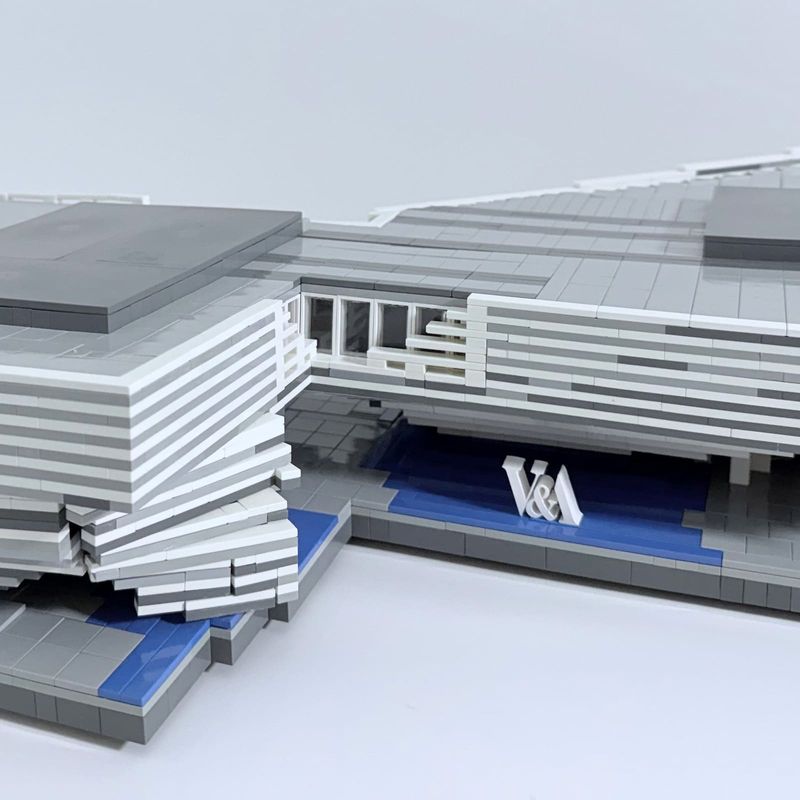
At the opposite end of the scale, the V&A Dundee in Scotland reinterprets the region's maritime history through horizontally layered stone cladding that evokes coastal cliffs. The building sits low against the waterfront, its silhouette echoing the topography rather than interrupting it. Inside, galleries are organized to maximize views of the River Tay, reinforcing the connection between cultural artifact and natural setting.
Both projects demonstrate Kuma's preference for local materials and contextual response, principles that have become increasingly urgent as architecture grapples with embodied carbon and supply-chain ethics. His work suggests that sustainability is not a technical addendum but a spatial and experiential proposition, one that begins with how a building situates itself in the world.
Recognition and Continuity
Yuri Xavier, co-founder of the CDA, framed the award as an acknowledgment of Kuma's sustained dialogue between tradition and modernity, a quality that aligned with Putman's own legacy. The architect joins a select group of past recipients, including Norman Foster, Tadao Ando, and Christian de Portzamparc, figures whose influence extends beyond individual commissions to shape discourse and pedagogy.
For Kuma, the recognition affirms a career philosophy centered on duration and consistency. He has described his goal as achieving harmony between humans and nature, a formulation that might sound vague in abstraction but becomes specific in built form: the way a timber screen filters afternoon sun, the thermal mass of stone in a coastal climate, the acoustic properties of wood in a stadium bowl. These are design decisions that accumulate over time, building a vocabulary that is both poetic and pragmatic.
The Ceremony and the Field
The award will be presented at the Shangri-La Paris on January 16, 2027, during a ceremony that will also announce winners across fifteen other categories. The event positions Kuma's work within a broader conversation about design's evolving priorities, from digital fabrication to circular economies to social equity. His selection suggests that the field continues to value practices rooted in material craft and environmental attentiveness, even as new tools and methods emerge.
The timing is notable. As cities worldwide confront climate adaptation, resource scarcity, and the psychological toll of dense urban living, architecture that foregrounds natural connection and material legibility offers a counterpoint to purely technical or formal solutions. Kuma's buildings propose that design can be both high-performance and experientially rich, that efficiency and beauty need not be in tension.
What Endures
Lifetime achievement awards inevitably prompt reflection on what constitutes a meaningful career. In Kuma's case, the answer appears to be consistency of inquiry paired with adaptability of method. He has not repeated a signature form across contexts but has instead developed a set of principles, material strategies, and spatial tactics that remain flexible enough to respond to diverse programs and sites.
This approach has implications beyond individual practice. It suggests a model for architecture that prioritizes place-based thinking over universal solutions, that values the slow refinement of ideas over the pursuit of novelty. In a discipline often driven by competition and spectacle, Kuma's long-distance runner metaphor offers an alternative: patient, cumulative, and oriented toward a goal that lies beyond any single project.
As the ceremony in Paris approaches, the award serves as both recognition and provocation. It honors a body of work that has already reshaped how we think about materiality, context, and the relationship between buildings and landscape. But it also poses a question for the field: what does it mean to sustain a practice over decades, and what kinds of architecture emerge when consistency of vision meets evolving circumstance? Kuma's answer, built across continents and climate zones, suggests that the pursuit itself may be the point.
Save this story. A free account keeps your reading list and the 07:00 email in one place.
CREATE FREE ACCOUNT →SIGN IN