
A Recognition Built on Decades of Material Inquiry
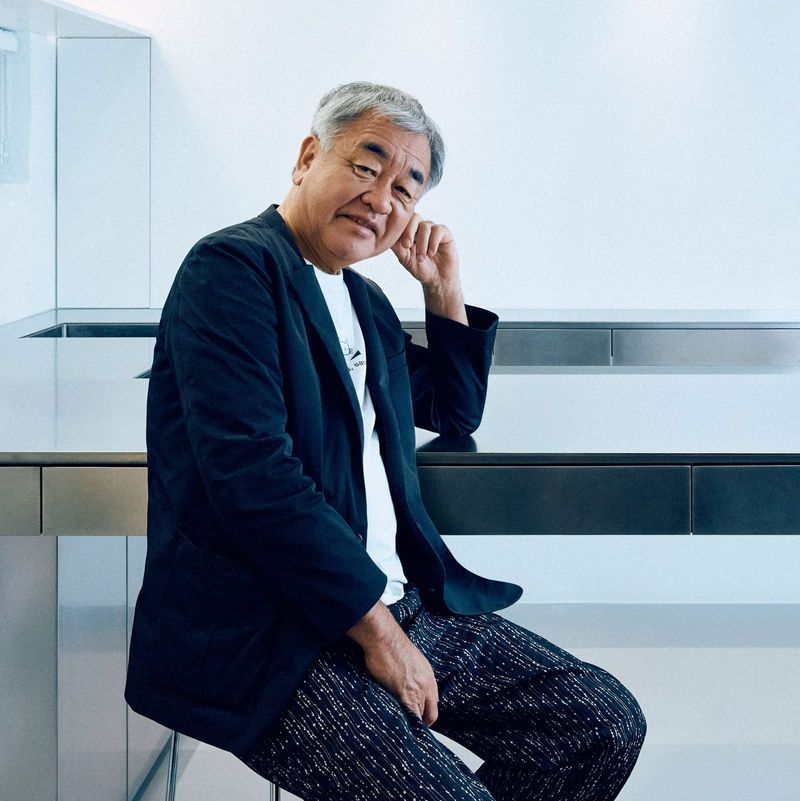
When the Créateurs Design Association selects a recipient for its Andrée Putman Lifetime Achievement Award, it signals more than professional accomplishment. The honor reflects a career that has fundamentally reshaped how architects think about materiality, context, and the relationship between built form and the landscape it inhabits. Kengo Kuma, who will receive the 2027 award at a ceremony in Paris this January, has spent more than thirty years developing an architectural language rooted in this very inquiry.
At World Archi Design, we've tracked Kuma's trajectory from his early experiments with timber joinery to his recent explorations of composite materials in large-scale civic infrastructure. What distinguishes his work is not a signature aesthetic but a consistent methodology: the interrogation of how buildings can mediate between human occupation and natural systems without defaulting to the glass curtain wall or the concrete monolith.
The Créateurs Design Awards announced Kuma as the honoree for the ceremony scheduled at the Shangri-La Paris on January 16, 2027. The Andrée Putman award, named after the French designer whose work bridged modernism and postmodern sensibility, is one of two Legacy Awards presented by the organization. Unlike the open-submission categories, this recognition is selected by members of the Créateurs Design Association and has previously been awarded to Norman Foster, Tadao Ando, and Christian de Portzamparc.
The Long-Distance Runner
Kuma describes his practice in terms of endurance rather than spectacle. In a statement accompanying the award announcement, he likened his design philosophy to long-distance running: a sustained effort toward a singular goal, achieving harmony between humans and nature. This metaphor is apt. Across projects spanning cultural institutions, transportation hubs, and civic buildings, Kuma's work refuses the quick gesture in favor of incremental refinement.
Born in Yokohama in 1954, Kuma established Kengo Kuma & Associates in Tokyo in 1990, later opening a Paris office in 2008. His practice has grown into a studio of significant scale, yet the work retains a consistency of inquiry. Early projects such as the Stone Museum in Nasu demonstrated his interest in dissolving the boundary between structure and site, using locally quarried stone to create a building that reads as geological formation as much as architectural object.
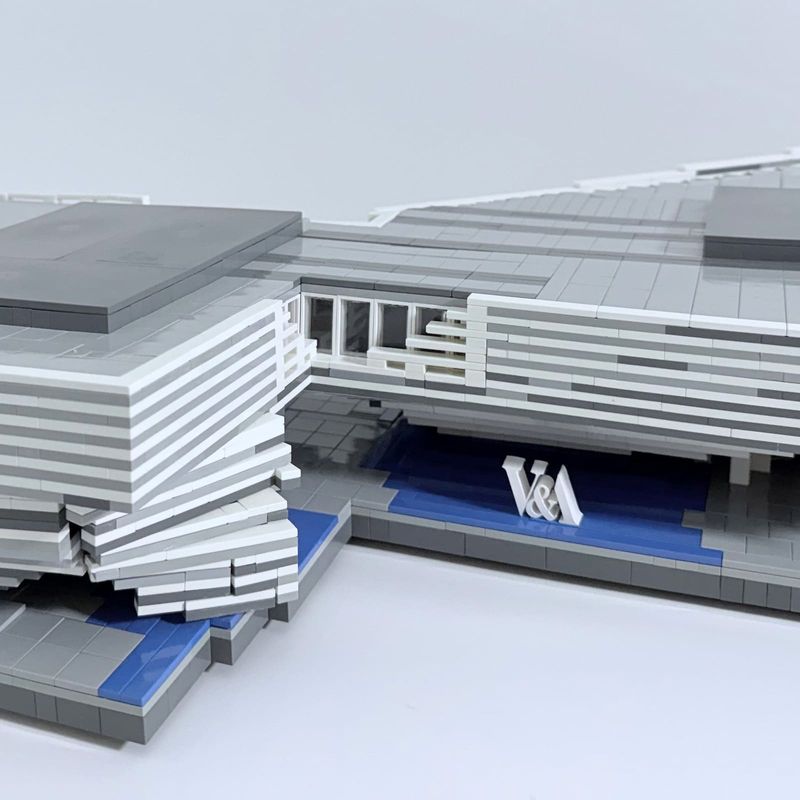
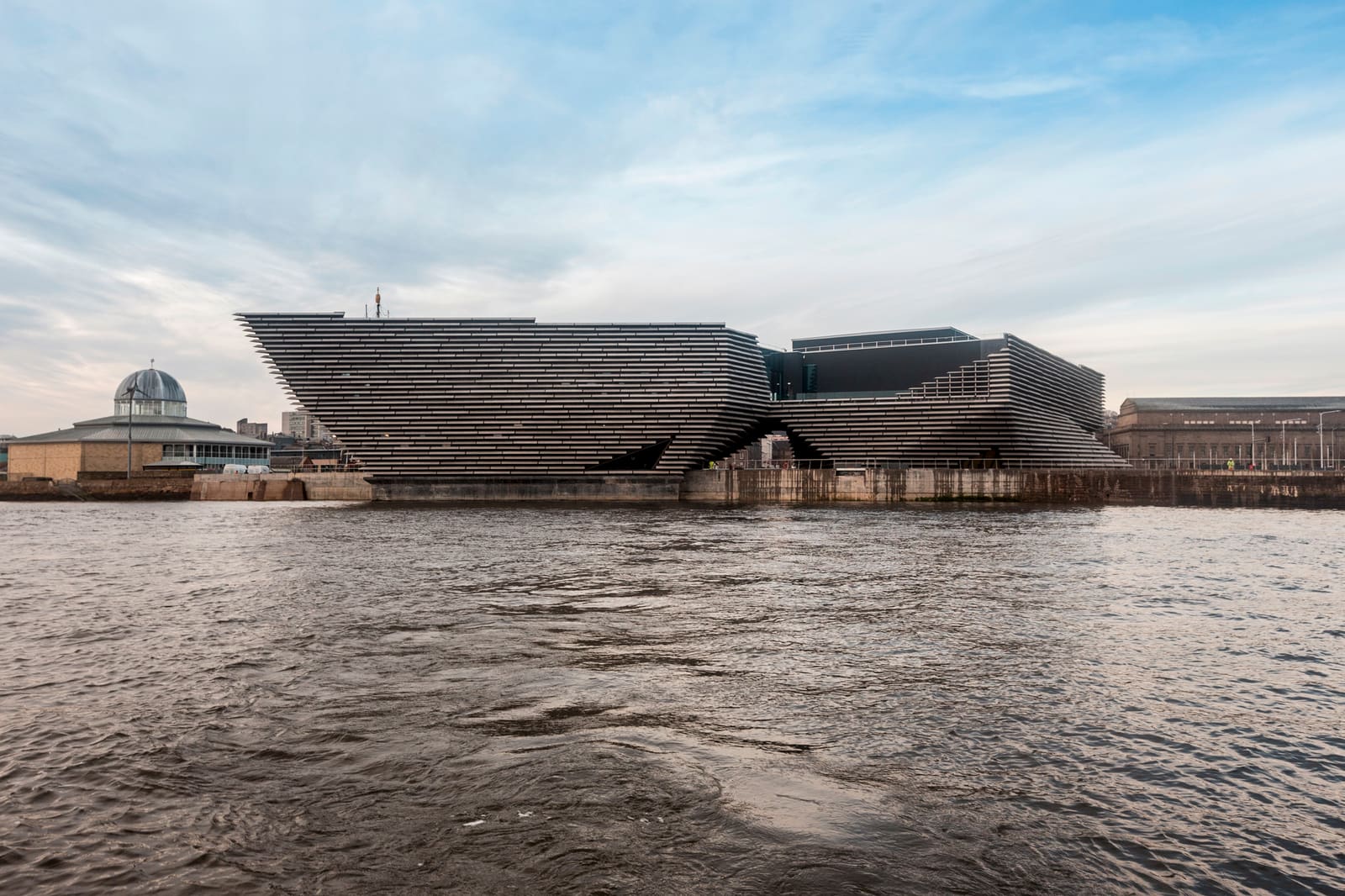
This approach has evolved but not abandoned its core premise. The V&A Dundee, completed in Scotland, employs precast concrete panels arranged to evoke the cliffs of the Scottish coastline. The façade's horizontal stratification and cantilevered planes generate shadow lines that shift with the movement of the sun, a tectonic expression that feels both contemporary and rooted in the maritime context of its location.
Material as Mediator
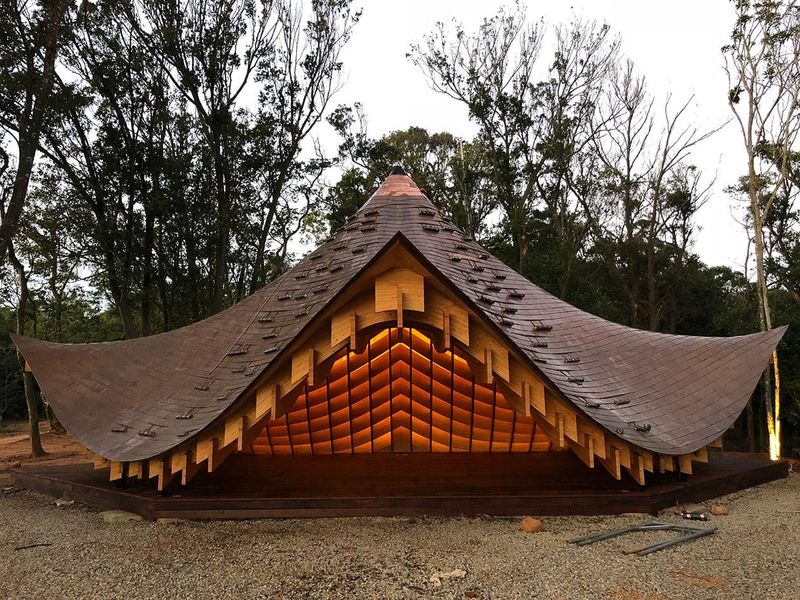
Kuma's work is often discussed in terms of materiality, but the more precise observation is that he treats material as a mediating device between architecture and its surroundings. The FRAC Marseille, a contemporary art center in southern France, uses a perforated glass screen that modulates light and views, creating a threshold condition rather than a hard boundary. The Cité des Arts et de la Culture in Besançon employs a timber lattice that filters daylight into interior galleries, a move that recalls traditional Japanese shoji screens while serving a distinctly modern programmatic need.
These projects share a common strategy: the use of repetitive, modular elements that aggregate into larger systems. This is not ornamentation but a structural logic that allows for both precision and flexibility. The timber members in Besançon, for instance, are standardized components that can be fabricated off-site and assembled with minimal waste, a consideration that aligns formal ambition with pragmatic construction realities.
The Japan National Stadium in Tokyo, built for the 2020 Summer Olympics, represents a test of this methodology at an unprecedented scale. Working within the constraints of a high-profile civic project, Kuma's practice integrated timber louvers into the façade, referencing traditional Japanese architecture while addressing contemporary requirements for ventilation and shading. The result is a stadium that reads as both monumental and permeable, a rare achievement in a building typology often dominated by brute engineering.
Infrastructure and the Everyday
Kuma's recent work has extended into transportation infrastructure, a domain where architecture often cedes authority to engineering. The Saint-Denis Pleyel station in Paris, completed in 2024, challenges this hierarchy. The station functions as an interchange hub for multiple transit lines, but its design prioritizes spatial clarity and material warmth over the utilitarian anonymity typical of such projects. Timber cladding and carefully calibrated lighting transform what could have been a generic transfer point into a space that acknowledges the experience of daily commuters.
This attention to the everyday is a hallmark of Kuma's practice. While his projects frequently occupy prominent cultural or civic roles, they resist the impulse toward iconic form. Instead, they propose a quieter architecture, one that foregrounds experience over image.
Academic and Research Foundations
Parallel to his design work, Kuma has maintained a sustained engagement with architectural education and research. He has been a professor at the University of Tokyo since 2009 and has taught at Keio University, Columbia University, and the University of Illinois at Urbana-Champaign. His writing, which he describes as integral to his design process, explores themes of materiality, tradition, and the role of architecture in a post-industrial context.
This dual commitment to practice and pedagogy has shaped a generation of architects who view material research not as a stylistic choice but as a fundamental aspect of architectural thinking. Kuma's emphasis on the relationship between construction methods and spatial outcomes has informed both his built work and his theoretical contributions.
Recognition and Continuity
The Andrée Putman Lifetime Achievement Award arrives amid a series of international recognitions. Kuma received the Wood Design Award and Global Award for Sustainable Architecture in 2016, the Japan Art Academy Prize and Imperial Prize in 2024, and the Prix Versailles for Best Museum and the 38th Louis I. Kahn Award in 2025. These honors reflect a body of work that has influenced architectural discourse across multiple continents and contexts.
Yuri Xavier, Co-Founder of the Créateurs Design Awards, noted that the selection recognizes Kuma's exploration of the relationship between tradition and contemporary architecture. This framing is accurate but incomplete. Kuma's work does engage with tradition, but it does so through a lens of material innovation and spatial experimentation rather than nostalgic replication.
The announcement coincides with the opening of submissions for the 2027 Créateurs Design Awards, which will accept entries from September 1 through October 31, 2026, across 15 categories spanning architecture, interior design, product design, and art and culture.
What Endures
Lifetime achievement awards invite reflection on legacy, but Kuma's practice resists easy summary. His projects do not cohere into a single formal language or stylistic signature. What they share is a method: the careful calibration of material, light, and structure to produce spaces that feel both grounded and open, specific to their context yet legible across cultures.
In an era when architecture often oscillates between parametric spectacle and minimalist austerity, Kuma's work proposes an alternative. It suggests that architecture can be both technically sophisticated and materially expressive, that it can engage with tradition without retreating into historicism, and that it can operate at the scale of infrastructure while remaining attentive to human experience.
The Andrée Putman award acknowledges this contribution, but it also marks a point of continuity. Kuma's practice shows no sign of slowing, and his recent projects suggest that the inquiry he began more than three decades ago remains as urgent and generative as ever. The long-distance runner, it seems, is still running.
Save this story. A free account keeps your reading list and the 07:00 email in one place.
CREATE FREE ACCOUNT →SIGN IN