
A Platform Rooted in Place
The question of where to locate a design institution carries implicit assumptions about audience, market, and legitimacy. For Caline Chagoury-Moudaber, the answer was never in doubt. Her new venture, Casa Mouda, operates from two sites in Lagos: AiMe Gallery, housed within the Eko Hotel, and AiMe Concept, a multipurpose facility on the Eko Atlantic Marina. The decision to establish both in Nigeria's commercial capital, rather than in London, Paris, or New York, reflects a deliberate shift in how African design is contextualised and supported.
The model addresses a recurring pattern in which African creative practitioners gain recognition primarily through institutions and markets outside the continent. By consolidating exhibition, production support, and community infrastructure in Lagos, Casa Mouda reframes the geography of validation. The city's density and its role as a crossroads for West African commerce and culture inform the project's structure, which balances commercial viability with broader access.
From Art 21 to Design Focus
Chagoury-Moudaber established Art 21 in 2013, a gallery that exhibited work by Olu Amoda, Yusuff Aina, and Tejumola Adenuga, among others. The transition to design was not a departure but an extension. Her mother's longstanding engagement with design objects shaped an early familiarity with materiality, craft, and the domestic environments in which such work functions. That background informed the question she began asking herself in 2018: what structural support did designers working on the continent actually need?
The answer involved both visibility and production capacity. While contemporary African art had gained significant institutional traction over the preceding decade, design remained more fragmented. Makers often lacked access to fabrication facilities, exhibition spaces that could accommodate furniture and objects at scale, or networks that connected them to collectors and commissioning bodies. Casa Mouda attempts to address all three.
Collaborative Infrastructure
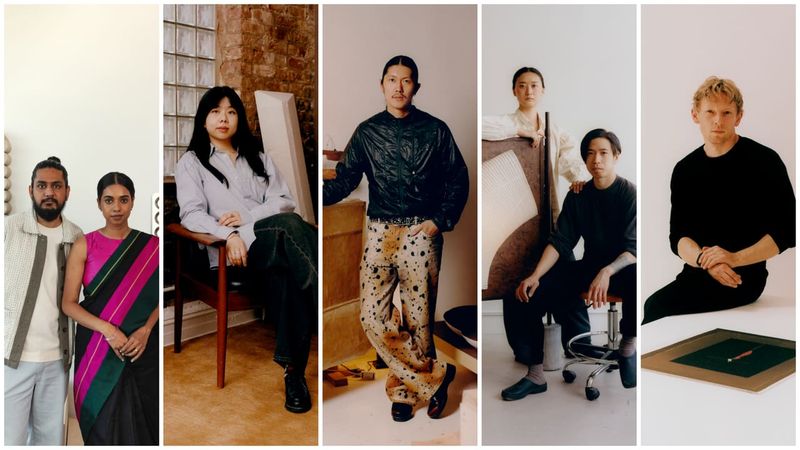
The physical spaces themselves emerged through collaboration with practitioners already embedded in the design community. Papa Omotayo of MOE+AA led the architectural design for AiMe Gallery. The interior of AiMe Concept was developed with designer Nifemi Marcus-Bello and Gemma Sfeir. Moroccan designer Hajar Daide contributed both furniture and the branding identity. This approach, assembling a project through a network of peers rather than commissioning external consultants, reflects the communal ethos Chagoury-Moudaber describes as central to Lagos's creative ecosystem.
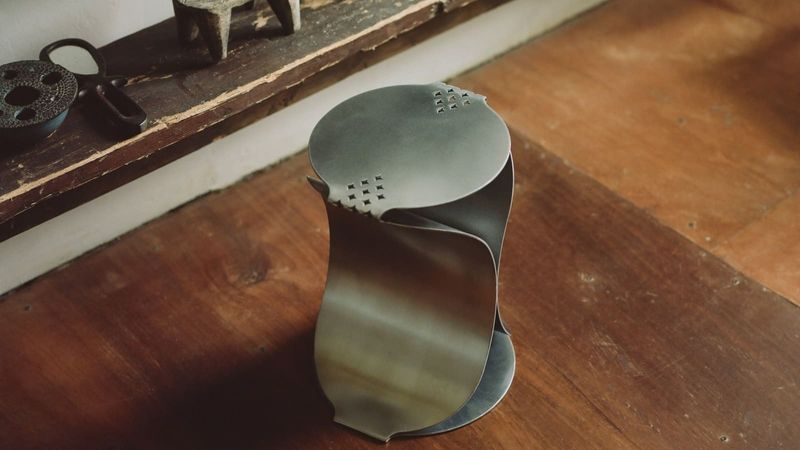
The inaugural exhibition, titled "The Design Institute", includes work by Ivorian designer Jean Servais Somian, whose bronze sculptures and furniture occupy several tableaux. Somian had spent two decades seeking factory access for production. Chagoury-Moudaber facilitated a partnership with UFI, a furniture factory owned by her husband Antoine Moudaber, enabling Somian to realise work at a scale and finish previously unavailable to him. The same facility produced pieces by Germane Barnes, an African-American architect and designer whose Credenza and Peacock chairs use Iroko, a local hardwood.
Material and Craft Economies
The emphasis on production infrastructure is not incidental. African design discourse frequently engages with materiality and craft knowledge, yet the means to execute work at professional standards, particularly furniture and large-scale objects, remain unevenly distributed. Access to CNC equipment, kilns, upholstery workshops, and metalworking facilities is concentrated in a handful of cities, and even there, capacity is often reserved for commercial manufacturing rather than limited-run design work.
By linking designers with existing industrial facilities, Casa Mouda offers a pragmatic model that does not require building new workshops from scratch. The partnership with UFI exemplifies this: a commercial furniture factory absorbs short production runs for designers, diversifying its output while providing makers with the technical support and equipment they lack. The arrangement benefits both parties and avoids the capital intensity of establishing standalone ateliers.
Other contributors to the inaugural show include sculptural lighting by Marie-Paule Tano, shelving by Hall Haus, a Paris-based collective of African diaspora designers, glass objects by Bubu Ogisi, basketry by Ghanaian maker Baba Tree, and artworks by People of the Sun and Midegbeyanevesho Ojisua. The exhibition is structured to rotate, with pieces swapped in and out over time, allowing the space to function as an evolving survey rather than a static display.
Staged Domesticity and Public Access
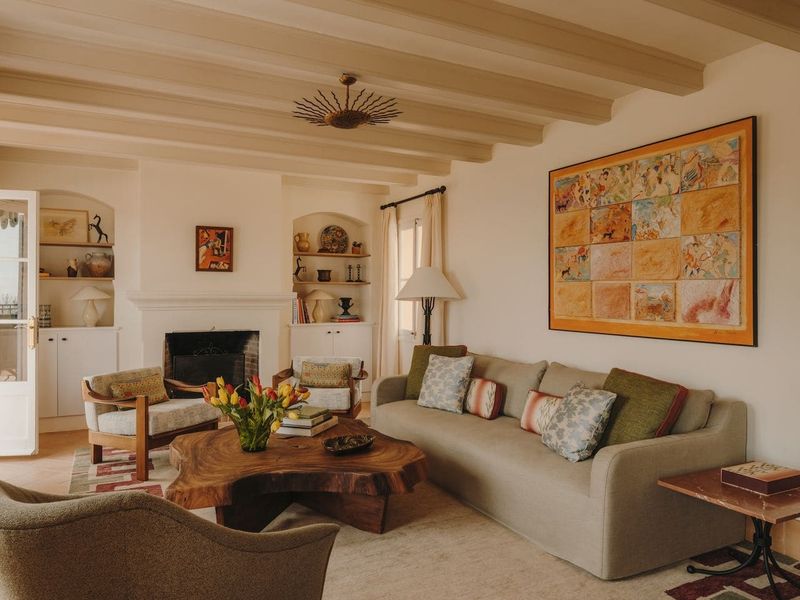
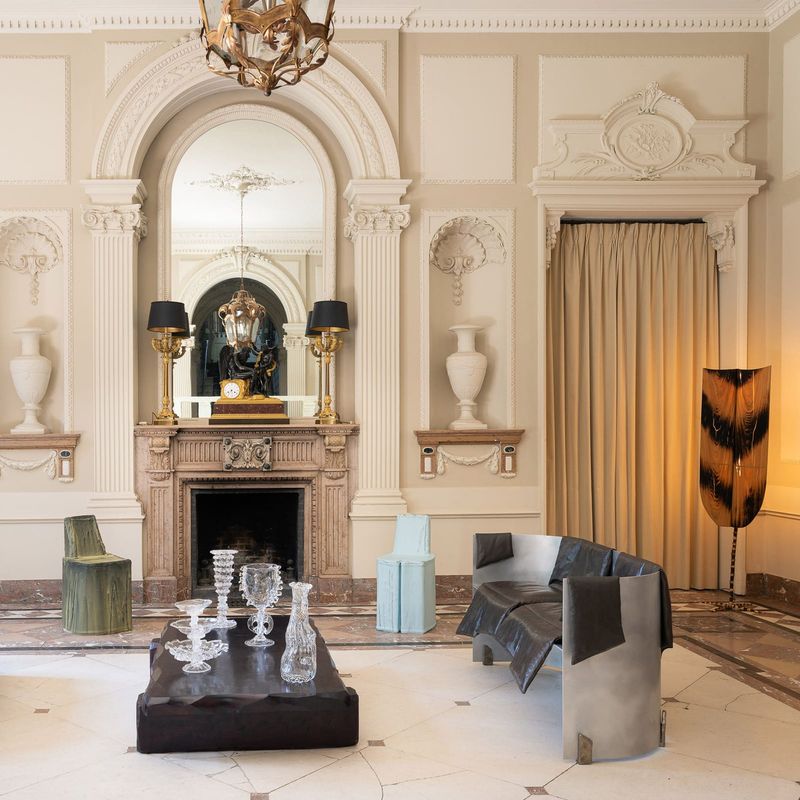
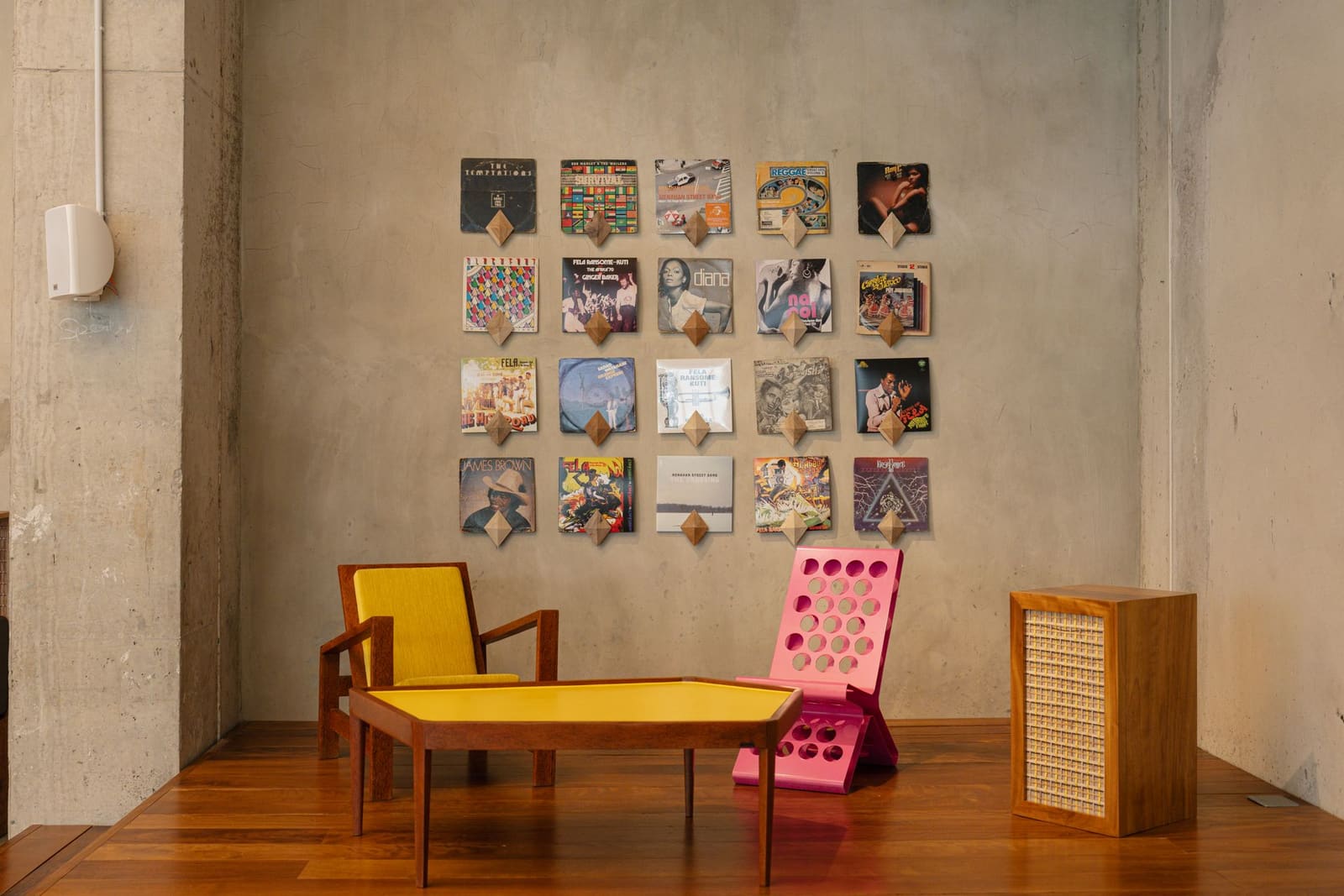
The exhibition design presents objects within fully styled domestic vignettes. Chagoury-Moudaber credits her mother with the insight that not all visitors know how to integrate a single design object into their own spaces. By staging complete rooms, furniture grouped with lighting, textiles, and art, Casa Mouda provides a template that makes the work more legible to a broader audience. This approach also supports sales, offering clients a turnkey aesthetic rather than requiring them to assemble disparate elements.
The KoFi coffee concept, present in both venues, extends accessibility beyond the gallery context. Walls finished with sand reference the coastal setting, and a soundscape developed with composer Malloy James layers ambient recordings of Lagos. The café lowers the threshold for entry, inviting visitors who may not consider themselves design-literate but are curious about the space. It is a small gesture with significant implications for how institutions position themselves within their cities, choosing permeability over exclusivity.
Representation and Geographic Scope
The roster of designers reflects both continental and diasporic practices. Chagoury-Moudaber has emphasised representation, not as demographic box-ticking but as an acknowledgement that African design is shaped by migration, border fluidity, and transnational networks. The inclusion of Barnes, an American working within African material and formal vocabularies, and Hall Haus, a collective formed in Paris, signals an expansive definition of what constitutes African design practice.
This framing aligns with broader shifts in how museums and galleries conceptualise regional categories. Rather than essentialising place, Casa Mouda treats Africa as a locus of exchange, where influences circulate and practitioners draw on multiple references. The curatorial stance is descriptive rather than prescriptive, mapping existing networks rather than imposing a singular narrative.
Precedent and Context
Lagos has seen a steady accumulation of creative infrastructure over the past fifteen years. Nike Art Gallery, Terra Kulture, and Rele Gallery established footholds for visual art. Design-focused spaces have been fewer and more provisional. The Lagos Design Collective, founded in 2017, operated primarily as a networking body rather than a physical venue. Alára, a concept store launched in 2015, included furniture and objects but functioned mainly as a retail environment for fashion.
Casa Mouda's dual-site model, combining a gallery in a high-traffic hotel with a community-oriented space on the marina, positions it as both a commercial and cultural node. The Eko Hotel location ensures visibility among international visitors and the city's business elite. The marina site, more flexible in programming, can accommodate workshops, talks, and outdoor installations. The bifurcation allows the institution to serve multiple audiences without forcing a single space to perform incompatible functions.
Custodianship as Ongoing Practice
Chagoury-Moudaber frames Casa Mouda as an exercise in custodianship, a term that implies both care and continuity. The rotating exhibition format, the emphasis on production partnerships, and the integration of public programming all point to an institution conceived not as a monument but as an active participant in the design ecosystem. The work it supports will continue to evolve, shaped by the practitioners it engages and the city in which it is embedded.
The project's success will depend on its ability to sustain those relationships over time. Lagos's creative community is tightly networked but also subject to the pressures of a city with limited public funding for culture, volatile infrastructure, and intense competition for space. Casa Mouda's viability rests on its capacity to remain commercially sustainable while fulfilling its broader cultural ambitions, a balance that institutions worldwide struggle to maintain.
For now, it offers a model worth observing: a design platform built through collaboration, attentive to production realities, and committed to the city in which it operates. Whether it can anchor a broader shift in how African design is produced, exhibited, and understood will become clear in the years ahead.
Save this story. A free account keeps your reading list and the 07:00 email in one place.
CREATE FREE ACCOUNT →SIGN IN