
The Body in Space
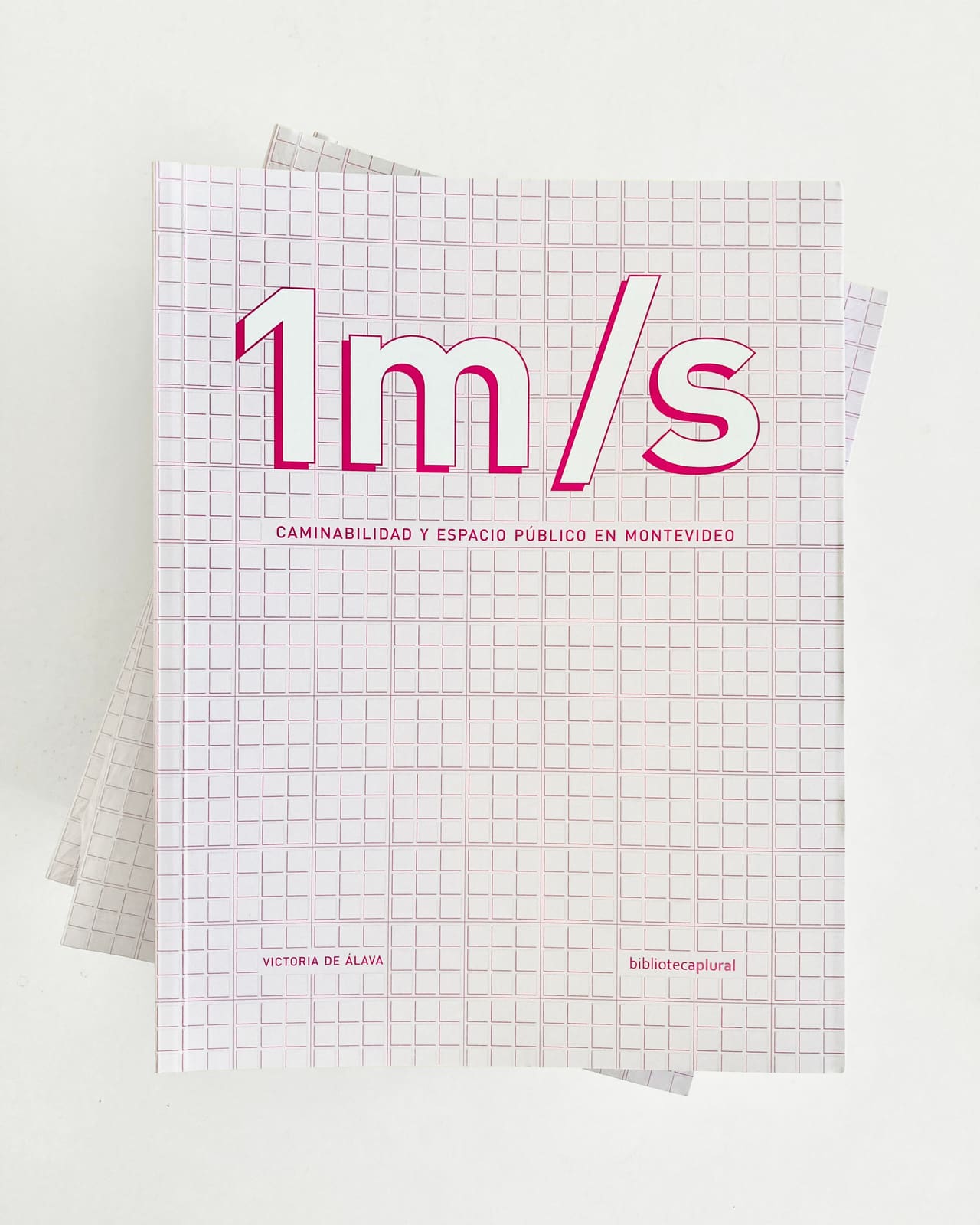
When we talk about urban mobility, we often default to discussing infrastructure: lanes, signals, transit networks. Yet the most revealing lens for understanding how cities function sits much closer to ground level. Consider the pedestrian, moving at roughly one meter per second through the streetscape. This pace, this scale, this unmediated encounter between body and environment offers something vehicular analysis cannot capture: the full sensory and social texture of urban life.
Montevideo's ongoing engagement with pedestrian-centered planning reflects a broader conceptual turn. Rather than optimizing for the movement of objects, contemporary urbanism increasingly asks how we might design for the experience of subjects. The distinction matters. Cars move through space; people inhabit it. The former demands efficiency; the latter requires attention to comfort, safety, variability, and encounter.
From Vehicle to Person
The traditional traffic engineering model treats movement as a problem of throughput. How many vehicles can pass a given point per hour? How do we minimize congestion? These questions have shaped urban form for nearly a century, producing cities built around the automobile's spatial demands. The result is familiar: wide arterials, limited crossings, pedestrian infrastructure treated as afterthought rather than foundation.
Recentering the pedestrian inverts this hierarchy. It begins not with the car's requirements but with the human body's capabilities and vulnerabilities. Walking speed, stride length, endurance thresholds, sensory range, these become the baseline metrics. From this perspective, urban design must account for far more than simple point-to-point transit. It must consider the journey itself as meaningful experience, shaped by everything from pavement quality to shade coverage to the presence or absence of other people.
This shift demands what we might call a dual-resolution approach. On one hand, planners need granular awareness of how individual pedestrians navigate specific environments: where they pause, which routes they prefer, how weather or time of day alters behavior. On the other, they require comprehensive understanding of how these micro-decisions aggregate into larger patterns of urban use and social practice.
The Democracy of Walking
Among all modes of urban movement, walking holds unique status. It is both primary and universal. We might choose bus, bicycle, or private car for longer trips, but every journey begins and ends on foot. The elderly person moving slowly with a cane, the parent pushing a stroller, the office worker hurrying between meetings, the child walking to school: all are pedestrians, all share the sidewalk, all depend on its quality and safety.
This universality makes pedestrian infrastructure fundamentally democratic in a way other transport modes cannot match. A well-designed walking environment serves everyone, regardless of income, age, or physical ability. Conversely, poor pedestrian conditions disproportionately burden those with fewest alternatives. The person who cannot afford a car must navigate broken sidewalks, dangerous crossings, and inadequate lighting. The mobility-impaired face barriers that render entire districts inaccessible.
Recognizing walking as the most basic form of urban movement thus carries political implications. Prioritizing pedestrian experience means prioritizing equity. It means understanding that the built environment either enables or constrains the freedom of the city's most vulnerable users.
Environment as Experience
Walking differs from mediated forms of transport in crucial ways. Inside a car or bus, the environment remains at distance, filtered through glass and metal. On foot, there is no buffer. The pedestrian encounters the city directly: its textures, smells, sounds, social dynamics. This immediacy makes environmental quality paramount.
Temperature and weather exposure matter enormously. A route comfortable in mild conditions becomes punishing in summer heat or winter rain without adequate shade or shelter. Surface quality affects not just comfort but accessibility; uneven pavement that merely annoys an able-bodied walker can render passage impossible for someone using a wheelchair or walker. Street width, building setbacks, and facade articulation shape the sense of enclosure and human scale. Wide, empty boulevards feel hostile to pedestrians regardless of technical walkability metrics.
Social factors weigh heavily as well. People gravitate toward routes that feel populated and safe, avoiding empty streets even when they offer shorter paths. The presence of shops, cafes, and other active uses generates foot traffic, which in turn attracts more walkers in a reinforcing cycle. Jane Jacobs articulated this dynamic decades ago: eyes on the street create safety, and safety enables the spontaneous public life that makes urban walking pleasurable rather than merely functional.
Measuring the Unmeasured
Traditional mobility planning relies on quantifiable data: vehicle counts, average speeds, delay times. Pedestrian-centered approaches require expanding the analytical toolkit to capture qualitative dimensions. How does it feel to walk a particular street? Where do people linger? What sensory qualities define the experience?
Some aspects admit measurement. Step counts, route choice, walking speed, these can be tracked and analyzed. But others resist easy quantification. The pleasure of walking beneath a tree canopy on a hot day, the unease of traversing a dark underpass, the social encounter that transforms a commute into a conversation, these shape pedestrian experience profoundly yet elude standard metrics.
Urban designers working in this paradigm thus need methodological pluralism. Quantitative data provides essential insights into aggregate patterns. But ethnographic observation, qualitative interviews, and participatory design processes capture dimensions of lived experience that numbers alone cannot reveal. The goal is not perfect measurement but sufficient understanding to design environments that serve actual human needs and desires.
The Montevideo Laboratory
Montevideo offers productive ground for exploring these ideas. The city's scale and density support walkable urbanism in ways sprawling metropolises cannot. Its established urban fabric, with relatively intact street grids and mixed-use neighborhoods, provides foundation for pedestrian-centered interventions without requiring wholesale reconstruction.
Recent initiatives have begun operationalizing the human-scale mobility paradigm. Expanded pedestrian zones, improved crossings, traffic calming measures, these represent not isolated infrastructure projects but components of a broader conceptual reorientation. The question driving these efforts is not "how do we move more cars?" but "how do we create environments where walking is safe, comfortable, and appealing?"
Success requires coordination across multiple domains. Street design must prioritize pedestrian space and safety. Land use policy should encourage the mixed-use, fine-grained development that generates walkable destinations. Transit planning needs to recognize that every bus or train trip depends on walkable access at both ends. Economic development strategies should value the street-level commercial activity that makes walking engaging rather than merely tolerable.
Beyond Nostalgia
Advocating for pedestrian-centered urbanism sometimes invites charges of nostalgia, a desire to return to pre-automotive city forms. This misreads the project. The goal is not to recreate the past but to build on its lessons while addressing contemporary needs and possibilities.
Modern cities face challenges unknown to earlier eras: larger populations, longer distances, different economic structures. Simply removing cars or narrowing streets solves nothing if people cannot access jobs, services, and social networks. The mobility paradigm shift acknowledges these complexities. It seeks not to eliminate motorized transport but to rebalance priorities, ensuring that the most fundamental, equitable, and sustainable form of movement receives commensurate attention and investment.
Technology offers tools previous generations lacked. Data analytics can reveal pedestrian patterns and preferences at unprecedented scale. Adaptive traffic signals can prioritize crossing times during peak pedestrian periods. Digital platforms can connect walkability planning with participatory input from diverse communities. The question is whether we deploy these capabilities in service of human-scale urbanism or continue optimizing for vehicular throughput.
The Practice of Movement
Ultimately, walking is more than transport. It is social practice, embodied experience, democratic right. When we understand urban mobility through this lens, design priorities transform. Streets become not merely conduits but public spaces in their own right. Sidewalks emerge as critical infrastructure deserving investment and maintenance equal to any roadway. The pedestrian, moving at one meter per second through the city, becomes the central figure around which urbanism organizes itself.
This shift requires rethinking professional practices, regulatory frameworks, and cultural assumptions built around automotive dominance. It demands recognizing that the most advanced mobility system is not the one that moves vehicles fastest but the one that enables diverse people to move through the city safely, comfortably, and equitably on foot. In Montevideo and cities worldwide, that recognition is slowly taking hold, reshaping how we design, plan, and experience urban space.
Save this story. A free account keeps your reading list and the 07:00 email in one place.
CREATE FREE ACCOUNT →SIGN IN