
The Spatial Logic of Restraint
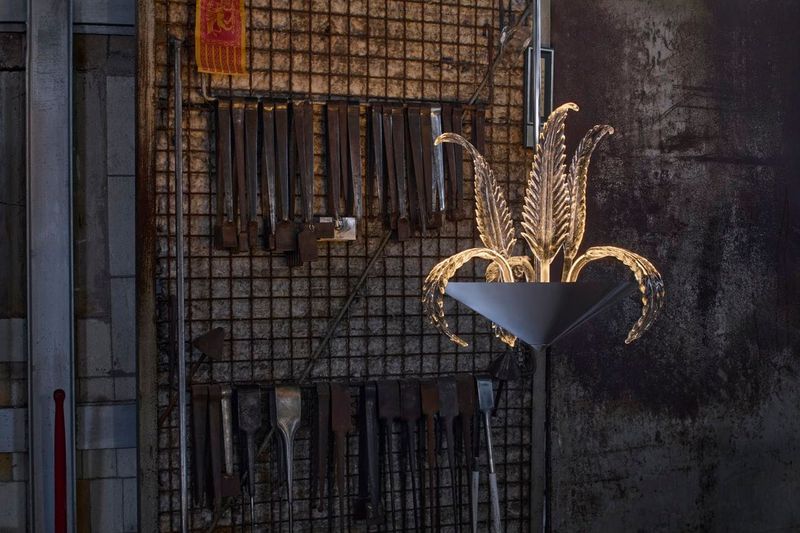
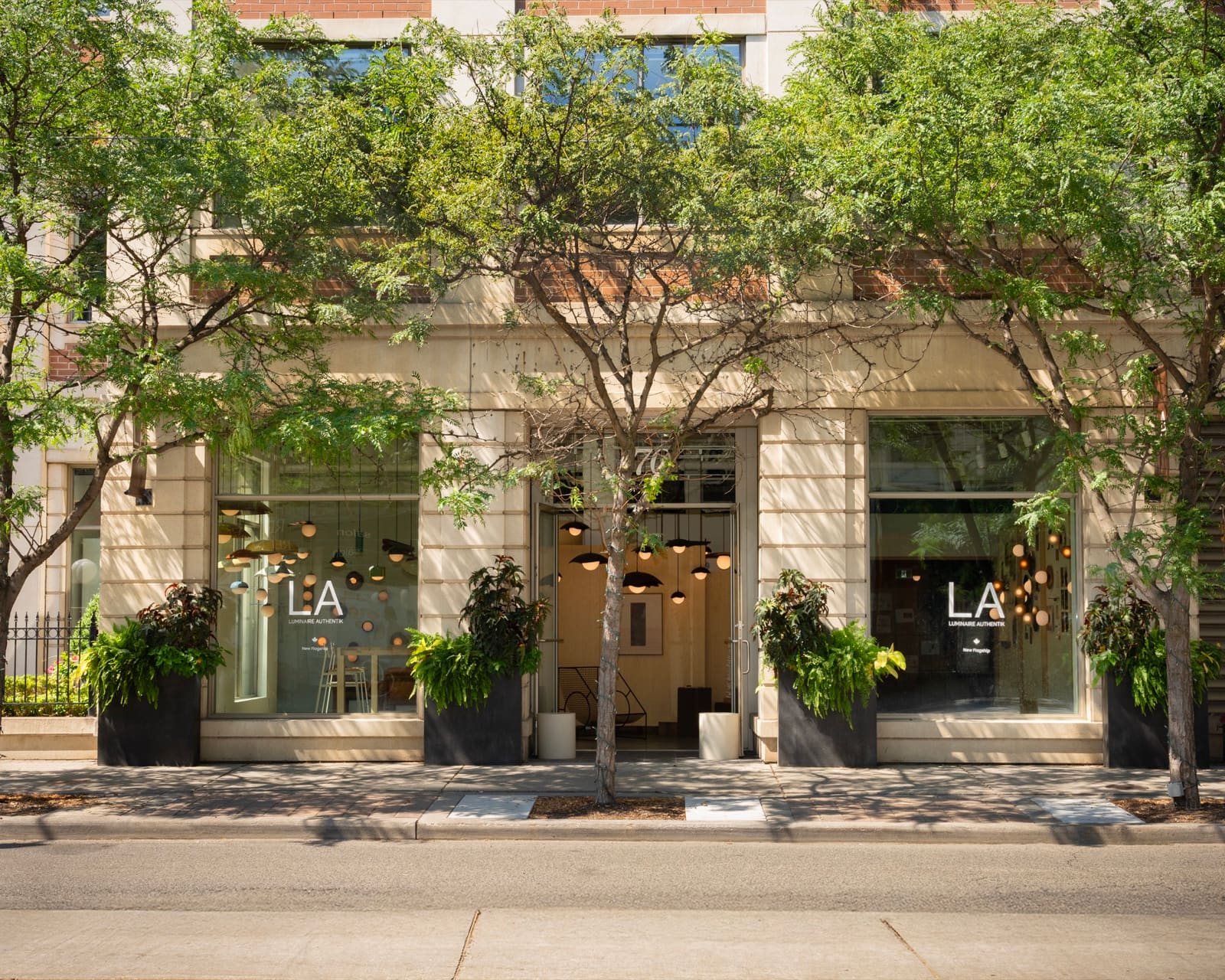
Most lighting showrooms operate on a density principle: pack in as many SKUs as possible, let the sheer volume speak for itself. Luminaire Authentik's new Toronto flagship, which opened this month in the King East Design District, takes the opposite approach. The space is four times larger than its predecessor, yet displays fewer fixtures per square metre. Founder Maude Rondeau describes the strategy as intentional curation rather than inventory showcase. Each product line occupies its own zone, separated by wooden partitions that function less as walls and more as optical breaks. The Forma series, with its angular geometry, sits apart from Pivoine's organic petal forms. The effect is less showroom, more gallery circuit, a spatial rhythm that allows each design to register individually before the eye moves on.
This restraint extends to materiality. Mason Studio, the Toronto firm responsible for the interior, deployed a limited palette: pale timber, caramel leather seating, and large expanses of white that recede behind the illuminated objects. The strategy mirrors the studio's broader approach to hospitality and retail work, where narrative takes precedence over decoration. Here, the narrative is twofold: Quebec craftsmanship and the specific journey of a brand that began in a garage workshop in 2015.
Two Moments of Density
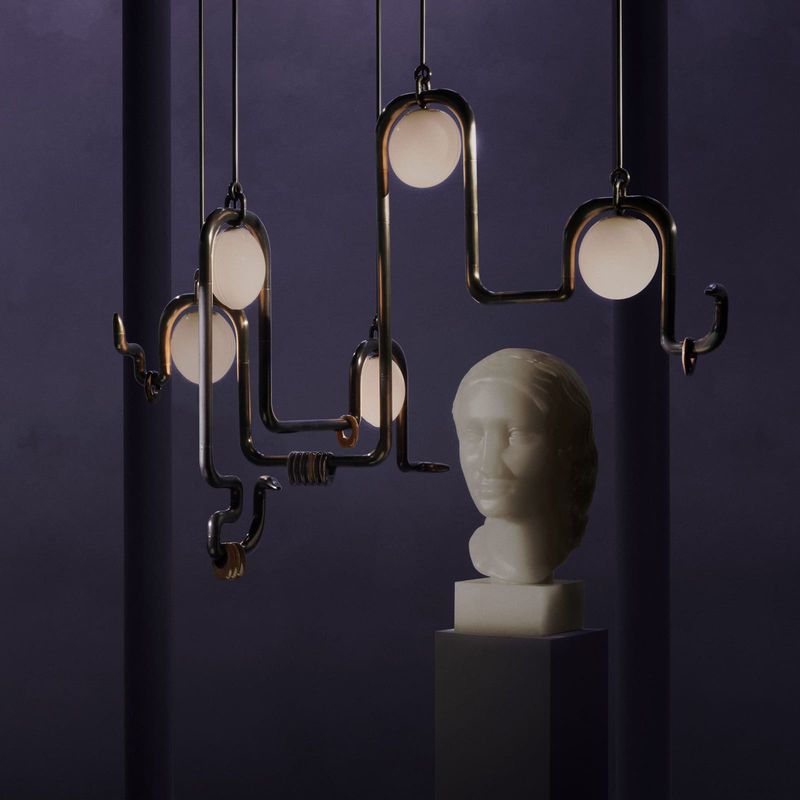
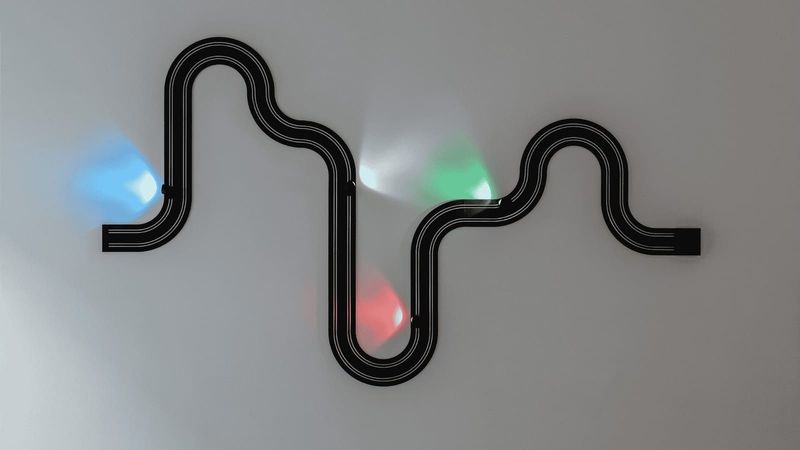
The showroom does allow for two choreographed moments of abundance. Upon entry, visitors pass beneath a constellation of pendants, a suspended canopy that functions as both threshold and introduction. The gesture is experiential rather than informational; it establishes light as atmosphere before the visitor encounters individual products. At the rear, a wall of sconces creates a dense graphic composition. Dozens of fixtures are mounted in a grid, their overlapping glows producing a layered wash of illumination. The installation serves a dual purpose: it offers side-by-side comparison for specifiers, and it demonstrates how Luminaire Authentik's designs perform in aggregate, a consideration for designers working on large hospitality or commercial projects.
These two density zones bookend the showroom, framing the more spacious middle galleries. The alternation between compression and release gives the space a sense of pacing often absent in product showrooms, where every square metre is treated with equal urgency.
The Gallery as R&D Window
Near the entrance, a section titled "The Gallery" functions as a transparent look into the brand's design process. Display panels, arranged by artistic director Jeremy Le Chatelier, collect inspiration images, material samples, and developmental sketches for upcoming releases. The format borrows from fashion showrooms, where mood boards and proto-samples are displayed alongside finished collections. For architects and designers, the section offers insight into how Luminaire Authentik approaches product development, a useful signal of the brand's design fluency and willingness to iterate.
Two forthcoming lines are previewed here: sconces with raw metallic backplates scheduled for release this fall, and a hardware collection that will include handles and dimmer switches. The latter represents a significant expansion beyond lighting fixtures into the broader territory of architectural fittings. If executed with the same attention to finish options that Luminaire Authentik applies to its lighting (the brand currently offers over 60 colour choices, recently expanded to include chocolate and burgundy tones), the hardware line could position the company as a more comprehensive source for interior detailing.
Maker Signals and Material Honesty
Scattered throughout the showroom are deliberate references to the brand's origin story. An old CRT television plays looped footage of the Quebec production facility, a low-tech gesture that feels more honest than the typical branded video content found in design showrooms. The vintage leather seating, worn in and softened by use, suggests longevity and craft rather than newness. A wall of material swatches demonstrates the scale of customisation now available, a visual reminder that Luminaire Authentik still manufactures entirely in Quebec's Eastern Townships region, maintaining control over finish quality and lead times.
These elements function as subtle authenticity markers, a term that carries particular weight in an era when "local" and "handmade" are often marketing claims rather than operational realities. The swatches, in particular, serve as proof of concept: each colour option represents a tangible material choice rather than a digital render.
Hospitality Infrastructure and Phase Two
Several bar-height tables are distributed throughout the space, designed for consultations between Luminaire Authentik staff and visiting designers. The tables are paired with an arched pass-through in the rear wall, a detail that connects the showroom to a back-of-house kitchen and bar zone. The aperture allows for easy drink service during events, a small architectural move that signals the brand's intention to use the space as a gathering point rather than a transactional retail environment. Luminaire Authentik plans to host product launches, lunch-and-learn sessions, and other programming aimed at the local design community.
Later this fall, a second phase will introduce an expanded designer workspace in a rear library zone. Mason Studio plans to drench this area in deep, saturated hues, a deliberate contrast to the light-filled front galleries. The move acknowledges a basic truth about lighting design: fixtures reveal their full character in low-light conditions, where contrast and glow become legible. By offering a darker environment, the showroom provides a more accurate preview of how the products will perform in evening hospitality settings or residential interiors after dusk.
Precedent and Context
The spatial strategy at play here has precedents. Flos's New York flagship, designed by Calvi Brambilla, similarly uses partitions to create discrete viewing zones, while Apparatus Studio's Los Angeles showroom leans into moody, gallery-like interiors. What distinguishes Luminaire Authentik's approach is the emphasis on transparency around process and origin. The Gallery section and production footage are moves toward demystifying manufacturing, a counter-narrative to the more common strategy of emphasising design mystique.
In the context of Toronto's King East Design District, the showroom also functions as a statement about cross-border manufacturing relationships. At a moment when trade tensions are reshaping supply chains, Luminaire Authentik's entirely domestic production model offers both practical advantages (shorter lead times, easier customisation) and symbolic weight. The brand's decision to work with Mason Studio, a Toronto firm, mirrors its Quebec practice of collaborating with a glass studio located 15 kilometres from its workshop. The emphasis on proximity and partnership is both operational and ideological, a way of building networks that prioritise regional craft ecosystems over global efficiencies.
What the Typology Suggests
Showrooms are, by definition, promotional spaces. But the best ones operate as research environments, places where designers can study typologies, compare finishes, and test ideas in three dimensions. Luminaire Authentik's Toronto flagship leans into this research function, offering enough spatial breathing room and organisational clarity to make the visit useful rather than overwhelming. The upcoming library zone and event programming suggest the brand understands that showrooms, particularly in design districts, function as nodes in a larger network of professional relationships and knowledge exchange.
Whether this model proves replicable will depend on scale and market position. Luminaire Authentik's decision to expand its Toronto footprint by a factor of four suggests confidence in the local design community's appetite for domestically produced lighting with high customisation options. If the second phase succeeds in drawing repeat visits and establishing the space as a true design hub, it may prompt other mid-scale manufacturers to rethink the showroom as something beyond a static display of inventory.
Save this story. A free account keeps your reading list and the 07:00 email in one place.
CREATE FREE ACCOUNT →SIGN IN