
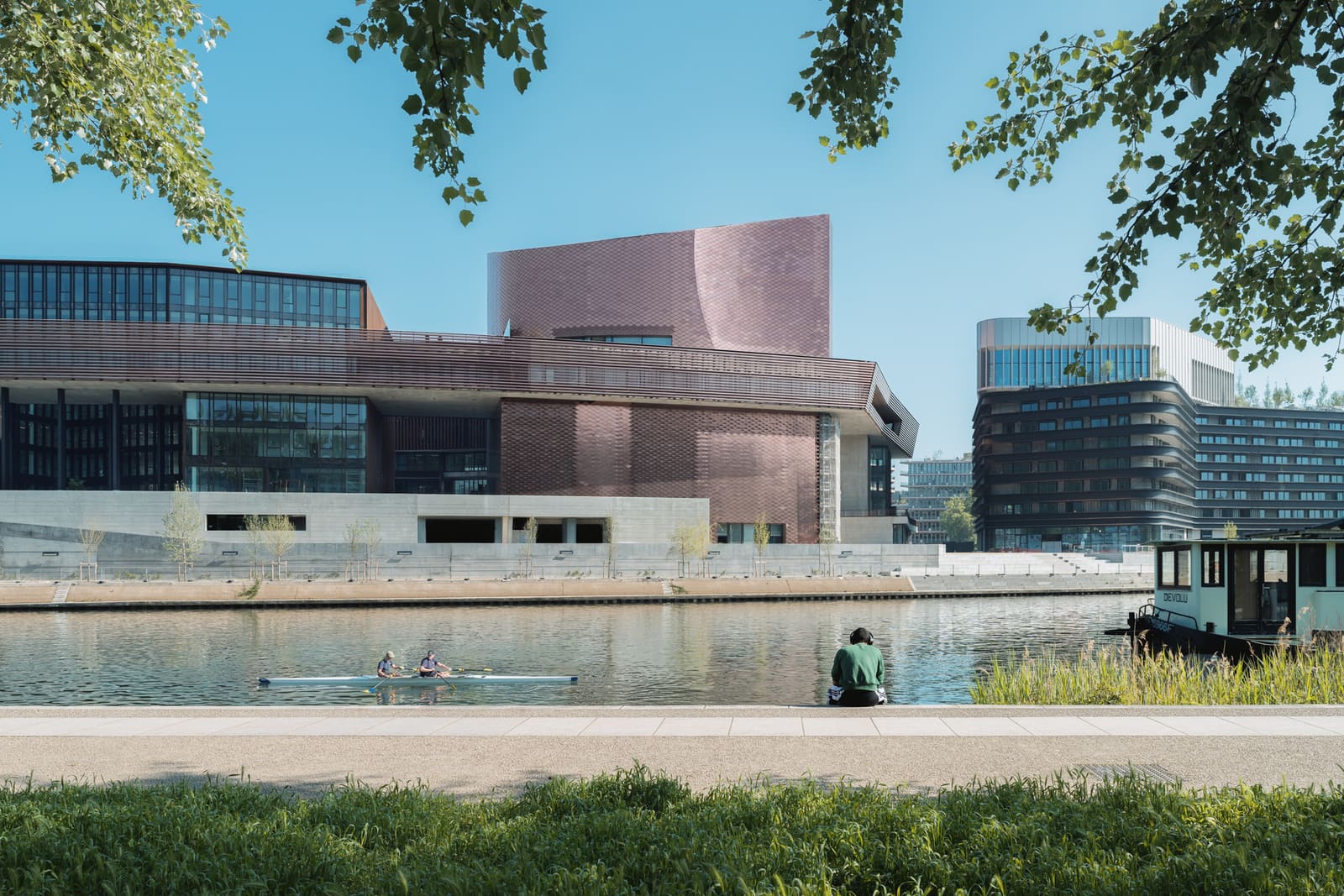
A Catalan Studio's First Move Into the Capital
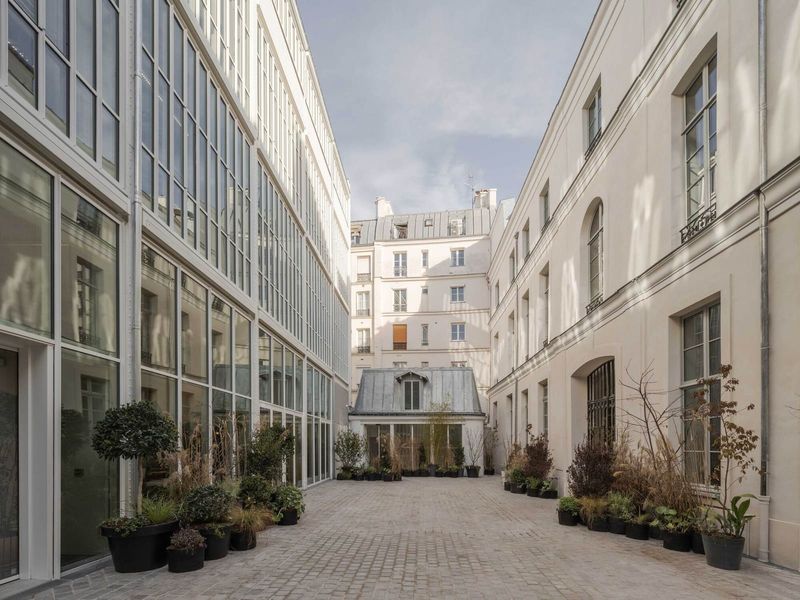
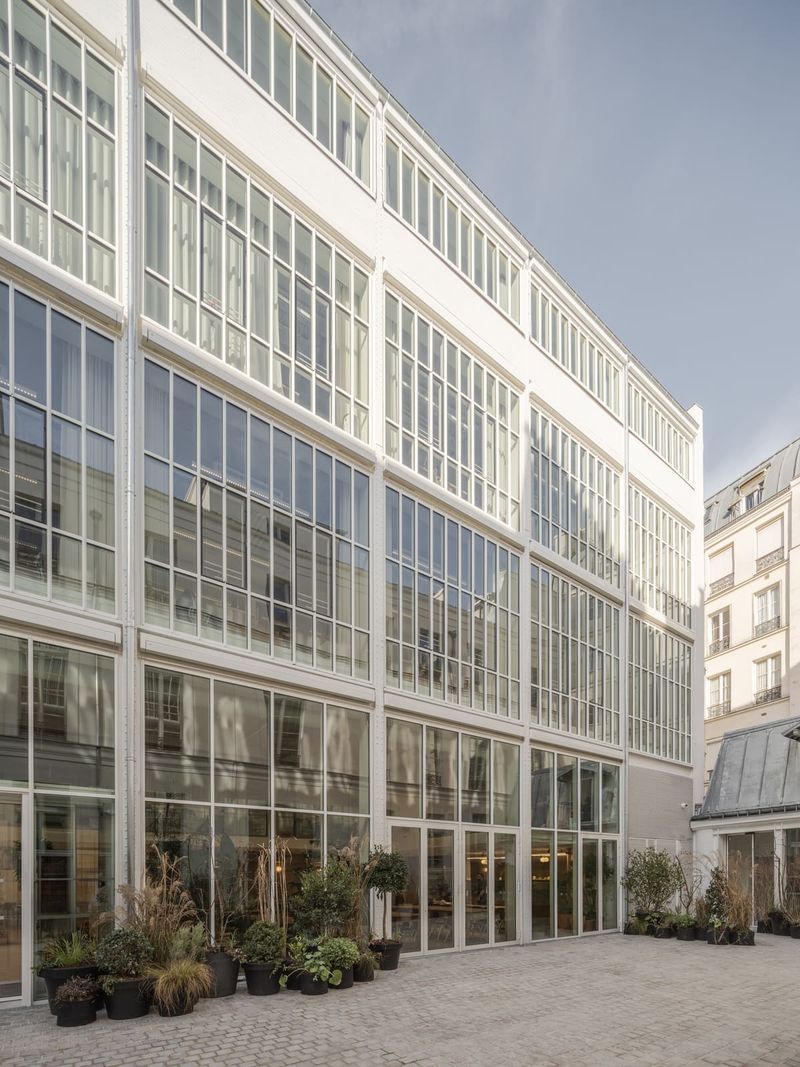
When a Pritzker-winning practice makes its inaugural gesture in Paris, the architecture community takes note. RCR Arquitectes, the Catalan trio known for their tectonic restraint and material sensitivity, has delivered a building for a new contemporary art institution on Île Seguin, the narrow river island in the western suburbs that once hummed with Renault's assembly lines. The project, housing an institution named Large, opens this October and marks the studio's entry into a city whose architectural establishment has historically preferred homegrown talent.
At World Archi Design, we've observed RCR's evolution from regional commissions in Olot to international recognition, and this Parisian debut carries particular weight. The firm's signature vocabulary of rusted steel, precise fenestration, and careful site response must now negotiate a context far removed from the volcanic landscapes of Catalonia. The question becomes whether their approach, so rooted in terroir, can translate to a post-industrial riverbank undergoing wholesale transformation.
Stratification as Organizing Principle
The architectural parti for Large follows a concept embedded in the broader masterplan by Ateliers Jean Nouvel: stratification. Across the Pointe des Arts development, which spans more than 53,000 square metres of former industrial land, Nouvel's vision calls for horizontal layering rather than vertical punctuation. RCR's contribution interprets this directive through massing that reads as stacked volumes, each slightly offset, creating shadow lines and spatial ambiguity along the building's profile.
This approach echoes precedents in adaptive reuse districts where new construction must acknowledge lost industrial fabric without mimicking it. Herzog & de Meuron's Tate Modern extension employed a similar strategy of articulated layers, while Peter Zumthor's Kolumba Museum in Cologne used stratified brickwork to bridge archaeological remnants and contemporary program. RCR's version appears more abstract, eschewing literal references to Renault's vanished factories in favor of geometric clarity.
Working alongside CALQ Argence d'architecture and Baumschlager Eberle Architekten, RCR has shaped a building whose horizontal emphasis contrasts with the vertical ambitions of much contemporary museum architecture. The fenestration pattern, still under analysis pending interior documentation, suggests a rhythm calibrated to gallery proportions rather than the continuous glazing favored by many cultural institutions today.
The Site's Industrial Memory
Île Seguin carries dense historical freight. For decades, Renault's plant occupied the entire island, a self-contained manufacturing city that at its peak employed over 30,000 workers. The factory closed in 1992, leaving behind contaminated soil and a planning vacuum that successive administrations struggled to fill. Nouvel's masterplan, commissioned after earlier schemes faltered, reimagines the island as a cultural anchor within the larger Boulogne-Billancourt redevelopment.
Large's program explicitly engages this industrial legacy. The opening exhibition, titled "Imaginary Engine," draws from the Collection Renault, bringing together 55 artists from 23 countries to examine the relationship between human creativity and mechanical production. The thematic choice positions the institution not as a generic white-cube venue but as a site-specific interpreter of place memory, a strategy that lends curatorial coherence to what might otherwise feel like opportunistic placemaking.
This intersection of art and industry recalls earlier efforts to animate former manufacturing zones through cultural programming. The Ruhr region's Zollverein complex, Dia Beacon's conversion of a Nabisco box-printing facility, and London's Battersea Power Station all grapple with similar questions of heritage, authenticity, and economic reinvention. Large joins this lineage, though its success will depend on sustained programming rather than inaugural spectacle.
Mixed-Use Adjacencies and Urban Grain
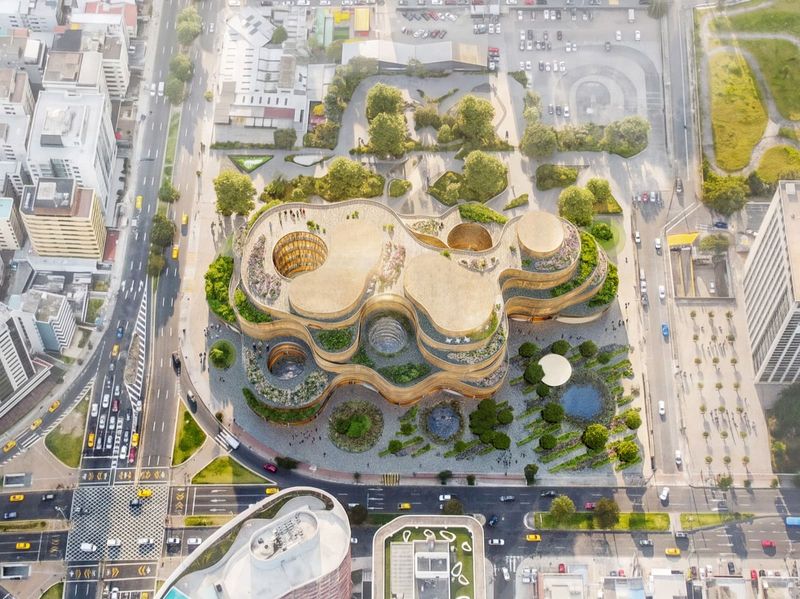
The Pointe des Arts development extends beyond Large to include residential towers, office space, and additional cultural venues, creating a mixed-use density uncommon in Paris's peripheral zones. This programmatic blending aligns with contemporary urbanism's rejection of single-use districts, yet it also introduces tensions. Cultural institutions thrive on accessibility and pedestrian flow, both of which depend on transit infrastructure and street-level activation that masterplanned developments often fail to deliver in their early phases.
RCR's building occupies a prominent position within this emerging quarter, its stratified volumes serving as a visual anchor. The success of the architecture will hinge partly on how it mediates between the island's internal pathways and the Seine's edge, a threshold condition that demands careful landscape integration. Nouvel's masterplan provides the framework, but individual buildings must execute the details of arrival, circulation, and connection to water.
We've seen similar challenges in other riverfront cultural projects. Copenhagen's Blox building by OMA negotiates a comparable edge between city and harbor, while Oslo's Munch Museum by Estudio Herreros addresses a waterfront site with vertical massing rather than horizontal spread. RCR's approach appears more aligned with the former, prioritizing lateral extension and layered reading over iconic silhouette.
Material Palette and Tectonic Expression
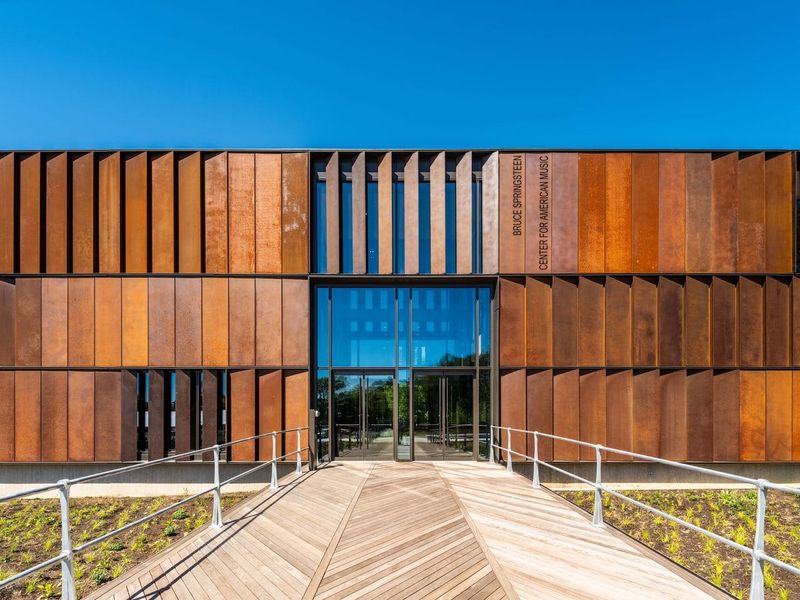
Though complete material specifications remain under wraps pending full documentation, RCR's established vocabulary suggests probable directions. The studio's preference for weathering steel, exposed concrete, and large-format glass panels has defined projects from the Bell-Lloc Winery to the Soulages Museum. If these materials appear on Île Seguin, they will register differently in an urban riparian context than in rural Catalonia or southern France.
Weathering steel, in particular, carries associative weight in post-industrial settings, signaling continuity with manufacturing heritage while offering low-maintenance durability. Its use here would align with the site's narrative, though it risks becoming a cliché of adaptive reuse aesthetics. RCR's skill lies in detailing and proportion rather than material novelty, so the success of their palette will depend on execution subtleties that photographs cannot fully capture.
The collaboration with Baumschlager Eberle, a practice known for environmental performance and 2226 passive design principles, hints at sustainability ambitions. Whether Large pursues aggressive energy targets or settles for code compliance will shape its long-term relevance as cultural institutions face increasing pressure to model ecological responsibility.
Opening Momentum and Long-Term Viability
October's inauguration positions Large within a crowded Parisian cultural landscape that includes the Fondation Louis Vuitton, Palais de Tokyo, and the Bourse de Commerce. Differentiation will require sharp curatorial identity and sustained engagement with contemporary practice. The opening exhibition's focus on art-industry dialogue offers a conceptual anchor, but subsequent programming must build on that foundation without repeating it.
For RCR, the project represents a threshold. Success in Paris opens access to institutional commissions across Europe, while missteps could reinforce perceptions that the studio's strengths lie in smaller-scale, regionally embedded work. The Île Seguin building will be judged not only on its architectural merits but on how it performs as a cultural venue, a test that unfolds over years rather than months.
As the Pointe des Arts development matures, Large will either catalyze further activity or stand as an isolated gesture within an under-activated masterplan. The difference hinges on factors beyond architecture: transit connections, programming budgets, and the willingness of Parisians to venture beyond the Périphérique for contemporary art. RCR has delivered the vessel; its contents and context will determine whether it becomes a destination or a detour.
Photo: Nicolas Trouillard
Save this story. A free account keeps your reading list and the 07:00 email in one place.
CREATE FREE ACCOUNT →SIGN IN