
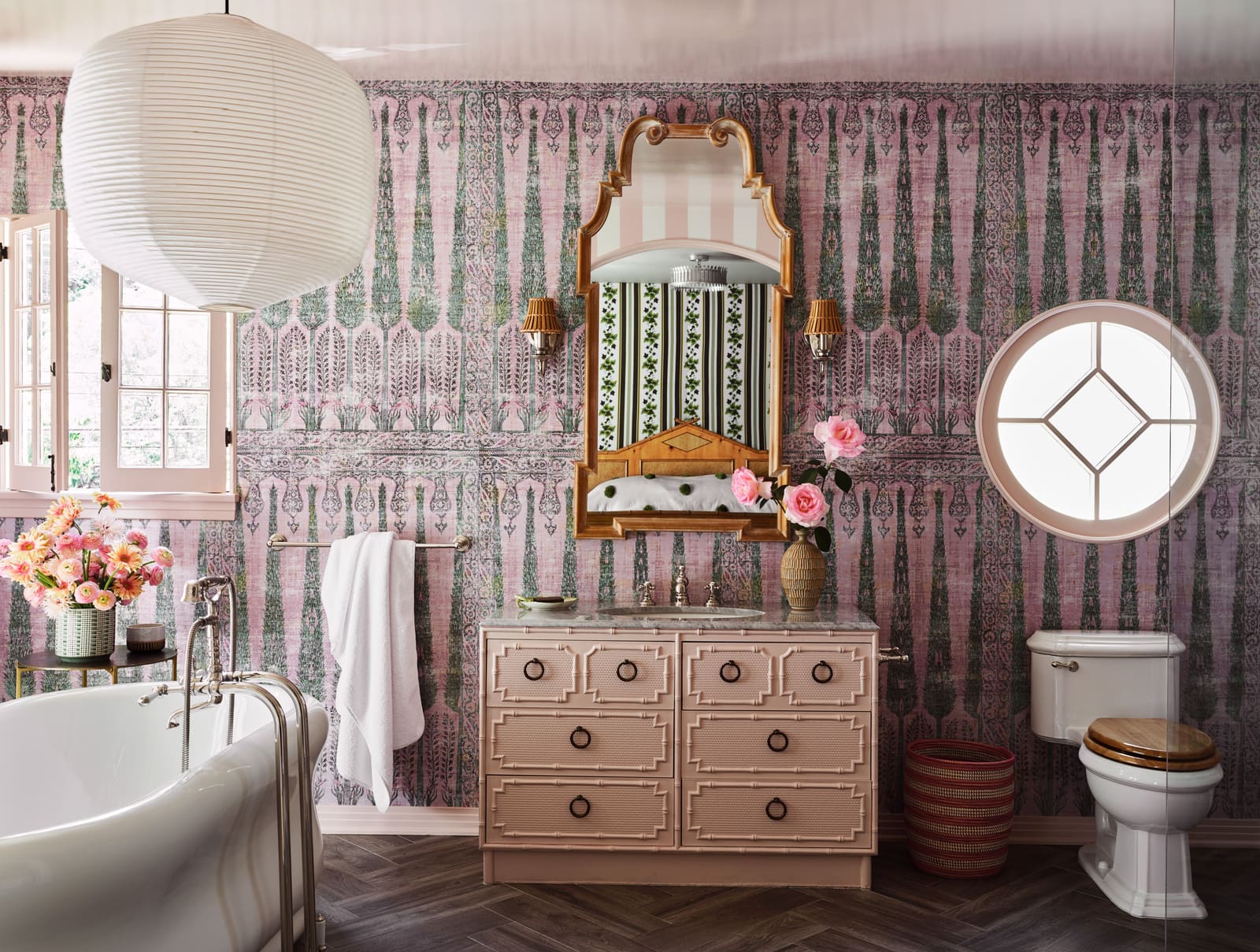
The Hardscape Problem
Bathrooms present a peculiar design challenge. Unlike living rooms, where furniture can be rearranged on a whim, or bedrooms, where textiles shift with the seasons, the bathroom's essential infrastructure tends to be permanent. Tile, fixtures, cabinetry: these elements define the space with an immobility that can feel either grounding or stifling, depending on what you inherit.
At World Archi Design, we've observed how designers and homeowners alike turn to accessories not as afterthoughts but as primary tools for spatial recalibration. The right soap dish or towel bar becomes more than functional hardware. It introduces material contrast, establishes visual rhythm, and in some cases, corrects architectural shortcomings that would otherwise require demolition to address.
Textile as Spatial Envelope
The shower curtain operates as the bathroom's largest vertical plane of color and texture. In compact spaces especially, this single element can expand or contract perceived volume. Transparent materials, whether vinyl or treated linen, preserve sightlines and amplify natural light, a tactic that counters the cave-like enclosure many small bathrooms suffer from.
Conversely, bold pattern can anchor an otherwise neutral scheme. Botanical prints or geometric lattices introduce visual complexity without permanent commitment, a quality particularly valuable in rental situations where structural intervention isn't possible. The textile's weight matters too: heavier linens hang with more deliberate folds, creating sculptural shadow play, while lighter synthetics maintain crisp lines.
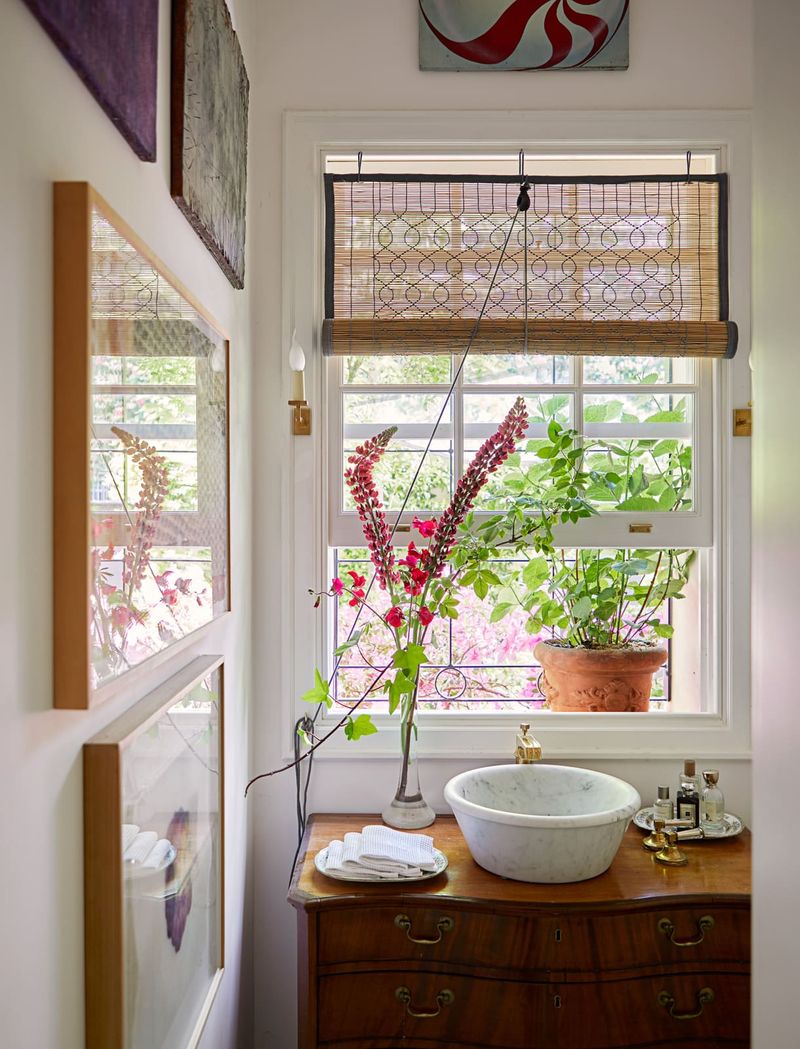
Waffle-weave fabrics occupy an interesting middle ground. Their three-dimensional texture catches light differently throughout the day, and the increased surface area promotes faster drying, a practical consideration in humid climates or poorly ventilated spaces.
The Towel Question
Towel selection reveals deeper priorities about tactile experience versus maintenance. High-pile Turkish cotton delivers immediate luxury, the kind of enveloping softness that makes stepping out of the shower feel ceremonial. But that plushness comes with tradeoffs: longer drying times, greater bulk in storage, and a tendency to shed fibers in the first dozen washes.
Waffle weaves and lighter constructions dry faster and occupy less visual mass when hung. For those with sensitive skin or eczema, the flatter surface reduces friction during drying. Linen towels, once considered too rough for bath use, have gained traction among minimalists who appreciate their quick-dry properties and the way they soften with age rather than deteriorate.
We've noted a shift toward viewing towels as displayable textiles rather than purely functional items. This mirrors broader trends in bath design where every visible element contributes to a curated aesthetic. Color coordination between hand towels, bath towels, and bath mats creates visual cohesion, while deliberate mismatching can introduce a collected-over-time sensibility.
Countertop Choreography
The bathroom counter operates as a stage for daily rituals, and its organization directly impacts spatial perception. Toothbrush holders and soap dishes might seem trivial, but their presence either contributes to visual clutter or establishes order.
Single-brush ceramic stands work well in minimalist schemes, where each object earns its place through form as much as function. Stainless steel multi-brush units address practical needs in shared bathrooms while maintaining clean lines. The material choice matters: pewter introduces warmth, marble adds weight and permanence, brass develops patina that tells a temporal story.
Soap dishes with integrated drainage prevent the puddle problem that degrades both the accessory and the counter surface beneath it. Slotted designs or pedestals with slight angles allow water to return to the basin, a small detail that extends the life of bar soaps and maintains counter hygiene.
Underfoot Material Innovation
Bath mats have undergone perhaps the most significant material evolution of any bathroom accessory in recent years. The traditional terry cloth rectangle, perpetually damp and prone to mildew, now competes with stone, wood, and diatomaceous earth alternatives that challenge our assumptions about what belongs underfoot in a wet environment.
Stone mats absorb water through capillary action and release it through evaporation, typically within minutes. The surface remains dry to the touch, eliminating the clammy sensation of stepping onto yesterday's moisture. Wood options, particularly hinoki cypress, bring warmth and a subtle aromatherapy component, though they require periodic oiling to prevent cracking.
For those who still prefer textile softness, hand-woven cotton mats with open weaves dry faster than their tufted counterparts. The key is surface area exposure: tightly packed fibers trap moisture, while looser constructions allow air circulation. Flatweaves also reduce the fiber-shedding problem that plagues higher-pile options, where wet feet become lint magnets.
Vertical Real Estate
Wall hooks serve dual purpose as functional hardware and sculptural accent. A single hook can act as a focal point, particularly when it features unusual form or finish. Ceramic hooks with organic, hand-sculpted shapes introduce an artisanal quality that contrasts with the industrial precision of most bathroom fixtures.
Multi-hook systems like the Eames Hang-It-All bring playful color and midcentury pedigree to an otherwise utilitarian task. The staggered ball configuration creates visual interest while accommodating towels, robes, and clothing in a compact footprint. In family bathrooms, assigning each member a dedicated hook in a different color establishes personal territory and encourages tidiness.
Material choice again proves crucial. Brass develops a living patina, ceramic can be glazed in custom colors, and wood introduces warmth in spaces dominated by hard, cold surfaces. The mounting height and spacing between hooks should consider both adult and child users, a detail often overlooked in standard installations.
The Laundry Interval
Hampers occupy the liminal space between use and maintenance, and their design reflects attitudes toward this transitional phase. Removable bag systems separate form from function: the basket remains stationary as decor while the bag travels to the washing machine. This proves especially valuable for those without in-unit laundry, where hauling a rigid wicker basket down multiple flights becomes impractical.
Compartmentalized hampers enable pre-sorting, reducing the cognitive load of laundry day. Separate sections for whites, colors, and delicates mean the sorting happens incrementally throughout the week rather than as a single overwhelming task. Bamboo constructions bring sustainability credentials and visual warmth, while canvas and metal frames lean more industrial.
Wheeled options acknowledge the physical reality of transporting heavy, wet textiles. Brass or rubber casters protect flooring while enabling easy movement, a consideration for aging-in-place design where reducing physical strain matters.
Discretion and Display
Wastebaskets test our commitment to aesthetic consistency. It's easy to invest in statement lighting or luxury linens, but the trash can often gets treated as purely functional. Yet in a small bathroom, every visible element contributes to the overall impression.
Step-open cans with lids contain odors and conceal contents, important in powder rooms where guests shouldn't confront evidence of previous occupants. Lidless options work in private bathrooms where convenience outweighs discretion. Material and finish should echo other hardware: brushed metal coordinates with faucets, wood grain complements cabinetry, ceramic ties to countertop accessories.
Printed or patterned wastebaskets, like circus-striped iterations, introduce whimsy in spaces that can otherwise feel clinical. This approach works best when the rest of the room maintains relative restraint, allowing the unexpected detail to register as intentional rather than chaotic.
The Soap Dispenser as Indicator Species
Few accessories signal design consciousness as clearly as the soap dispenser. Replacing a plastic grocery-store pump with a considered alternative, whether ceramic, glass, or bamboo, demonstrates attention to detail that extends beyond major architectural moves.
Motion-sensor dispensers eliminate cross-contamination, a feature that gained prominence during recent public health concerns but remains relevant in shared household bathrooms. The touchless operation also prevents soap residue buildup on the pump mechanism, reducing maintenance.
Material transparency can be strategic: clear glass displays colorful liquid soaps as part of the composition, while opaque ceramic maintains mystery. Bamboo and wood bring organic texture to counter landscapes otherwise dominated by porcelain and metal. The dispenser's volume capacity should match usage patterns; undersized options require frequent refilling, while oversized ones collect dust.
Toward Holistic Bathroom Thinking
The cumulative effect of these accessories extends beyond mere decoration. Together, they construct an environment that either supports or hinders daily routines. A well-chosen bath mat prevents slips while introducing color. A properly sized towel bar ensures towels dry fully between uses, extending their lifespan and maintaining hygiene. Wall hooks placed at thoughtful heights accommodate different users without requiring constant adjustment.
We're seeing a maturation in how people approach bathroom design, moving beyond the major fixtures to consider the full ecosystem of objects that mediate our interaction with the space. This parallels trends in kitchen design, where utensil storage and countertop organization receive the same scrutiny as appliance selection.
The bathroom's intimacy, its role as a private retreat within the home, makes these details particularly significant. Unlike the living room, where design choices are partly performative (what will guests think?), the bathroom serves primarily its inhabitants. The accessories we choose reflect genuine preferences about texture, color, maintenance, and ritual rather than external expectations.
As rental markets tighten and home ownership becomes less accessible, the ability to personalize space through non-permanent interventions grows more valuable. Accessories offer this flexibility. They transform inherited architecture into personal territory, correcting aesthetic missteps and functional gaps without requiring landlord approval or contractor bids.
The best bathroom accessories operate on multiple registers simultaneously: they solve practical problems while contributing to visual coherence, they accommodate individual needs while fitting within shared spaces, and they balance durability with the freedom to change course when tastes evolve. This is design working at its proper scale, attentive to the granular realities of daily life.
Save this story. A free account keeps your reading list and the 07:00 email in one place.
CREATE FREE ACCOUNT →SIGN IN