
The Industrial City as Cultural Canvas
Retail architecture has long grappled with a fundamental tension: how to root global brand experiences in local identity without slipping into pastiche. In Jinjiang, a manufacturing powerhouse in China's Fujian province, that question takes on particular urgency. The city has built its economy on footwear and apparel production, earning the unofficial title of the nation's "Capital of Brands." Yet its cultural assets - Maritime Silk Road heritage, vernacular Minnan architecture, the fishing village of Xunpu with its celebrated hairpin flower tradition - have historically existed apart from its industrial identity.
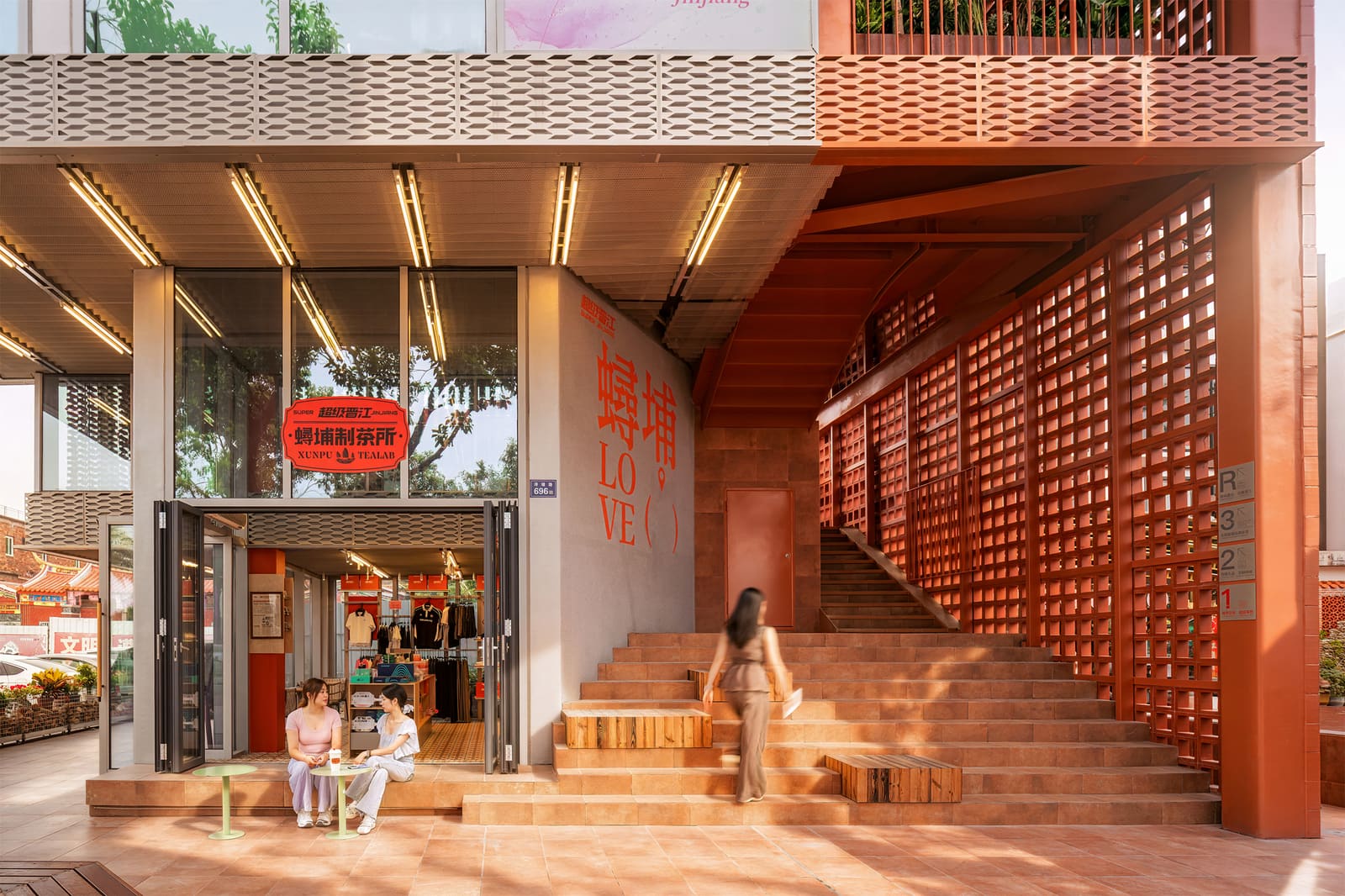
COLORFULL YUJING DESIGN's Super Jinjiang flagship, completed in 2026, attempts to collapse that distance. Occupying just 275 square meters in Xunpu, the project functions less as a conventional store and more as a curated intersection of manufacturing, design, and cultural tourism. Design directors Sunny Zhao and Ryo Ono have crafted a space that treats local production not as background context but as the primary narrative material.
Compact Footprint, Expanded Program
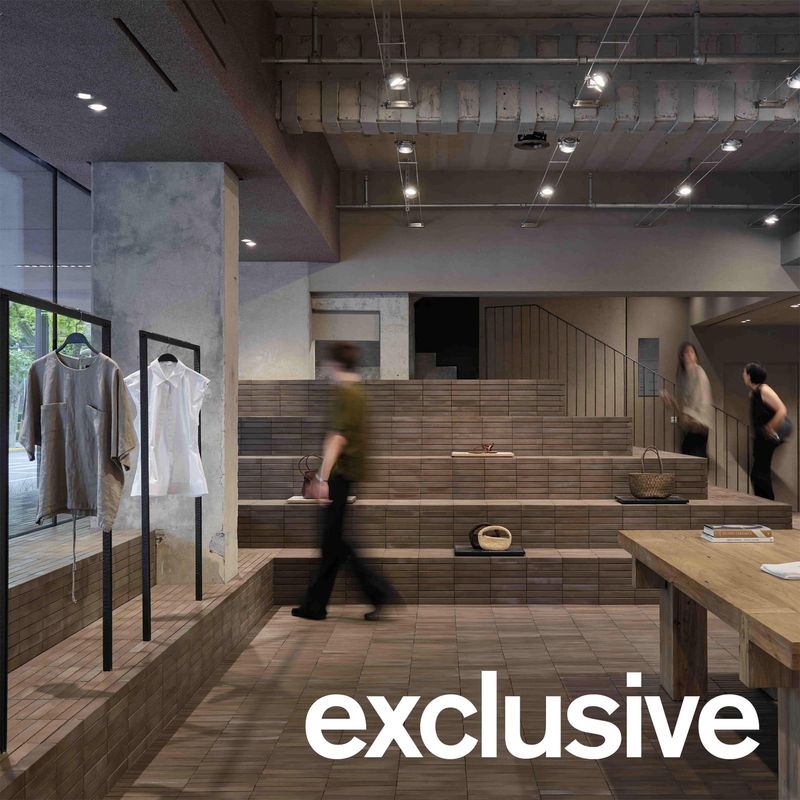
The store's modest scale demands spatial economy. Rather than segregating retail, exhibition, and gathering zones, the interior flows between functions. Display fixtures double as circulation guides; material palettes shift to signal programmatic transitions without relying on partition walls. The design team employed a layered approach to vertical space, using ceiling-height variations and suspended elements to create visual complexity within the compact envelope.
This compression is deliberate. In an era when flagship stores often sprawl across multiple floors to broadcast brand scale, Super Jinjiang's restraint reads as editorial discipline. The space privileges curation over inventory volume, a strategy aligned with its broader mission to showcase local brands and design rather than compete with large-format retail typologies.
Material Dialogue: Industrial and Vernacular
COLORFULL YUJING DESIGN's material strategy negotiates between Jinjiang's dual identities. Exposed structural elements and raw finishes reference the city's manufacturing infrastructure, while textural warmth - timber accents, woven screens, terracotta tones - evokes the Minnan architectural tradition prevalent in nearby Xunpu. The studio sourced materials from regional suppliers, including Nanchow, reinforcing the project's rootedness in local production networks.
This approach avoids the trap of superficial regionalism. Rather than applying decorative motifs borrowed from historic Minnan houses, the design abstracts spatial and material principles: modular composition, layered transparency, the interplay of solid and void. The result is a contemporary vocabulary that feels coherent with its context without mimicking it.
Retail as Cultural Infrastructure
Super Jinjiang positions itself explicitly as a platform connecting manufacturing, culture, and tourism. The store hosts rotating exhibitions of local design work, pop-up collaborations with Jinjiang-based brands, and programming tied to Xunpu's cultural calendar. This hybrid model reflects broader shifts in retail strategy, particularly in secondary cities where mono-functional commercial spaces struggle to generate sustained foot traffic.
The project's integration with Xunpu's tourism economy is strategic. The village has gained visibility in recent years for its hairpin flower tradition and preserved coastal character, drawing visitors seeking alternatives to standardized heritage sites. By embedding retail within that cultural ecosystem, Super Jinjiang leverages existing visitation patterns while contributing new programming that extends beyond souvenir commerce.
Precedent and Divergence
The project invites comparison with other retail interventions that foreground regional production. In Japan, studios like Schemata Architects have explored similar territory with stores for D&Department and other platforms dedicated to local craft. In China, initiatives such as Shenzhen's Design Society and various "maker district" projects have attempted to bridge manufacturing and cultural programming, though often at larger scales and with more institutional backing.
What distinguishes Super Jinjiang is its compactness and its focus on a specific industrial sector. Where many culture-retail hybrids default to artisanal craft or design collectibles, this project centers footwear and apparel - categories often dismissed as commodity production. The gamble is that visitors will engage with these goods differently when presented through a spatial and curatorial lens that foregrounds design authorship and manufacturing provenance.
The Limits of Scale
The flagship's success as a spatial and programmatic prototype does not guarantee replicability. Its intimate scale and site-specific integration with Xunpu's cultural landscape are assets that would be difficult to translate to other contexts. Expansion to additional locations risks diluting the model's core premise: that manufacturing identity and cultural heritage can be synthesized in a retail format that feels neither exploitative nor didactic.
Moreover, the project's reliance on sustained tourism to Xunpu introduces vulnerability. Cultural destinations built on social media visibility can experience volatile visitation patterns. If foot traffic wanes, the store's hybrid programming may struggle to support itself, particularly if local brands prioritize more conventional retail channels.
A Regional Model with Broader Implications
At World Archi Design, we've been tracking the emergence of retail projects that reject placelessness in favor of hyper-local specificity. Super Jinjiang represents a compelling iteration of that impulse, particularly in its willingness to center industrial production rather than retreat into nostalgia or artisanal exceptionalism.
The project's value lies not in formal innovation - the material palette and spatial moves are competent but not groundbreaking - but in its programmatic ambition. By treating a 275-square-meter retail space as infrastructure for a larger conversation about manufacturing, culture, and place, COLORFULL YUJING DESIGN has produced a model that other secondary cities with strong industrial identities might study. Whether that model proves durable will depend on factors beyond architecture: brand commitment, local government support, and the evolution of Xunpu's cultural economy.
For now, the flagship stands as a disciplined exercise in spatial storytelling, one that resists the twin temptations of generic brand language and superficial regionalism. In a retail landscape dominated by scale and replicability, that restraint alone is worth noting.
Save this story. A free account keeps your reading list and the 07:00 email in one place.
CREATE FREE ACCOUNT →SIGN IN