
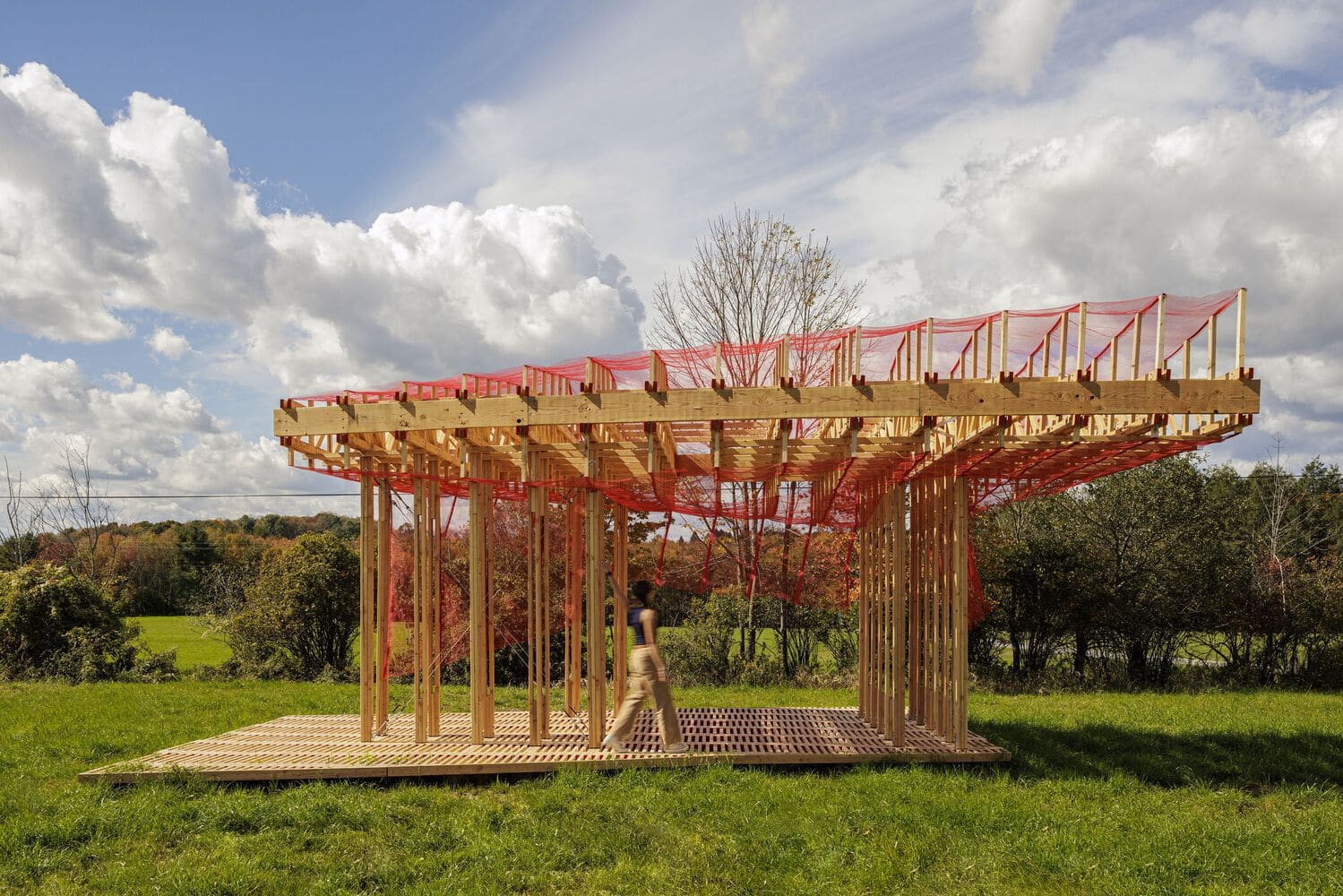
A Material Both Ancient and Urgent
Wood has accompanied human building for millennia, yet its position in contemporary architecture is anything but settled. Questions of carbon sequestration, supply chain ethics, forest management, and end-of-life disassembly now accompany every specification. At the same time, digital fabrication tools from CNC routers to robotic arms have unlocked geometries and joinery once impossible by hand, prompting a reconsideration of timber not as a traditional craft material but as a high-performance substrate for computational design.
Caught between these twin pressures, architectural education has found in timber pavilions an ideal vehicle for inquiry. Unlike hypothetical studio projects or purely theoretical research, full-scale pavilions demand that students reconcile environmental ambition with structural reality, navigate fabrication constraints, and confront the labor, cost, and coordination inherent in building. The result is a growing body of work that treats the university campus not as a closed pedagogical space but as an active laboratory for material research.
Digital Fabrication Meets Low-Impact Thinking
One of the defining characteristics of recent academic timber work is the convergence of computational design and ecological accountability. Students are learning to write parametric scripts that optimize material use, minimize waste, and enable flat-pack assembly, all while considering the embodied energy of transportation, adhesives, and surface treatments. CNC milling allows complex interlocking joints to replace metal fasteners, reducing reliance on fossil-fuel-derived connectors and simplifying disassembly for reuse.
This synthesis is not merely technical. It reflects a broader shift in architectural education toward what might be called "post-digital craft," a mode of practice that accepts digital tools as integral to making but insists that automation serve ecological and social goals rather than formal novelty alone. In this context, the pavilion becomes a test of whether computational methods can support circular economies, local material networks, and hands-on student engagement rather than displacing them.
Structural Systems as Pedagogical Experiments
Timber pavilions in academic settings often function as scaled prototypes for structural systems that might otherwise remain speculative. Reciprocal frames, geodesic shells, stressed-skin panels, and tensegrity hybrids all appear regularly in student work, each offering distinct lessons about load path, material efficiency, and assembly sequence. Because these projects are temporary and non-commercial, they can afford a degree of risk that professional practice rarely permits.
The educational value lies not only in success but in calibrated failure. A joint that proves too flexible under load, a connection detail that requires unanticipated shimming, or a fabrication tolerance that compounds across components all become teachable moments. Students learn to iterate not in the abstract space of digital models but in the physical domain of wood grain, moisture content, and site conditions, a form of situated knowledge that studio pedagogy alone cannot provide.
Bio-Based Materials and Hybrid Assemblies
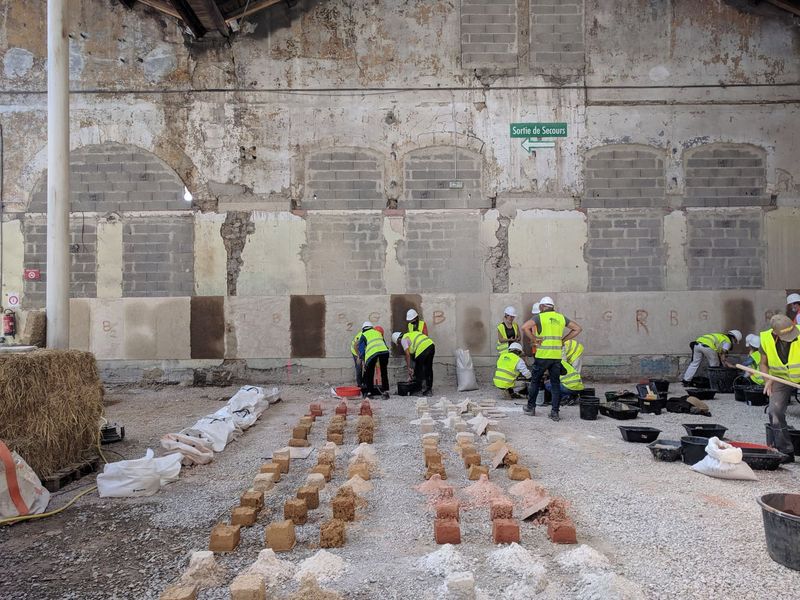
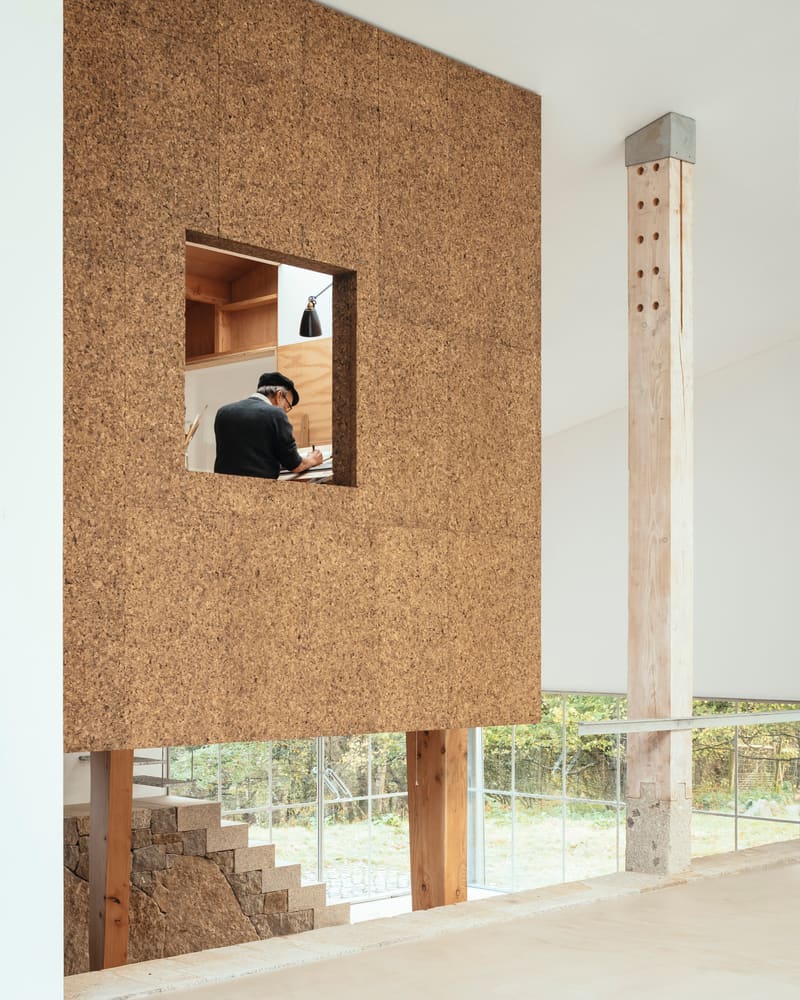
Beyond solid timber, many university projects are incorporating engineered wood products, laminated composites, and bio-based binders into their material palettes. Cross-laminated timber, laminated veneer lumber, and wood-fiber insulation panels offer predictable performance and dimensional stability, while mycelium composites, hemp-lime casts, and agricultural waste aggregates introduce questions of regional availability and biodegradability.
These hybrid assemblies challenge students to think beyond the single-material paradigm that often dominates architectural education. A pavilion might pair a CLT frame with a woven bamboo skin, or a glulam arch with a hempcrete infill, each material selected not for aesthetic coherence but for its role in a broader ecological and economic system. The goal is not purity but intelligence: a legible logic that connects material choice to place, climate, and lifecycle.
Collaboration Beyond the Architecture School
An encouraging trend in academic timber work is the increasing involvement of artists, ecologists, foresters, and fabricators in the design process. Some programs invite sculptors to co-lead pavilion studios, introducing students to non-architectural modes of spatial thinking. Others partner with forestry departments to source wood directly from university-managed woodlands, embedding questions of stewardship and land use into the curriculum.
These collaborations expand the definition of what a timber pavilion can be. It might serve as a community gathering space, a field station for ecological monitoring, or a backdrop for performance, its architectural function inseparable from its social and environmental roles. In this model, the pavilion is not an end in itself but a node in a network of relationships among people, materials, and landscapes.
The Question of Permanence and Reuse
One tension inherent in academic timber pavilions is their intended lifespan. Designed as temporary structures, many are dismantled after a semester or a year, raising questions about whether such projects truly model sustainable practice or merely rehearse it. Some schools have responded by designing for disassembly from the outset, cataloging components for future reuse, or donating structures to community organizations. Others treat the pavilion as a material bank, with timber members entering a campus inventory for subsequent projects.
This attention to afterlife is more than logistical. It reflects a pedagogical commitment to teaching students that design responsibility extends beyond inauguration. The detailing required for reversible joinery, the documentation needed for future reassembly, and the communication required to transfer a structure to new stewards are all skills that prepare students for a construction industry increasingly focused on circularity and deconstruction.
Regional Variations and Local Economies
Timber pavilion pedagogy is not monolithic. Projects in Scandinavia often emphasize engineered wood products and prefabrication, reflecting regional industrial capacity. Work in North America may focus on dimensional lumber and platform framing, engaging the continent's dominant construction logic. In regions with less established timber industries, students might experiment with hybrid systems that combine wood with earth, stone, or salvaged materials, responding to local resource landscapes.
These regional differences are not limitations but opportunities. They ground abstract discussions of sustainability in the specificities of supply chains, labor practices, and building codes. A student who learns to design with locally milled lumber, accounting for its variable dimensions and moisture content, acquires a form of material literacy that transcends any single project. The pavilion becomes a lens through which to understand how architecture is embedded in economies, ecologies, and cultures.
Toward a Pedagogy of Material Intelligence
At World Archi Design, we've been tracking how academic timber pavilions function as sites of material research, and what emerges is less a set of formal outcomes than a shared methodological disposition. These projects treat wood not as a neutral medium but as an active agent with environmental, structural, and cultural dimensions. They insist that digital fabrication be accountable to ecological goals. They value hands-on construction as a form of knowledge production. And they recognize that architectural education must prepare students not only to design buildings but to participate in the material systems that make buildings possible.
The pavilion, in this context, is not a typology but a format: a time-limited, full-scale experiment that allows students to test ideas, develop craft, and contribute to ongoing conversations about timber's role in a post-carbon future. Whether these projects ultimately influence professional practice remains to be seen. What is clear is that they are cultivating a generation of architects who understand wood as both a historical legacy and an urgent contemporary question, and who possess the technical, ecological, and collaborative skills to engage that question with rigor and imagination.
Photo: Alon Koppel
Save this story. A free account keeps your reading list and the 07:00 email in one place.
CREATE FREE ACCOUNT →SIGN IN