
The Continent That Refuses Sovereignty
There is no place on Earth quite like Antarctica. It supports no government, sustains no permanent civilian population, generates no economy, and since the signing of the Antarctic Treaty in 1959, recognizes no legal owner. Every territorial claim lodged before that date remains frozen in diplomatic suspension. On paper, the continent represents humanity's largest experiment in shared stewardship, a true commons carved from ice and rock.
Yet walk through any of the more than seventy research stations scattered across its surface, and you will find something that complicates that idealized vision. One station operates a school. Another maintains a chapel. A third has recorded eleven births in its civil registry since 1978, and a cemetery marks the graves of those who never left. These are not the trappings of temporary scientific outposts. They are the infrastructure of permanence.
At World Archi Design, we have long observed how architecture functions not only as shelter but as claim, as presence, as argument. In Antarctica, where law explicitly prohibits ownership, built form becomes the language through which nations assert what they cannot legally declare. The stations are not accidental. They are deliberate, expensive, and architecturally significant acts of territorial inscription.
The Cost of Presence
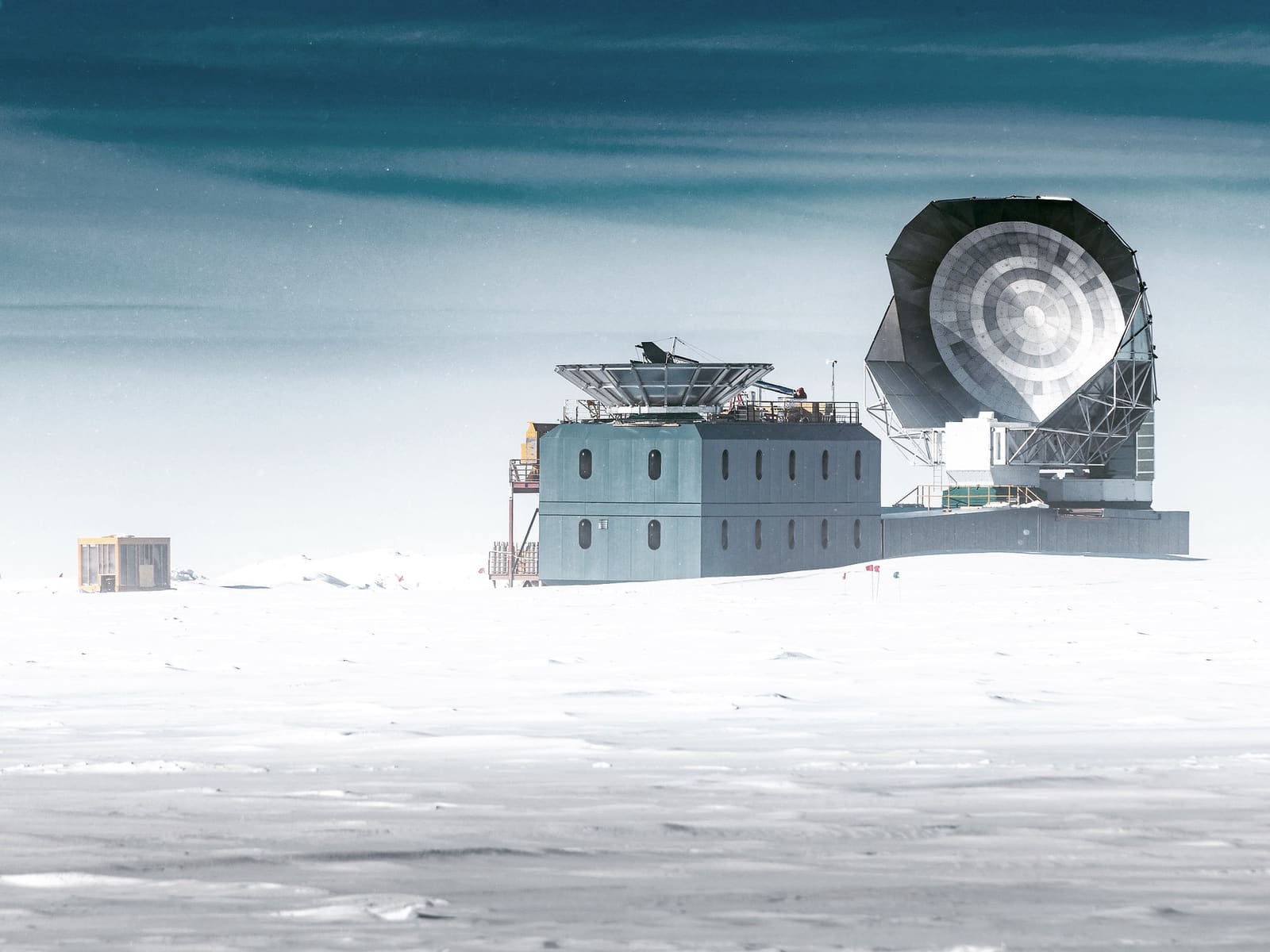
Building in Antarctica is an exercise in logistical extremity. Materials must be shipped or flown thousands of kilometers. Construction windows are narrow, dictated by weather that can shut down operations for months. Supply chains are fragile, and every structure must withstand temperatures that plunge below negative fifty degrees Celsius, winds that exceed two hundred kilometers per hour, and isolation that makes repair or evacuation nearly impossible.
A single research station can cost tens of millions of dollars to construct and millions more each year to maintain and supply. That expenditure demands justification, and the official answer is always science: climate monitoring, glaciology, atmospheric research, biological surveys. These are legitimate endeavors, and Antarctica offers unique conditions for certain kinds of observation.
But the same atmospheric data could, in many cases, be collected elsewhere, closer to home, at a fraction of the cost. The same ice cores could be drilled in Greenland. The same penguin colonies studied in sub-Antarctic islands. What cannot be replicated elsewhere is the geopolitical value of maintaining a visible, operational, year-round presence on a continent that seven nations have claimed and dozens more have an interest in.
Architecture as Geopolitical Grammar
The design and program of Antarctic stations encode more than functional requirements. They encode intent. A station that houses only rotating teams of scientists for a few months each year is one kind of statement. A station that includes a post office, a chapel, or a school is another. The latter speaks not of temporary research but of habitation, of community, of rootedness.
Consider the implications of a civil registry office. Births recorded on Antarctic soil, even under the suspended legal framework of the Treaty, establish a narrative of belonging. They suggest continuity, lineage, a future. Similarly, a cemetery does not merely mark death; it marks the land itself as a place where a nation's citizens rest, a subtle but potent form of consecration.
These programmatic choices are architectural decisions. They shape the massing, the circulation, the symbolic weight of the station. A chapel, however modest, introduces a vertical element, a spire or a cross, a visual marker that can be read from a distance. A school requires classrooms, play areas, domestic spaces that soften the industrial severity typical of polar research infrastructure. These are not incidental additions. They are calculated gestures, designed to project permanence in a landscape where permanence is both impossible and, under international law, forbidden.
Precedent and the Architecture of Claim
The use of architecture to assert territorial presence is hardly new. Colonial powers have long deployed built form as a tool of occupation, from forts and trading posts to missions and administrative centers. The typology of the remote outpost, the flag-raising ceremony, the construction of a church or a school in contested or unclaimed territory are all familiar strategies from earlier eras of imperial expansion.
What distinguishes Antarctica is the legal paradox. The Antarctic Treaty System does not nullify the earlier claims of Argentina, Chile, the United Kingdom, Norway, France, Australia, and New Zealand. It simply suspends them, agreeing that no new claims will be recognized and no existing claims enforced. This creates a peculiar condition: a landscape where sovereignty is asserted through presence rather than law, where architecture becomes the primary medium of geopolitical expression because legal instruments are deliberately muted.
In this sense, Antarctic stations resemble less the research facilities they claim to be and more the frontier outposts of the nineteenth century, structures built not only for their stated function but to mark, to occupy, to make visible a nation's interest in a space that others also desire.
Material and Tectonic Strategies
The material choices for Antarctic construction are tightly constrained by climate and logistics. Prefabrication is common; modules are built elsewhere and assembled on site. Steel frames, insulated panels, triple-glazed windows, and elevated foundations to prevent snow accumulation are standard. The aesthetic that results is often utilitarian, shaped more by engineering necessity than by architectural ambition.
Yet even within these constraints, there are differences. Some stations adopt a modular, expandable parti, designed to grow incrementally as funding and need allow. Others are conceived as singular, iconic structures, their forms distinctive enough to be recognized in photographs, to become symbols. The Halley VI Research Station, for instance, uses hydraulic legs to lift its modules above accumulating snow, a tectonic solution that also produces a striking, almost sci-fi silhouette. The design is functional, but it is also memorable, media-friendly, a piece of architectural branding for the nation that built it.
Color, too, is a tool. Bright reds, oranges, and blues stand out against the white monotony of the ice, making stations visible from the air and in photographs. This is practical, but it is also symbolic: a declaration of human presence in a landscape that otherwise erases it.
The Question of Legitimacy
The Antarctic Treaty was a Cold War compromise, a rare moment of international cooperation that set aside territorial disputes in the interest of scientific collaboration and environmental protection. It has largely succeeded in preventing military activity and preserving the continent as a zone of peace and research. But it has not eliminated the underlying competition for influence.
Stations serve as proxies for claims that cannot be made explicit. The more stations a country operates, the more personnel it rotates through, the more infrastructure it builds, the stronger its de facto presence becomes. Should the Treaty ever weaken or expire, that presence could become the basis for renewed legal claims. Architecture, in this context, is not neutral. It is a form of occupation, a way of writing a nation's name onto the land.
This raises questions about the ethics of design. Architects working on Antarctic projects are not simply solving technical problems. They are participants in a geopolitical strategy, whether they acknowledge it or not. The decision to include a chapel, a school, or a registry office is not made by architects alone, but architects give those decisions physical form, and in doing so, they shape the narrative that the architecture tells.
The Illusion of the Commons
We often speak of Antarctica as a commons, a space held in trust for all humanity. The Treaty supports that ideal in principle, but the reality on the ground, or rather, on the ice, is more complicated. The continent is not equally accessible to all nations. Only those with the resources to build and maintain stations, to operate icebreakers and aircraft, to fund scientific programs and logistical networks, can participate meaningfully in Antarctic affairs.
This creates a de facto hierarchy. Wealthy nations with advanced polar infrastructure have a voice in Antarctic governance that less wealthy nations do not. The architecture of the stations is both a reflection of that inequality and a mechanism for perpetuating it. To be present is to matter; to be absent is to be irrelevant.
In this sense, the architecture of Antarctica is less a commons than a club, one whose membership is determined by the ability to build and sustain a built environment in one of the most hostile places on Earth. The stations are the entry fee, and the design of those stations, their scale, their program, their visibility, determines the weight of a nation's seat at the table.
Looking Forward
The Antarctic Treaty is up for review in the coming decades, and the pressures on it are mounting. Climate change is making the continent more accessible, opening new routes for shipping and potentially for resource extraction. As ice shelves collapse and temperatures rise, the logistical barriers that have protected Antarctica from large-scale exploitation are eroding.
If the Treaty weakens, the architecture already in place will matter. The nations with the most stations, the most infrastructure, the longest record of continuous presence will have the strongest hand to play. The schools, the chapels, the registry offices will become evidence in a renewed contest over who belongs there, who has invested, who has, in some meaningful sense, inhabited the continent.
Architecture, in other words, is not a neutral record of scientific activity. It is a form of preparation, a way of positioning for a future in which the legal status of Antarctica may change. The buildings we construct there now are arguments we are making to our future selves, inscriptions we hope will be read as precedent when the time comes to decide what Antarctica is and who it belongs to.
For now, the ice remains a commons in name. But the architecture tells a different story, one of nations staking invisible lines, building permanent homes in a place that belongs, officially, to no one.
Save this story. A free account keeps your reading list and the 07:00 email in one place.
CREATE FREE ACCOUNT →SIGN IN