
A Living Archive of Venetian Craft
There is something uniquely instructive about staying in a city where the vernacular architecture hasn't been stripped away for tourist consumption. Venice remains one of the few European centers where residential interiors still carry forward craft traditions that elsewhere exist only in museums. The city's short-term rental market, rather than diluting this heritage, has become an unexpected vehicle for its preservation.
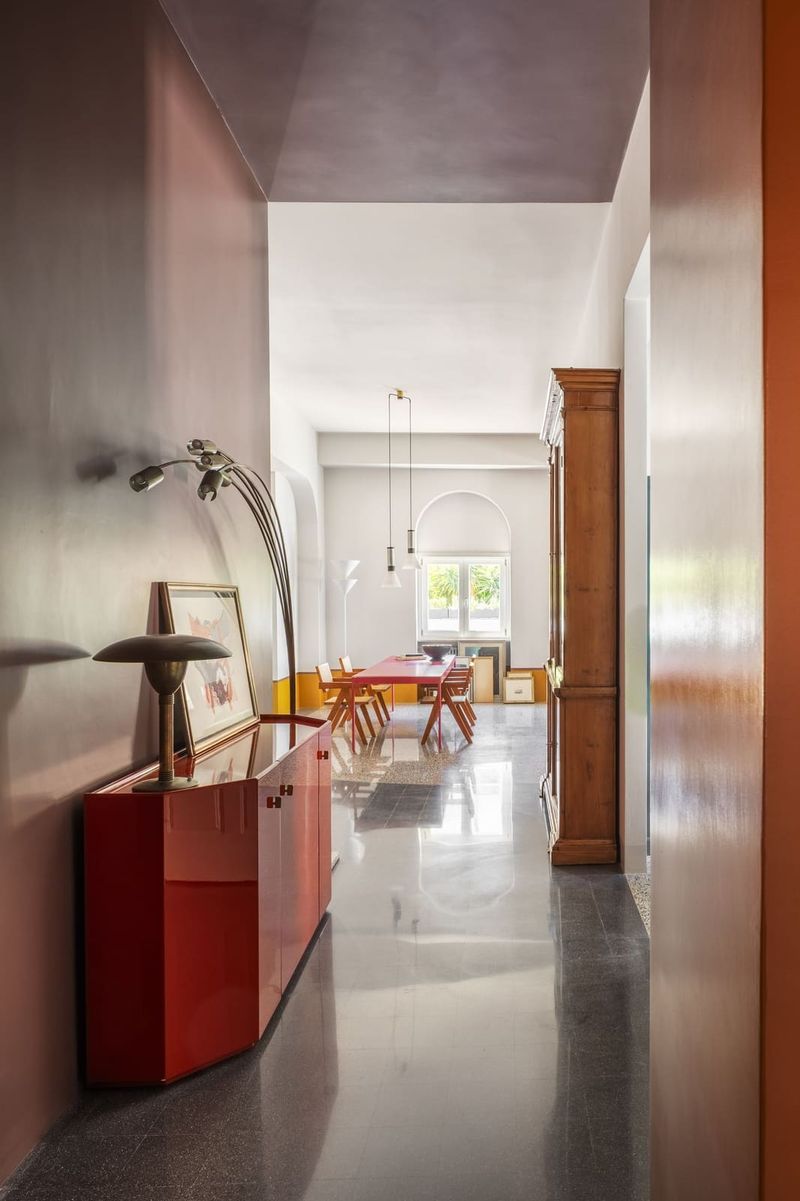
We've observed across multiple restoration projects that terrazzo flooring, a technique refined in Venice during the 15th century, appears with remarkable frequency in these homes. The composite stone method, labor-intensive and requiring specialized knowledge, survives not as decorative nostalgia but as functional infrastructure. In apartments throughout Cannaregio and Dorsoduro, these floors remain intact, their geometric patterns and aggregate compositions offering tactile evidence of pre-industrial construction methods.
The preservation extends beyond surfaces. Gothic and Moorish fenestration, exposed timber ceiling systems, and hand-carved joinery persist in properties that have undergone contemporary renovations. This coexistence of old and new presents a case study in adaptive reuse that balances heritage protection with livability.
Material Authenticity in Contemporary Interiors
At World Archi Design, we've been tracking how Italian designers approach historical buildings, and the Venetian model offers instructive contrasts to more aggressive renovation strategies seen elsewhere. Rather than concealing original materials behind drywall or replacing them entirely, many of these apartments integrate historic elements as focal points within modern spatial planning.
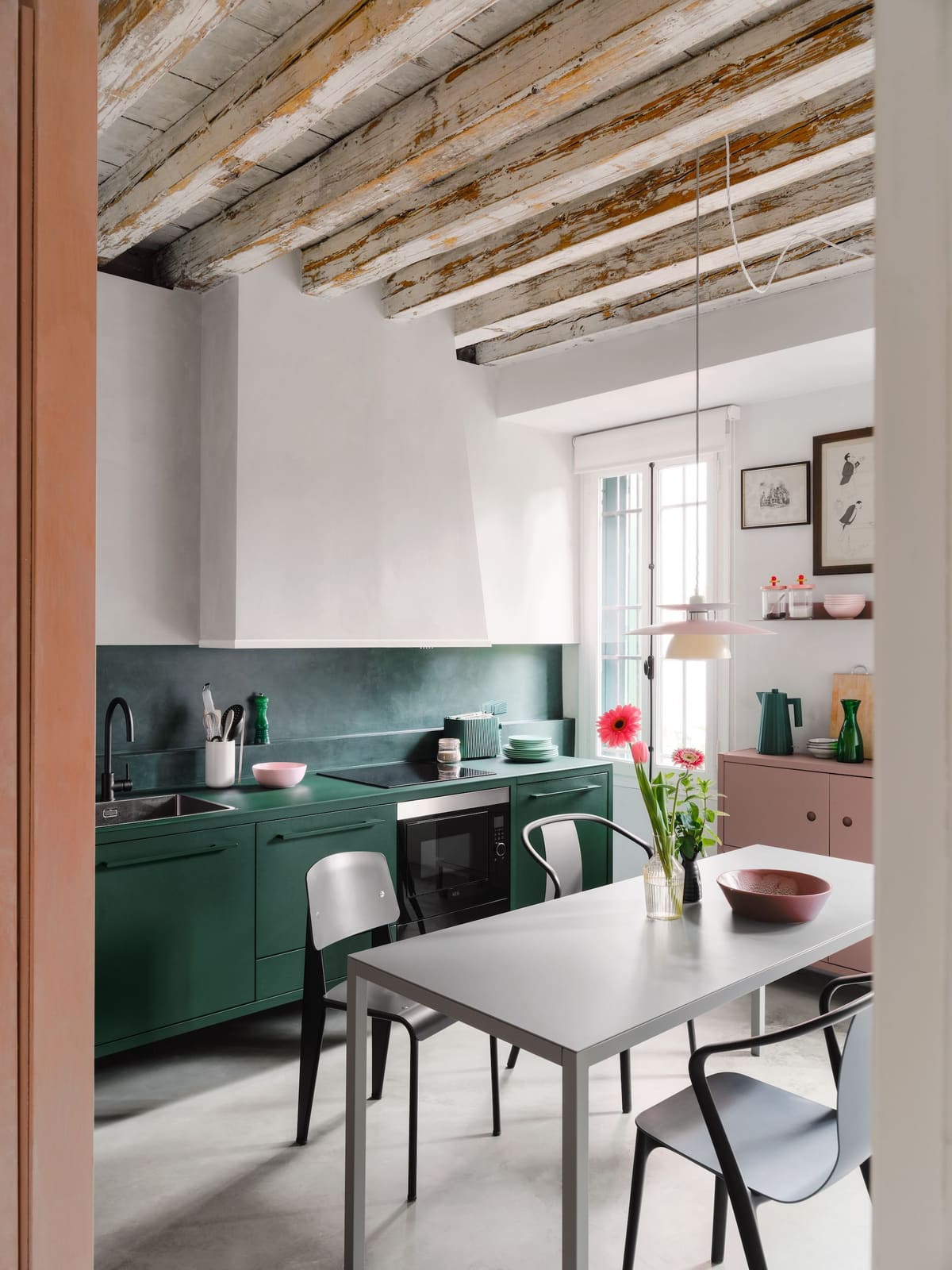
Exposed brickwork in canal-side properties, for instance, isn't treated as accent texture but as structural evidence. Wood beam ceilings remain visible not for aesthetic effect but because the tectonic system demands it. This honesty of material extends to more recent interventions: concrete floors in 18th-century townhouses, contemporary cabinetry by firms like Valcucine installed alongside marble fireplaces, midcentury furnishings positioned against centuries-old plasterwork.
The design logic resists pastiche. Where new elements appear, they announce themselves clearly rather than attempting period mimicry. Arched doorways in renovated spaces employ clean geometries that reference but don't replicate historical forms. The result is a layered interior language that acknowledges multiple timelines without subordinating one to another.
Spatial Typologies and Urban Density
Venice's residential fabric imposes specific constraints that shape interior organization. Narrow building footprints, irregular floor plates, and the absence of vehicular access produce spatial solutions rarely encountered in other European cities. Multi-story townhouses, common in the rental market, distribute program vertically rather than horizontally, a typology that predates but anticipates contemporary urban housing strategies.
Private courtyards and roof terraces, prized amenities in these properties, function as essential breathing space within the city's dense urban grain. These outdoor rooms, often walled or elevated for privacy, create microclimates that mediate between public canal life and domestic interiority. The design of these transitional zones, whether planted gardens or paved dining areas, reflects a sophisticated understanding of how outdoor space operates in a city built on water.
The generous ceiling heights found in many palazzo conversions, a legacy of pre-modern ventilation strategies, now provide volume that contemporary interventions can exploit. Mezzanines, loft sleeping areas, and vertical storage systems leverage this spatial surplus in ways that maintain the proportional character of the original rooms.
The Murano and Burano Influence
Venice's satellite islands have long functioned as centers of specialized craft production, and their influence permeates the city's residential interiors. Murano glasswork appears not merely as decorative objects but as integrated architectural elements: lighting fixtures, door hardware, and custom tableware that carry forward techniques developed over centuries.
Burano lace, though less structurally embedded, signals a broader textile tradition that informs contemporary fabric choices in these spaces. The color palettes associated with Burano's painted houses, saturated and unapologetic, find echoes in the tonal wall treatments and painted ceilings of renovated apartments. This chromatic boldness, rooted in island vernacular, provides an alternative to the neutral minimalism that dominates much of contemporary European interior design.
The relationship between Venice proper and its production satellites illustrates how craft economies shape aesthetic vocabularies. Objects made on Murano or Burano aren't imports but local manufactures, and their presence in residential interiors reinforces regional material culture in ways that globalized supply chains have largely eroded elsewhere.
Preservation Versus Comfort: The HVAC Question
One of the more pragmatic challenges in adapting historic Venetian buildings for short-term occupancy involves climate control. The city's humid subtropical conditions, combined with masonry construction that predates modern moisture management, create environments where air conditioning becomes a contentious addition.
Properties that successfully integrate mechanical systems do so by concealing infrastructure within existing cavities or employing ductless mini-split systems that minimize visual and structural impact. The trade-off between thermal comfort and architectural integrity remains a live question in preservation circles, and the rental market has essentially voted for hybrid solutions that prioritize guest experience while attempting to minimize alterations.
Washing machines, another modern expectation, present similar spatial challenges in buildings where plumbing was retrofitted into structures designed around different water management systems. The successful examples we've seen locate these appliances in service areas, former storage rooms, or repurposed closets, maintaining the ceremonial character of primary living spaces.
Design Firms and the Venetian Context
Several Italian design houses have shaped the contemporary interiors found in these renovated properties. De Padova, Gervasoni, and Cassina, all referenced in various listings, represent a Milan-based modern tradition that contrasts with Venice's more ornate historical character. The presence of these firms' work in Venetian apartments signals a deliberate choice to import a different regional aesthetic, one rooted in rationalist principles and craft modernism.
This cross-pollination between Milan's design industry and Venice's architectural heritage creates interiors that feel distinctly Italian but not specifically Venetian. The clean-lined furniture and restrained material palette associated with these manufacturers provide visual counterweight to the Gothic and Byzantine elements embedded in the architecture itself. It's a productive tension, one that prevents the spaces from becoming overly theatrical or frozen in historical reenactment.
Custom-designed furnishings, commissioned specifically for individual properties, represent another approach. When local Venetian architects undertake renovations and design bespoke pieces to fit irregular room geometries, the results tend toward site-specificity that off-the-shelf solutions can't achieve. These interventions, tailored to particular spatial conditions, demonstrate how contemporary design practice can respond to rather than override historical context.
What Residential Interiors Reveal
The broader lesson here extends beyond Venice. Cities facing pressure to monetize their historic building stock through tourism often confront a choice between museum-ification and erasure. Venice's short-term rental market, for all its economic complications, has created a category of preservation that keeps buildings inhabited and maintained while exposing visitors to architectural heritage in functional rather than purely observational contexts.
Sleeping in a room with 15th-century terrazzo underfoot or cooking in a kitchen where exposed timber joinery remains visible offers a different kind of architectural education than guided museum tours provide. The spatial experience, unmediated by curatorial interpretation, allows materials and construction methods to communicate directly.
Whether this model proves sustainable in the long term remains to be seen. The economics of short-term rentals incentivize renovation and upkeep, but they also drive residential displacement and alter neighborhood character. The architectural gains, significant as they are, come with social costs that other cities watching Venice would do well to consider carefully.
Save this story. A free account keeps your reading list and the 07:00 email in one place.
CREATE FREE ACCOUNT →SIGN IN