
The Paradox of Postcolonial Modernism
Independence movements across mid-twentieth-century Africa won political freedom, but the work of nation-building extended far beyond constitutional drafts and parliamentary procedure. Sovereignty demanded a physical presence, a visual vocabulary that could articulate self-determination in concrete and steel. Yet the architectural languages available to these new states carried their own colonial genealogies. Modernism and Brutalism, with their monumental geometries and raw materiality, had emerged from European avant-gardes and post-war reconstruction programs. The question facing architects and political leaders alike was whether these forms could be stripped of their imperial associations and repurposed as expressions of African futurity.
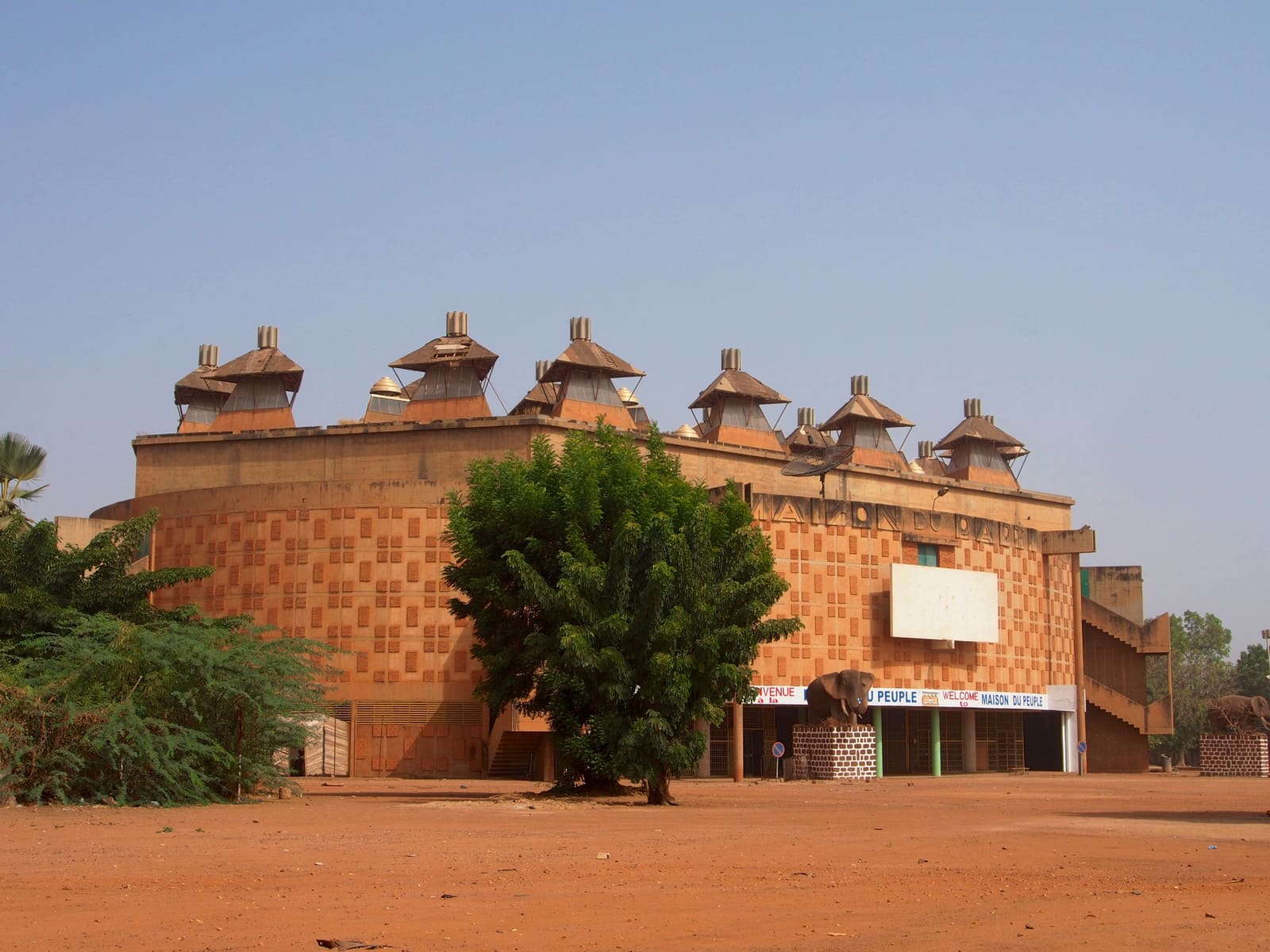
At World Archi Design, we've been tracking how buildings function as instruments of national identity, and few projects illustrate this tension as vividly as the Maison du Peuple in Ouagadougou. Designed by French architect René Faublée and completed in the early years of the Republic of Upper Volta's independence, the building stands as a case study in architectural appropriation, where a European formal language was consciously deployed to signal a break from European dominance.
Brutalism as Political Gesture
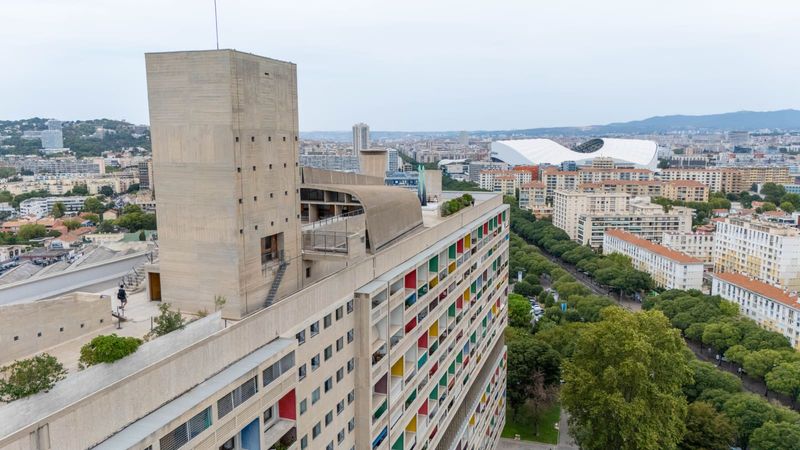
The choice of Brutalism for civic architecture in postcolonial contexts was never ideologically neutral. The style's aesthetic of exposed concrete, repetitive structural bays, and monumental scale had already been associated with state power in Europe, from Le Corbusier's Unité d'Habitation to the civic centers of post-war Britain. In Africa, these same formal strategies were redirected toward different ends: to project permanence, to claim modernity on African terms, and to establish a visual break from the colonial administrative architecture that preceded independence.
The Maison du Peuple, functioning as a people's house or civic assembly hall, exemplified this strategy. Its massing and material palette borrowed from the European Brutalist playbook, yet its symbolic function was distinctly postcolonial. Where colonial government buildings had been designed to enforce administrative control, the Maison du Peuple was intended to house popular sovereignty. The building's name alone signaled a shift in political ideology, even as its formal language remained legible within a transnational modernist discourse.
The French Upper Volta Context
The territory that would become Burkina Faso entered French colonial administration in 1901, following military campaigns that subdued Mossi resistance and captured Ouagadougou. Organized as French Upper Volta within the broader French West Africa federation, the region remained under colonial rule until the wave of African independence in 1960. That year, sixteen African states gained sovereignty, and the Republic of Upper Volta was established.
The architectural legacy of French colonialism in the region had been one of utilitarian administrative buildings and infrastructure designed to facilitate extraction and control. Independence created an urgent demand for new typologies: national assembly halls, cultural centers, universities, and other institutions that could embody the aspirations of the new republic. The Maison du Peuple was commissioned within this context, intended to serve as a space for public gathering and civic engagement.
Authorship and the Colonial Architect
One of the most striking aspects of the Maison du Peuple is that it was designed by René Faublée, a French architect. This was not unusual; across postcolonial Africa, many of the most prominent nation-building projects were designed by architects from former colonial powers. The reasons were pragmatic: newly independent states often lacked the infrastructure to train large numbers of architects, and European firms had the technical capacity and international networks to undertake large-scale projects.
Yet this arrangement created its own contradictions. How could a building designed by a French architect be read as an assertion of independence from France? The answer lies in the difference between authorship and appropriation. While Faublée controlled the formal language of the building, the political meaning of that language was determined by its commissioners and users. The Maison du Peuple was not simply a French building transplanted to African soil; it was a deliberate act of architectural borrowing, in which a European style was repurposed to serve African political goals.
This dynamic recalls other postcolonial projects where foreign architects worked in service of nationalist agendas. The tension between architectural form and political content was never fully resolved, but it was productive. The buildings that emerged from this collaboration were hybrid objects, carrying traces of multiple origins and multiple meanings.
Material and Tectonics
The structural and material choices of the Maison du Peuple align with Brutalist principles: exposed concrete frames, modular fenestration, and an emphasis on honest expression of structure. These decisions were partly pragmatic, reflecting the availability of materials and construction techniques in the region, but they also carried symbolic weight. Concrete, with its associations of permanence and modernity, became a preferred material for postcolonial nation-building across Africa and Asia.
The building's massing is assertive without being monumental in the manner of European state architecture. It occupies its site with confidence but does not overwhelm the surrounding urban fabric. This balance reflects a different conception of civic architecture, one that seeks to represent collective identity without resorting to the intimidating scale of colonial government buildings.
Renaming and Reimagining
The Republic of Upper Volta would undergo its own transformation in 1984, when revolutionary leader Thomas Sankara renamed the country Burkina Faso, a name meaning "Land of Upright People" in the Mossi and Dioula languages. This act of renaming was part of a broader effort to decolonize language, culture, and political institutions. The Maison du Peuple, by that time more than two decades old, took on new significance within this reimagined national identity.
Sankara's political project included a critique of the neocolonial relationships that had persisted after formal independence, and his government sought to reorient Burkina Faso's economic and cultural policies toward self-reliance. In this context, buildings like the Maison du Peuple became sites of contested meaning. Could a structure designed in a European idiom be fully claimed as part of an African architectural heritage? The question remains open, but the building's continued use as a civic space suggests that its meaning has been shaped more by its function than by its formal origins.
Precedents and Legacies
The Maison du Peuple sits within a broader lineage of postcolonial civic architecture that grappled with similar tensions. Independence-era buildings across Africa, from Kenzo Tange's conference center in Dakar to the National Theatre in Accra, reveal a pattern of borrowing and adaptation. Modernism's universalist rhetoric made it a flexible tool for nation-building, even as its European origins complicated its symbolic resonance.
We might compare the Maison du Peuple to other Brutalist civic projects of the same period, such as the National Assembly of Bangladesh, designed by Louis Kahn and completed decades later. Both buildings use monumental concrete geometries to express democratic ideals, yet both were designed by foreign architects. The difference lies in how each building has been received and integrated into national narratives. The success of such projects depends less on the identity of the architect than on the building's capacity to accommodate new meanings over time.
The Work of Appropriation
What the Maison du Peuple demonstrates is that architectural language is not fixed. Brutalism, despite its European origins, could be made to serve postcolonial purposes because buildings are not only designed, they are also inhabited, interpreted, and reimagined by their users. The work of appropriation is ongoing, a process that extends far beyond the moment of completion.
This is not to suggest that the contradictions of postcolonial architecture have been resolved. The reliance on European architects and European formal languages in the construction of African national identity remains a subject of debate. But the Maison du Peuple offers a more nuanced picture than simple narratives of cultural imperialism would allow. It is a building that belongs to multiple histories at once, a product of colonial relationships that was nevertheless mobilized in the service of independence.
As we continue to examine the architecture of the mid-twentieth century, the question is not whether postcolonial states should have rejected European modernism outright, but how they transformed it. The Maison du Peuple, with its exposed concrete and civic ambitions, remains a testament to the complex negotiations that shaped the built environment of newly independent Africa.
Save this story. A free account keeps your reading list and the 07:00 email in one place.
CREATE FREE ACCOUNT →SIGN IN