
The Ritual Object Question
We tend to accept that certain objects in our homes will always be ugly. The plastic lighter shoved in a drawer. The mismatched box of matches. The worn-out igniter that clicks ten times before it sparks. These are the tools of small rituals - lighting a candle at the end of the day, igniting incense, setting a mood - and yet we rarely ask whether they deserve the same design attention we lavish on coffee makers or dinnerware.
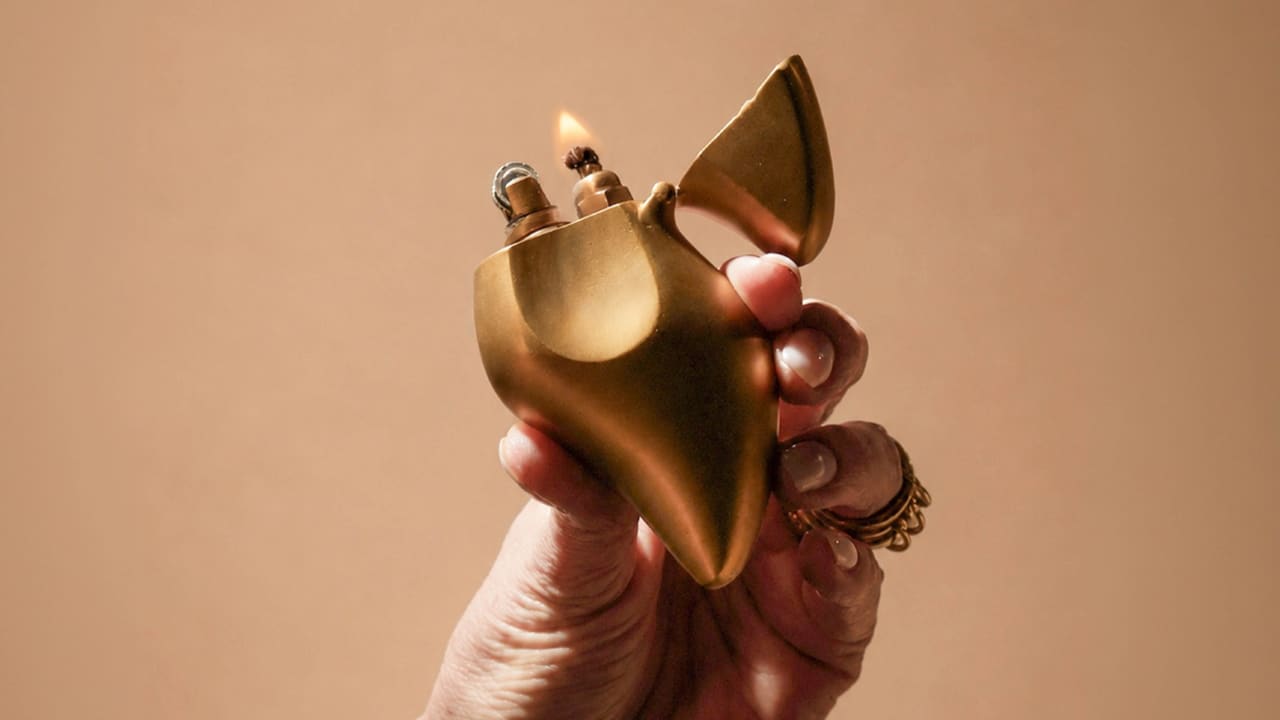
Los Angeles-based brand Dumæ has asked that question, and the answer is a sculptural lighter cast in brass and handcrafted in India. The Kayla Lighter is not trying to hide what it is. Instead, it occupies a curious middle ground: functional enough to live on a countertop, beautiful enough to remain there permanently.
Materiality as Statement
Brass carries weight, both literally and conceptually. It ages visibly, developing patina over time - a quality that runs counter to the disposable logic of most home accessories. The Kayla Lighter is refillable, designed to be kept rather than discarded, and its heft signals that intent. At World Archi Design, we've been tracking a broader shift toward permanence in everyday objects, particularly among brands that position themselves against the churn of fast home goods.
The choice of brass also ties the lighter to a lineage of tabletop objects - candlesticks, trays, hardware - that have historically used the material for its durability and warm finish. Dumæ's piece reads less like a novelty item and more like an extension of that vocabulary, a small sculptural presence that doesn't demand attention but rewards it when given.
Artisan Networks and Brand Identity
Dumæ was founded by Kym Gold and Sakshi Khurana, both of whom bring fashion-industry experience to the home design sector. Gold previously co-founded True Religion, the high-end denim brand, while Khurana worked in operations and product development with Giorgio Armani and Urban Zen by Donna Karan. That background is evident in the brand's approach: a focus on materiality, finish quality, and the idea that objects can carry narrative weight.
The brand's production model relies on artisan partnerships across India, a strategy that echoes the supply-chain thinking of fashion but applied to ceramics, metal, wax, and textiles. The Kayla Lighter represents Dumæ's first venture into sculptural resin, expanding a portfolio that already includes tabletop vessels, serving pieces, candle holders, and lighting.
The brand name itself is a hybrid: Point Dume, the Malibu coastline where Gold spent her formative years, combined with Mae, a nod to motherhood and the women who shaped her creative outlook. It's the kind of origin story that fashion brands have long used to build identity, and Dumæ is translating that impulse into the home goods market with a similar emphasis on personal narrative and place.
The Wider Collection Context
The Kayla Lighter was introduced alongside a broader collection that spans categories - tableware, lighting, decorative objects - but shares a common thread: the transformation of mundane household items into conversation pieces. This is not new territory in design. Alessi built an empire on it. Dieter Rams made it a modernist principle. What distinguishes Dumæ's approach is the pairing of artisanal production with a fashion-inflected sense of finish and detail.
The brand's pieces are designed to move between residential and hospitality contexts, a flexibility that speaks to the blurring of those markets. Hotels increasingly look to residential aesthetics, while homes borrow the curated restraint of boutique properties. Objects that can code-switch between those environments - beautiful but not precious, functional but not utilitarian - occupy a growing niche.
Design as Elevation
There's a recurring idea in the brand's language: elevation. The act of lighting a candle is framed as self-care, and the lighter becomes an instrument of that ritual. This kind of positioning is common in the wellness-adjacent design market, where objects are sold not just for what they do but for the atmosphere they create and the intentions they reinforce.
Whether or not a brass lighter genuinely elevates the experience of lighting a candle is subjective. What's less debatable is that it changes the visual and tactile experience. The weight, the finish, the deliberate form - these are design decisions that ask the user to slow down, to notice the object in hand. In that sense, the Kayla Lighter functions as a small intervention in the speed and disposability that define much of contemporary consumer culture.
Precedents and Parallels
The sculptural lighter is not without precedent. Luxury brands like S.T. Dupont and Dunhill have long produced high-end igniters, though typically for cigarettes rather than candles, and often coded as masculine accessories. Dumæ's version shifts the context: domestic rather than personal, gender-neutral in form, and positioned within a broader homeware collection rather than as a standalone luxury item.
There are also parallels to the work of designers like Fort Standard or Bddw, studios that treat everyday objects - hooks, handles, trivets - as opportunities for material exploration and formal refinement. The Kayla Lighter shares that sensibility: it doesn't reinvent the lighter, but it does reconsider what materials and craft can bring to an object that's typically an afterthought.
The Question of Longevity
Refillability is a selling point, but it's also a test. Will users actually refill a brass lighter, or will it become another beautiful object that eventually stops working and sits unused on a shelf? The success of objects like this depends not just on initial appeal but on sustained utility. The best-designed everyday items are the ones that remain in rotation, that justify their presence through repeated use rather than decorative value alone.
Dumæ's broader ambition - to create pieces that encourage permanence and beauty in daily rituals - hinges on that question. If the Kayla Lighter becomes a fixture rather than a novelty, it will have succeeded in its stated aim. If it becomes a conversation piece that people admire but don't use, it will join the long list of design objects that look better than they live.
For now, the lighter represents a clear point of view: that even the smallest, most disposable objects in our homes can be reimagined, that craft and material have a role to play in the everyday, and that rituals - however minor - might be worth the investment.
Save this story. A free account keeps your reading list and the 07:00 email in one place.
CREATE FREE ACCOUNT →SIGN IN