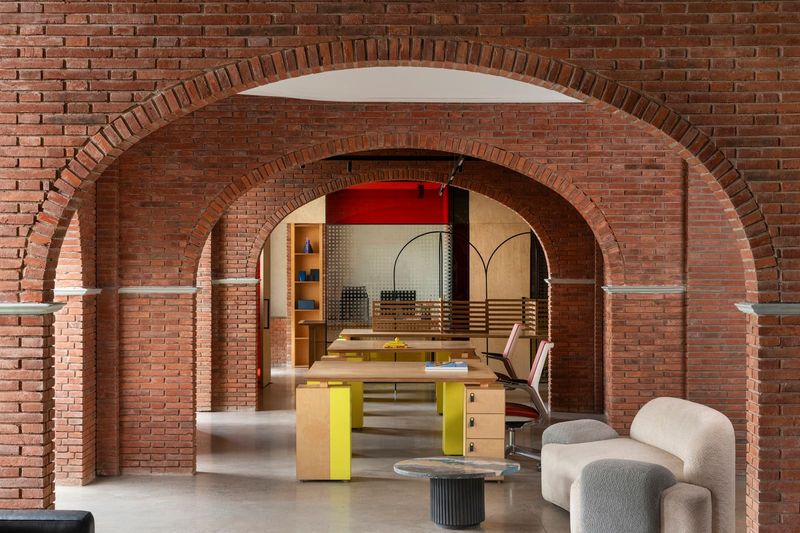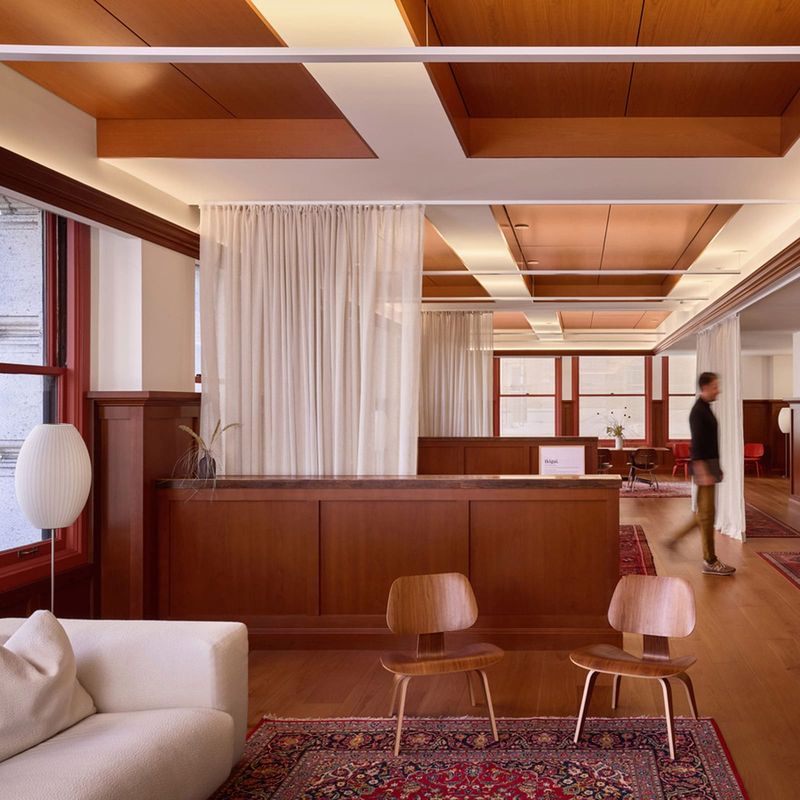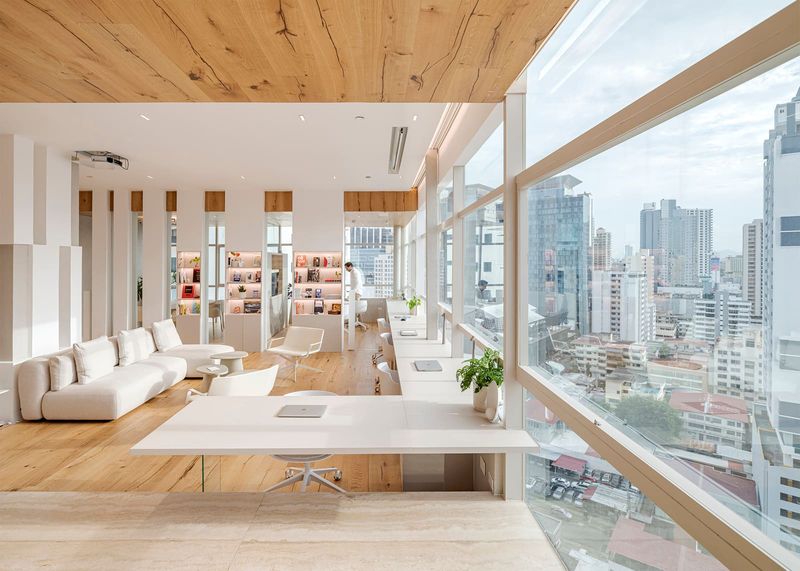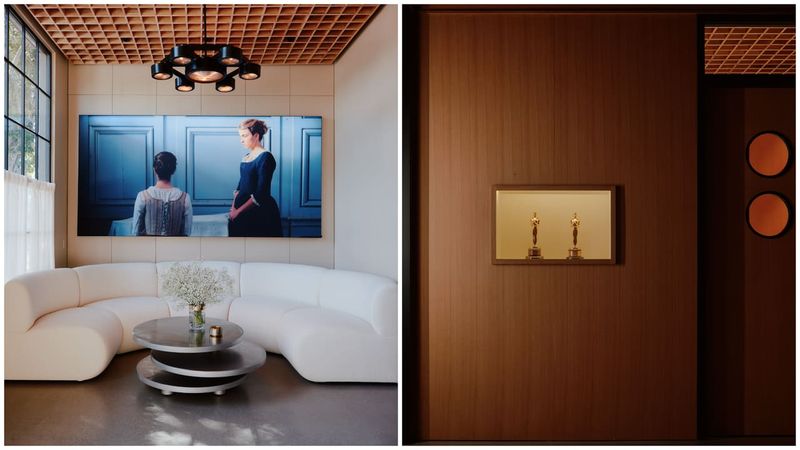

The Shift from Decoration to Spatial Logic
The office interior has undergone a tectonic shift. Where previous generations of workplace design prioritized efficiency and standardization, the contemporary office is increasingly asked to perform cultural work. It must signal values, foster belonging, and communicate identity. Art, once relegated to the margins of this conversation, has moved to the center.
At World Archi Design, we've been tracking this transition for several years. What began as occasional commissions or donated works in lobbies has evolved into a more intentional practice: the use of visual art as a structuring element in workspace interiors. The shift is not merely aesthetic. It reflects deeper changes in how organizations understand their relationship to space, to employees, and to the public.
This is not a story about corporate collections or philanthropic gestures. It is a story about how art functions spatially, how it organizes movement and attention, and how it can either reinforce or challenge the hierarchies embedded in workplace design.
Art as Wayfinding and Spatial Anchor
One of the most pragmatic roles art plays in contemporary offices is wayfinding. In open-plan environments where walls are scarce and sight lines extend across large floorplates, visual differentiation becomes essential. Art provides that differentiation without the weight of permanent architecture.
Consider the use of large-scale murals or site-specific installations at key circulation nodes. These works serve as landmarks, helping occupants orient themselves within otherwise undifferentiated space. The art is not incidental; it is infrastructural. It anchors zones, marks thresholds, and creates memory points that make navigation intuitive.
This approach draws on precedents in public space design, where artists like Richard Serra or Maya Lin have created works that shape how people move through plazas and parks. The same principles apply in the office: a carefully placed sculpture or wall-mounted piece can slow foot traffic, encourage pause, or direct flow toward collaborative areas.
The difference between art as decoration and art as spatial tool lies in intentionality. The former is applied after the fact, often to soften or humanize an environment. The latter is integrated into the design process from the beginning, functioning as part of the spatial parti.
Curation as Editorial Voice
The selection and placement of art in a workspace is an act of curation, and curation is inherently editorial. Every choice communicates something: about taste, about values, about who is imagined as the audience.
Some organizations commission works by local artists, embedding the office within a specific cultural geography. Others rotate pieces from larger collections, treating the workspace as a semi-public gallery. Still others invite employees to contribute, democratizing the curatorial process and blurring the line between maker and viewer.
Each strategy carries implications. A rotating collection suggests fluidity and openness to change. A permanent commission signals investment and rootedness. Employee contributions can foster a sense of ownership, but they also risk diluting a coherent visual identity.
The most compelling examples we've encountered are those where the curatorial voice aligns with the spatial logic of the office itself. In adaptive reuse projects, for instance, art that responds to the building's history or materiality can deepen the connection between past and present. In ground-up construction, works that engage with the architect's formal language can amplify the spatial experience rather than compete with it.
The Politics of Display: Whose Art, Whose Space?
Art in the workplace is never neutral. It reflects power structures, budget priorities, and assumptions about who belongs in the space. The question of whose art is displayed, and how, is therefore a political one.
Historically, corporate art collections favored established, often male, often Western artists. The works served as status symbols, signaling cultural capital and financial stability. In recent years, there has been a push toward greater diversity in both the artists commissioned and the forms of art displayed. This shift is not purely altruistic; it responds to changing demographics within the workforce and a growing awareness that homogeneity can alienate.
But diversity alone does not resolve the underlying tension. The workplace remains a hierarchical environment, and art can either reinforce or interrogate that hierarchy. A single large canvas in the executive suite versus dispersed works throughout open areas sends different messages about access and value.
The most thoughtful approaches recognize this tension and work with it. Some offices integrate art into shared spaces, conference rooms, and circulation corridors, ensuring visibility across the organization. Others create rotating displays that give different voices prominence at different times. A few have experimented with participatory projects, where employees collaborate with artists to produce site-specific works.
Materiality and Scale: When Art Becomes Architecture
There is a threshold at which art stops behaving like an object and starts behaving like architecture. This happens through scale, through materiality, or through integration with the building fabric.
Large-scale textile installations, for example, can function as acoustic treatments, absorbing sound in open-plan environments while adding color and texture. Sculptural elements can define zones without erecting walls, maintaining visual openness while creating psychological boundaries. Light-based works can modulate the atmosphere of a space, shifting its character throughout the day.
These hybrid forms resist easy categorization. They are not purely art, nor are they purely architecture. They occupy a productive middle ground, performing multiple functions simultaneously. This multiplicity is part of their appeal: they solve practical problems while enriching the spatial experience.
The technical demands of such works are considerable. They require collaboration between artists, architects, engineers, and fabricators. They must meet building codes, integrate with mechanical systems, and accommodate maintenance. But when executed well, they demonstrate that art and infrastructure need not be separate concerns.
The Limits of the Gallery Wall
Not all art belongs in the office, and not all offices should aspire to be galleries. There is a risk in over-curating, in treating the workplace as a perpetual exhibition. Employees are not museum visitors; they inhabit these spaces daily, and their needs differ from those of a temporary audience.
The gallery wall, with its white surfaces and carefully controlled lighting, is a specific typology. It privileges certain kinds of art, certain modes of viewing. Applied uncritically to the office, it can create a sterile environment, one that feels more like a showroom than a place of work.
Alternative models exist. Some offices embrace a more eclectic approach, mixing high and low, commissioning and found objects, creating environments that feel layered and lived-in. Others focus on ephemeral or digital works, recognizing that not all art needs to be permanent or physical.
The key is alignment between the art strategy and the broader spatial and organizational culture. A startup with a horizontal structure and a culture of experimentation may thrive with a constantly changing, employee-driven art program. A heritage institution may find greater resonance in works that engage with its history and mission.
Looking Forward: Art, Flexibility, and the Hybrid Office
The rise of hybrid work models complicates the role of art in the office. If employees are present only part-time, who is the art for? How does it justify its cost and its claim on space?
One response has been to treat art as an amenity, something that enhances the office as a destination worth traveling to. Another has been to focus on works that can be experienced digitally, through documentation and virtual tours, extending their reach beyond the physical space.
But there is a third possibility: using art to make the office more adaptable. Modular installations, reconfigurable elements, and works that can be moved or recontextualized allow the space to evolve as needs change. This approach treats art not as a fixed asset but as a flexible tool, one that can respond to the shifting demands of contemporary work.
As we continue to rethink what offices are for, art will play an evolving role. It will not be enough for it to simply beautify or impress. It will need to work harder, performing spatial, cultural, and social functions simultaneously. The most successful workplace interiors of the coming decade will be those that understand art not as an afterthought, but as a core component of the spatial strategy.
Save this story. A free account keeps your reading list and the 07:00 email in one place.
CREATE FREE ACCOUNT →SIGN IN