The Case for Preloved
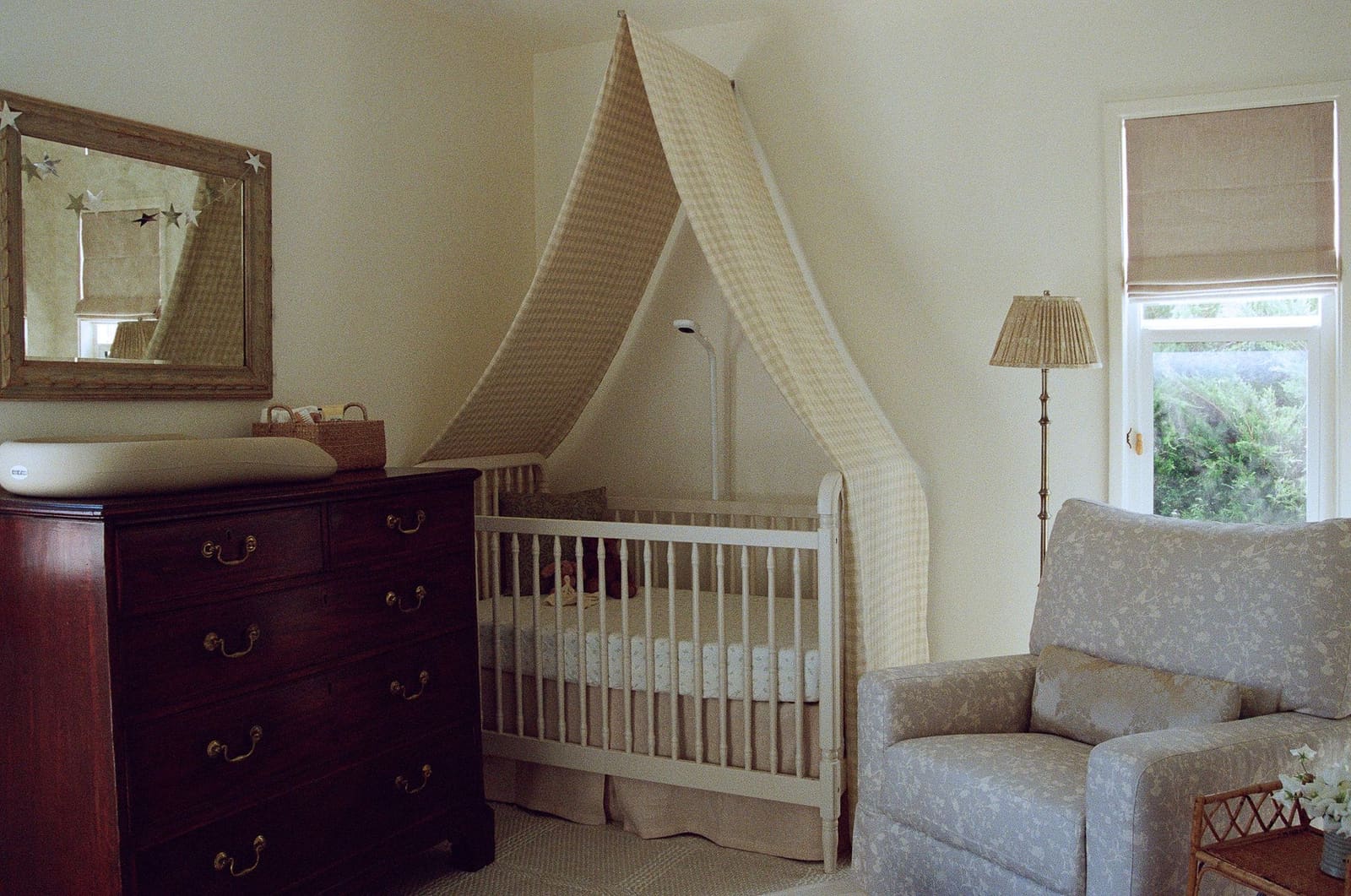
There's a paradox in how we approach nursery design. We treat it as a temporary space, something to be filled with purpose-built furniture destined for resale, yet it's the room where some of our most enduring memories take shape. Designers who work across residential interiors have started applying a different logic: treat the nursery like any other room in the house, which means making space for furniture with history.
The argument isn't sentimental. Vintage and antique pieces offer practical advantages that new nursery furniture rarely can. They've already survived decades of use, which means a few more crayon marks or milk spills won't diminish their value. Patina is built in. And unlike flat-pack solutions engineered for obsolescence, older furniture was often made to last, constructed with joinery techniques and materials that have already proven their durability.
Alex Yeske, an interior designer who has furnished multiple family homes, points out that vintage furniture in children's spaces is inherently forgiving. Because these pieces arrive preloved, parents worry less about damage. Any new scratches simply layer into the object's existing narrative. It's an approach that acknowledges what nurseries actually are: high-use spaces where function and longevity matter more than showroom perfection.
Start With the Chair You'll Actually Use
If there's one piece worth hunting for in the secondhand market, it's the nursing chair. Kendall Knox, cofounder of Olive Ateliers, has watched too many clients panic-buy gliders only to resent them months later. Her alternative: a Napoleon III chair, reupholstered in a fabric that doesn't scream "baby." The silhouette does the same work as a dedicated rocker, but with enough visual presence to migrate to the living room or guest bedroom once the nursing phase ends.
Upholstery is where personality enters. Knox encourages clients to choose prints or textures they'd be happy to see elsewhere in the home, because that chair will eventually leave the nursery. A vintage frame gives you flexibility. You're not locked into the beige linen that came standard. You can commission velvet, choose a bold plaid, or go with something graphic. The chair becomes an investment piece rather than a single-use purchase.
Amanda Knorr of Knosen Antiques has fielded an increasing number of requests from parents looking for antique chests of drawers to double as changing tables. The logic is straightforward: why buy a dedicated changing table when a solid wood dresser does the same job and remains useful long after diapers are gone? Add a changing pad to the top of an English pine chest or a mid-century walnut dresser, and you have storage that transitions seamlessly into a child's room, then a teenager's, and eventually into another part of the house entirely.
Pieces That Grow With the Room
Woven baskets might be the most versatile tool in a nursery. Different shapes serve different functions. A low, flat basket becomes a play surface, inviting a baby to explore textures and objects within easy reach. A tall harvest basket keeps diaper cream, medicine, and other daily essentials contained but visible. As the child grows, these baskets shift roles: toy storage, book bins, art supply holders. They're one of the few nursery purchases that genuinely adapt rather than expire.
The same principle applies to vintage hampers. A wicker bear hamper holds onesies now, but it will eventually corral stuffed animals, then blankets, then whatever a seven-year-old decides is treasure. Whimsy has staying power when it's tied to craft rather than cartoon licensing. These objects don't age out of relevance because they were never designed for a single developmental stage.
Folding screens, often overlooked in nursery planning, offer unexpected utility. They can separate sleep zones from play areas, create privacy in shared rooms, or hide toy clutter without requiring permanent walls. A vintage screen papered in pastoral motifs or abstract prints adds pattern and color while remaining functionally flexible. As the room evolves, the screen moves with it, serving new purposes without looking out of place.
Lighting and Layers
Soft lighting is non-negotiable in a nursery, but there's no reason it has to come from a plug-in nightlight shaped like a cartoon character. A vintage Louis Poulsen wall lamp, designed in the 1960s with oak and woven rattan, casts the kind of warm, diffused light that makes late-night feedings feel less exhausting. Danish modern lighting, in particular, was engineered around the quality of light rather than decorative excess, which makes it ideal for spaces where mood matters.
Mirrors, too, earn their place. A sculptural rattan sunburst mirror by Franco Albini doesn't just reflect light; it becomes a focal point. And because nursery mirrors inevitably end up in the background of countless photos, choosing one with personality means those images age better. The mirror won't feel dated in five years because it was already fifty years old when you bought it.
Rugs anchor a room, but alphabet rugs and cartoon motifs have a short shelf life. A 1920s hooked rug depicting nursery rhyme scenes functions as American folk art. Its small scale makes it ideal for layering beside a crib or defining a reading corner, and its pastoral imagery feels timeless rather than trend-driven. When the nursery becomes a bedroom, the rug stays relevant.
The Furniture Kids Will Actually Use
Children's furniture designed by modernist architects tends to outlast trends. Alvar Aalto's N65 children's chair, first produced in 1935, remains in production because its bent birch frame and L-leg construction work as well now as they did ninety years ago. The vintage versions, often found in saturated colors like poppy red, carry the same structural integrity as contemporary reissues but with the added appeal of having already lived through decades of use.
A rocking elephant from 1960s Denmark channels the warmth and playfulness of Scandinavian design without veering into kitsch. It's a sculptural object that happens to be functional, the kind of piece that becomes a family heirloom not because it's precious but because it's genuinely well made. These objects were designed with the understanding that children's furniture should be as considered as adult furniture, just scaled differently.
Bentwood rocking chairs with ottomans, originally produced by mid-century manufacturers like BioForm, offer ergonomic support that holds up under months of use. Knorr recommends sourcing vintage frames and reupholstering them in fabrics that align with the rest of the home. If the chair works in the nursery, it should also work in the living room five years later. That kind of longevity justifies the upfront cost and the effort of restoration.
Building a Collection, Not a Registry
Vintage children's books are one of the easiest entry points into secondhand nursery furnishings. A first-edition alphabet book from 1939 or a dog-eared Dr. Seuss title from the 1960s brings a different kind of charm than newly printed board books. The illustrations feel hand-drawn because they were. The pages show wear because they've been read. Knox keeps her husband's childhood books on her son's shelf, where they double as artwork until he's old enough to read them himself.
Magazine racks, plentiful at flea markets and antique shops, find new purpose beside a nursery glider. They hold bedtime stories within arm's reach and look considerably better than plastic bins. A bent bamboo rack from the 1970s costs less than most new storage solutions and will outlast them by decades.
The larger shift happening in nursery design isn't about aesthetics alone. It's about rejecting the idea that a baby's room requires an entirely new category of furniture, one that's disposable by design. Vintage pieces resist that logic. They were made to be repaired, refinished, and repurposed. They carry the marks of previous lives, which makes them well-suited to a room where new memories will inevitably leave their own traces.
Choosing secondhand doesn't mean sacrificing safety. Cribs should meet current standards, and any painted furniture from before the 1980s should be tested for lead. But beyond those considerations, there's little reason to default to new. A well-made dresser from the 1920s will outlast most contemporary equivalents. A mid-century rocker will support you through late-night feedings and then serve you for another thirty years in a different room.
The nursery, more than most spaces, benefits from furniture that doesn't try too hard to be cute. Antiques and vintage pieces bring restraint, craft, and a kind of quiet confidence that allows the room to grow alongside the child. They don't announce their function. They simply do their work, accumulate new stories, and remain useful long after the original purpose has shifted. That's not nostalgia. It's just good design.
Save this story. A free account keeps your reading list and the 07:00 email in one place.
CREATE FREE ACCOUNT →SIGN IN