
The Problem With All-New Rooms
There is something unmistakably hollow about a space furnished entirely from this decade. The problem is not quality or aesthetics, exactly. It is that environments composed solely of contemporary production tend to read as staged, not lived in. They lack the textural friction that comes from objects with separate histories converging in one interior.
This is why designers working at the highest level consistently reach for vintage furniture, not as a styling flourish but as a structural choice. A single piece with genuine age can recalibrate an entire room, introducing material depth and visual weight that new manufacture struggles to replicate. The question is not whether to incorporate older pieces, but how to do so without tipping into costume drama.
Bedrooms: Where One Piece Does Heavy Lifting
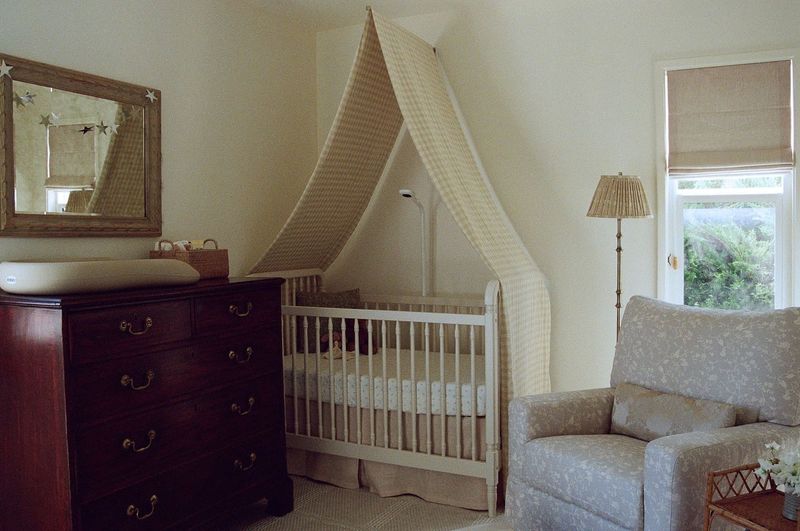
The bedroom offers the most forgiving canvas for vintage experimentation. Because the space is private and personal, it tolerates eclecticism better than public-facing rooms. A Federal-style convex mirror above the headboard, for instance, can anchor the entire composition without requiring additional period references.
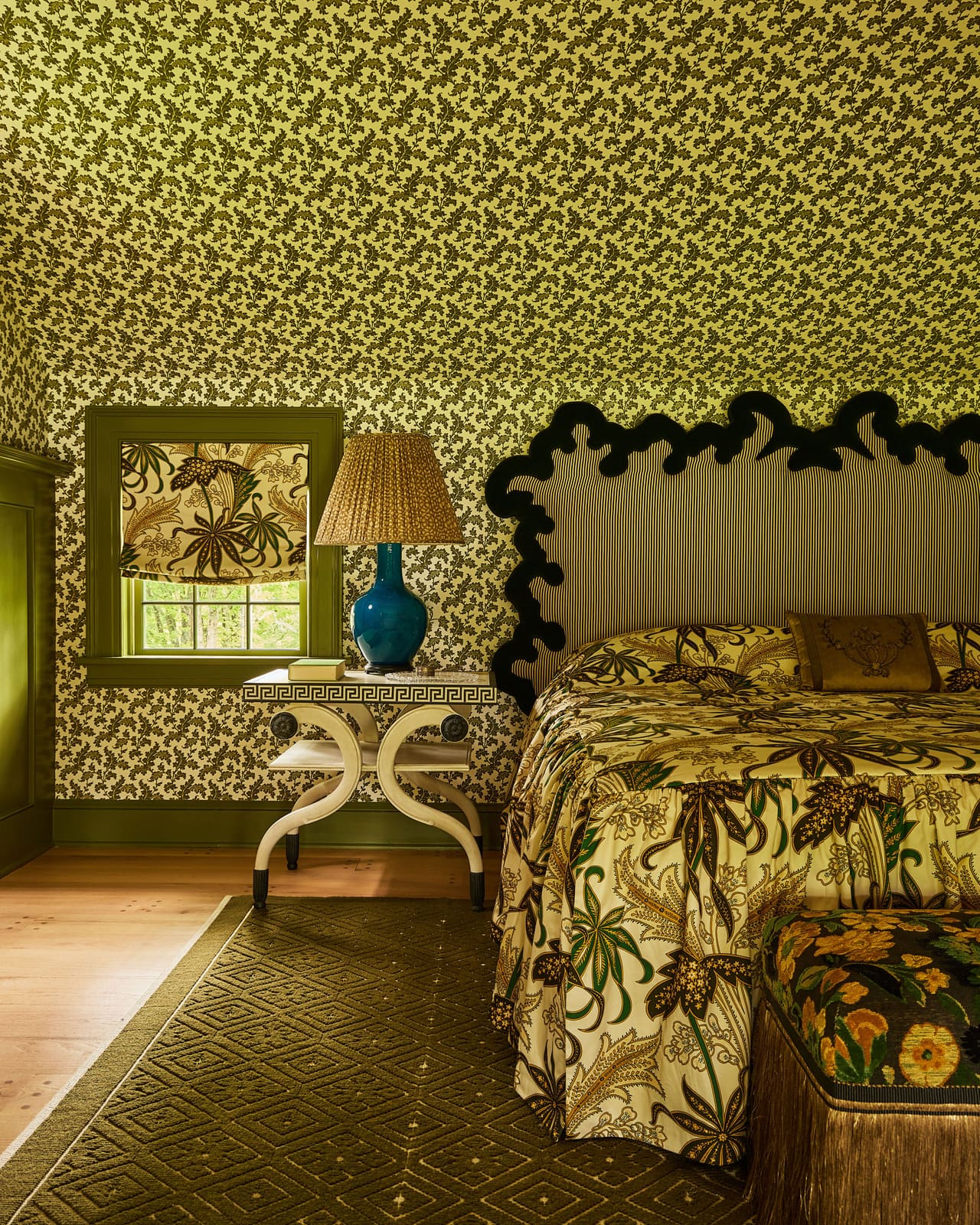
Nightstands present an accessible entry point. Pieces with compelling form, even those needing refinishing, can be transformed through paint or decorative techniques. Greek key detailing applied by a skilled painter can elevate a pair of flea market finds into bespoke bedside furniture. The tolerance for imperfection is higher here; slight surface wear reads as patina rather than damage.
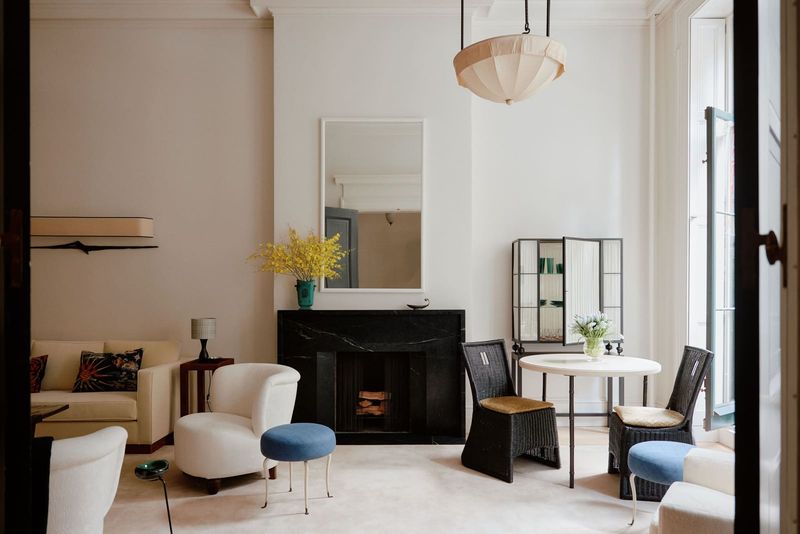
Material choice influences mood. Painted vintage pieces skew casual, while lacquered or richly stained wood furniture introduces formality. Rattan and cane seating, particularly mid-century examples with strong joinery, soften the architecture of a room and provide textural contrast to upholstered headboards and linen bedding.
Decorative accessories offer lower-commitment opportunities. Vintage table lamps with original shades, small case pieces for jewelry or books, and mirrors with unusual frames all reward patient hunting at estate sales. These items deliver what designers call soul, a term that resists precise definition but refers to the sense that a room has been assembled over time rather than ordered in one invoice.
Living Rooms: Provenance as Conversation
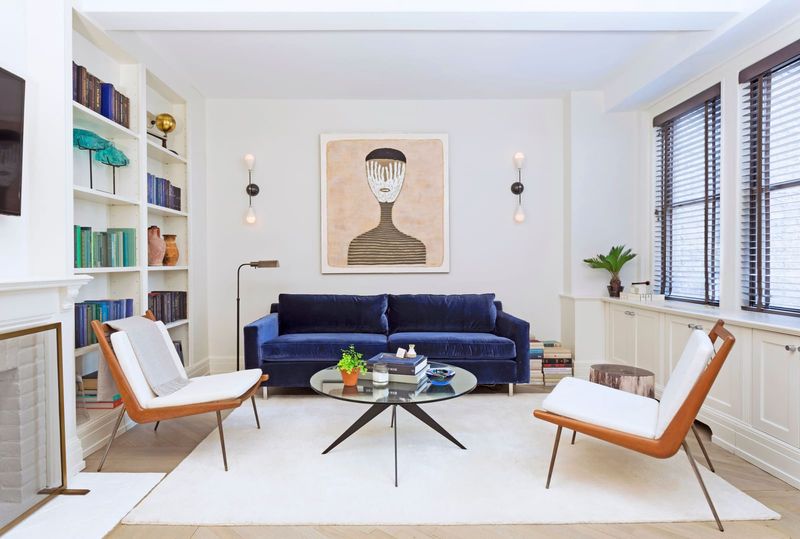
In shared spaces, vintage furniture functions as narrative infrastructure. An heirloom cabinet with brass hardware and aged wood does more than store objects; it signals continuity and provides a biographical anchor. For a Korean-American household, a traditional cabinet inherited through family lines can hold its own in a modern apartment overlooking Central Park, adding historical resonance without requiring the rest of the room to follow suit.
Upholstered seating with original trim details, passementerie, or nailhead application offers a direct line to craft traditions that contemporary upholsterers rarely replicate at accessible price points. These pieces work especially well in schemes that lean into maximalist layering, where fringe and braid read as intentional rather than fusty.
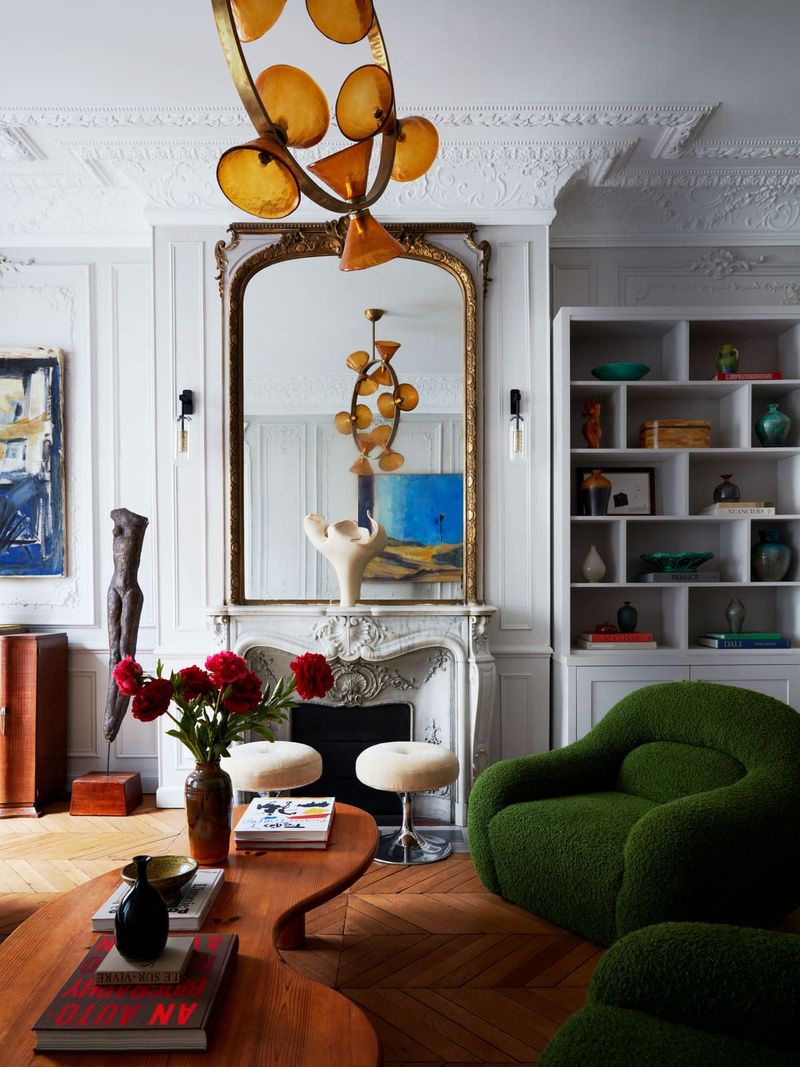
Lighting deserves particular attention. A period chandelier or a pair of sculptural vintage lamps will outperform contemporary alternatives in both presence and distinctiveness. The asymmetry and handwork evident in older lighting fixtures create atmospheric effects that feel calibrated rather than engineered. This is where drama enters without theatricality.
Kitchens: Storage as Display
The kitchen has largely been colonized by built-in cabinetry, which optimizes function but flattens visual interest. Breaking up that uniformity with vintage furniture, plate racks, side tables, and freestanding cabinets reintroduces variety. The approach requires rethinking storage as a distributed system rather than a monolithic one.
Decorative plates mounted on walls or displayed on open shelving personalize the space in ways that subway tile and pendant lighting cannot. Vintage glassware, particularly pieces with cut crystal or colored glass, elevates daily rituals. A collection of mismatched stemware behind glass-front cabinet doors becomes a focal point, especially when backlit.
Art and ephemera also belong here. A framed Italian poster advertising sponge cake, sourced from a Milan flea market, can bring wit and color to a cooking space typically dominated by stainless steel and stone. The kitchen, when treated with the same curatorial attention as the living room, becomes more than a work zone.
Dining Rooms: Boldness Rewarded
The dining room permits risk. Because it is used episodically rather than continuously, it can sustain stronger gestures. Vintage seating, whether a full set of antique chairs or a mix of recovered frames, shifts the mood immediately. The bones matter more than the upholstery; a well-constructed frame can be re-covered in unexpected fabric, preserving historical form while updating surface.
English wood furniture, especially sideboards and extending tables, brings a sense of permanence. These pieces evoke institutional dining without the heaviness, particularly when paired with contemporary lighting or abstract art. The goal is not period accuracy but temporal layering, where different eras coexist without hierarchy.
Wrought-iron chairs, particularly those with original patina, introduce industrial texture. They work equally well in rustic settings and in minimalist interiors where their materiality provides needed contrast. The key is confidence; a vintage piece placed tentatively reads as afterthought, but the same piece given prominence becomes a design anchor.
Bathrooms: Salvage as Strategy
Bathrooms are typically the most standardized rooms in the home, governed by plumbing constraints and a narrow palette of acceptable finishes. Vintage fixtures, salvaged tubs, and reclaimed sinks disrupt that homogeneity. A clawfoot tub or a wall-mounted porcelain sink with exposed plumbing carries more character than any contemporary equivalent, regardless of price point.
Mirrors offer another intervention. Instead of a recessed medicine cabinet, a vintage mirror with a carved wood or gilded frame transforms the vanity area into something closer to furniture than fixture. Storage can be relocated to baskets, apothecary jars, or small cabinets sourced separately.
Accessories matter here as well. Woven baskets from Provençal markets, old pharmacy jars with Latin labels, and vintage glass bottles add layers of visual interest without requiring major renovation. These small gestures accumulate into an environment that feels considered rather than contractor-grade.
Acquisition and Integration
Sourcing vintage furniture well requires patience and a willingness to see past surface condition. Strong silhouettes and quality construction are non-negotiable; upholstery and finish can be addressed later. Flea markets, estate sales, and salvage yards remain the most fertile hunting grounds, though online platforms have democratized access.
The integration challenge is knowing when to stop. A room with too many vintage pieces can feel like a museum or a stage set. The goal is balance: enough older objects to create depth, but not so many that the space loses coherence. Mixing eras and styles works when unified by a consistent material palette or tonal range.
Vintage furniture is not about recreating the past. It is about using objects that carry time as a material quality, layering them into contemporary interiors to create spaces that feel inhabited from the first day. The result is rooms that reward attention, where each piece has a reason for being there beyond filling a functional slot.
Save this story. A free account keeps your reading list and the 07:00 email in one place.
CREATE FREE ACCOUNT →SIGN IN