
The Afterlife of Corporate Architecture
What happens when a bank leaves its headquarters? In many cities, the question resolves itself through demolition or conversion into luxury condominiums. Yet the transformation of Santander's Pereda Building suggests a different trajectory, one in which corporate patrimony evolves into genuine public infrastructure rather than simply changing hands within the private sector.
Opening on September 8, Faro Santander represents a nine-year journey to convert what was, until recently, the operational heart of Banco Santander into a cultural destination housing thousands of artworks from the institution's collection. The project raises questions we've been tracking across recent adaptive reuse work: how does one honor the palimpsest of a building's history while making it legible to contemporary users? And when does corporate philanthropy cross the threshold into meaningful civic contribution?
A Building with Multiple Lives
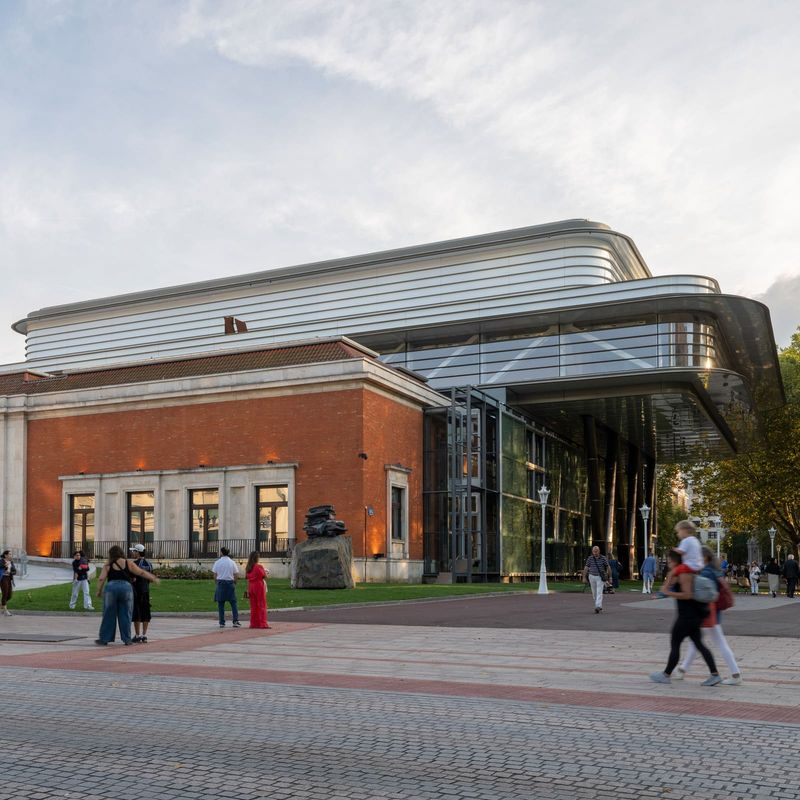
The Pereda Building carries the accumulated DNA of Spanish institutional architecture across two centuries. Its oldest sections date to 1795, a fragment of late-colonial administrative style that subsequent generations reworked, expanded, and eventually absorbed into the modernist vocabulary of mid-century banking. Architect Javier González de Riancho's 1961 renovation added layers of rational planning and materials that spoke to postwar confidence in financial institutions as engines of national development.
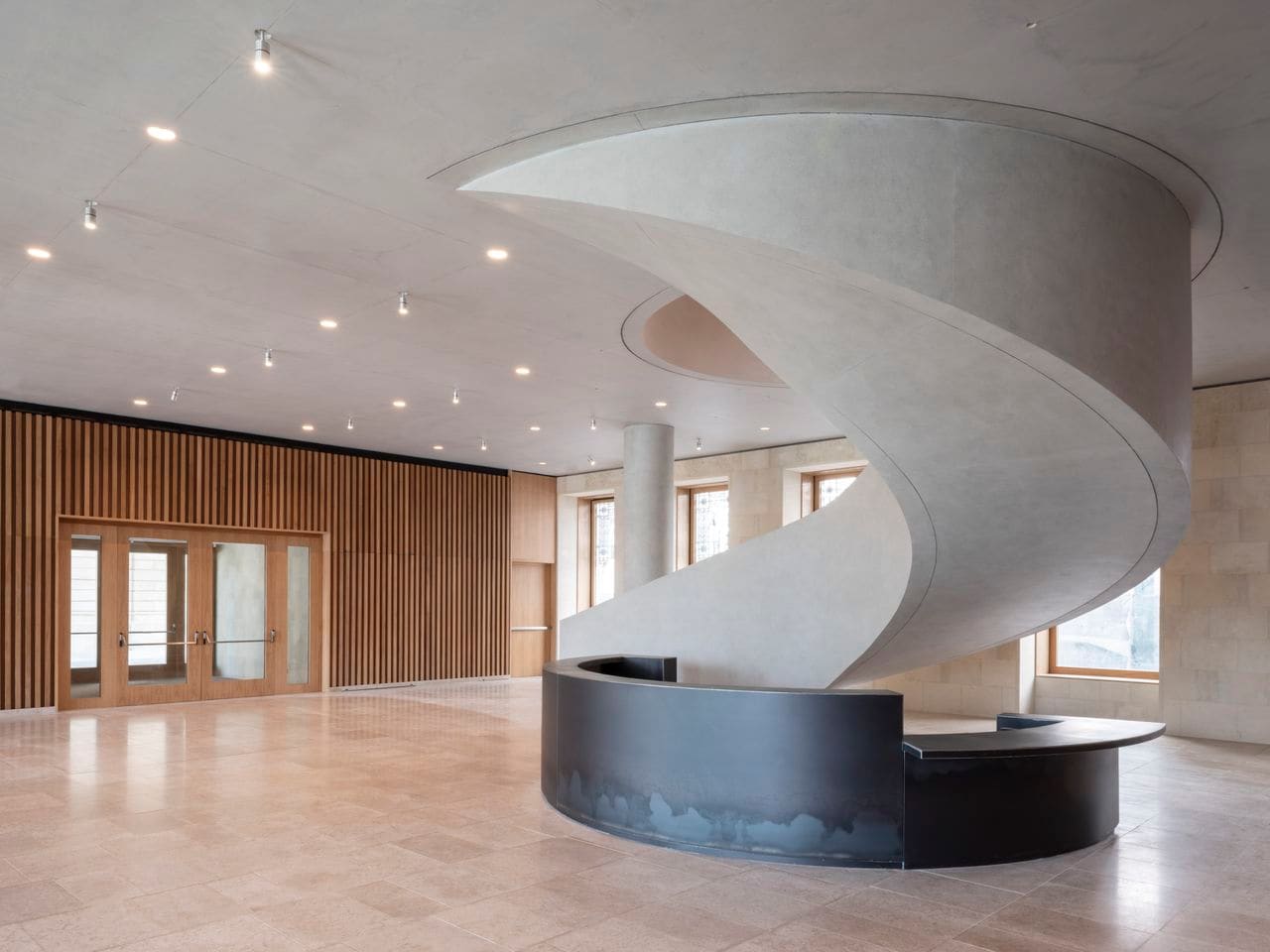
David Chipperfield Architects inherited this complex stratigraphy. Rather than pursuing archaeological purity by peeling back to a single historical moment, the practice embraced what Chipperfield describes as the building's "multi-layered history," allowing different eras to coexist within the renovation. The approach recalls the studio's work on the Neues Museum in Berlin, where war damage and successive construction phases were treated as legitimate chapters in the building's biography rather than problems to be erased.
Remaking the Interior Landscape
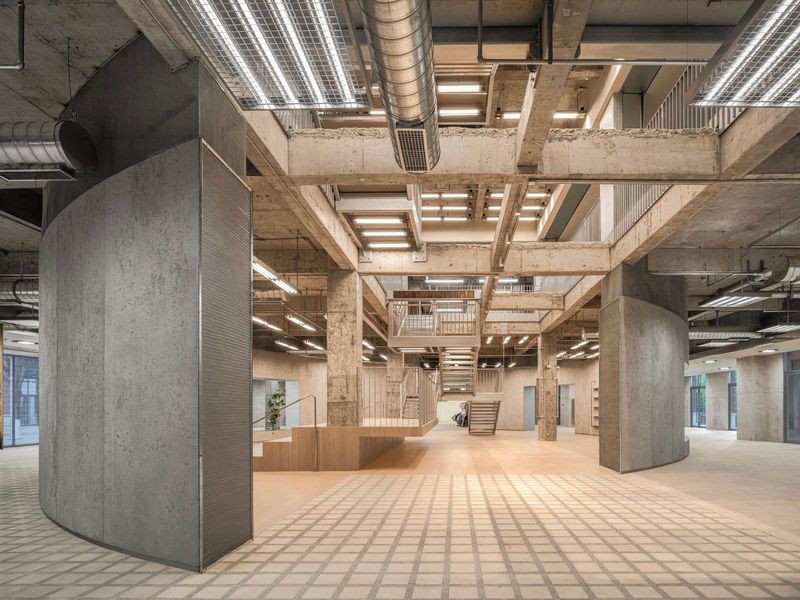
The renovation delivers 10,000 square meters of usable space, with 3,000 square meters dedicated to galleries distributed across five floors. Chipperfield Architects reconfigured circulation to accommodate public movement patterns fundamentally different from the hierarchical flows of office life. Where banking operations required secure zones and controlled access, the cultural program demands openness, intuitive wayfinding, and spaces that invite lingering.
This shift in spatial logic extends to technical systems. Meeting contemporary standards for climate control, lighting, and security while respecting the constraints of a listed structure required threading new infrastructure through historic fabric. The project achieved an Outstanding BREEAM certification with a score of 92.96, which Faro Santander identifies as the highest registered globally by any museum or cultural facility. That figure reflects not only energy performance but also considerations of material sourcing, construction waste management, and long-term operational impact.
Sustainability credentials in adaptive reuse projects often feel like box-ticking exercises, but here the metrics align with the project's underlying premise: that the most sustainable building is frequently the one already standing. By preserving and upgrading the Pereda Building rather than pursuing new construction, the intervention avoids the embodied carbon of replacement while extending the useful life of substantial existing infrastructure.
The Civic Dimension of Private Collections
Faro Santander will house the Banco Santander Collection, an accumulation of artworks assembled over decades of corporate patronage. The transition from private holding to public-facing institution involves more than simply opening doors; it requires rethinking how collections are interpreted, displayed, and made accessible to audiences beyond the specialist or collector class.
Daniel Vega Pérez de Arlucea, who directs Faro Santander, frames the project as "creating a cultural centre that is open to everyone," emphasizing accessibility and diverse programming. The language is familiar from institutional mission statements, yet the Pereda Building's prominence on Santander's seafront gives the claim material weight. As a recognizable landmark already woven into the city's mental map, the building arrives with existing civic legibility that purpose-built museums on peripheral sites often struggle to achieve.
This matters because architectural accessibility is not only about ramps and elevators. It concerns whether a building reads as welcoming or forbidding, whether its spatial organization is intuitive or alienating, whether it signals that cultural resources belong to a narrow elite or to the broader public. Banks, by their nature and history, tend toward the monumental and the exclusionary. Remaking such a space for genuine openness requires dismantling those coded messages at the level of threshold, circulation, and material expression.
Precedents and Parallels
The Pereda Building joins a growing roster of financial structures repurposed as cultural venues. Herzog & de Meuron's transformation of the Bankside Power Station into Tate Modern established the template two decades ago, demonstrating that industrial-scale volumes could accommodate the spatial ambitions of contemporary art. More recently, Diller Scofidio + Renfro's work on The Shed in New York and David Chipperfield's own James Simon Galerie in Berlin have explored how new public institutions can activate urban edges and mediate between historic districts and contemporary development.
In Spain, the precedent of the Museo Reina Sofía, which occupies an 18th-century hospital building expanded by Jean Nouvel, offers a regional reference point for adaptive reuse at museum scale. Yet the Pereda Building operates in a different register, less about spectacular architectural addition than about patient reworking of what exists. The project suggests a maturing of adaptive reuse practice, moving beyond the drama of contrast between old and new toward a more integrated approach that treats existing fabric as the primary design material.
What Opens in September
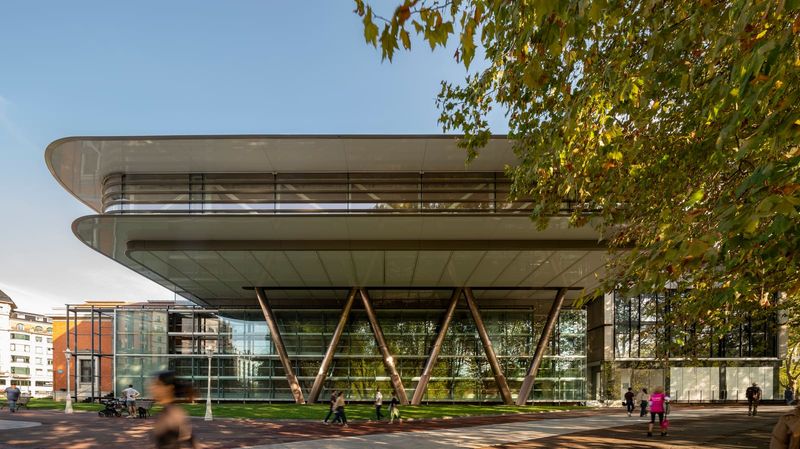
When Faro Santander opens its doors, visitors will encounter a building that carries its history visibly but not oppressively. The ten-story structure will function as both museum and urban landmark, a seafront presence that has shaped Santander's identity for generations now available for new forms of public use.
Whether the project succeeds as civic infrastructure will depend on programming, accessibility, and the institution's willingness to genuinely engage local communities rather than simply attracting cultural tourists. Architecture can create the conditions for openness, but it cannot guarantee it. Chipperfield's renovation provides the spatial framework; what happens within those galleries and public areas will determine if Faro Santander becomes a true commons or remains, despite its rhetoric, an exclusive enclave.
The broader lesson concerns the potential latent in existing structures. Across Europe and beyond, cities hold inventories of underused institutional buildings, structures that once housed government offices, banks, hospitals, or schools and now sit vacant or underutilized as functions migrate elsewhere. The Pereda Building demonstrates that such spaces can be reimagined not as liabilities but as opportunities, existing volumes with embedded energy and urban presence waiting for new life. The challenge is less technical than imaginative: recognizing that architecture's value accumulates over time and that the most radical intervention is often the one that builds on what already stands.
Photo: Juan Baraja
Save this story. A free account keeps your reading list and the 07:00 email in one place.
CREATE FREE ACCOUNT →SIGN IN