
A Season Between Seasons
August occupies a curious position in the cultural calendar. The major fairs have closed; biennial fatigue has set in; September's machinery hasn't yet cranked back to life. For those of us who track the built environment and its adjacencies, this lull is less a void than an invitation to notice what the usual noise obscures. The month rewards lateral curiosity: a documentary about an owl's improbable survival, a dumpling that has quietly become a London staple, an architectural showcase on a Balinese beach that prioritizes models over manifestos.
At World Archi Design, we've been watching how certain cultural moments thrive precisely because they sidestep the blockbuster apparatus. What follows is a selection of projects, events, and diversions that caught our attention this month, not for their scale but for the questions they raise about how we move through cities, engage with craft, and measure resilience.
The Gallery as Refuge
London in August is a study in extremes: either sweltering or abandoned, sometimes both. The gallery circuit offers a third option. War Child's Secret 7" project, on view at 180 Studios through the end of the month, exemplifies the kind of cross-disciplinary work that benefits from unhurried viewing. Seven musicians each press a track onto 100 vinyl records; artists including Clare Twomey, Thierry Noir, Murugiah, and Orlando Weeks design one-of-a-kind sleeves for every copy. The format is deliberately analog, the output tactile. In an era when music distribution has been flattened into algorithmic playlists, the project reasserts the record sleeve as a canvas, a collectible, and a site of surprise.
Elsewhere in the city, Dulwich Picture Gallery's "Portrait of a City: A Century of American Photography" traces urban life across a hundred years of American image-making. The exhibition runs through early October, offering a long viewing window for those who prefer their encounters with photography slow and recursive. On Savile Row, John Currin's paintings at Sadie Coles through mid-September continue his exploration of exaggerated female forms set against pastoral backdrops. Currin's work courts discomfort; his women are neither idealized nor caricatured but occupy a deliberate middle ground that resists easy consumption.
An Owl, a Documentary, and the Limits of Captivity
Flaco, the Eurasian eagle-owl who escaped his enclosure at the Central Park Zoo in February 2023, became an unlikely emblem of urban wildness. Born and raised in captivity, he was expected to perish within days. Instead, he learned to hunt, to navigate the city's vertical topography, and to attract a following of amateur ornithologists and joggers who paused mid-run to scan his favored oak tree.
Penny Lane's documentary "Wild Inside," in select theaters since late July, recounts Flaco's story with an eye toward the larger question of what divides the built environment from the natural world. The film is less a celebration of animal ingenuity than an examination of the boundaries we impose and the creatures that refuse them. Flaco's fate, which the documentary does not shy away from, underscores the fragility of that refusal. For architects and urbanists, the film offers a reminder that cities are not sealed systems; they leak, accommodate, and sometimes destroy the nonhuman life they claim to protect.
Folkloric Persistence in Puglia
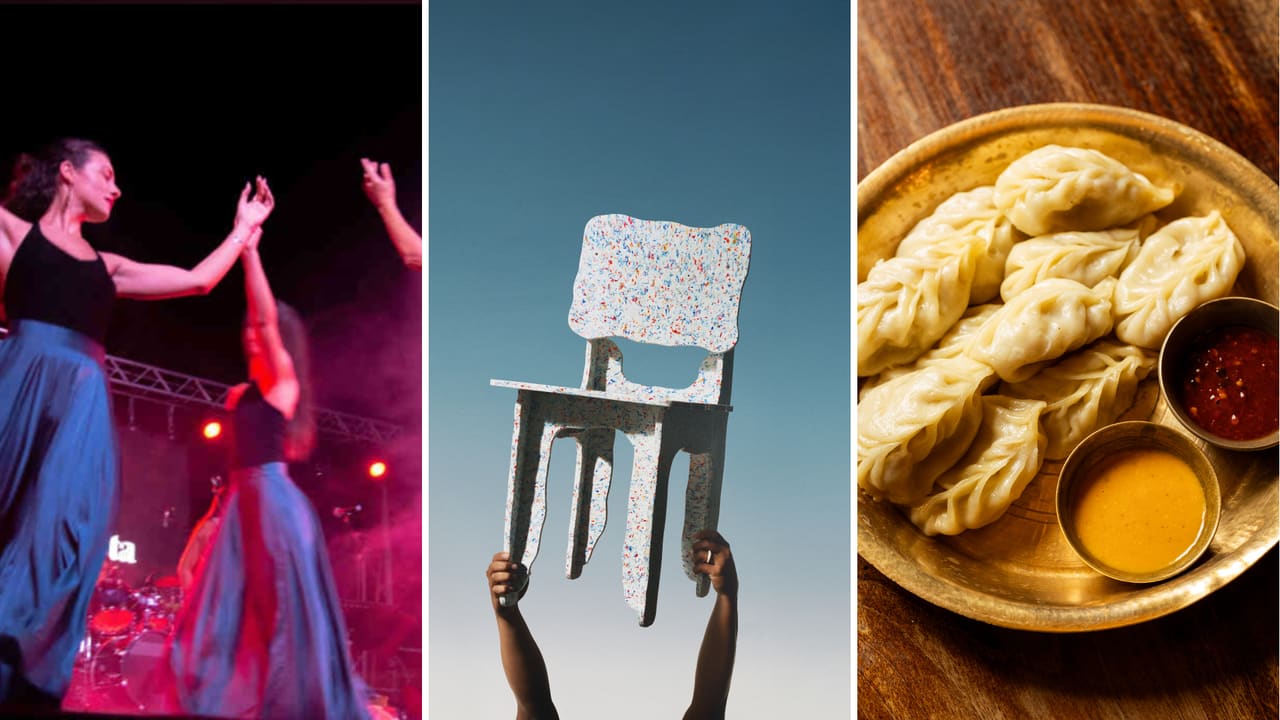
La Notte della Taranta, the annual music festival that unfolds across twenty towns in Salento through late August, privileges regional tradition over imported spectacle. The festival centers on pizzica, a folk dance rooted in Southern Italy's agrarian past, and the tambourine-driven music that accompanies it. This year's Concertone, the festival's closing concert in the town of Melpignano, features Ermal Meta conducting an ensemble that blends traditional instrumentation with contemporary arrangement.
Festivals of this scale often face pressure to modernize, to court broader audiences by diluting their origins. La Notte della Taranta has resisted that impulse. The event remains tethered to the small towns that host it, prioritizing local participation over tourism infrastructure. For those of us interested in how place shapes cultural production, the festival offers a case study in what happens when a region refuses to treat its own history as nostalgia.
The Momo Moment
House of Momo in Dalston has been serving Nepalese dumplings for years, but the dish itself has only recently gained traction as a London staple. Momo, a half-moon dumpling stuffed with minced meat or vegetables and served with a chili-based dipping sauce, is standard fare across Tibet and the Himalayan region. In London, it has quietly become one of the city's most reliable quick eats.
Eat Momo, a canteen founded by sisters Trishna and Dipa Chamling, opened at Borough Yards before establishing a residency at Coach and Horses in Leyton. The operation is no-frills: steamed dumplings, a handful of fillings, a sauce that varies in intensity depending on the batch. What distinguishes momo from other dumpling traditions is its texture, pillowy rather than al dente, and the way the filling retains moisture without turning soupy. It's food that benefits from repetition; the more you eat, the more you notice the small calibrations in seasoning and fold.
Architectural Biophilia in Bali
Jia Curated, the annual gathering founded by Budiman Ong, Rudi Winata, and Yang Yang Hartono in 2022, takes over Pengembak Beach in Sanur, Bali, from mid to late August. This year's theme, "Nature Weave," anchors a series of exhibitions and installations that explore how architects integrate biophilic principles into built form. The showcase "Architecture in Scale" features 25 models from studios across Indonesia, Singapore, Taiwan, and Japan, including Kengo Kuma + Associates, Andramatin, Ibuku Studio, and Cheng Tsung Feng.
The decision to present models rather than renderings or photographs is deliberate. Models reveal tectonic logic in ways that images flatten. They allow viewers to circle a building, to understand massing and fenestration as spatial decisions rather than aesthetic gestures. For Kengo Kuma, whose work often employs modular timber systems that blur the line between structure and ornament, the model becomes a tool for demonstrating how repetition generates complexity. Elora Hardy's Ibuku Studio, known for its bamboo construction in Bali, uses models to show how organic materials dictate form, the curve of a beam determined by the plant's growth pattern rather than an architect's preference.
Jia Curated operates on the assumption that architectural discourse benefits from decentralization, that ideas circulate more freely when they're not funneled through the same handful of Western institutions. The festival's community-oriented structure, which includes workshops and open critiques alongside exhibitions, reflects a broader shift in how emerging practices build networks outside traditional channels.
What August Reveals
The projects and events gathered here share a common trait: they thrive in the gaps left by the mainstream calendar. Secret 7" works because it's small-scale and ephemeral. Flaco's story resonates because it unfolded in real time, without a publicist. La Notte della Taranta endures because it refuses to be anything other than what it is. Momo succeeds because it's unpretentious. Jia Curated matters because it prioritizes dialogue over spectacle.
At World Archi Design, we've long argued that the most interesting work often happens at the margins, in the months when no one is paying attention, in the towns that don't make the shortlist, in the studios that haven't yet been canonized. August, for all its stillness, offers a chance to recalibrate, to step away from the cycle of openings and deadlines and ask what we're missing when we move too fast.
Save this story. A free account keeps your reading list and the 07:00 email in one place.
CREATE FREE ACCOUNT →SIGN IN