
A City That Consumes Itself
Mérida occupies an unusual position among Mexico's urban centers. Unlike the vertical density of Mexico City or the tourist-driven sprawl of coastal developments, the Yucatán capital grows horizontally, steadily, almost imperceptibly. The city expands into its periphery with residential subdivisions and low-rise commercial corridors, each wave of construction reshaping the relationship between built form and the landscape that preceded it.
Casa Ínsula sits within this context, a 198-square-meter residence completed in 2026 through the collaboration of TANAT, PEMO, and Carlos García Noriega. The project arrives at a moment when the pressures of urbanization are not abstract forces but immediate conditions shaping how architects approach site, program, and material. Lead architects Diego Rivero Borrell, Mariana Estrada, Daniel Pereira, and García Noriega worked within a compact footprint, a decision that reflects both pragmatic constraints and a deliberate stance toward the question of scale in contemporary Mexican residential work.
At World Archi Design, we've been tracking how studios in secondary cities navigate the tension between regional building traditions and the demands of a globalizing construction economy. Casa Ínsula offers a case study in that negotiation, one where collaboration across practices becomes a method for resisting the homogenization that often accompanies rapid urban growth.
The Logic of Containment
The house operates on a principle of enclosure. Rather than dispersing program across a larger site or fragmenting volumes to create voids, the design consolidates living spaces within a defined perimeter. This approach is not defensive in the fortress sense but calibrated to establish a clear boundary between the domestic interior and the city beyond.
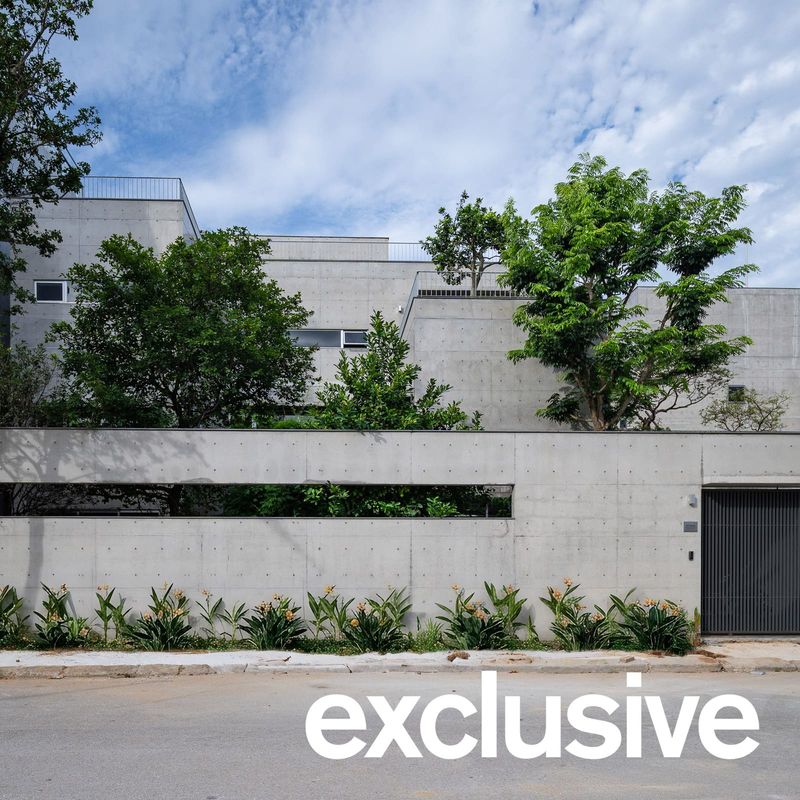
Enclosure as a tactic has deep roots in Yucatecan vernacular architecture, where thick masonry walls and inward-facing courtyards mediate the region's heat and light. Casa Ínsula reinterprets that logic without replicating its forms. The massing is compact, the fenestration selective, and the relationship to the street understated. There is no grand gesture toward the public realm, no facade designed to announce the building's presence. Instead, the project privileges the experiential quality of interior space over external representation.
This restraint is notable in a regional context where newer residential developments often emphasize visual distinction through material excess or stylistic eclecticism. Casa Ínsula proposes a different set of values: clarity of organization, precision in detailing, and a spatial sequence that unfolds gradually rather than revealing itself all at once.
Materiality and the Question of Craft
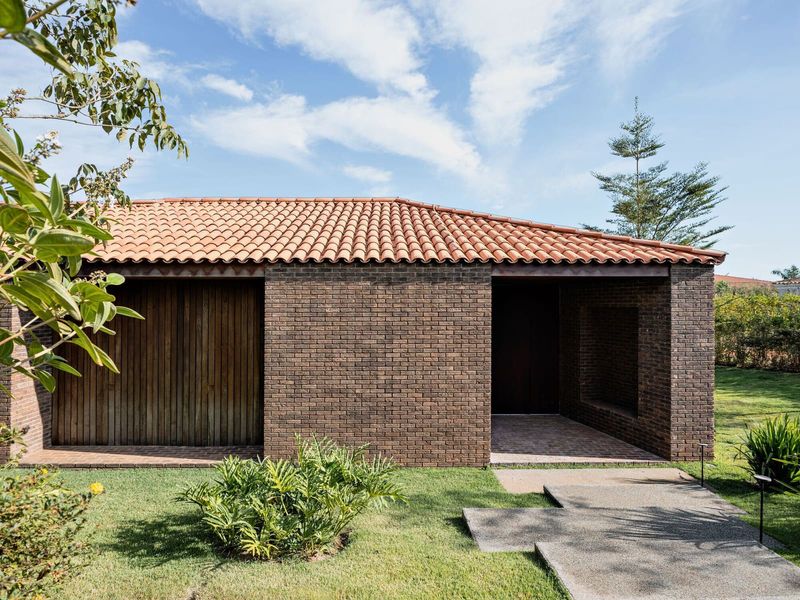
Construction was handled by Taller MID51, a detail that matters when considering how the project's material choices translate from drawing to built reality. The palette is limited, relying on masonry, concrete, and wood to establish tectonic coherence. These are not exotic materials, nor are they deployed for their novelty. Their selection reflects an understanding of local construction capacity and a willingness to work within the craft traditions available in Mérida's building trades.
The masonry work, in particular, demonstrates a careful calibration between structural necessity and spatial character. Walls function as both load-bearing elements and surfaces that modulate light and sound. The joints are legible, the coursing consistent, and the finish left largely unadorned. This is not minimalism as an aesthetic overlay but a direct expression of how the building is made.
Wood surfaces introduce warmth and tactile variation without disrupting the overall sense of restraint. Joinery details are precise, and the material is used where it can perform multiple roles: as structure, as finish, and as a device for organizing transitions between spaces. The result is a palette that feels considered rather than calculated, rooted in the specifics of the project rather than imported from a generic catalog of contemporary residential finishes.
Collaboration as Method
The involvement of three distinct practices in a single residential project is uncommon in the Mexican context, where authorship tends to be singular and studio identities closely guarded. Casa Ínsula suggests an alternative model, one where collaboration is not a compromise but a productive friction that generates design outcomes none of the participants might have reached independently.
TANAT and PEMO bring distinct sensibilities to the table. TANAT's work often engages with questions of typology and urban context, while PEMO's projects tend toward material experimentation and spatial layering. García Noriega's involvement adds a third perspective, one informed by a practice that has navigated both institutional and residential commissions. The synthesis of these approaches is evident in the project's balance between programmatic clarity and spatial nuance.
This collaborative structure also reflects a broader shift in how younger practices in Mexico are organizing themselves. Rather than competing for commissions within a zero-sum framework, studios are increasingly forming temporary alliances to take on projects that require a range of expertise or to share the risks inherent in experimental work. Casa Ínsula is a product of that ethos, and its success depends on the ability of its authors to subordinate individual authorship to the collective goal of the project.
Precedents and Departures
To place Casa Ínsula within a longer trajectory, it's useful to consider how it relates to other small-scale residential projects in Mexico that have grappled with similar questions. Alberto Kalach's early houses in the 1990s established a language of geometric rigor and material austerity that influenced a generation of architects. Tatiana Bilbao's social housing prototypes demonstrated how modest budgets and compact footprints could still generate spatial richness. More recently, practices like Taller Mauricio Rocha + Gabriela Carrillo have shown how regional materiality can be reinterpreted without sliding into nostalgia.
Casa Ínsula shares with these projects a commitment to clarity and an interest in the expressive potential of everyday materials. Where it departs is in its refusal to make that commitment legible through a singular formal gesture. The house does not announce its architectural ambitions through a dramatic roof line, an exaggerated cantilever, or a monumental void. Instead, it accumulates meaning through the sequence of spaces, the quality of light, and the precision of its detailing. This is architecture that rewards sustained attention rather than immediate apprehension.
The Urban Implications of Modest Work
At 198 square meters, Casa Ínsula is neither a mansion nor a minimal dwelling. It occupies a middle ground that is increasingly rare in contemporary residential discourse, which tends to celebrate either extreme luxury or radical austerity. The project suggests that this middle territory, often overlooked, is where much of the meaningful work of architecture actually happens.
The question the house poses is not whether small-scale residential work can be architecturally significant - that debate was settled decades ago - but whether such work can engage with the urban pressures of a city like Mérida without either retreating into private enclaves or capitulating to the logic of speculative development. Casa Ínsula proposes that engagement is possible, but it requires a different set of tools: collaboration across practices, material restraint, and a willingness to define quality through craft rather than scale.
As Mérida continues to grow, the city will need more projects that think carefully about how density, domesticity, and regional identity intersect. Casa Ínsula is a modest but instructive example of what that thinking might look like when it moves beyond rhetoric and into the specifics of site, program, and construction. The challenge now is whether this model can be scaled, adapted, or replicated in ways that address not just individual clients but the broader housing needs of the region.
Save this story. A free account keeps your reading list and the 07:00 email in one place.
CREATE FREE ACCOUNT →SIGN IN