When Architecture Outlives Intent
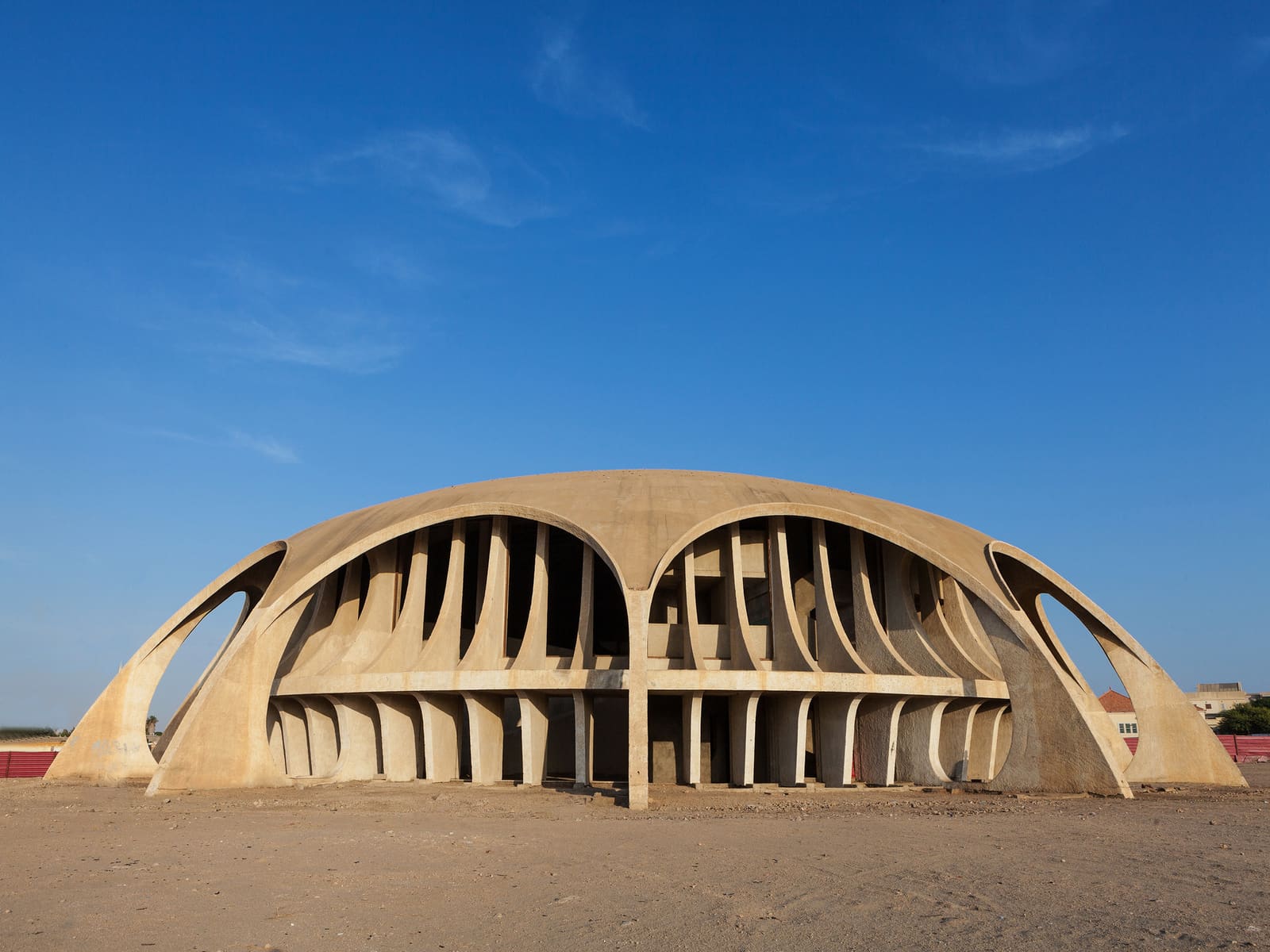
Some buildings are born into use. Others wait. The Cinema-Studio in Namibe, Angola, belongs to the latter category - a structure that spent nearly five decades locked in limbo, never hosting a single screening despite being designed explicitly for that purpose. Completed in 1973 along Angola's southwestern coast, the venue remained shuttered through wars, regime changes, and the slow erosion of collective memory. Yet it never disappeared. Instead, it became a monument to a more provocative question: can architectural form alone sustain a building's relevance when function fails to materialize?
At World Archi Design, we've been tracking adaptive reuse projects and derelict modernist gems across continents, but the Namibe case resists easy categorization. This was not abandonment followed by rediscovery. It was abandonment that paradoxically preserved significance. The building's survival hinged not on patronage or preservation grants, but on something harder to quantify - a formal vocabulary so distinctive that the structure refused to be forgotten.
A Tropical Modernist Parti
The Cinema-Studio's design reflects the confident geometries of early 1970s tropical modernism, a moment when Portuguese colonial architects in Africa experimented with climate-responsive forms and expressive massing. The building's shell-like roof structure, cantilevered and curved, reads as both protective canopy and sculptural gesture. Deep overhangs shade interior volumes, while the open plan invites cross-ventilation - essential strategies for the arid, sun-drenched climate of Namibe.
Fenestration is minimal, concentrated where needed to frame views of the Atlantic coastline. The material palette leans heavily on exposed concrete, a choice that speaks to both modernist aesthetic principles and the practical realities of construction in remote areas. Concrete's thermal mass helps regulate interior temperatures, while its monolithic presence reinforces the building's tectonic logic: a single, unified volume rather than an assembly of parts.
What distinguishes the Namibe Cinema-Studio from contemporaneous work - say, the cinemas built in Luanda during the same period - is its willingness to prioritize sculptural expression over programmatic flexibility. Where other modernist theaters hedged their bets with multipurpose lobbies or retail annexes, Namibe doubled down on a singular, uncompromising form. The result is a building that reads unmistakably as cinema, even when vacant.
The Paradox of Permanence
Why does an unused building endure when so many occupied structures vanish? The Namibe case suggests that architectural legibility - the clarity with which a building communicates its formal ideas - can function as a preservation mechanism independent of utility. The Cinema-Studio became a landmark not because it served the community, but because its silhouette anchored the coastline. Locals passed it daily, framed it in photographs, used it as a navigational reference. The building accrued meaning through presence, not performance.
This phenomenon is not unique to Angola. Oscar Niemeyer's unfinished projects in Brazil, the skeletal remains of the 1992 Expo structures in Seville, even Eero Saarinen's TWA Terminal during its dormant years - all demonstrate that iconic form can outlast obsolete function. But the Namibe Cinema-Studio pushes the concept further: it was never occupied in the first place. There is no nostalgia for a lost golden age, no collective memory of packed screenings or opening night galas. The building's cultural foothold rests entirely on its architecture.
Material Resilience
Concrete ages well in coastal environments when properly executed, and the Namibe structure benefited from solid construction standards typical of late colonial public works. The roof's structural system - likely a series of precast or poured-in-place ribs supporting a thin shell - has held up despite decades of salt air and minimal maintenance. Weathering has stained the surfaces, but the underlying integrity remains. This durability matters. A timber or steel-framed cinema would have succumbed to rot or rust long ago, erasing the building from the landscape and from memory.
The choice of concrete also aligns with broader trends in African modernism during the 1960s and 1970s. Architects working across the continent - from Kenzo Tange's projects in Nigeria to Amancio d'Alpoim Guedes's work in Mozambique - embraced reinforced concrete as a material that could express both monumentality and modernity. The Namibe Cinema-Studio fits within this lineage, a vernacular of sorts for a post-independence (or in Angola's case, pre-independence) Africa seeking architectural identity.
The First Screening
Nearly fifty years after construction, the Cinema-Studio finally hosted a film screening. The event marked not a reopening in the traditional sense, but an acknowledgment - a ceremonial completion of the building's original intent. Details of the screening remain sparse: what film played, who attended, whether renovations preceded the event. But the symbolic weight is clear. The building, which had existed as pure potential, crossed a threshold into actualization.
This moment raises practical questions. Is the structure now in regular use, or was the screening a one-time gesture? Has the interior been updated to accommodate contemporary projection and seating standards, or did the event embrace the rawness of the space? The answers matter less than the fact of the screening itself, which recontextualizes the building's entire history. What once appeared as failure - a cinema that never showed films - now reads as a long gestation.
Precedents and Parallels
The story of Namibe echoes other delayed completions in architectural history. Gaudí's Sagrada Família, under construction for over a century, has functioned as both building site and pilgrimage destination, its incompletion integral to its identity. Closer to the scale and program of the Namibe Cinema-Studio, the Jai Hind Cinema in Mumbai sat derelict for decades before a recent restoration returned it to use. In both cases, architectural distinctiveness - an unmistakable formal language - ensured the buildings remained visible during their dormancy.
Yet the Namibe case differs in one crucial respect: there was no advocacy campaign, no heritage trust, no international attention demanding preservation. The building simply persisted, a fact of the landscape. This passive survival suggests that in certain contexts, strong architecture can be its own advocate, requiring no external champion to justify its existence.
What Remains
The Cinema-Studio in Namibe stands as a test of architecture's intrinsic value. Stripped of function, patronage, and active stewardship, the building endured on formal merit alone. Its sculptural roof, its material honesty, its siting along the coast - these qualities generated enough cultural gravity to keep the structure relevant through half a century of vacancy.
This outcome is neither replicable nor prescriptive. Most vacant buildings decay into ruin, their forms insufficient to secure survival. But the Namibe Cinema-Studio offers a counterpoint to the utilitarian calculus that often governs preservation debates. Sometimes, a building's reason for being is simply that it is - boldly, unapologetically, and with enough conviction to outlast the circumstances of its creation.
Whether the recent screening signals a new chapter or remains a singular event, the Cinema-Studio has already secured its legacy. It waited fifty years to fulfill its purpose, and in doing so, redefined what purpose can mean.
Save this story. A free account keeps your reading list and the 07:00 email in one place.
CREATE FREE ACCOUNT →SIGN IN