
A Curatorial Vision Anchored in Everyday Ritual
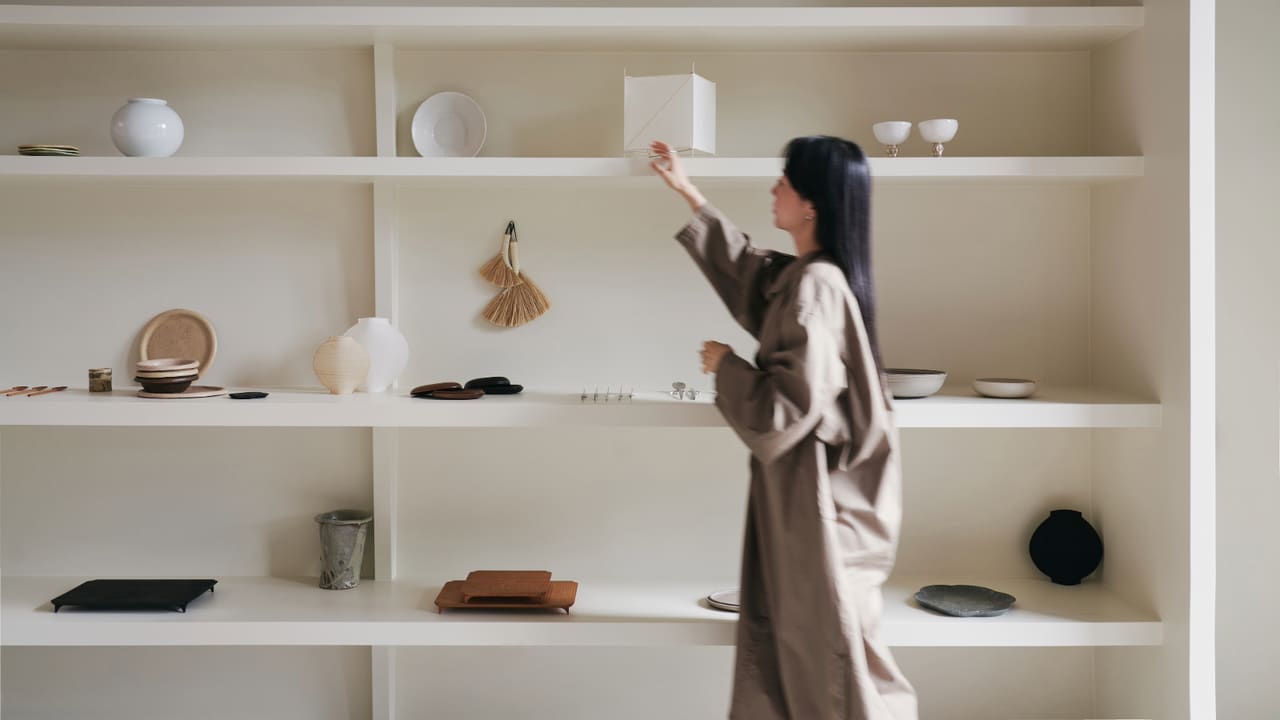
There is something disarming about walking into a space where every object feels calibrated for touch. At Hye the Store in Copenhagen's Nordhavn, the atmosphere resists spectacle. Instead of the visual crescendo typical of design boutiques, visitors encounter a restrained collection of Korean and Japanese craft objects arranged with the kind of care usually reserved for private collections. Hyeyoung Hwang, who founded the store in June 2025 after years as an editor in Seoul, has created what might best be described as a domestic laboratory: a place where the rituals of East Asian making meet the functional demands of Northern European living.
The location itself carries weight. Nordhavn has emerged over the past decade as a testing ground for architectural ambition, home to BIG's headquarters, the Audo boutique hotel, and JAJA Architects' Park'n'Play, a crimson-hued rooftop playground that hovers above a multi-storey car park. Hwang's red-brick warehouse occupies quieter territory within this landscape of contemporary statements. The building's industrial bones provide a foil to the soft materiality inside: cherry wood cutting boards with gentle curves, stainless steel cutlery that feels substantial without weight, hand-carved wooden vessels that seem to absorb rather than reflect light.
Selecting for Tactility and Temporal Depth
Hwang's curation rests on a principle that runs counter to much contemporary retail: she privileges the haptic over the visual, the enduring over the novel. Each of the fifteen South Korean artists and brands in the debut collection was chosen after direct conversation, a process Hwang describes as essential to understanding not just the finished object but the temporal rhythm of its creation. Taesoo Kim's traditional sabal bowls, for instance, carry forward a technique rooted in Korean woodturning history, while Studio EAEA's cutting boards demonstrate how a single material, cherry wood, can be shaped to serve both culinary and aesthetic functions.
This approach aligns with a broader shift we have been tracking at World Archi Design: the growing interest in craft objects that operate at the intersection of utility and sculpture. The work of Korean woodworkers Kyungwon Hwang and Hongjun Park exemplifies this duality. Their pieces possess organic forms that feel discovered rather than designed, each curve and chamfer responding to the grain of the wood. In a European context, where Scandinavian design has long celebrated the marriage of form and function, these Korean objects find surprising kinship. They share a commitment to understatement, to letting material quality speak without ornamental mediation.
The Moon Jar as Cultural Translator
Among the objects on display, one has generated particular curiosity: the Mosi moon jar by Artbo Studio, founded by Los Angeles-based Korean artist Yejin Shin. Unlike traditional ceramic moon jars, Shin's version is crafted from mosi, a Korean ramie fabric known for its fine texture and historical use in ceremonial garments. The object can function as a small vase or exist purely as sculptural presence, its rounded form evoking the idealized fullness of a harvest moon.
What makes the piece compelling from a design perspective is its capacity to operate across cultural registers. For those familiar with Korean ceramics, the moon jar carries specific historical resonance, tied to Joseon Dynasty pottery and the aesthetic philosophy of natural imperfection. For visitors encountering the form for the first time, the appeal is more instinctive, rooted in the object's proportions and the tactile quality of the fabric surface. This dual legibility suggests something about how traditional forms can be reinterpreted without losing their essential character. Shin's use of textile rather than clay shifts the object's weight and presence, making it more portable and less fragile, but the silhouette remains unmistakable.
The moon jar also serves as a useful lens for examining Hwang's broader curatorial strategy. She is not interested in objects that require extensive cultural translation or didactic explanation. Instead, she seeks pieces that can integrate naturally into daily routines, that earn their place through use rather than novelty. This philosophy extends to the store's apparel and accessories, which include garments by Oy and collaborations with Asian artisans working in traditional textiles.
Bridging Material Traditions Across Geographies
Hwang's forthcoming line of original designs, set to launch later this year, will focus on placemats and coasters made from mosi and sambe, a traditional Korean hemp fabric. Both materials have deep roots in Korean textile history, valued for their durability and breathability. In the context of contemporary European interiors, these textiles offer an alternative to the linen and cotton that dominate Scandinavian table settings. The slightly coarser hand of ramie and hemp introduces a different tactile register, one that feels more grounded and less refined in the conventional sense.
This kind of material cross-pollination is not without precedent. Japanese craft has long found a receptive audience in Europe, particularly in design circles that value wabi-sabi aesthetics and the visible trace of the maker's hand. Korean craft, by contrast, has remained less visible outside Asia, despite sharing many of the same principles: an emphasis on natural materials, restrained ornamentation, and forms that evolve through iterative refinement rather than radical innovation. Hwang's project, in this sense, is as much about expanding the geographic scope of craft appreciation as it is about retailing specific objects.
The store's program extends beyond product sales to include tea gatherings, dinners, and other events designed to contextualize the objects within broader cultural practices. This emphasis on ritual and atmosphere reflects a recognition that craft objects are not inert commodities but participants in social and domestic life. A ceramic tea bowl, for instance, gains meaning through repeated use, its surface gradually acquiring a patina that records the history of its handling. By creating opportunities for visitors to engage with objects in settings that approximate their intended use, Hwang is attempting to collapse the distance between retail display and lived experience.
Architectural Context and Spatial Restraint
The physical space of Hye the Store reinforces this ethos of restraint. The red-brick warehouse, with its exposed structural elements and high ceilings, provides a neutral backdrop that allows the objects to assert their presence without competition. The layout is deliberately sparse, avoiding the density of inventory typical of design boutiques. This spatial generosity serves a practical function, it allows visitors to approach each object individually, to pick it up and assess its weight and texture, but it also communicates a philosophical position. In a retail environment increasingly dominated by algorithmic recommendation and endless choice, Hwang's curation operates through subtraction rather than addition.
This approach finds resonance with the architectural character of Nordhavn itself. The district's transformation from industrial harbour to mixed-use neighbourhood has been guided by principles of density and public accessibility, but the individual buildings maintain a certain material honesty. Brick, concrete, and steel remain visible, their surfaces weathered rather than concealed. Hye the Store participates in this aesthetic, treating the warehouse shell as a found condition to be inhabited rather than erased.
Quiet Objects in a Noisy World
At a moment when design discourse often tilts toward the spectacular, toward parametric facades and digitally fabricated forms, Hwang's focus on quiet, tactile objects feels almost oppositional. These are pieces that reward slow looking and repeated handling, that resist the logic of the scroll and the swipe. They demand a different kind of attention, one calibrated to the pace of craft rather than the velocity of trend cycles.
This is not to suggest that the objects at Hye the Store are nostalgic or backward-looking. Many of the makers represented are working within contemporary design frameworks, using traditional techniques as a point of departure rather than a fixed destination. Studio EAEA's cutting boards, for instance, employ CNC milling for precision while retaining hand-finishing to soften edges and surfaces. CYS' stainless steel cutlery combines industrial materials with ergonomic forms that reference traditional Korean utensil shapes. The result is a hybrid vocabulary that acknowledges both heritage and present-day manufacturing realities.
Hwang's aspiration is that these objects might subtly alter the way people inhabit their homes, that a well-designed bowl or a thoughtfully proportioned vase might introduce a moment of pause into the daily routine. It is a modest ambition, but one grounded in the belief that design operates most powerfully at the scale of the everyday. In a revitalized harbour district increasingly defined by architectural landmarks, Hye the Store proposes a different kind of intervention: one measured in tactile encounters and accumulated rituals rather than iconic forms.
Save this story. A free account keeps your reading list and the 07:00 email in one place.
CREATE FREE ACCOUNT →SIGN IN