
A Position That Didn't Exist Until Now
For decades, the conversation around Donald Judd has centered on stacks, floor pieces, and the austere geometries that helped define minimalism. Yet anyone who has visited 101 Spring Street in New York or the sprawling compound in Marfa, Texas, knows that Judd's practice extended far beyond gallery walls. His furniture, his adaptive reuse projects, his fierce advocacy for vernacular objects, and even his 33,000-acre land conservation effort in West Texas all reveal a maker deeply invested in the relationship between form, function, and environment.
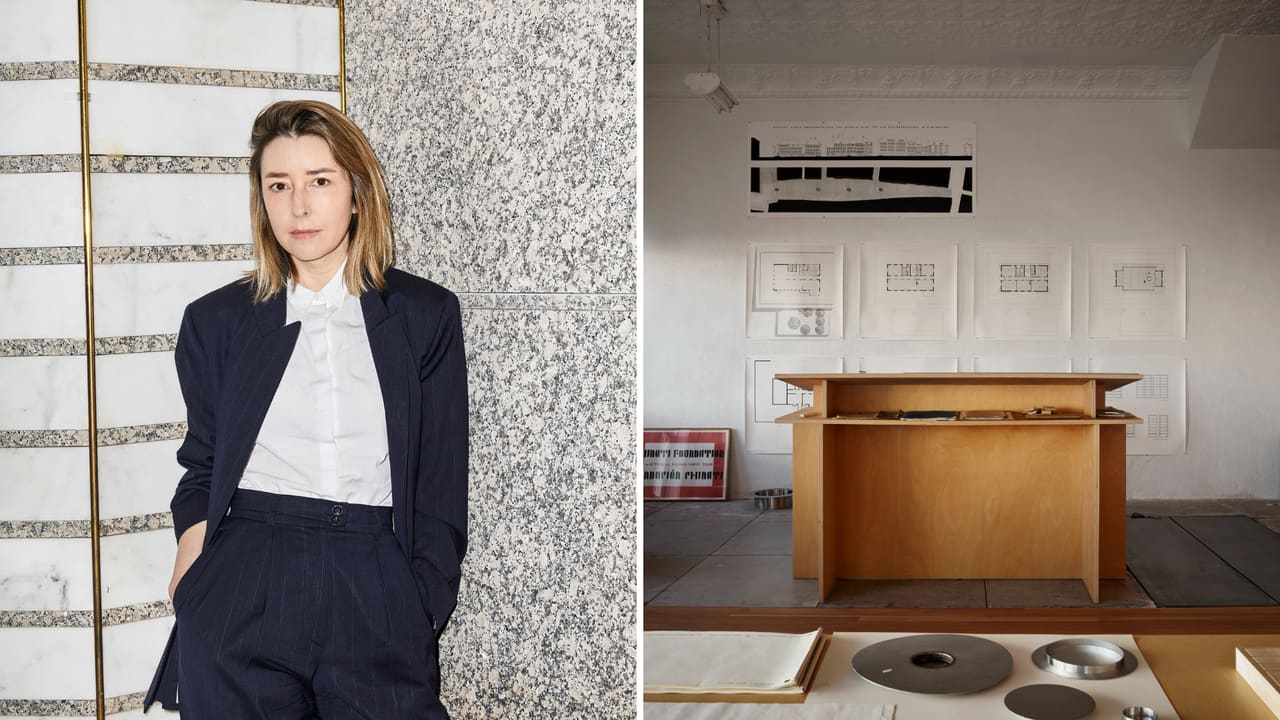
It is precisely this broader territory that Judd Foundation now seeks to foreground. In 2026, the organization created its first director of design position and appointed Alexandra Cunningham Cameron, a figure who has moved fluidly between the commercial design world and major museums. The timing is deliberate: with the Judd Centennial approaching in 2028, the foundation is preparing a series of institutional exhibitions and programs that will unfold across New York, Marfa, and international venues. Details remain under wraps, but the ambition is clear.
At World Archi Design, we have tracked how artist-designed furniture has moved from niche collectible to institutional canon over the past decade. Judd's daybeds and plywood tables now appear in celebrity homes and museum collections alike, yet the intellectual architecture behind them has often been overshadowed by the art-world celebrity of his wall-mounted aluminum boxes. Cameron's appointment signals a recalibration, one that treats design not as a footnote to Judd's sculpture but as a parallel inquiry of equal weight.
From Design Miami to Cooper Hewitt to Spring Street
Cameron arrives with an unusual pedigree. She spent years at Design Miami, the commercial fair that helped transform collectible design into a market category, working closely with galleries and navigating the intersection of art, craft, and industrial production. Later, as curator of contemporary design at Cooper Hewitt, Smithsonian Design Museum, she focused on practitioners who refuse single categories: architects who make art, artists who design furniture, designers who engage spatial installation.
According to Judd Foundation, co-president Flavin Judd and his sister Rainer Judd recognized Cameron's ability to operate across these domains. The foundation had already undertaken significant design programming in recent years, including furniture exhibitions in Tokyo and Seoul, as well as the current show at 101 Spring Street titled "Donald Judd Furniture: Wood and Metal," which runs through early August 2026. But the organization lacked a dedicated voice to unify these efforts, expand scholarship, and connect Judd's design thinking to contemporary discourse.
Cameron describes her role as encompassing a wide spectrum: developing new research programs, forging institutional collaborations, and supporting Donald Judd Furniture, the commercial entity that continues to produce pieces and provides financial support to the foundation. She is also tasked with exploring Judd's work in product design, graphic design, and environmental design, areas that have received less sustained attention than his furniture.
The Ecosystem of Making
One of Cameron's first observations concerns Judd's personal collections. She notes his "incredibly sophisticated understanding of international material culture," evident in the objects he chose to live with, from a bedside clock to an Alvar Aalto sanatorium chair. These selections were not casual; they reflect a curatorial sensibility that extended into every corner of his domestic and working environments.
This approach aligns with Cameron's own view of design as an ecosystem, a field that encompasses practice, commerce, preservation, and the transmission of material histories. She argues that Judd's furniture and architectural interventions are not merely ancillary to his sculpture but part of a coherent investigation into how objects, spaces, and landscapes shape experience.
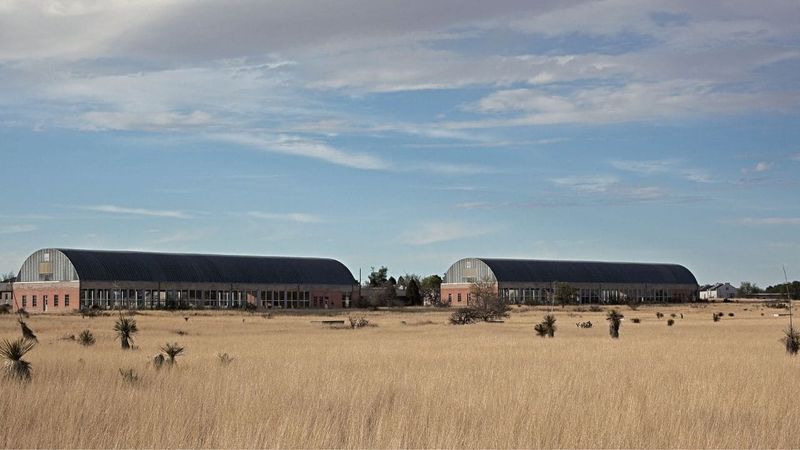
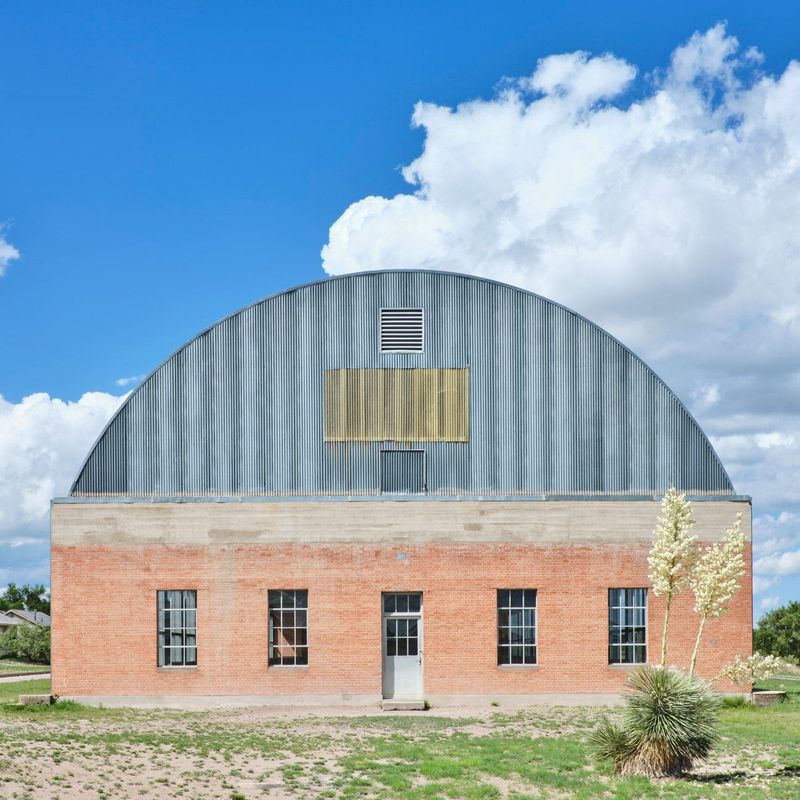
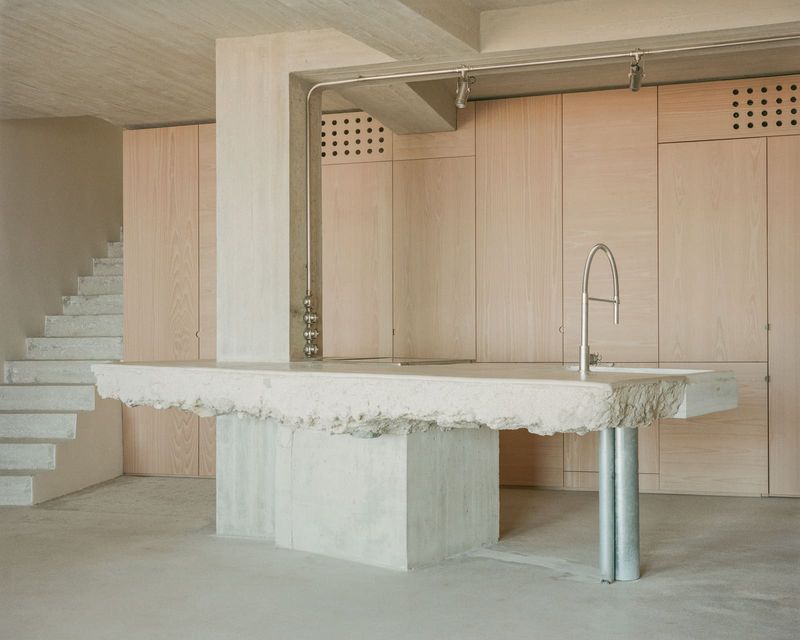
At 101 Spring Street and in Marfa, art and design coexist without hierarchy. Judd famously drew a hard line around use, insisting that furniture must function and that architecture must serve its inhabitants. Yet within his spaces, aluminum wall reliefs sit alongside Douglas fir tables, and concrete artillery sheds are converted into galleries lined with custom shelving. Cameron is less interested in policing the boundaries between art and design than in expanding the conversation around what Judd's multifaceted practice can teach us today.
Connecting Judd to Contemporary Urgencies
One of Cameron's stated goals is to draw lines between Judd's design ethos and the preoccupations of the current design world. Organic materials, circularity, local production, and craft-based making are now central to architectural and design discourse, yet these concerns were already embedded in Judd's work decades ago. He sourced materials regionally, worked with fabricators in Marfa, and championed the longevity and repairability of well-made objects.
In his 1993 essay "It's Hard to Find a Good Lamp," Judd laid out a vision of design rooted in clarity, utility, and skepticism toward mass-market compromise. The essay has become a touchstone for designers frustrated by planned obsolescence and aesthetic bloat. Cameron sees an opportunity to position Judd's furniture practice not as a historical artifact but as a living framework for thinking about self-reliance, subjectivity, and environmental care.
She also emphasizes Judd's willingness to take risks and act on his own terms. In an era when much design production is driven by market research and trend forecasting, Judd's insistence on personal vision, even at the cost of commercial viability, offers a counter-model. Cameron hopes to open up more conversations about how his critical stance and independence might inform contemporary practice.
The Marfa Archive and What Comes Next
Cameron has only visited Marfa once, for the reopening of the Architecture Office in 2025, and much of her early work involves deepening her familiarity with the archive and the physical sites. She plans to spend extended time in West Texas, examining storage, studying the land conservation projects, and developing a fuller picture of how Judd thought about landscape, preservation, and the relationship between built and natural environments.
Judd's 33,000-acre holdings in the Chinati region represent one of his most ambitious and least discussed design projects. He was grappling with questions of land stewardship, ecological balance, and the aesthetics of the desert, treating the landscape itself as a medium. Cameron is particularly drawn to this dimension of his work, seeing in it an intersection of abstraction and wildness that parallels his engagement with form and material in furniture.
When asked which aspect of Judd's design canon best exemplifies his thinking, Cameron points to the elemental clarity of his furniture forms. The use of material and structure is immediately legible, she notes, allowing viewers to understand both the making and the intended use. This transparency has made Judd's furniture accessible to a wide audience, from amateur woodworkers to institutional curators.
Yet she is equally interested in the experimental edges of his practice, the areas where design bleeds into environmental science, conservation, and spatial intervention. As she develops programming for the centennial and beyond, these intersections will likely come into sharper focus.
A Legacy in Motion
Judd Foundation has long been committed to preserving and interpreting Judd's spaces and objects, maintaining them as sites of public engagement rather than static monuments. Cameron's appointment suggests that the foundation is now ready to engage more actively with the contemporary design community, positioning Judd's ideas as resources for current debates rather than relics of a past moment.
The challenge is not simply to increase awareness of Judd's furniture or to secure his place in design history; both are already well underway. Rather, it is to make design an automatic reference point in any discussion of Judd's work, to ensure that his thinking about use, material, and space is as widely understood as his contributions to sculpture.
As the centennial approaches, the foundation is preparing a multi-site, international program that will test this ambition. Cameron's role is to ensure that design is not treated as a secondary category but as a central axis of interpretation. In doing so, she is navigating a path between preservation and innovation, honoring Judd's vision while refusing to treat it as something static.
At World Archi Design, we see this as part of a broader shift in how institutions engage with artist-designers. The boundaries between disciplines are increasingly porous, and practices that once seemed marginal, hybrid, or difficult to categorize are now recognized as prescient. Judd's insistence on working across art, furniture, architecture, and land use no longer appears eccentric; it looks like a model for integrated practice in an era that demands systemic thinking.
Cameron's task is to articulate that model, to make it legible and relevant to a generation of designers, architects, and curators who may not have grown up with Judd's work but who are grappling with many of the same questions he posed. The outcome will shape not only how we understand one of the twentieth century's most uncompromising artists but also how we imagine the role of design in shaping thoughtful, enduring environments.
Photo: Jeremy Liebman, Matthew Millman / Judd Foundation
Save this story. A free account keeps your reading list and the 07:00 email in one place.
CREATE FREE ACCOUNT →SIGN IN