
When the Container Fails the Contained
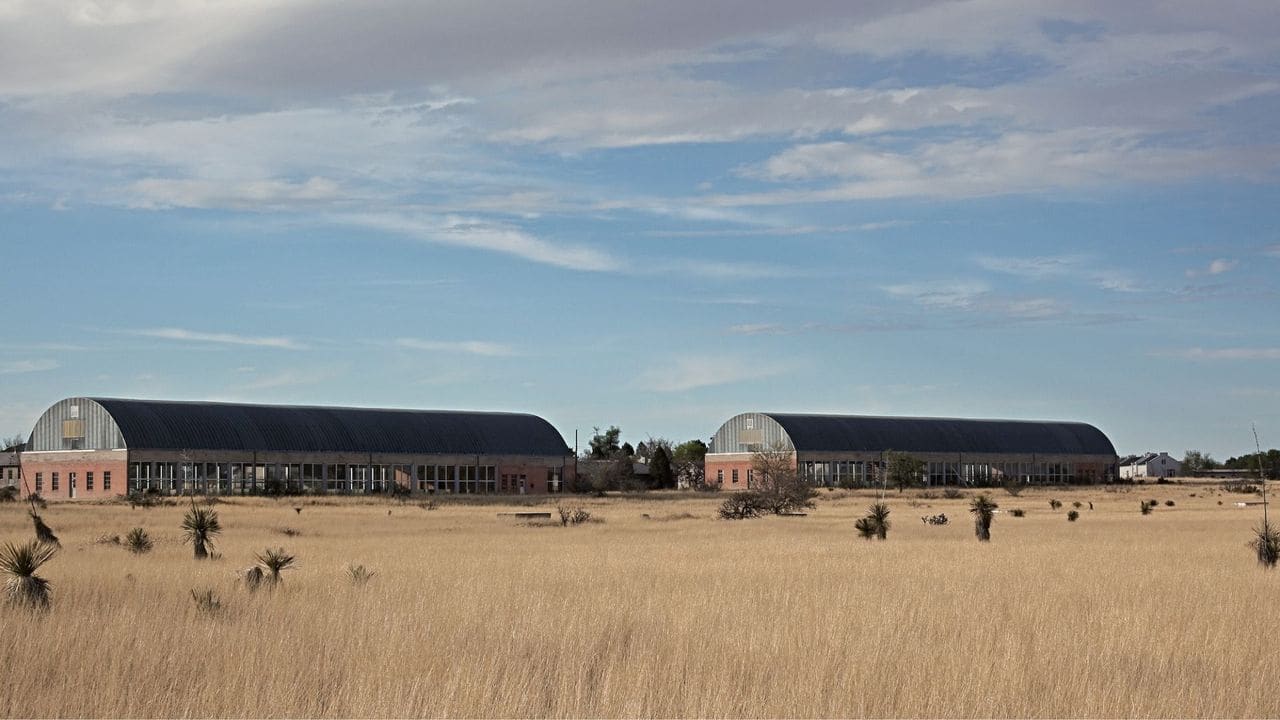
There is a particular irony in the fact that one of the most rigorous explorations of permanence and spatial precision in twentieth-century art has spent forty years leaking. Donald Judd's transformation of two abandoned military sheds into galleries for his 100 untitled works in mill aluminum was an exercise in control: gleaming boxes arrayed in perfect formation, each one identical yet each occupying a distinct relationship to light, shadow, and the Texas landscape beyond. But the architecture meant to protect this meditation on order has been quietly undermining it, dripping rainwater into buckets, admitting clouds of Chihuahuan dust, and baking the aluminum forms in temperatures that reached 115 degrees Fahrenheit.
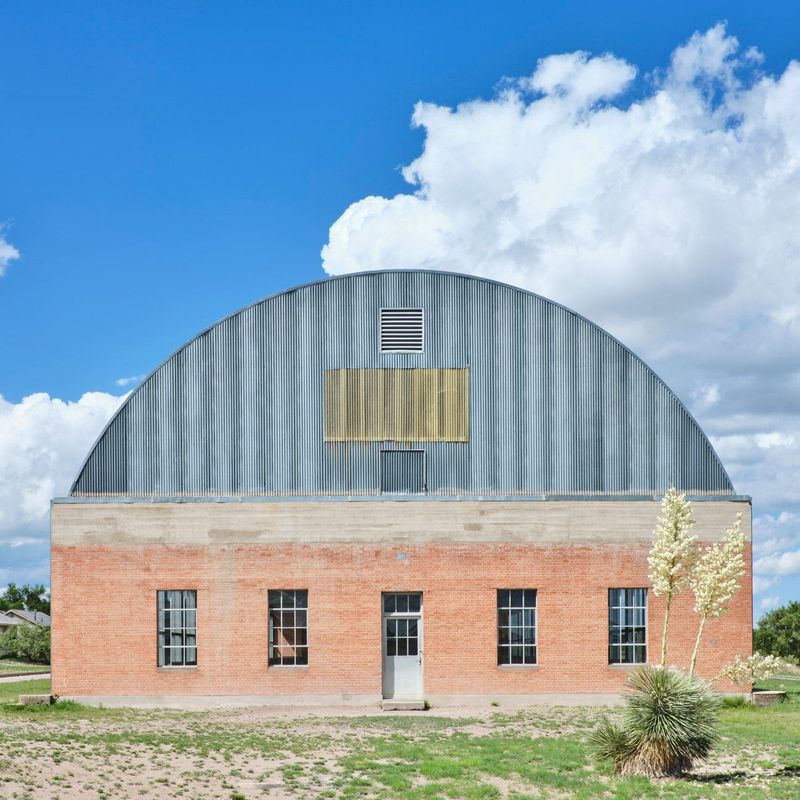
At World Archi Design, we have long tracked the tension between adaptive reuse and conservation, particularly when a building's history becomes inseparable from the art it houses. The artillery sheds at Marfa represent an especially knotty version of this problem: Judd himself intervened architecturally, capping the original structures with arched corrugated steel roofs in an attempt to stop the leaks. That intervention is now part of the site's heritage, yet it never fully solved the problem it was designed to address. The Chinati Foundation has announced a comprehensive restoration that will finally reconcile Judd's artistic vision with the practical demands of preservation, climate control, and visitor access.
The Original Transformation
When Judd acquired the decommissioned Fort D.A. Russell in the late 1970s, he was pursuing an idea that had animated his work for years: that art should occupy space on its own terms, free from the compromises of gallery walls and museum hierarchies. The pair of long sheds, originally built to shelter military vehicles and weaponry, offered raw volume and natural light. Judd saw them as ideal containers for an installation that would exist in perpetual dialogue with its surroundings.
The 100 boxes that now occupy the sheds are fabricated from 3003 aluminum alloy, a material specified by Judd for its reflective qualities and left entirely unfinished. This decision was both aesthetic and philosophical: the aluminum would capture and modulate the shifting desert light, creating a visual field that changed continuously throughout the day. But it also made the work exceptionally vulnerable. Without a protective coating, the alloy is prone to scratching, oxidation, and deformation. The precision of the grid formation was integral to the installation's meaning; even minor shifts in position would compromise Judd's carefully calibrated spatial relationships.
Judd's architectural fix, the secondary roof structure, was a pragmatic response to an immediate problem. It was not, however, a permanent solution. Over the decades, water continued to find its way through joints and seams, pooling on concrete floors and occasionally threatening the artworks themselves. Stephen Martin, the foundation's director of preservation and planning, noted that severe rainstorms could require as many as 100 buckets placed strategically throughout the interior, a makeshift arrangement that underscores the gap between Judd's ambitions and the building's performance.
The Accumulated Costs of Environmental Exposure
Beyond water infiltration, the sheds have struggled with ventilation and thermal control. The surrounding desert generates relentless dust storms, and fine particles of sand and soil would infiltrate through gaps in the building envelope. This grit settled on the aluminum surfaces, dulling their reflective finish and complicating conservation efforts. Meanwhile, the lack of effective climate control meant that interior temperatures could swing wildly, soaring during summer days and plummeting at night.
Conservators discovered that these temperature fluctuations were causing the aluminum boxes to expand and contract, gradually shifting them out of alignment. The grid that Judd had established with such precision was drifting, a slow erosion of the installation's geometric integrity. For a work predicated on exactitude, this creep represented a fundamental threat. The question facing the Chinati Foundation was not simply how to stop the leaks, but how to stabilize the environment in a way that would halt further deterioration without altering the visitor experience or compromising the building's character.
This challenge places the artillery sheds within a broader conversation about the conservation of site-specific art. Unlike a painting that can be moved to a climate-controlled vault, Judd's installation is inseparable from its location. The light, the scale, the relationship between interior and exterior are all constitutive elements of the work. Any intervention had to respect that interdependence, addressing technical failures without sanitizing the rawness that makes the site compelling.
An Invisible Restoration
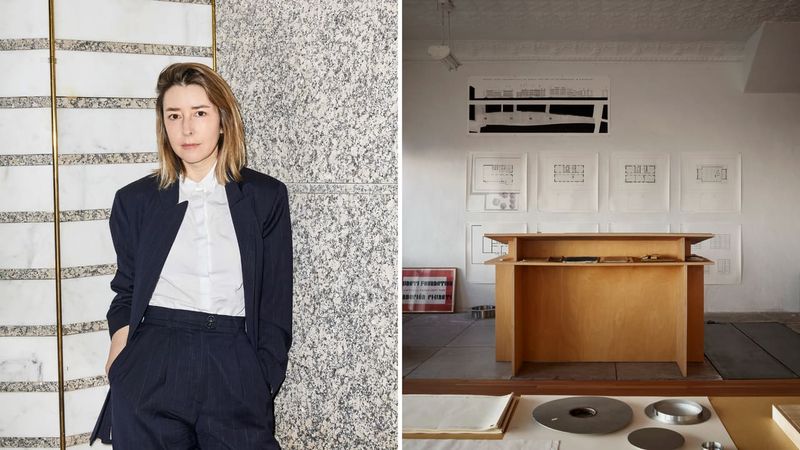
The design team assembled by the Chinati Foundation includes architect Troy Schaum, whose firm previously restored the foundation's John Chamberlain Building, and engineering consultants from TYLin. Schaum's approach is guided by a principle he describes as forensic: the goal is to solve problems without leaving visible evidence of the intervention. The restoration will incorporate several layers of environmental control, each calibrated to address a specific vulnerability.
First, the team will apply an invisible film to approximately 10,000 square feet of glazing. This coating will filter ultraviolet radiation, protecting both the aluminum and visitors from cumulative exposure, while preserving the quality of natural light that is central to the installation's effect. Second, the building will be positively pressurized, a mechanical strategy that circulates conditioned air and prevents dust infiltration by maintaining slightly higher pressure inside than out. This technique is common in cleanroom environments and museum conservation labs, but deploying it in a structure of this scale and character required careful calibration.
The most significant intervention addresses the roof itself. Rather than replacing Judd's corrugated steel addition, the design team will install a new structural layer that improves drainage, redirects water flow, and incorporates rainwater harvesting. This system will capture runoff for reuse on site, a gesture toward sustainability that also reduces the volume of water that might find its way into the building envelope. The engineering required to achieve this without altering the roof's profile or adding visible hardware reflects the team's commitment to what Schaum calls a "heist movie" logic: get in, make changes, leave no trace.
Restoring the Ground Plane
The restoration extends beyond the buildings themselves to encompass the surrounding landscape, which bears its own scars from decades of military use. The soil has been compacted and degraded, native plant communities disrupted, and natural drainage patterns altered. Landscape consultants Maggie Tsang and Jim Martinez are leading an ecological restoration effort that will analyze soil composition, reintroduce indigenous species, and reconfigure water flow to support long-term regeneration.
This dimension of the project aligns with a growing recognition, visible across projects we have covered in recent years, that landscape is not merely a setting for architecture but an active system that requires stewardship. Judd himself was attentive to the relationship between his installations and the desert ecology; the foundation's decision to invest in land restoration is consistent with that ethos. The work will also address fire risk, a persistent concern in arid environments where dry grasses can ignite and spread rapidly.
Accessibility improvements are woven into the restoration plan. The design team will widen pathways and incorporate ramps, making it easier for visitors with mobility challenges to navigate the site. This is a delicate negotiation: enhancing access without imposing a layer of infrastructure that feels incongruous with the site's minimalist character. The challenge is to make the sheds more welcoming without smoothing away the sense of encounter that defines the Marfa experience.
The Conservation of the Aluminum Itself
For the first time since the installation was completed in the 1980s, the 100 aluminum boxes will be temporarily relocated to allow for detailed analysis and conservation. This work will be overseen by Alfred Lippincott, the fabricator who originally produced the pieces under Judd's direction, in collaboration with the Getty Conservation Institute and Bogna Skwara, Chinati's head of conservation. The relocation is both logistically complex and symbolically significant: moving the boxes acknowledges their status as discrete objects even as it underscores their dependence on the specific conditions of the sheds.
The conservation process will likely involve cleaning, surface analysis, and minor repairs to address scratches or deformations that have accumulated over four decades. The team will also document the precise position of each box, using laser measurement to ensure that when the installation is reassembled, it matches Judd's original grid as closely as possible. This forensic attention to detail reflects a broader shift in conservation practice, where digital tools enable a level of precision that would have been unimaginable when the work was first fabricated.
Lippincott's involvement is particularly valuable. As the original fabricator, he possesses tacit knowledge about the material properties and construction techniques that shaped the boxes. This kind of experiential expertise is difficult to transmit through documentation alone; having Lippincott on site allows the conservation team to make informed decisions about how to handle and stabilize the aluminum without inadvertently introducing new problems.
A Model for Site-Specific Conservation
The artillery sheds restoration is, according to Chinati executive director Caitlin Murray, the most significant preservation project the foundation has undertaken in a generation. That assessment speaks not only to the scale of the intervention but to its implications for how we think about conserving site-specific art. The project is expected to take between two and three years, during which the sheds will be closed to the public. This hiatus is itself a departure: Marfa has become a pilgrimage site for architects, artists, and design enthusiasts, and the temporary closure of one of its most iconic installations will reshape the visitor experience.
Yet the restoration also offers an opportunity to reset expectations. By addressing the environmental and structural issues that have compromised the sheds for decades, the Chinati Foundation is ensuring that Judd's vision can endure for another generation. More broadly, the project models a conservation approach that balances fidelity to the artist's intentions with pragmatic problem-solving. It acknowledges that buildings age, that materials fail, and that even the most carefully conceived interventions require revision over time.
This is not a restoration that seeks to return the sheds to some imagined original state. Judd's corrugated roof will remain, a testament to his own engagement with the building's shortcomings. Instead, the project adds another layer, one designed to be as invisible as possible while fundamentally altering the building's performance. It is a strategy that respects both the historical accumulation of interventions and the need for the architecture to function reliably in support of the art.
Looking Forward
As the restoration moves forward, it will be worth watching how the design team navigates the inevitable trade-offs between preservation and performance. The goal of invisibility is admirable, but every intervention leaves some mark, whether in the form of altered airflow, refined light quality, or improved accessibility. The question is not whether the sheds will change, but whether those changes will feel consistent with the site's character.
The Marfa experiment has always been about more than the artworks themselves. It is a test case for whether art, architecture, and landscape can coexist in a state of productive tension, each element shaping and responding to the others. The artillery sheds, with their history of leaks and improvised fixes, embody that tension. The restoration will not resolve it, but it should stabilize the conditions under which that tension can continue to generate meaning. For a site built on the premise that art should occupy space on its own terms, that may be the most faithful form of preservation.
Save this story. A free account keeps your reading list and the 07:00 email in one place.
CREATE FREE ACCOUNT →SIGN IN