
Beyond the Bill of Quantities
Construction has long measured value in immediate terms: cost per square metre, delivery schedules, installation efficiency. Yet this accounting misses a crucial variable. A roof that lasts fifty years will be installed, dismantled, and replaced at least once during the century-long service life of a typical institutional building. Each cycle demands fresh material extraction, manufacturing energy, transportation, skilled labour, and waste disposal. The environmental ledger accumulates entries long after the contractor leaves the site.
Life Cycle Assessment (LCA) offers a more complete framework. It tracks a material from quarry or factory through installation, decades of weathering, maintenance intervals, and eventual removal. The method reveals patterns invisible to conventional procurement. Products with modest embodied carbon can generate substantial lifetime impacts if their replacement cycles are short. Conversely, materials that demand greater upfront energy may deliver net environmental savings by eliminating future interventions.
The Replacement Multiplier
Roofing systems illustrate the principle clearly. Natural slate quarried in Galicia carries an estimated service life exceeding one hundred years. Clay tiles average fifty-two years; concrete variants reach forty-eight; fibre cement approaches forty-seven. These figures vary with installation quality, climate exposure, and maintenance regimes, yet the order of magnitude holds.
Over a century, a roofing assembly rated for fifty years requires two complete replacements. Each iteration involves scaffolding, membrane removal, substrate inspection, new fastener penetrations, and disposal of the old system. A slate roof installed in 1926 can still be performing its waterproofing function in 2026, having avoided those interventions entirely. The avoided work translates to fewer lorry movements, less landfill burden, and no disruption to building occupants during tear-off and re-roofing.
CUPA PIZARRAS has introduced a century-long manufacturer warranty for its natural slate products in the United States, a guarantee that shifts durability from an abstract claim to a contractual obligation. The move places long-term performance at the centre of specification conversations, rather than treating it as a secondary consideration after cost and aesthetics.
Maintenance as an Environmental Input
Maintenance schedules shape a material's lifetime carbon profile. Some cladding systems require periodic recoating to resist UV degradation or moisture ingress. Others depend on chemical treatments to preserve dimensional stability or prevent biological growth. Each intervention consumes labour, solvents, transport energy, and generates residual waste.
Natural slate formed through metamorphic processes over geological timescales. Its mineral structure resists freeze-thaw cycling, UV exposure, and acidic precipitation without protective coatings. The material reaches the building site through cutting and manual splitting, techniques that avoid chemical additives or artificial binders. Colour remains stable across decades; physical properties hold without surface treatments.
Quarries in Galicia and Castilla y León supply the material, which undergoes individual quality inspection before classification. Each piece carries traceability data recording its origin, production date, and technical characteristics. The portfolio includes variations in dimension, texture, and format. In the United States, the CUPA 14, CUPA 98, and CUPA 7 ranges address different architectural applications, while the CUPACLAD system extends the material to ventilated facade assemblies.
Laure Ferrari, working on a facade project, noted that natural slate "illuminates the facade and generates different shades throughout the day." The observation points to a quality distinct from maintenance reduction: the material's interaction with light changes as sun angles shift, without relying on applied finishes that would require renewal.
Patina Versus Deterioration
Some materials acquire character through exposure. Limestone weathers to a mellow surface; timber develops a silver-grey patina; brick softens in hue. Others lose their original appearance in ways that signal functional decline: coatings crack, colours fade unevenly, surface integrity compromises. The distinction matters for buildings intended to remain in service for generations.
Natural materials often establish a relationship with time that manufactured assemblies struggle to replicate. Each piece of slate carries its own mineral composition and texture, allowing roofs and facades to develop individuality without depending on factory-applied finishes. The variability is geological, not industrial.
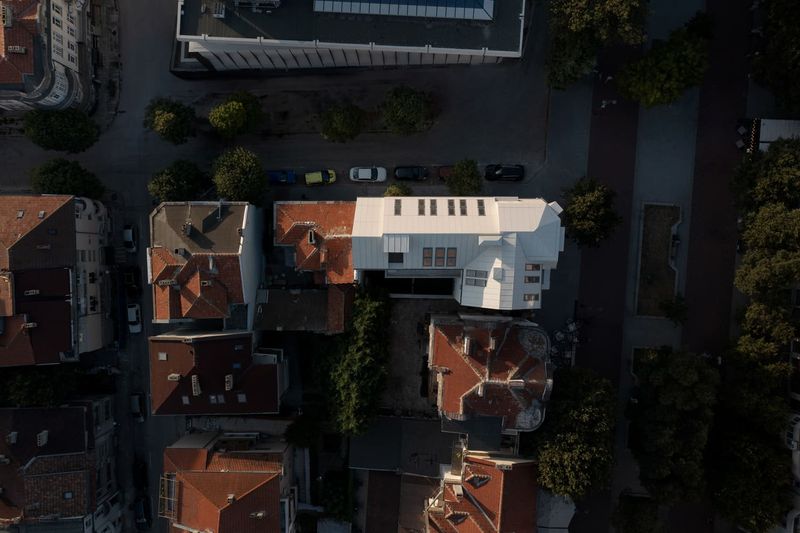
Zaha Hadid Architects demonstrated this quality at the Antwerp Port House, where adaptive reuse required retaining the original structure while introducing a contemporary intervention. The roof of the existing building, recalling sixteenth-century architectural traditions, received CUPA 4 slate quarried at Armadilla. The choice acknowledged both the heritage context and the need for a material that would remain functional across another century.
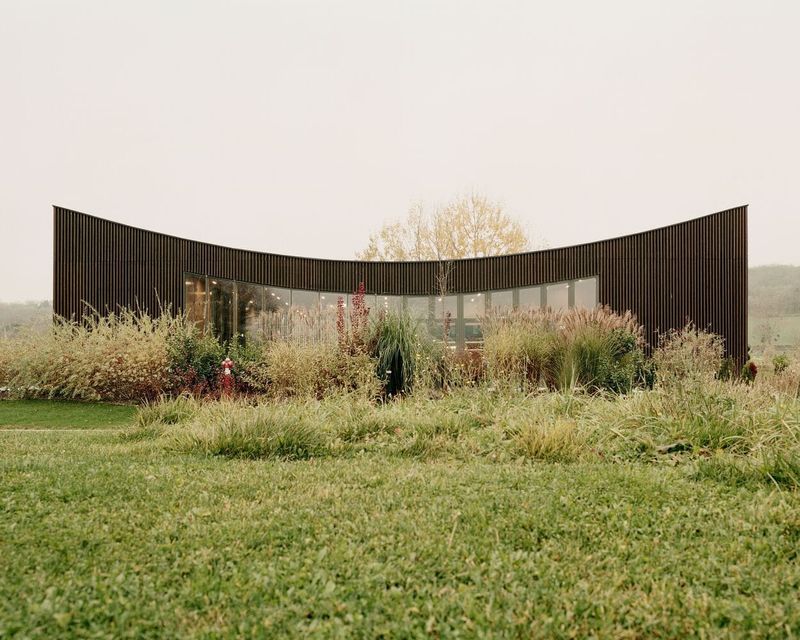
Villa P by N+P Architecture deployed natural slate in two configurations: roof coverage and a CUPACLAD 101 LOGIC rainscreen cladding system. The project sits near the ocean, where salt spray and high winds test material resilience. The architects observed that "slate is a great material standing the test of time. At the same time, it withstands the harsh and brutal conditions close to the ocean." The statement reflects a practical assessment: coastal environments accelerate the degradation of many cladding systems, yet slate's mineral composition resists the corrosive effects.
Guarantees as Specification Tools
A century-long warranty introduces a new variable into material selection. It functions as more than a risk-transfer mechanism; it signals a manufacturer's confidence in documented performance data and compels attention to installation standards. A guarantee of that duration requires traceability systems, quality control protocols, and an understanding of how the material behaves across diverse climates and building typologies.
For specifiers, such guarantees provide a reference point when comparing options. They do not replace careful detailing or site-specific analysis, but they reinforce the case for materials with proven longevity. In an industry where responsibility for building performance is often fragmented across designers, contractors, and product suppliers, a contractual commitment spanning a century clarifies accountability.
The economic logic extends beyond environmental metrics. Building owners face lower lifecycle costs when replacement intervals stretch from decades to a century. Institutional clients, particularly those managing portfolios of civic, educational, or cultural buildings, benefit from predictable long-term performance. Avoided disruption during roof replacement carries value: no temporary relocation of occupants, no risk of water damage during tear-off, no coordination with academic calendars or event schedules.
Designing for the Long Term
Durability intersects with broader architectural ambitions. Heritage conservation relies on materials that age gracefully and remain available for repair. Adaptive reuse projects succeed when existing assemblies can be retained or complemented with compatible interventions. District-scale urban planning benefits when individual buildings do not require frequent envelope renewals that generate waste and disrupt streetscapes.
The CUPACLAD systems, which extend slate to ventilated facades, address contemporary performance requirements: thermal decoupling, moisture management, ease of inspection. The systems combine a material with centuries of precedent with installation methods that meet current building codes and energy standards. The result is an assembly that can satisfy both technical performance and aesthetic continuity.
Anima Architects noted the client reception of slate cladding: "When using a wooden cladding system, the client is a bit resistant to the maintenance. Yet with slate, this concern is less due to its durability and easy maintenance." The remark captures a shift in client expectations. As building owners become more aware of lifecycle costs, materials that minimise ongoing intervention gain favour.
A Metric for Responsibility
Selecting construction materials on the basis of initial cost or embodied carbon alone overlooks a significant portion of their environmental and economic impact. Replacement cycles, maintenance demands, and end-of-life disposal all contribute to a building's total resource consumption. Materials that endure reduce the frequency of those interventions, delivering environmental savings that compound over time.
The most responsible choice is not always the one with the lowest production footprint. It is the one that delivers reliable performance while minimising the need for future resources. For architects and specifiers, this requires looking beyond the procurement phase and considering how a material will behave across the building's intended service life. Durability, once a secondary specification criterion, has become a performance metric with measurable environmental and economic consequences.
Natural slate, with its geological origins and century-long service potential, exemplifies this shift. It represents not a return to traditional methods, but a recalibration of how the industry values longevity. As the construction sector confronts the environmental cost of frequent replacement, materials that endure offer a pathway to buildings that demand less from future generations.
Save this story. A free account keeps your reading list and the 07:00 email in one place.
CREATE FREE ACCOUNT →SIGN IN