A Philosophy Born in the Shadow of Industry
At World Archi Design, we've noticed a recurring thread in the work of studios we admire: a quiet resistance to the ego-driven object, a preference for materials that speak of place rather than authorship. That thread often traces back to a single term coined in Japan a century ago. Mingei, a contraction meaning folk craft, emerged not as a nostalgic retreat but as a deliberate counterargument to the encroaching logic of mass production. Japanese philosopher Sōetsu Yanagi, working alongside potters Shoji Hamada and Kanjiro Kawai, introduced the word in 1925, drawing on the ideas of John Ruskin and William Morris, whose Arts and Crafts movement had similarly questioned the costs of industrialisation decades earlier.
Yanagi's insight was not to invent a new category of object but to name what had always existed: the beauty inherent in things made for use, by hands trained through repetition, from materials close at hand. These were items without signature, without pretence, without the burden of artistic intent. They were bowls, textiles, baskets, tools shaped by necessity and refined by accumulated knowledge. As factories began to redefine daily life in early twentieth-century Japan, mingei offered a framework for recognising what was at risk of disappearing.
Nine Principles, One Ethos
The characteristics Yanagi outlined for mingei objects form a coherent design philosophy, one that remains surprisingly relevant. First, utility: the object must serve a function. Second, anonymity: it should emerge from the collective skill of artisans rather than the vision of a named creator. Third, quantity: mingei objects are made in multiples, intended for wide circulation. Fourth, they demonstrate mastery born from sustained labour. Fifth, they rely on division of labour, with different hands contributing to the whole. Sixth, they carry forward inherited knowledge. Seventh, they respond to external conditions such as climate, available materials, local need. Eighth, they reveal the culture and terrain of their origin. Ninth, they must be affordable, accessible to ordinary people.
This is not a set of aesthetic preferences so much as a description of how vernacular production operates when it is allowed to function outside market pressures and artistic ambition. The objects that result are shaped by their context: snow clogs from Yamagata Prefecture, indigo-dyed cotton chest covers, ceramic braziers cradled by fishermen on cold boats. Each embodies a solution to a specific problem, worked out over generations, refined through use.
A Museum as Archive and Argument
The Japan Folk Crafts Museum, established in Tokyo in 1936, functions as both repository and manifesto. Its collection of approximately 17,000 objects spans Japan, China, Korea, Taiwan, and the United Kingdom, encompassing ceramics, woodwork, textiles, metalwork, basketry, stonework, and painting. The selection reflects Yanagi's eye, his particular sensitivity to the unnamed and the utilitarian. The museum's existence is itself an argument: that these objects warrant preservation, study, and elevation to the status of cultural knowledge.
Japan's geography contributes to the richness of its mingei tradition. The archipelago stretches across multiple climate zones, each region developing distinct material cultures in response to local conditions. Isolation played a role as well. From 1639 to 1854, during the Edo period, Japan pursued a policy of near-total seclusion, limiting foreign trade and influence. The intention was political, to consolidate power and forge a unified identity, but the effect was to slow industrialisation. While Britain pioneered factory production in the eighteenth century, Japan remained largely pre-industrial. Traditional craft practices continued uninterrupted, evolving slowly, embedded in daily life.
When the Meiji Restoration ended isolation in the mid-nineteenth century, the new government pursued rapid modernisation, importing Western technologies and methods. Industrialisation arrived swiftly, and with it the displacement of handcraft by machine production. Mingei emerged precisely at this hinge point, as one mode of making gave way to another. It was both elegy and manifesto, a way of seeing what was being lost and insisting on its value.
The Contemporary Resonance
Naoto Fukasawa, the industrial designer and current director of the Japan Folk Crafts Museum, has articulated why mingei thinking continues to matter. He draws a distinction between design and fine art, arguing that the designer's role is not self-expression but the creation of functional objects that respond to context, materials, and culture. This, he suggests, aligns with the underlying spirit of mingei. The designer, like the anonymous craftsperson, works within constraints, shaping solutions that emerge from conditions rather than imposing a personal vision.
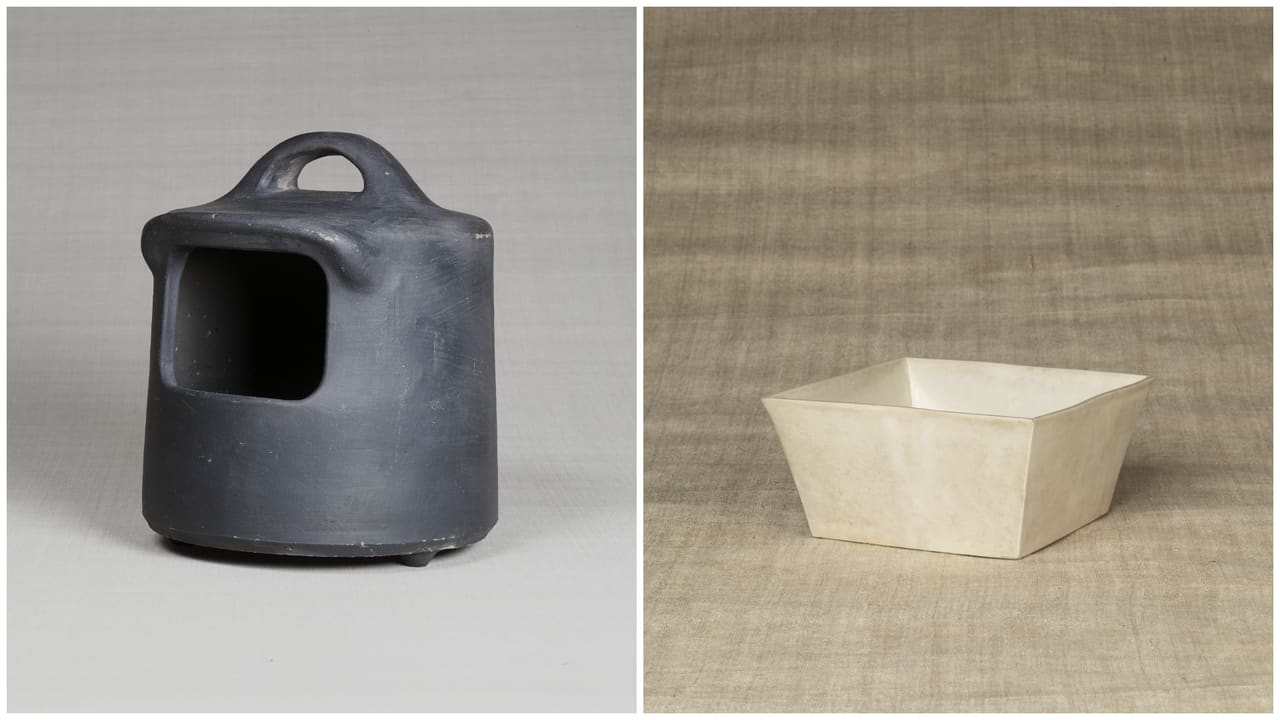
Fukasawa points to a particular object in the museum's collection: a ceramic brazier designed to be held between the legs of fishermen working in cold conditions. The form is ingenious, a response to a specific need. What strikes him is not just the object's functionality but the care embedded in its conception, the attention to human comfort in a harsh environment. He argues that such thoughtfulness, such attunement to lived experience, is fundamentally human. It cannot be replicated by algorithm or artificial intelligence.
This observation feels especially pertinent now, as automation and machine learning reshape creative industries. Fukasawa suggests that what draws people to handmade objects is precisely what machines cannot reproduce: the inconsistencies, the traces of human decision-making, the small variations that arise from working by hand. These are not flaws but evidence of presence, of attention, of care. They are the marks of making that mingei philosophy recognised and valued a century ago.
Precedents and Parallels
The mingei movement shares conceptual ground with other twentieth-century design philosophies. The Bauhaus, founded in Germany in 1919, similarly sought to reconcile craft and industry, though its emphasis on standardisation and geometric rationality diverges from mingei's embrace of irregularity and regional specificity. Scandinavian functionalism, particularly the work of designers like Alvar Aalto and Kaare Klint, found middle ground, valuing both serial production and the warmth of natural materials. The American Studio Craft movement, which emerged in the 1950s, reasserted the value of handwork in an increasingly industrial landscape, though its focus on individual artistry differs from mingei's commitment to anonymity.
What distinguishes mingei is its insistence on the everyday. It does not elevate craft into a separate sphere of artistic production but locates beauty in the ordinary, the useful, the accessible. This has implications for how we think about contemporary design. If mingei teaches anything, it is that thoughtful making need not announce itself, that the best objects often go unnoticed until they are absent.
The Uncontrollable Element
Across the projects we've covered this year, from adaptive reuse schemes in rural Japan to biophilic interventions in dense urban cores, we've seen a recurring interest in materiality that resists total control. Architects specify rammed earth that will age unpredictably, timber joinery that records the marks of its making, lime plaster that settles unevenly. These choices reflect a broader shift away from the seamless, the perfect, the machine-polished. They reflect, whether consciously or not, a mingei sensibility.
Fukasawa's observation about the uncontrollable element is key. Machine production offers consistency, repeatability, precision. These are valuable qualities, essential for many applications. But they also flatten experience, eliminate variation, remove the trace of human involvement. Mingei objects, by contrast, carry evidence of their making. The glaze on a ceramic bowl pools differently from piece to piece. The weave of a textile varies slightly across its surface. These inconsistencies are not defects but signals: this was made by a person, for a person, in a particular place and time.
This is not an argument for rejecting technology or retreating into nostalgia. It is, instead, a call to recognise what is lost when efficiency becomes the sole measure of value. Mingei offers a counterweight, a set of principles that prioritise use, context, and the accumulated knowledge of communities over the logic of optimisation and scale.
What Remains
A century after its coining, mingei persists not as a historical curiosity but as a living framework. Designers continue to visit the Japan Folk Crafts Museum, seeking lessons in form, material, and process. Contemporary makers reference mingei principles in their work, whether explicitly or through parallel intuition. The philosophy endures because it addresses something fundamental: the relationship between making and use, between object and context, between individual skill and collective knowledge.
The challenge mingei poses to contemporary design is not to replicate folk objects but to absorb their underlying logic. What would it mean to design with the same attentiveness to place, the same willingness to let material and process shape outcome, the same humility about authorship? What would it mean to value accessibility and utility as highly as formal innovation? These questions do not have simple answers, but they remain urgent. In an era defined by rapid technological change and environmental precarity, mingei's century-old insights feel less like historical curiosity and more like necessary corrective.
The ceramic brazier cradled by fishermen, the snow clogs from Yamagata, the indigo-dyed chest covers - these objects survive in museum collections, but the thinking that produced them remains available. It asks us to attend to the everyday, to recognise beauty in the useful, to value the hand that shapes and the knowledge that guides it. That remains a compelling proposition, one that continues to shape how thoughtful designers approach their work.
Save this story. A free account keeps your reading list and the 07:00 email in one place.
CREATE FREE ACCOUNT →SIGN IN