
The Question of Place
What makes a town visually coherent? At World Archi Design, we've been tracking the relationship between vernacular architecture and regional identity, and the answer is rarely straightforward. Climate dictates rooflines and material palettes. Settlement history determines street grids and building typologies. Cultural memory influences ornamentation and scale. When these forces align, a town achieves something beyond mere prettiness: it becomes legible, a readable text of place.
The United States offers an unusual laboratory for studying this phenomenon. Within a single nation, you can trace the arc from Spanish colonial planning in the Southwest to New Urbanist experiments on the Gulf Coast, from German immigrant craft traditions in the Midwest to modernist civic ambition in Indiana. Each region has produced settlements that crystallize local architectural character, and examining them in aggregate reveals patterns about how Americans build, inhabit, and value their small-town environments.
Southern Coastal Vernacular
Along the Gulf Coast and Atlantic seaboard, architectural expression follows the dictates of heat, humidity, and hurricane. Fairhope, Alabama exemplifies the type: live oak canopies provide natural cooling, while the French Quarter district demonstrates how European spatial planning adapted to Mobile Bay's microclimate. The brightly painted facades function as solar reflectors, a practical response dressed in decorative language.
Further east, Seaside, Florida represents a different strand of coastal thinking. As one of the first New Urbanist communities, it borrowed heavily from Caribbean and Gulf Coast precedents, particularly the shotgun house and the deep front porch, but codified them into strict design guidelines. The result is simultaneously authentic and constructed, a debate that continues to animate discussions about historicist architecture. The pastel palette here is deliberate rather than accumulated, which gives the town a different texture than organically evolved settlements.
Cape May, New Jersey offers a northern counterpoint. The concentration of Victorian gingerbread architecture reflects the town's 19th-century heyday as a resort destination. The ornamental excess, typical of that era's coastal building, creates a rhythmic streetscape where each house competes for visual attention yet somehow coheres into a unified whole. The boardwalk mediates between town and ocean, a threshold space that acknowledges the power of adjacency in coastal urbanism.
Mountain Towns and Altitude
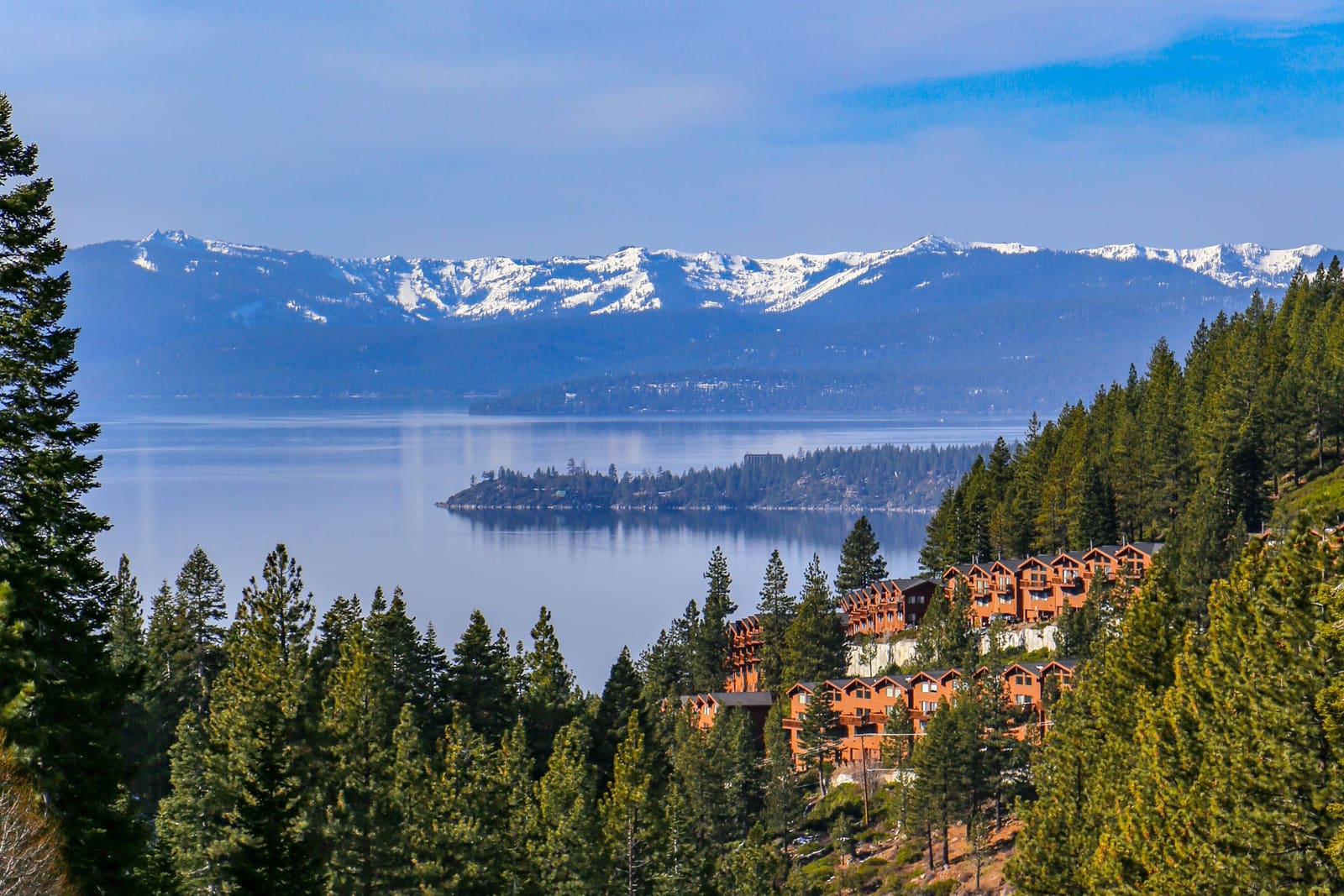
In elevated terrain, architecture confronts different pressures. Breckenridge, Colorado and Whitefish, Montana both emerged from 19th-century resource extraction, gold and timber respectively, and both retain the compressed downtown form typical of mining settlements. What distinguishes them now is how they've managed growth. Whitefish's ban on national chain stores in the downtown core has preserved a fine-grained retail character increasingly rare in American resort towns. The policy decision becomes architectural outcome.
Sedona, Arizona presents a unique case of landscape overwhelming built form. The red rock formations are so visually dominant that the town's Main Street District reads almost as stage set, a necessary infrastructure for accessing the geology. Cathedral Rock, a butte formation south of town, exemplifies how natural monumentality can diminish human-scale building. Architects working here face the challenge of creating structures that neither compete with nor disappear into the terrain.
Ketchum, Idaho at nearly 6,000 feet demonstrates how altitude influences material choice and building orientation. The ski resort model, pioneered in Sun Valley adjacent to Ketchum, established a mountain town typology: lodges with steep rooflines for snow load, extensive glazing for views, and heavy timber framing that references regional building traditions while accommodating large interior spans.
Midwest Craft and Preservation
The Midwest offers perhaps the most varied architectural character, from German immigrant settlements to modernist civic projects. Amana Colonies in Iowa preserves a 1850s communal settlement pattern, with workshops and residences arranged according to religious and economic principles. The architecture is purposefully plain, reflecting Inspirationist theology, yet the spatial organization reveals sophisticated thinking about shared resources and community structure.
Columbus, Indiana stands as an anomaly, a small city that became a proving ground for modernist architecture through an unusual patron-architect relationship. The Cummins Foundation's architecture program, which paid design fees for significant buildings, brought Eero Saarinen, I.M. Pei, and Harry Weese to a town of 50,000. The result is a distributed museum of midcentury civic architecture: schools, fire stations, libraries, all designed by first-tier practitioners. The collection demonstrates how institutional clients can shape an entire town's architectural character.
Holland, Michigan maintains its Dutch heritage through more than tulip festivals. The urban form follows low-country precedents: compact downtown, clear edge between town and agricultural land, and civic buildings that anchor visual axes. The red lighthouse functions as both navigation aid and town symbol, a vertical marker in otherwise horizontal terrain.
Maritime Heritage and Working Waterfronts
Coastal towns built around fishing and maritime trade share certain formal characteristics: wharfs and piers that structure the relationship between land and water, boat storage that dominates the visual field, and housing stock that climbs hillsides for views and drainage. Stonington, Maine exemplifies the type. The cedar-shake shingles that clad most buildings weather to silver-gray, creating a monochromatic palette that reads as background to the working waterfront. This is vernacular architecture in its truest sense, form following function without self-consciousness.
Mystic, Connecticut has evolved differently, transforming from working port to heritage tourism destination. The maritime museum and preserved wooden vessels create an architectural palimpsest, where contemporary visitor infrastructure overlays historic maritime building types. The harbor still structures the town's visual identity, but the relationship has inverted: boats are now objects to be viewed rather than tools of economic production.
Carmel-by-the-Sea, California demonstrates how artistic community can generate architectural character. The fairy-tale cottages and cobblestone alleys reflect the town's early 20th-century bohemian identity, when artists and writers sought affordable coastal property. The painstakingly restored Carmel Mission, founded in 1771, provides historical ballast, but the town's distinctive architecture comes from a later period of romantic medievalism. Clint Eastwood's tenure as mayor in 1986 brought unexpected attention to local land use policy, particularly debates about commercial development and architectural review.
Desert Urbanism and Spiritual Landscapes
In arid regions, settlement patterns respond to water scarcity and extreme temperature swings. Chimayo, New Mexico, established in the late 1700s by Spanish colonists, demonstrates how adobe construction creates thermal mass for passive cooling. The village clusters around El Santuario de Chimayo, a pilgrimage church where spatial hierarchy reflects religious importance. The architecture is additive, buildings growing room by room as families expand, creating irregular massing that contrasts with grid-planned American towns.
The Southwest's Spanish colonial heritage produced a different urban form than Anglo-American settlement patterns: plaza-centered rather than main street linear, thick-walled rather than wood-framed, introverted courtyards rather than front porches. These formal differences encode cultural assumptions about public and private space.
Great Lakes and River Towns
Inland waterways generated their own settlement typologies. Annapolis, Maryland combines maritime function with governmental purpose, the state capital and home to the US Naval Academy. The urban form reflects both roles: formal axes for civic buildings, organic street patterns near the harbor. The architecture ranges from 18th-century Georgian to contemporary infill, a palimpsest of building periods that somehow maintains visual coherence through consistent scale and material palette.
Cape Girardeau, Missouri on the Mississippi River demonstrates how bridge infrastructure can become civic monument. The suspension bridge here structures views and creates a gateway threshold. River towns often develop strong linear organization, with primary streets running parallel to the water and cross streets providing visual and physical access.
Appalachian Craft Traditions
Berea, Kentucky has built its identity around craft production, establishing itself as a center for weaving, furniture making, and other traditional practices. The architecture reflects this emphasis on making: workshops with north-facing windows for consistent light, retail spaces that double as demonstration areas, and residential buildings that incorporate studio space. The town's designation as folk art capital rests not just on individual makers but on a built environment that supports craft production.
This represents a different model of economic development, where cultural production shapes urban form rather than following it. The architecture becomes infrastructure for a specific kind of creative work.
Looking Forward
These fifty-one towns represent a fraction of American settlement patterns, but they illuminate how regional forces shape architectural character. Climate, topography, cultural heritage, economic base, and policy decisions all leave marks on the built environment. What they share is coherence: a readable relationship between place and building.
As development pressure increases in small towns across the country, particularly those with recreational economies, the challenge becomes maintaining this coherence while accommodating growth. Whitefish's chain store ban and Seaside's design codes represent two approaches, regulatory frameworks that attempt to preserve character through rules. Columbus's patron-architect model suggests another path, where exceptional design becomes civic identity.
The question for architects and planners is how to honor vernacular traditions without freezing them in amber, how to allow evolution while maintaining legibility. These towns offer lessons not in replication but in understanding the forces that create architectural character in the first place.
Save this story. A free account keeps your reading list and the 07:00 email in one place.
CREATE FREE ACCOUNT →SIGN IN