A Different Kind of Flagship
The calculus of luxury SUVs has shifted. Where once these vehicles competed on horsepower and brand heritage, a new generation prioritizes spatial quality and material intelligence. Genesis's GV90 enters this arena not by shouting louder than Mercedes-Maybach or Bentley, but by asking what happens when you treat a vehicle cabin less like cockpit and more like commissioned interior.
At World Archi Design, we've been tracking the South Korean brand's trajectory since its inception. Genesis has carved out a niche through restraint, an approach that translates design confidence into products that don't rely on ostentatious badging. The G80 sedan proved the studio could deliver chauffeur-grade comfort without the theatrical gestures of established luxury marques. Now, with the GV90, that philosophy scales up to a 5.2-meter electric platform.
The Neolun Arch Gate and Spatial Choreography
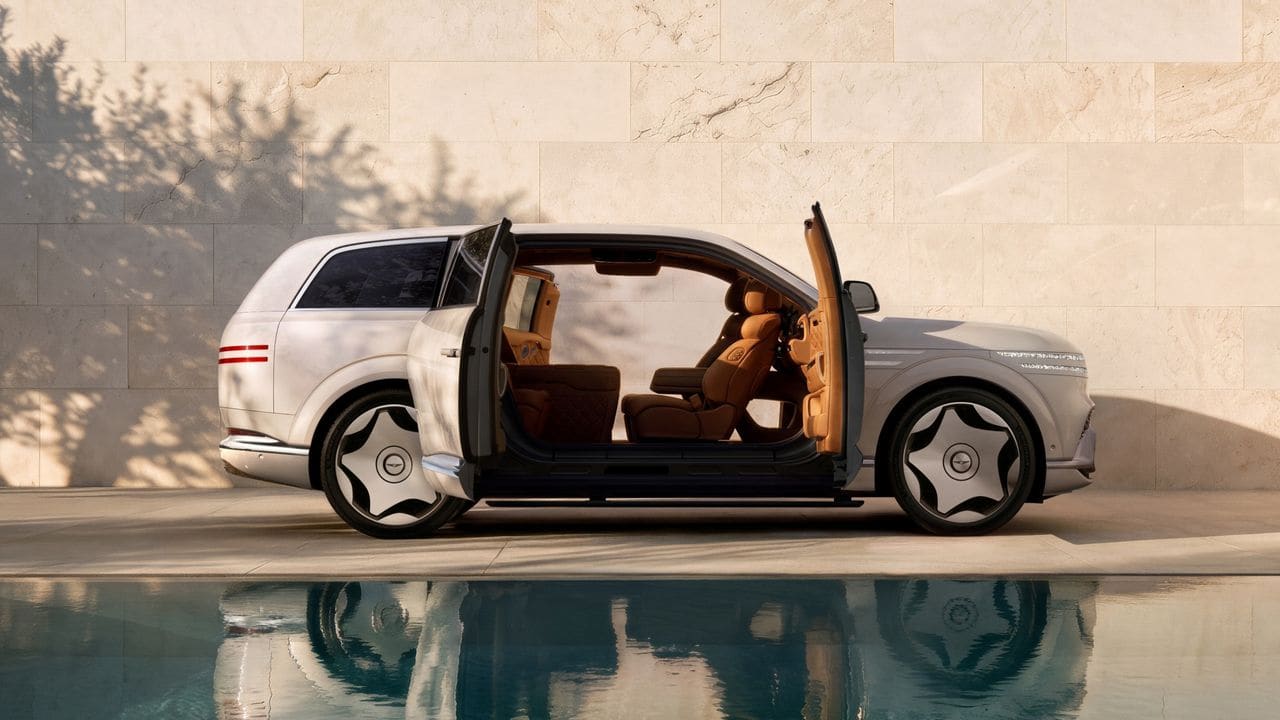
The most technically ambitious feature is what Genesis calls the Neolun Arch Gate, a hidden B-pillar coach door system available on the top Neolun trim. This isn't simply a party trick. Coach doors, historically reserved for coachbuilt vehicles and ultra-luxury sedans like the Rolls-Royce Phantom, solve a fundamental problem: access. The GV90's implementation goes further by concealing the B-pillar entirely when the doors are open, creating an uninterrupted 3,245mm wheelbase opening.
That dimension is worth pausing on. For context, the standard Range Rover measures around 3,000mm between axles. The extra quarter-meter in the GV90 enables a fully flat floor, a luxury made possible by the electric skateboard platform that packages batteries below the cabin rather than requiring transmission tunnels or driveshafts. Genesis leverages this architecture to create what it describes as a bespoke living space, a term that signals intent beyond mere transportation.
The four-seat Executive Suite configuration takes this spatial thinking to its logical conclusion. Front seats swivel to face rearward passengers, transforming the cabin into a mobile conference or lounge. We've seen this idea in concept vehicles for years, from the Mercedes F 015 to various autonomous vehicle studies. What's notable here is Genesis's willingness to offer it in a production vehicle, even if current regulatory frameworks and autonomous technology mean the feature only works when stationary.
Material Palette and Chromatic Ambition
The Neolun launch edition introduces five bespoke color pairings that venture into territory most luxury automakers avoid. Regal Navy paired with Majestic Purple. Tyrian Purple with Travertine Beige. These aren't safe choices. They signal a design team willing to risk polarization in pursuit of a specific aesthetic vision.
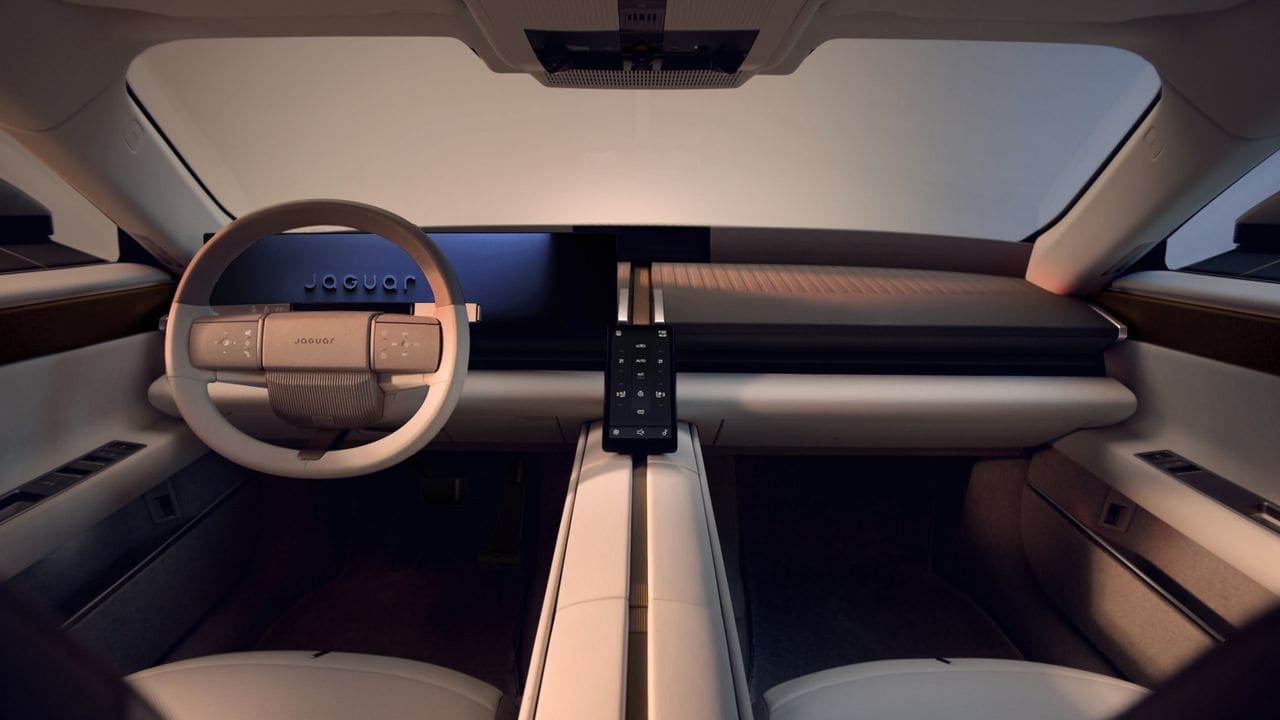
Inside, Genesis specifies leather, wool cashmere, stone, crystal, and wood. The material list reads like an interior design specification rather than an automotive bill of materials. That's intentional. The Ambient Glow lighting system, which the studio describes as evoking a private art gallery, reinforces the idea that this cabin should be read through the lens of spatial design rather than automotive tradition.
The 24.6-inch cinematic display spans the dashboard, a feature that's become table stakes in this segment. More interesting is the 25-speaker Bang & Olufsen system, which in a cabin this size and with this much sound-absorbing material, should deliver acoustic performance closer to a dedicated listening room than a vehicle. Genesis even includes underfloor heating, a detail borrowed from high-end residential construction.
Technical Realities and Range Compromises
The GV90's 123.5 kWh battery delivers a claimed range of 311 miles. That's competitive but not class-leading. The BMW iX xDrive50 achieves similar range with a smaller battery. The Mercedes EQS SUV stretches further. Genesis appears to have prioritized interior volume and feature density over maximum efficiency, a trade-off that makes sense given the vehicle's positioning.
Fast charging capability tops out at 350 kW, which aligns with the current high-water mark for production EVs. In ideal conditions, that should enable 10-80% charging in under 20 minutes, though real-world performance always varies based on temperature, battery conditioning, and charger availability.
The safety systems include what Genesis claims is the world's first roof airbag, a necessary innovation given the all-glass roof structure. Large glass roofs create structural challenges, particularly in rollover scenarios. The roof airbag presumably deploys downward from the edges to create a cushioning layer between occupants and the glass, though Genesis hasn't detailed the exact mechanism.
Precedent and Positioning
The GV90 invites comparison to several recent projects that blur automotive and spatial design. The Lucid Air, for instance, leverages a similar skateboard platform to maximize interior volume, though its sedan format limits absolute space. The Range Rover's latest generation prioritizes material quality and restraint over the brand's traditional rugged imagery. And of course, the Mercedes-Maybach GLS remains the incumbent in this specific niche of full-size luxury electric SUVs.
What distinguishes the GV90 is its willingness to embrace color and material risk. Most luxury SUVs default to black, white, beige, and perhaps a restrained navy. The Tyrian Purple and Majestic Purple options suggest Genesis is courting clients who want differentiation beyond badge and price point. That's a gamble. Bold color specifications often hurt resale values and limit market appeal. But for a brand still building recognition outside South Korea, memorability has value.
The swiveling front seats and conference-room configuration also position the GV90 as forward-looking, even if the technology to fully utilize these features doesn't yet exist. It's a bet that buyers in this segment value the idea of future capability, a signal that they're early adopters of what autonomous luxury mobility might eventually become.
The Seven-Seat Alternative
For buyers less interested in the four-seat luxury theater, Genesis offers a seven-seat configuration. This version presumably eliminates the swiveling front seats and reconfigures the rear into a more conventional three-row layout. It's a practical hedge, acknowledging that not every GV90 buyer wants to sacrifice utility for spatial drama.
The dual configuration strategy mirrors approaches from Volvo (the EX90 offers six or seven seats) and Mercedes (the EQS SUV comes in five or seven-seat layouts). It's a recognition that the full-size luxury SUV segment serves multiple use cases, from family hauler to executive shuttle to status signifier.
Design Language and Brand Evolution
Genesis's design language, characterized by the split headlamp treatment and crest grille, has matured into something coherent across the lineup. The GV90's exterior proportions are restrained given its size. There's no attempt to make the vehicle appear smaller or more aggressive than it is. The stance is confident but not confrontational, which aligns with the brand's broader aesthetic strategy.
This restraint extends to the hidden B-pillar. When the doors are closed, the GV90 reads as a conventional three-box SUV. The drama is reserved for the moment of entry, when the coach doors open and the pillar retracts. It's a theatrical gesture, certainly, but one that's choreographed rather than constant.
The Magma sub-brand, which Genesis positions as its performance line, suggests the studio understands it needs to serve multiple audiences. The GV90 is not a Magma vehicle. It's the opposite, prioritizing serenity and spatial quality over dynamic capability. That segmentation is smart. It allows Genesis to explore different facets of luxury without diluting the core brand message.
What Comes Next
The GV90 arrives as Genesis consolidates its position in markets beyond South Korea. The brand has established distribution in North America, Europe, and select Asian markets, though recognition remains limited compared to German and British luxury marques. The GV90's success will depend partly on whether Genesis can articulate why its approach to luxury, quieter and more spatially focused, deserves consideration alongside more established alternatives.
Pricing hasn't been announced, but expect the GV90 to slot below the Mercedes-Maybach GLS and Bentley Bentayga while undercutting them by enough to make the value proposition compelling. Genesis has historically priced aggressively to overcome brand recognition gaps. The risk is being perceived as a discount alternative. The opportunity is attracting buyers who value design intelligence over badge equity.
We're watching to see whether the Neolun Arch Gate remains exclusive to the top trim or eventually cascades down the range. That feature, more than the battery capacity or range figures, defines the GV90's identity. It's the clearest statement that Genesis views this vehicle as an exercise in spatial design rather than just another entry in the luxury SUV arms race.
Save this story. A free account keeps your reading list and the 07:00 email in one place.
CREATE FREE ACCOUNT →SIGN IN