
The Fixture as Parti
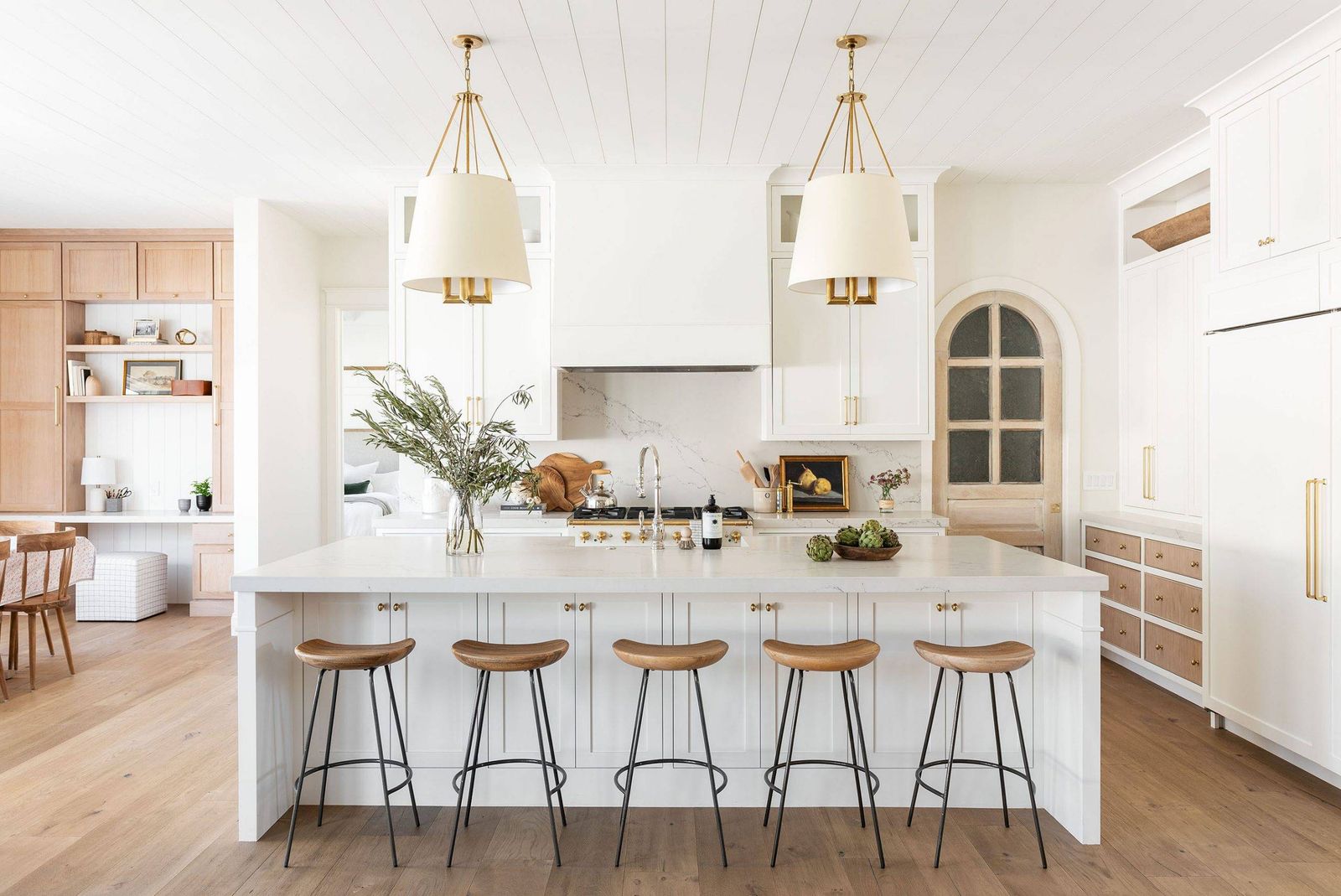
When did the pendant light become more important than the backsplash? Across the projects we've covered this year, one pattern has crystallized: the kitchen fixture is no longer an accessory to the design—it is the design. Architects and interior designers now allocate as much conceptual energy to selecting a luminaire as they once did to specifying cabinetry profiles or countertop materials. The lamp has become the parti, the organizing idea around which spatial hierarchy is built.
This elevation reflects a broader shift in how we conceive of kitchens. No longer purely utilitarian, the contemporary kitchen operates as living room, dining hall, and social anchor. The fixture suspended above the island or table does more than illuminate; it defines territory, signals taste, and establishes the room's material vocabulary. In that sense, lighting has become the most legible statement a designer can make.
Material Vocabulary: From Brass to Woven Fiber
Material choice in kitchen lighting now mirrors the tectonic palette of the architecture itself. Brass detailing—particularly in lampshade-style pendants—has reemerged as a signifier of understated luxury, grounding contemporary interiors with a warm metallic note that counters the prevalence of stainless steel appliances. These fixtures recall mid-century Scandinavian design, where brass served as both structural element and ornamental accent.
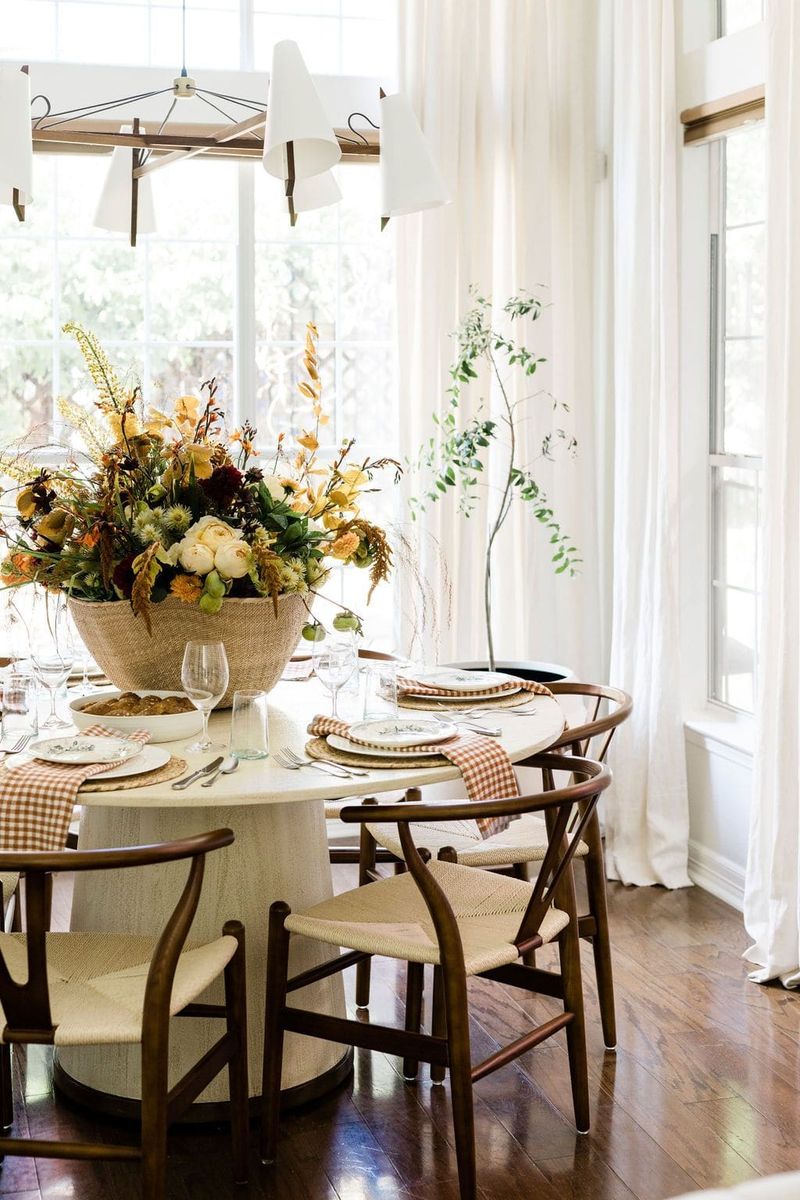
At the opposite end of the spectrum, woven fiber pendants introduce softness and texture into otherwise hard-edged spaces. The tactile quality of rattan, jute, or wicker brings a vernacular sensibility to open-plan kitchens, echoing the material honesty championed by architects like Glenn Murcutt. Unfinished wood dining tables gain coherence when paired with woven luminaires, creating a dialogue between rustic materiality and refined spatial planning.
Glass, meanwhile, retains its status as the universal solvent. Orb pendants in clear or smoked glass adapt to nearly any stylistic context, from modern farmhouse to minimalist loft. The transparency allows the fixture to occupy space without visual weight, a useful strategy in kitchens where sightlines must remain unobstructed. Glass also refracts light in ways that metal or fiber cannot, producing a diffuse glow that softens the clinical brightness of LED task lighting.
Geometry and Gesture: The Pendant as Sculptural Object
The geometric cage pendant represents a convergence of minimalism and industrial aesthetics. Wireframe designs—particularly in matte black—function as three-dimensional line drawings suspended in space, recalling the structural diagrams of Buckminster Fuller or the tensile experiments of Frei Otto. These fixtures work best in kitchens with restrained material palettes, where the pendant provides the only moment of formal complexity.
Lantern-style pendants, by contrast, invoke a more historicist vocabulary. Their silhouette references pre-electric illumination, a nostalgic gesture that softens the technological sheen of contemporary appliances. When executed in clear glass with minimal metalwork, the lantern pendant bridges traditional and modern sensibilities—a hybrid typology that has become signature to the farmhouse-contemporary aesthetic.
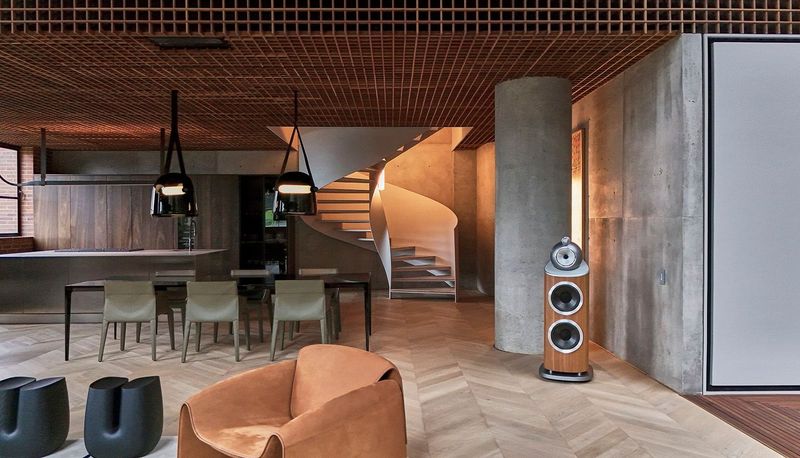
Billiards-style fixtures, updated with exposed cables and oversized shades, introduce an element of industrial utility. The hanging wires—often fabric-wrapped or in raw copper—become part of the composition, adding vertical rhythm to horizontal islands. This typology works particularly well in loft conversions or adaptive reuse projects, where the fixture's industrial heritage aligns with the building's original program.
The Chandelier Reimagined: High-End Gesture in Domestic Space
Crystal chandeliers in kitchen-dining zones mark a deliberate blurring of public and private realms. Historically confined to formal entertaining spaces, the chandelier now appears over breakfast bars and family tables, bringing a ceremonial quality to everyday rituals. The fixture's prismatic sparkle introduces movement and light play, animating spaces that might otherwise read as static.
This typology works best when the kitchen's material palette skews traditional—think marble countertops, paneled cabinetry, and dentil molding. The chandelier reinforces the room's aspiration toward grandeur, aligning domestic space with the spatial logics of hospitality design. It's no accident that this fixture type has proliferated in an era when residential kitchens increasingly emulate restaurant and hotel aesthetics.
Color and Contrast: The Black Pendant as Grounding Device
Matte black pendants—whether netted, caged, or solid-shade—function as visual anchors in predominantly white kitchens. The high contrast mimics the graphic clarity of modernist composition, recalling the black-and-white spatial diagrams of De Stijl. In open-plan layouts, where boundaries between kitchen and living areas dissolve, the black pendant reasserts definition, creating a focal point that organizes the visual field.
This strategy also counteracts the clinical brightness that can plague all-white interiors. By introducing a dark element at eye level, designers prevent the space from feeling washed out or overly sanitized. The black fixture absorbs rather than reflects light, creating pockets of shadow that add depth and drama.
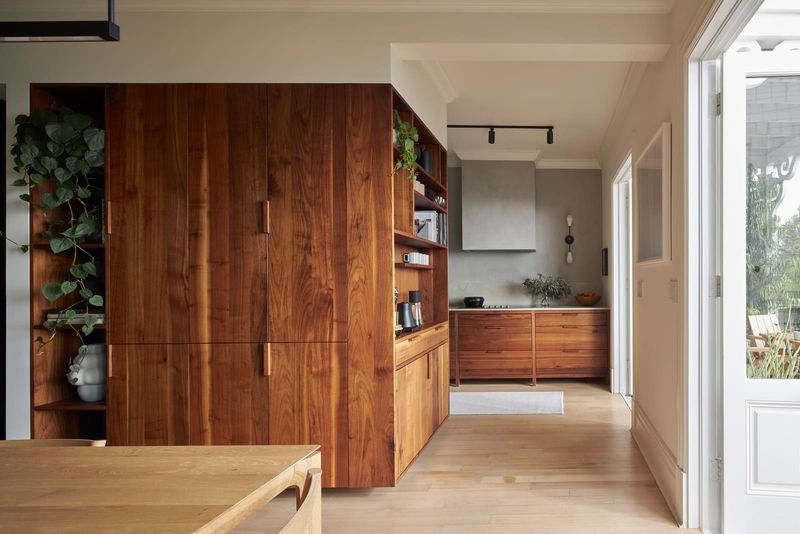
Taupe and earth-toned pendants pursue a different aim: they seek to harmonize rather than contrast. In kitchens with natural wood cabinetry or stone surfaces, a neutral-toned luminaire extends the material continuity, reinforcing the room's connection to landscape and vernacular building traditions. This approach aligns with the biophilic design principles that have gained traction in residential work over the past decade.
Precedent and Evolution: From Task Lighting to Spatial Anchor
The kitchen pendant's current prominence represents a departure from the recessed-lighting paradigm that dominated North American residential design in the 1990s and early 2000s. That era prioritized invisible, evenly distributed illumination—an aesthetic borrowed from commercial office design. The shift toward statement fixtures signals a return to pre-modern lighting strategies, where the source of light was itself an object of beauty and craft.
This evolution parallels broader trends in architectural lighting, where designers like Ingo Maurer and Lindsey Adelman have elevated the luminaire to art object status. Their work demonstrated that a light fixture could anchor a room's identity as decisively as a fireplace or a view. In kitchens, this lesson has been absorbed and democratized, filtering down from bespoke commissions to mass-market product lines.
The challenge now is avoiding formula. As pendant lighting becomes ubiquitous, the risk of cliché increases. The most successful applications are those that treat the fixture not as an off-the-shelf accessory but as an integral component of the spatial concept—chosen in dialogue with ceiling height, island proportions, and the room's broader material logic.
Forward Reflection: Lighting as Architectural Authorship
At World Archi Design, we've observed that the kitchen fixture has become a proxy for architectural authorship in projects where budget or client preference limits other forms of expression. When cabinetry must be IKEA and countertops must be quartz, the pendant light offers a moment of genuine design agency. It's the element most likely to be photographed, shared, and remembered.
This concentration of meaning in a single object raises questions about how we distribute design intelligence across a project. Is it better to invest in one exceptional fixture and compromise elsewhere, or to pursue a more even distribution of quality? The answer likely depends on the project's social function. In kitchens that serve as gathering spaces—where the island becomes stage and the pendant becomes chandelier—the case for a signature luminaire is strong. The fixture earns its prominence by organizing not just light, but social ritual.
As LED technology continues to miniaturize and improve, we may see a return to more integrated lighting strategies, where the source becomes invisible again. But for now, the pendant reigns. It remains the most legible gesture a designer can make, the element that signals intention and anchors identity in the room where contemporary life increasingly unfolds.
Save this story. A free account keeps your reading list and the 07:00 email in one place.
CREATE FREE ACCOUNT →SIGN IN