
The Evolution of Performance Textiles
The outdoor rug has quietly undergone a material revolution. Where earlier generations relied on crude synthetic fibers that aged poorly under UV exposure, contemporary manufacturers are engineering textiles that rival indoor counterparts in tactile quality while maintaining the resilience required for exposed environments. This convergence of aesthetic ambition and technical performance marks a notable shift in how designers approach the ground plane in exterior architecture.
Across the projects we've covered at World Archi Design, we've observed a consistent pattern: the most successful outdoor spaces treat flooring not as an afterthought but as a foundational element that establishes scale, defines zones, and mediates between built form and landscape. The challenge lies in selecting materials that can endure seasonal extremes without sacrificing visual sophistication.
Material Innovation and Environmental Accountability
Recycled polyethylene terephthalate, commonly known as PET, has emerged as a compelling solution to the durability problem. Several manufacturers now produce rugs woven entirely from reclaimed plastic bottles, a process that diverts waste while creating fibers naturally resistant to moisture penetration and chromatic degradation. The heathered weave patterns possible with recycled PET offer a practical advantage beyond sustainability: they effectively mask the inevitable accumulation of fine particulate matter that plagues lighter-toned textiles in high-traffic zones.
The technical specifications matter here. Polypropylene and polyester blends engineered for outdoor use typically incorporate UV stabilizers directly into the polymer matrix, rather than applying protective coatings that wear away with abrasion. This molecular-level approach to fade resistance extends the viable lifespan of these textiles considerably, though few manufacturers transparently report the specific stabilizer compounds or concentrations they employ.
Natural fibers present a different set of considerations. Jute and sisal offer textural warmth and acoustic absorption that synthetics struggle to replicate, but their hygroscopic nature makes them vulnerable in consistently humid climates. The most successful natural-fiber outdoor textiles we've encountered pair plant-based warps with synthetic wefts, creating a hybrid construction that balances aesthetic character with moisture management.
Pattern as Spatial Strategy
The decorative program of an outdoor textile does more than provide visual interest. It functions as a wayfinding device, a scale reference, and a method for visually extending or compressing perceived dimensions. Geometric patterns with strong directional emphasis can elongate narrow terraces, while concentric or radial compositions anchor circular conversation groupings and soften the hard edges of angular paving materials.
Consider the distinction between Mediterranean-inspired tile motifs and Bauhaus-derived abstractions. The former references historical precedent and pairs naturally with travertine, stucco, and other materials associated with vernacular Mediterranean building traditions. The latter aligns with mid-century modernist vocabularies, emphasizing color field relationships and geometric reduction. Neither approach is inherently superior, but each carries specific associative weight that should inform selection based on the broader architectural context.
The revival of vintage kilim patterns in outdoor-appropriate materials represents an interesting case study in how traditional craft techniques translate to contemporary manufacturing. Machine-woven interpretations of hand-knotted Turkish and Persian designs democratize access to these aesthetic traditions while sidestepping the conservation concerns that would arise from exposing genuine antique textiles to weather exposure. The washed-out, sun-faded appearance many of these products simulate will, paradoxically, intensify with actual UV exposure over time.
Scale, Proportion, and the Definition of Outdoor Rooms
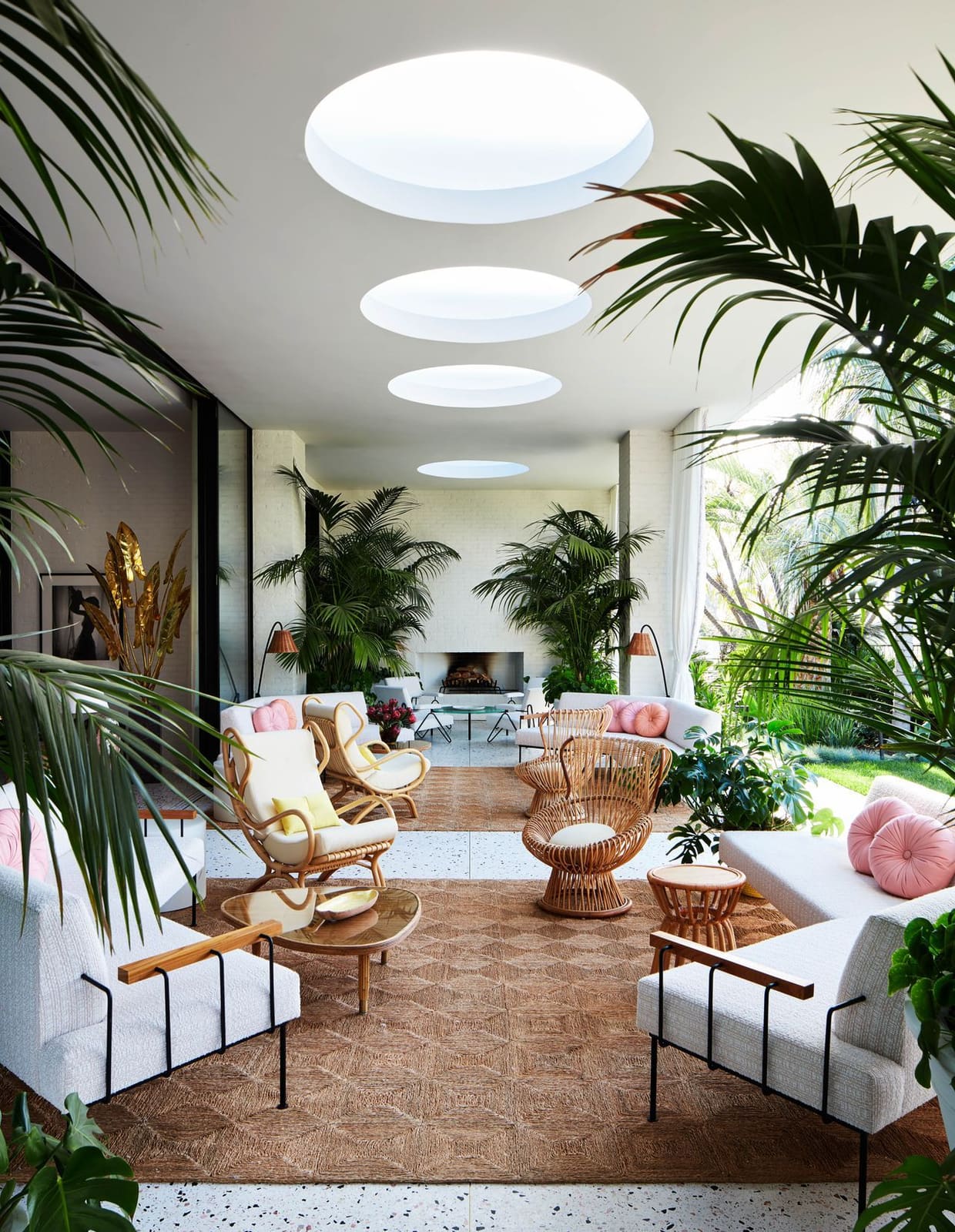
Undersizing remains the most common error in outdoor textile selection. A rug that barely extends beyond the footprint of furniture creates visual tension rather than resolution. The principle that governs indoor area rug sizing applies with even greater force in exterior applications: all furniture legs should ideally rest on the textile surface, or at minimum, front legs should be anchored while rear legs extend onto adjacent paving.
For dining configurations, this translates to rugs sized generously enough that chairs can pull away from the table without catching on the border edge. An eight-foot diameter round table typically requires a minimum ten-foot circular rug to accommodate this functional clearance. Rectangular dining setups demand similar proportional thinking, with at least two feet of textile extending beyond chair backs when pushed in.
Oversized backyards and expansive terraces present the opposite challenge. A single undersized rug adrift in a large paved expanse emphasizes emptiness rather than organizing it. In these contexts, either multiple rugs deployed to define discrete activity zones or a single large-format textile becomes necessary. Handwoven performance fibers that mimic natural rope or jute can now be sourced in configurations exceeding twelve by fifteen feet, dimensions that begin to approach the scale required for genuinely large outdoor rooms.
The Maintenance Reality
The promise of "maintenance-free" outdoor textiles deserves scrutiny. While contemporary synthetic fibers resist mildew formation and chromatic fading more effectively than their predecessors, they still accumulate organic debris, pollen, and the fine dust that settles on all horizontal surfaces. Flatweave constructions without pile height prove easier to clean than their looped or tufted counterparts, as debris sits on the surface rather than embedding within fiber bundles.
Machine-washable outdoor rugs represent a genuine innovation, though the logistics of laundering an eight-by-ten-foot textile shouldn't be underestimated. The two-piece systems that separate decorative top layers from non-slip backing pads simplify the washing process considerably, though they introduce additional cost and require periodic realignment to prevent bunching.
Most outdoor textiles benefit from periodic hosing followed by air drying in direct sunlight, which serves the dual purpose of removing surface soil and naturally sanitizing the fibers through UV exposure. Latex or rubber backing materials can deteriorate when exposed to standing water, making drainage a critical consideration. Elevating rugs on slatted decking rather than placing them directly on solid concrete improves air circulation and accelerates drying.
Unexpected Applications Beyond the Patio
The technical characteristics that make contemporary outdoor rugs suitable for exposed terraces also recommend them for transitional interior zones subject to moisture and heavy traffic. Mudrooms, covered porches, and poolside changing areas all present environmental challenges that performance textiles address more gracefully than traditional wool or silk constructions.
The aesthetic flexibility of current outdoor offerings makes these crossover applications increasingly viable. Short-pile polyester textiles that simulate the appearance of traditional Turkish or Persian carpets bring unexpected warmth to spaces that might otherwise default to tile or sealed concrete. The vintage-inspired, deliberately faded colorways many manufacturers now offer develop additional patina with use, a quality traditionally associated with natural-fiber antiques but rarely achieved in synthetic materials.
Circular and irregularly shaped formats deserve particular attention for their ability to solve spatial problems that rectangular textiles cannot. Round rugs anchor conversation groupings arranged around fire pits or water features, softening the geometric rigidity of square or rectangular paving patterns. In asymmetrical or irregularly shaped outdoor rooms, custom-cut textiles can define usable zones within awkward footprints, though few manufacturers offer true custom sizing beyond standard dimension increments.
Looking Forward
The trajectory of outdoor textile development points toward continued material innovation, particularly in bio-based polymers that might eventually supplant petroleum-derived synthetics. Early experiments with polylactic acid fibers derived from corn starch show promise, though current formulations lack the UV stability and tensile strength of conventional polyester and polypropylene.
What remains constant is the fundamental role these textiles play in mediating between architecture and landscape. At their best, outdoor rugs function as a calibrated layer that humanizes the scale of exterior spaces, provides tactile comfort, and establishes visual coherence among disparate furniture elements. The technical sophistication now available in performance fibers means designers need not compromise aesthetic ambition for practical durability. The question is no longer whether outdoor textiles can withstand the elements, but rather how intentionally we deploy them as instruments of spatial definition.
Save this story. A free account keeps your reading list and the 07:00 email in one place.
CREATE FREE ACCOUNT →SIGN IN