
A Philosophy of Addition, Not Erasure
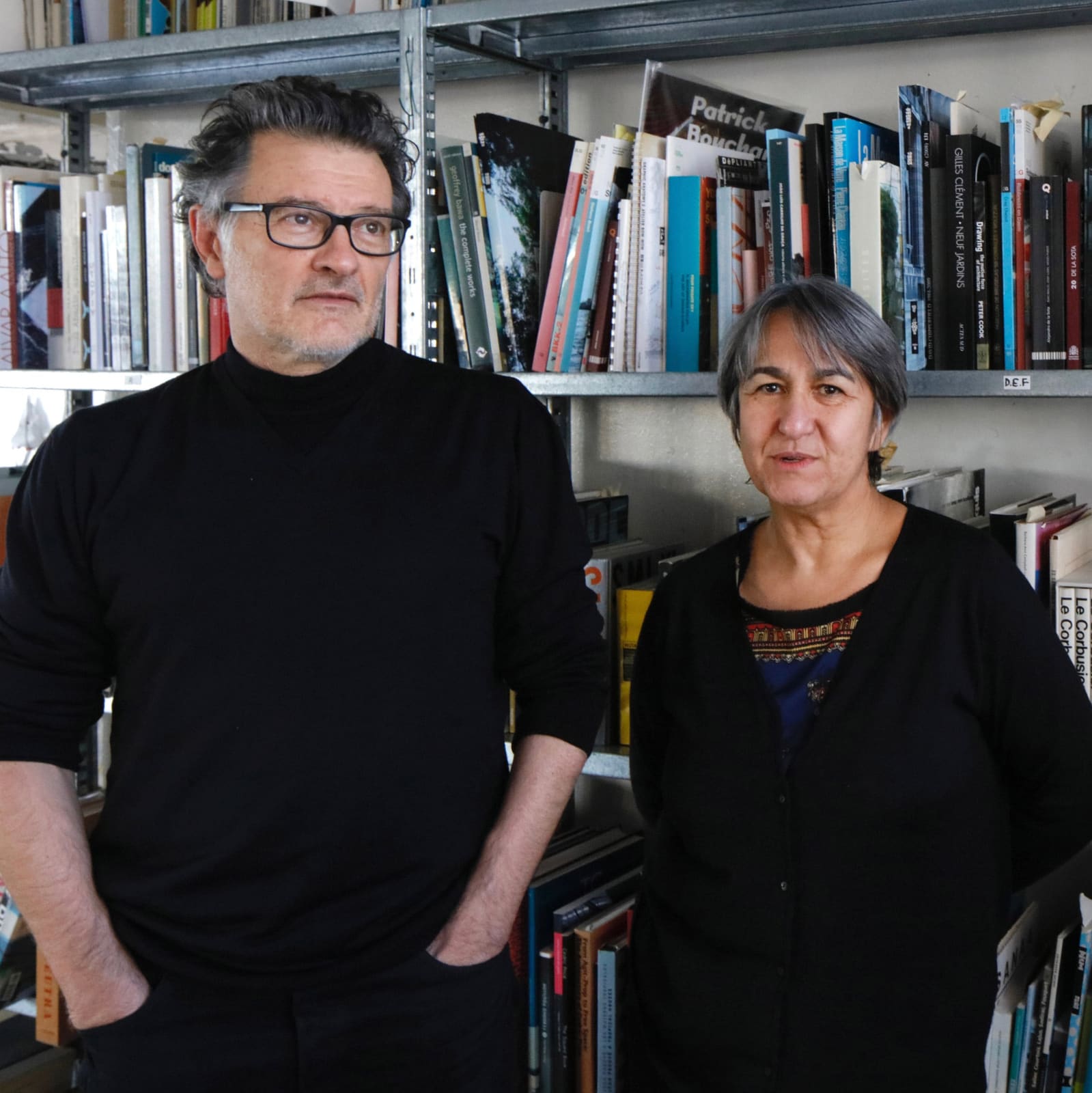
There is a certain humility in choosing to work with what exists rather than clearing the slate. For nearly four decades, Anne Lacaton and Jean-Philippe Vassal have pursued an architectural practice grounded in that restraint, one that asks how buildings might be enhanced, expanded, and dignified without resorting to demolition. According to the Créateurs Design Association, the Paris-based studio has now been named the recipient of Le Prix Charlotte Perriand 2027, an honour that recognises practitioners whose contributions have advanced the fields of architecture and design with particular attention to social impact and material intelligence.
The award, established in collaboration with the family of the late French architect Charlotte Perriand, carries a particular resonance for Lacaton and Vassal. In their own statement, the architects described Perriand's "tireless pursuit of comfort, well-being, and the pleasure of the inhabitant" as profoundly relevant to contemporary practice. Her political commitment to exposing poor housing conditions and her spirit of openness remain, in their view, a source of inspiration. It is a lineage that the studio has extended through projects that prioritise the lived experience of residents over architectural spectacle.
The Cité du Grand Parc and the Case for Transformation
Among the studio's most celebrated works is the transformation of the Cité du Grand Parc housing estate in Bordeaux, completed in collaboration with Frédéric Druot and Christophe Hutin. The project, which won the European Union's Mies van der Rohe Award in 2019, involved the renovation of three towers containing over five hundred flats built in the 1960s. Rather than demolishing the structures, the team added generous winter gardens and balconies to each unit, effectively doubling the usable space while preserving the existing framework.
The intervention is instructive in its restraint. By extending the building envelope with lightweight structures, the architects increased natural light, improved thermal performance, and provided residents with private outdoor space. The strategy avoided the social and environmental costs of demolition while delivering a marked improvement in living conditions. It is an approach that reframes obsolescence as opportunity, a lens through which ageing housing stock becomes a site for innovation rather than an impediment.
Social Housing as a Site of Experimentation
Lacaton and Vassal's commitment to social housing predates the Grand Parc project by decades. The renovation of the Tour Bois-le-Prêtre in Paris, also undertaken with Frédéric Druot and completed in 2011, applied similar principles to a seventeen-storey tower in the city's 17th arrondissement. Here, too, the architects added prefabricated balconies and winter gardens, wrapping the existing structure in a new layer that extended each flat by several square metres. The project demonstrated that high-density housing could be retrofitted without displacing residents, a critical consideration in cities where affordable housing is increasingly scarce.
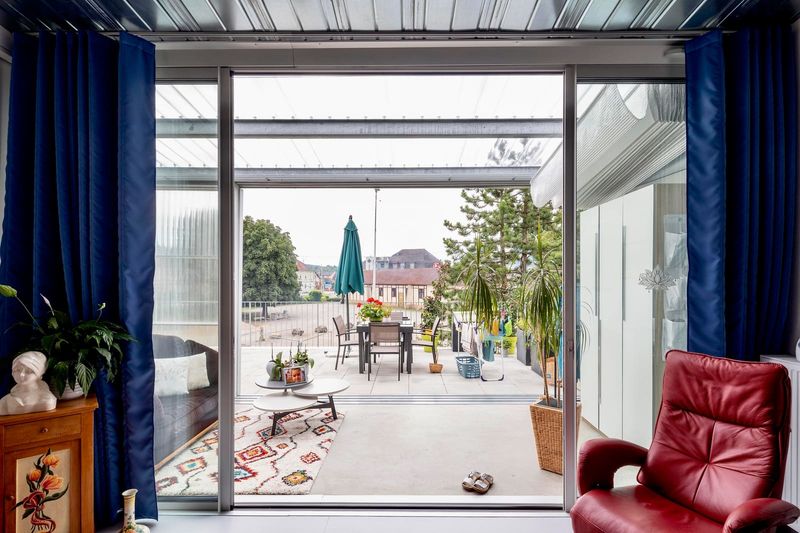
The studio's early residential work, including the Latapie House completed in 1993, established a material vocabulary that would recur throughout their practice. The house, located near Bordeaux, used prefabricated polycarbonate panels to enclose a greenhouse-like extension, a low-cost solution that maximised space and light. The logic of economy, generosity, and material pragmatism evident in that modest dwelling has scaled up to inform their approach to large-scale housing.
Adaptive Reuse Beyond Housing
While social housing remains central to their practice, Lacaton and Vassal have applied their philosophy of adaptive reuse to cultural and educational buildings as well. The transformation of the Palais de Tokyo in Paris, completed in 2002, stripped away false ceilings and partitions to reveal the raw concrete structure beneath, creating expansive, flexible exhibition spaces. The intervention was minimal in its additions but maximal in its spatial impact, a strategy that has since been adopted by institutions seeking to balance heritage conservation with contemporary programming.
Similarly, the conversion of a former shipbuilding workshop into the FRAC Nord-Pas de Calais contemporary art gallery in Dunkirk demonstrated how industrial structures could be repurposed for cultural use. The existing workshop, with its soaring ceilings and structural clarity, was retained and augmented with a translucent polycarbonate envelope, creating a luminous interior that preserved the building's tectonic character while accommodating new functions. The project exemplifies the studio's broader thesis: that architecture's value often lies in what is already there, waiting to be recognised.
Recognition and a Broader Shift
The Le Prix Charlotte Perriand is the latest in a series of accolades for the practice. Lacaton and Vassal received the Pritzker Architecture Prize in 2021, with the jury citing their "commitment to a restorative architecture" and their ability to "transform the lives of residents". Anne Lacaton was also awarded the Jane Drew Prize for women in architecture in 2025, and the studio received the Soane Medal in 2023. These honours reflect a broader shift in the discipline, one that increasingly values sustainability, social equity, and the intelligent stewardship of existing building stock over the production of new landmarks.
Meredith Xavier, co-founder of the Créateurs Design Association, noted that the award recognises "the care and imagination with which they approach the places people call home". That care is evident not only in the studio's built work but in their insistence that architecture can improve lives without erasing the past. It is a position that challenges the prevailing logic of obsolescence, proposing instead that the most sustainable building is often the one that already exists.
An Ethic for the Present
The award ceremony is scheduled for 16 January 2027 at the Shangri-La Paris, where Japanese architect Kengo Kuma will also be honoured with the Andrée Putman Lifetime Achievement Award. The pairing is fitting: both practices have, in different ways, engaged with questions of materiality, tradition, and the relationship between architecture and landscape. Yet Lacaton and Vassal's work remains distinct in its unapologetic focus on the ordinary, the inhabited, and the overlooked.
At a moment when the construction industry accounts for nearly forty per cent of global carbon emissions, the studio's philosophy of preservation and enhancement offers a compelling alternative to the cycle of demolition and reconstruction. Their projects suggest that architecture's most urgent task may not be to build anew but to reconsider what we already have, to find generosity in constraint, and to recognise that the places people call home deserve more than efficiency. They deserve, as Perriand herself might have insisted, the pleasure of everyday life.
Save this story. A free account keeps your reading list and the 07:00 email in one place.
CREATE FREE ACCOUNT →SIGN IN