
A Practice Built on Restraint
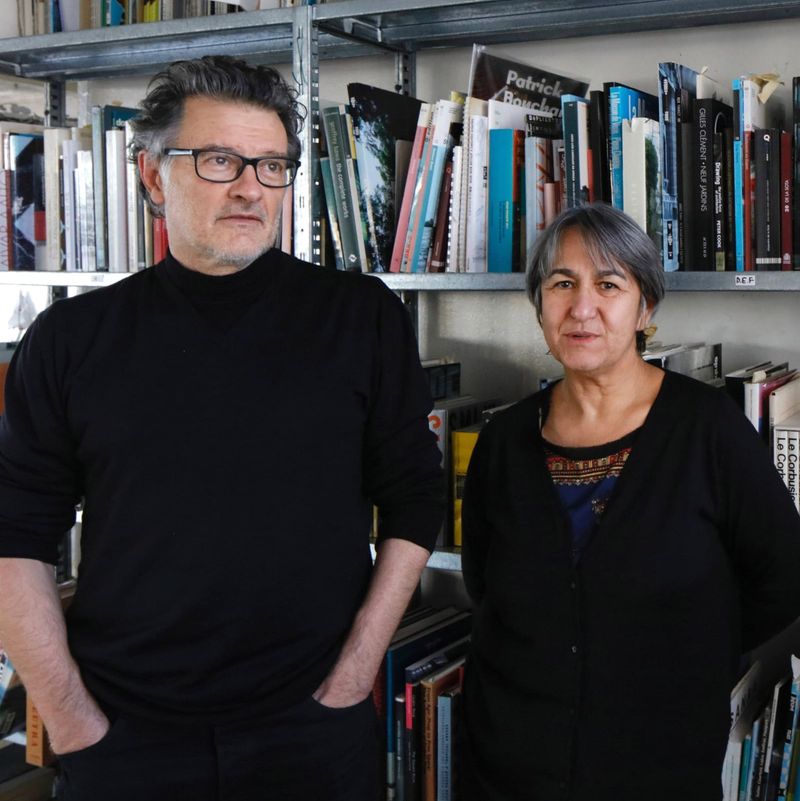
For more than three decades, the French duo Anne Lacaton and Jean-Philippe Vassal have quietly championed an architectural philosophy that runs counter to the industry's demolition reflex. Rather than erasing what exists, their work asks a different question: what happens when we treat existing buildings not as obstacles but as foundations for something better? That question has now earned them the 2027 Le Prix Charlotte Perriand, an annual distinction organised by the Créateurs Design Awards through peer-led voting.
The award, now in its eighth edition, singles out practitioners whose contributions have advanced architecture and design. Past recipients include Xu Tiantian, Kazuyo Sejima and Ryue Nishizawa, Frida Escobedo, and Jeanne Gang. This year's selection committee emphasised how Lacaton & Vassal's approach to adapting existing structures improves living conditions whilst conserving both material resources and architectural heritage.
Spatial Generosity as Method
Founded in 1989 after both architects completed their studies at the École Nationale Supérieure d'Architecture de Bordeaux, Lacaton & Vassal has built a body of work distinguished by what the Créateurs Design Awards describes as "spatial generosity, environmental responsibility and respect for the people who inhabit buildings." These are not merely aesthetic choices but tectonic ones, embedded in how the practice measures success.
Their transformation of the Palais de Tokyo in Paris, completed in two phases in 2002 and 2012, exemplifies this ethos. Rather than concealing the building's industrial bones, the intervention celebrated its raw materiality, creating expansive, flexible galleries that prioritise volume and natural light. The Nantes School of Architecture, completed in 2009, similarly relies on structural simplicity and generous fenestration to create open, adaptable learning environments.
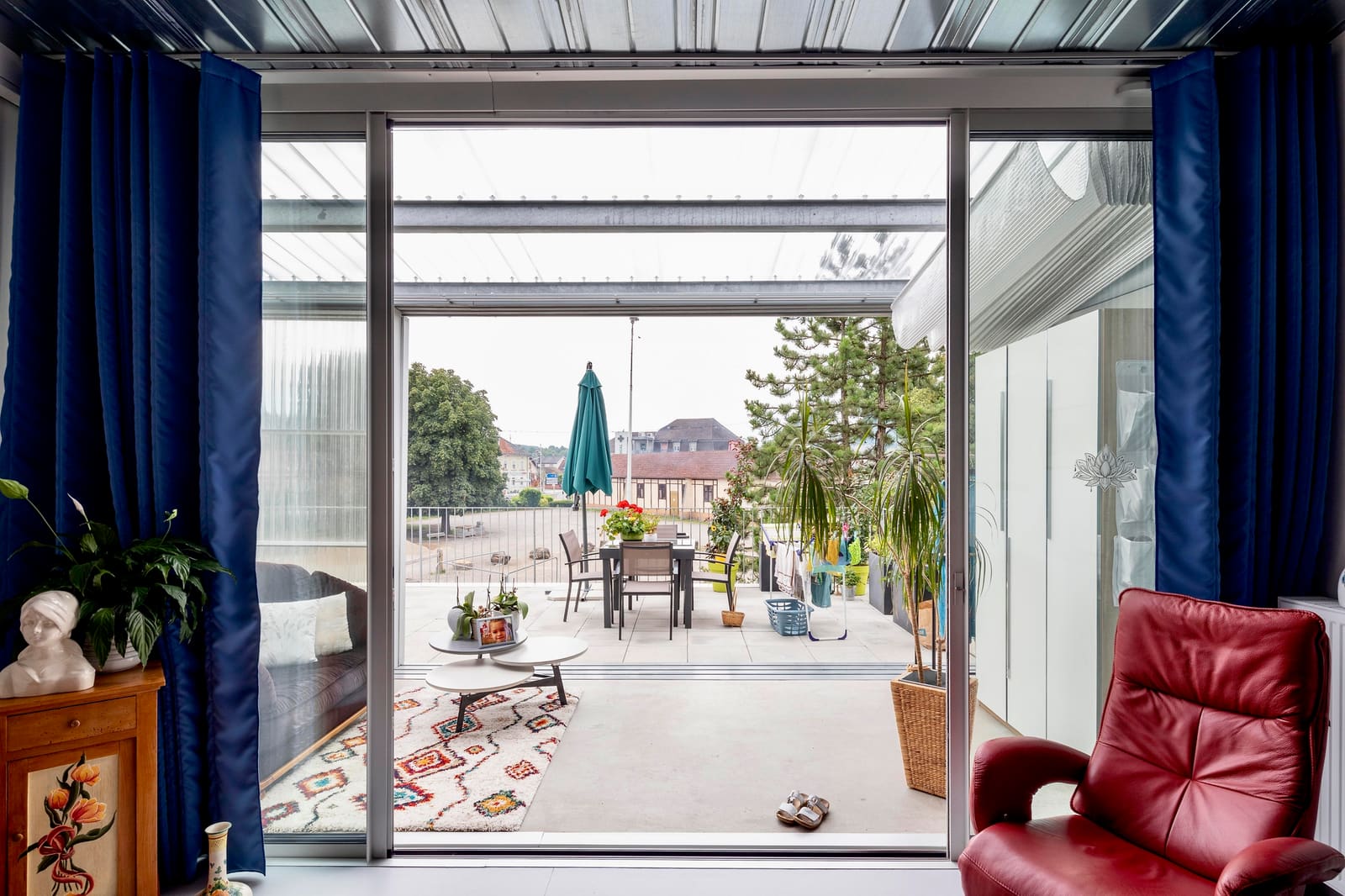
Perhaps their most instructive project remains the Cité du Grand Parc housing transformation in Bordeaux, undertaken with Frédéric Druot and Christophe Hutin. The scheme demonstrates how small, precise operations can yield infrastructural impact. By adding lightweight extensions and winter gardens to existing post-war social housing blocks, the team doubled usable space without displacing residents. The intervention preserved the buildings' structural logic whilst fundamentally improving thermal performance and spatial quality. It is a model of adaptive reuse that prioritises inhabitants over imagery.
The Perriand Connection
The prize bears the name of Charlotte Perriand, the French architect and designer whose furniture for Le Corbusier's atelier in the 1920s and 30s helped define modernist interiors. Yet Perriand's legacy extends beyond bentwood and tubular steel. She spent decades advocating for better housing conditions, particularly for working-class families, and her commitment to comfort, well-being, and the politics of everyday space aligns closely with Lacaton & Vassal's priorities.
In a statement, the architects acknowledged that connection directly, noting Perriand's "tireless pursuit of comfort, well-being, and the pleasure of the inhabitant and of everyday life, her modernity, and her political commitment to exposing poor housing conditions." They described her "manifest spirit of openness and freedom" as a source of inspiration, adding that they were "very happy to receive this distinction."
The Créateurs Design Awards programme spans 15 categories and two legacy distinctions, recognising achievements in architecture, interior design, product design, curation, photography, journalism, and digital art. This year, Lacaton & Vassal will be honoured alongside Kengo Kuma, who receives the Andrée Putman Lifetime Achievement Award 2027. Both prizes carry the names of influential French women whose work shaped modern design practice.
Why Adaptation Matters Now
At World Archi Design, we have been tracking a slow but decisive shift in how the discipline approaches existing buildings. For decades, the default response to ageing infrastructure was clearance and replacement. But as material supply chains tighten and embodied carbon calculations become standard practice, that logic no longer holds. Lacaton & Vassal's work offers an alternative, one grounded not in nostalgia but in material pragmatism.
Their projects demonstrate that transformation need not mean erasure. By understanding what is already there, by reading the structural and spatial logic embedded in existing buildings, architects can often deliver better outcomes with fewer resources. This is not preservation for its own sake but a strategic rethinking of how we allocate material and labour.
The Cité du Grand Parc project, for instance, avoided the embodied carbon cost of demolition and reconstruction whilst improving thermal performance and spatial quality. The lightweight extensions rely on prefabricated timber frames and polycarbonate cladding, materials that minimise both weight and environmental impact. The result is a project that meets contemporary performance standards without resorting to wholesale replacement.
A Broader Recognition
The Charlotte Perriand award adds to a series of recent recognitions across the discipline. Farshid Moussavi received the 2026 Soane Medal for her contributions to architectural practice, history, and theory. Daniel Libeskind was awarded the 2026 Praemium Imperiale for Architecture. These honours signal a widening acknowledgement of diverse approaches to practice, from Moussavi's exploration of affect and materiality to Libeskind's engagement with memory and cultural identity.
Lacaton & Vassal's Pritzker Prize in 2021 already positioned their work within the discipline's highest tier. The Perriand distinction, however, carries a different emphasis. Whilst the Pritzker celebrates lifetime achievement, the Créateurs Design Awards foreground peer recognition and the advancement of specific ideas. In this case, the award underscores the relevance of adaptive reuse and spatial generosity at a moment when both are urgently needed.
The prize will be presented on 16 January 2027, at the Shangri-La Paris. Submissions for the 2027 Créateurs Design Awards remain open across 15 categories, with a deadline of 22 November 2026.
What Comes Next
The question now is whether Lacaton & Vassal's approach can scale beyond individual projects. Their work has demonstrated that transformation is technically feasible and economically viable. But widespread adoption requires shifts in policy, procurement, and professional culture. Developers must be willing to accept longer timelines and more complex negotiations with existing tenants. Regulatory frameworks must recognise adaptive reuse as equivalent to new construction in terms of performance standards.
There are precedents. In the Netherlands, the transformation of existing housing stock has become a standard practice, supported by national policy and financing mechanisms. In Switzerland, where Lacaton & Vassal completed the Tour Opale mixed-use project in Geneva, planning regulations increasingly favour renovation over demolition. These examples suggest that the technical and material logic of adaptive reuse can be institutionalised, but only if the political will exists to do so.
For now, the Charlotte Perriand award serves as a reminder that architecture's most pressing challenges often require restraint rather than spectacle. By treating existing buildings as resources rather than obstacles, Lacaton & Vassal have shown how much can be gained through careful attention to what is already there. That lesson, more than any single project, may be their most enduring contribution.
Save this story. A free account keeps your reading list and the 07:00 email in one place.
CREATE FREE ACCOUNT →SIGN IN