
A Jeweler's Vision of Domesticity
The conventional jewelry boutique operates on a strict hierarchy: vitrines command attention, lighting focuses narrowly, and every surface defers to the merchandise. Nikos Koulis has dispensed with that script. His first boutique outside Greece, which opened on rue Boissy d'Anglas in the 8th arrondissement, reads less like a retail environment and more like the salon of a particularly discerning collector who happens to design jewelry for a living.
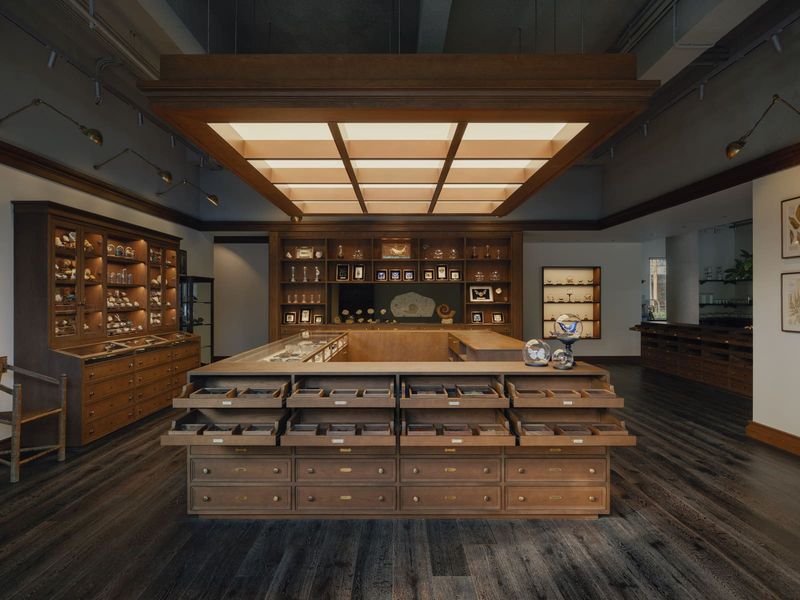
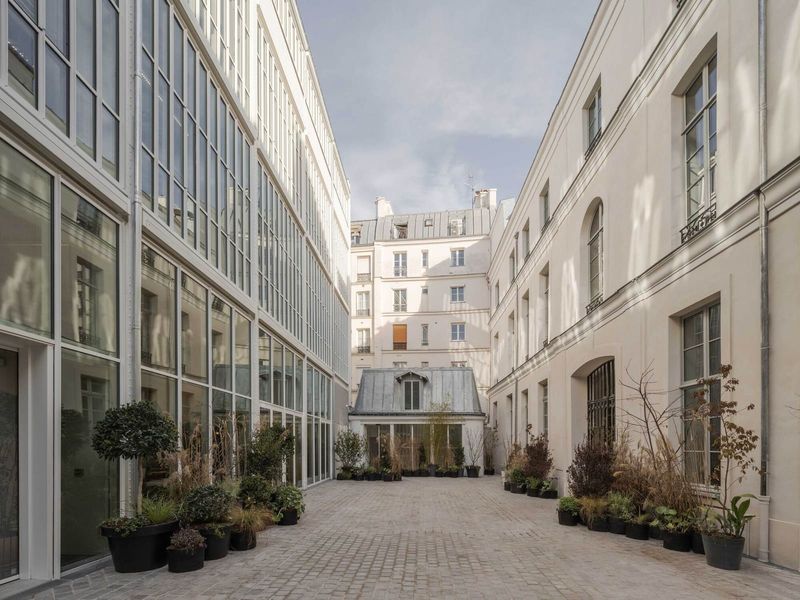
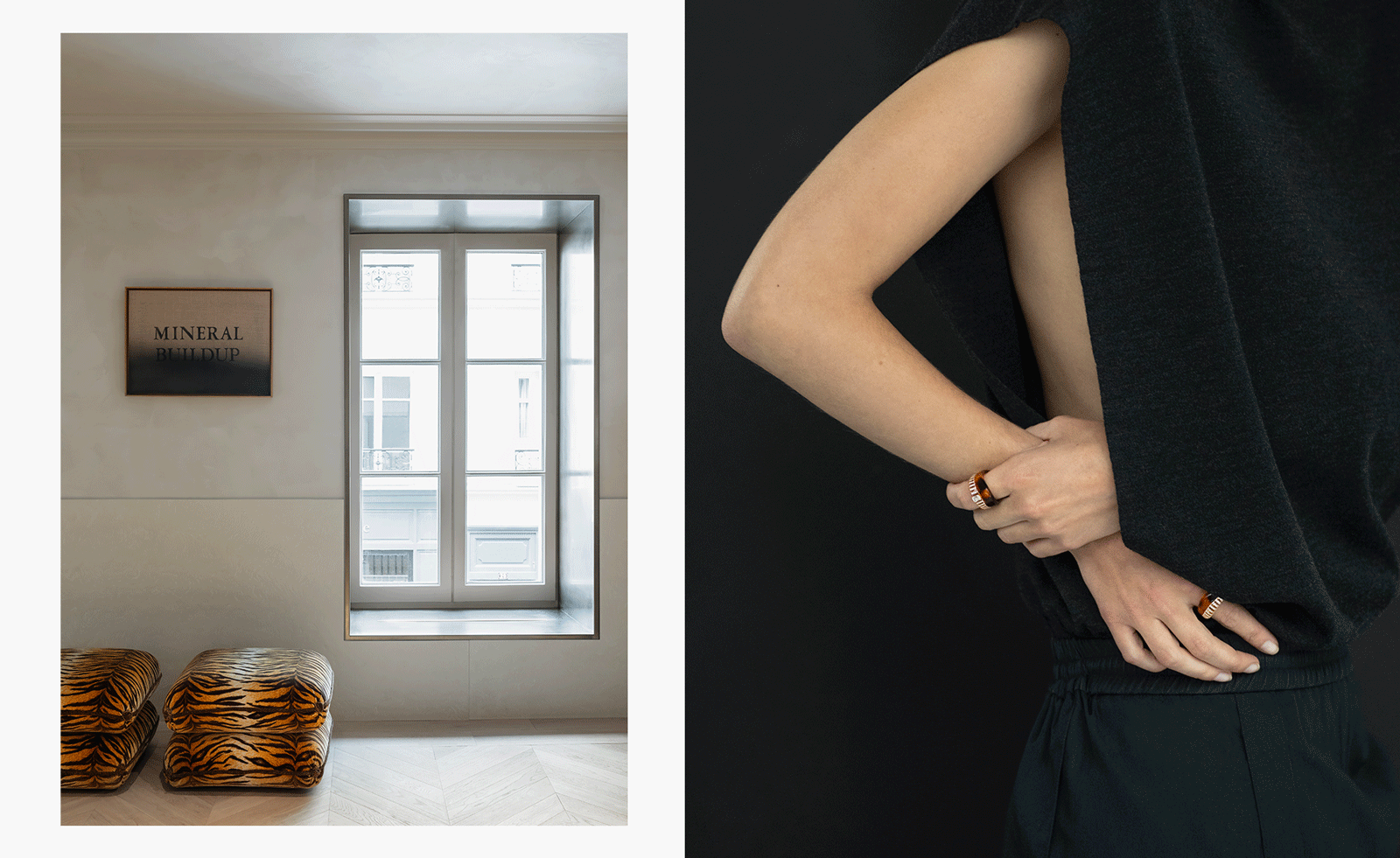
The space occupies an 18th-century building, and rather than impose a contemporary shell, Koulis and his collaborators at Bureau de Change - a London-based practice founded by Greek architects - chose restraint. Original proportions remain legible; moldings and ceiling heights speak to the structure's Enlightenment-era origins. Into this framework, the design team introduced layers of objects that reflect the jeweler's own sensibility: a midcentury Kalmar glass chandelier, mirrors designed by Gio Ponti, artworks from his personal collection, and a series of candlesticks from his moNO line of sculptural objects.
Engineering Subversion
Koulis built his reputation on jewelry that challenges classical codes without abandoning them entirely. He favors unconventional gem cuts, intricate engineering that allows stones to appear suspended, and unexpected material pairings. The aesthetic is geometric but fluid, disciplined but playful. In the Paris boutique, this approach extends beyond the jewelry cases. The design itself becomes an argument for how precious objects might coexist with daily life, rather than remaining isolated under halogen spotlights.
The boutique's layout resists the typical procession through a luxury retail environment. Instead of a linear narrative that guides visitors toward a transaction, the space unfolds more organically. Jewelry shares visual real estate with design classics and contemporary art, creating a context in which a pair of earrings might be understood as part of a broader material culture rather than a standalone commodity. Fresh flowers rotate weekly, a detail that reinforces the sense of inhabitation.
The Architect as Collaborator
Bureau de Change approached the project with an understanding of how to honor historical architecture while inserting contemporary interventions. The practice, which has designed residential projects, hospitality interiors, and retail spaces across Europe, brought a tactile sensibility to the commission. Rather than treat the 18th-century shell as a neutral backdrop, they worked with its existing character - plasterwork, window proportions, floor plans - and threaded new elements through it.
This method aligns with Koulis's own design philosophy. Just as he might set a tsavorite garnet in an unexpected orientation or engineer a hinge that allows a piece to transform from earring to pendant, the architects treated the boutique as a problem of spatial engineering. How do you create intimacy in a grand room? How do you display jewelry without making it feel untouchable? The answers lie in scale, lighting, and the careful curation of surrounding objects.
Objects in Dialogue
Among the pieces Koulis selected for the space, two candlesticks from his moNO series hold particular significance. He describes them as embodying "the feminine and the masculine," a conceptual pairing that reflects his interest in duality and transformation. These objects, crafted in metal with the same attention to form and engineering that defines his jewelry, function as sculpture and as functional design. They underscore the boutique's central premise: that the line between art, design, and adornment is more porous than traditional retail categories suggest.
The '77' collection, a series of necklaces and earrings that feature angular geometry and bold color combinations, occupies a prominent place in the boutique. The pieces exemplify Koulis's technical skill - stones are set in ways that maximize light return while maintaining structural integrity - and his willingness to push beyond conventional ideas of what fine jewelry should look like. In the context of the boutique, surrounded by Ponti's mirrors and the Kalmar chandelier, the '77' pieces read as part of a continuum of modernist design thinking.
The Case for Intimacy
Koulis has spoken about his intention to create a space that reflects not only his work but his "way of looking at things." This ambition distinguishes the boutique from many luxury retail environments, which often prioritize brand consistency over individual perspective. Here, the designer's personal taste becomes the organizing principle. The result is a space that feels lived-in, even as it functions as a commercial environment.
This approach carries risks. A boutique that doubles as a personal cabinet of curiosities can alienate customers who expect the clarity of a traditional jewelry store. But it can also attract a different kind of visitor - one who values context, who wants to understand the aesthetic lineage behind a piece of jewelry, who sees acquisition as part of a larger conversation about design and material culture.
Precedents and Departures
The concept of the designer-as-curator is not new. Carlo Scarpa's interventions for Olivetti showrooms in the 1950s and 1960s demonstrated how retail spaces could function as gesamtkunstwerk, total works of art in which architecture, furniture, and product merged into a unified vision. More recently, Dries Van Noten's Antwerp flagship and the late Azzedine Alaïa's Paris maison have offered models for how fashion designers might create retail environments that reflect their personal aesthetic rather than corporate branding imperatives.
Koulis's boutique operates in this lineage but with a lighter touch. Where Scarpa's showrooms were highly choreographed and Alaïa's space felt like a private museum, the Koulis boutique retains a sense of spontaneity. The weekly flower rotation, the mix of personal art and design classics, the jeweler's stated willingness to change his mind about which pieces are his favorites - all of these elements suggest a space in flux, responsive to its inhabitant's evolving taste.
Material Culture as Context
The decision to display jewelry alongside furniture and art reflects a broader shift in how luxury goods are marketed and understood. As consumers become more knowledgeable about design history and more interested in the provenance of objects, the isolated presentation of a single product category feels increasingly insufficient. Contextualization becomes a form of education; the boutique functions as a three-dimensional essay on the jeweler's influences and aesthetic priorities.
This strategy also serves a practical purpose. By surrounding his jewelry with midcentury design icons and contemporary art, Koulis signals the intended audience: collectors who move fluidly between categories, who might acquire a Ponti mirror and a pair of Koulis earrings in the same season, who see these purchases as part of a coherent approach to building a personal environment.
The Parisian Gambit
Opening a flagship in Paris represents a significant investment for any designer, particularly one whose previous retail presence was limited to Greece. The city remains one of the world's most competitive luxury markets, with established jewelry houses occupying prime real estate on Place Vendôme and rue de la Paix. Koulis's decision to locate on rue Boissy d'Anglas - a quieter street that nonetheless sits within the golden triangle of the 8th arrondissement - suggests a strategy that values discretion over visibility.
The boutique's design reinforces this positioning. Rather than compete with the theatrical presentations of larger houses, Koulis offers an alternative model: intimate, personal, layered with meaning beyond the immediate transaction. It remains to be seen whether this approach will resonate with Parisian clients, who are famously particular about their jewelry. But the project represents a clear articulation of a design philosophy that extends beyond individual pieces to encompass an entire way of engaging with objects.
Save this story. A free account keeps your reading list and the 07:00 email in one place.
CREATE FREE ACCOUNT →SIGN IN