
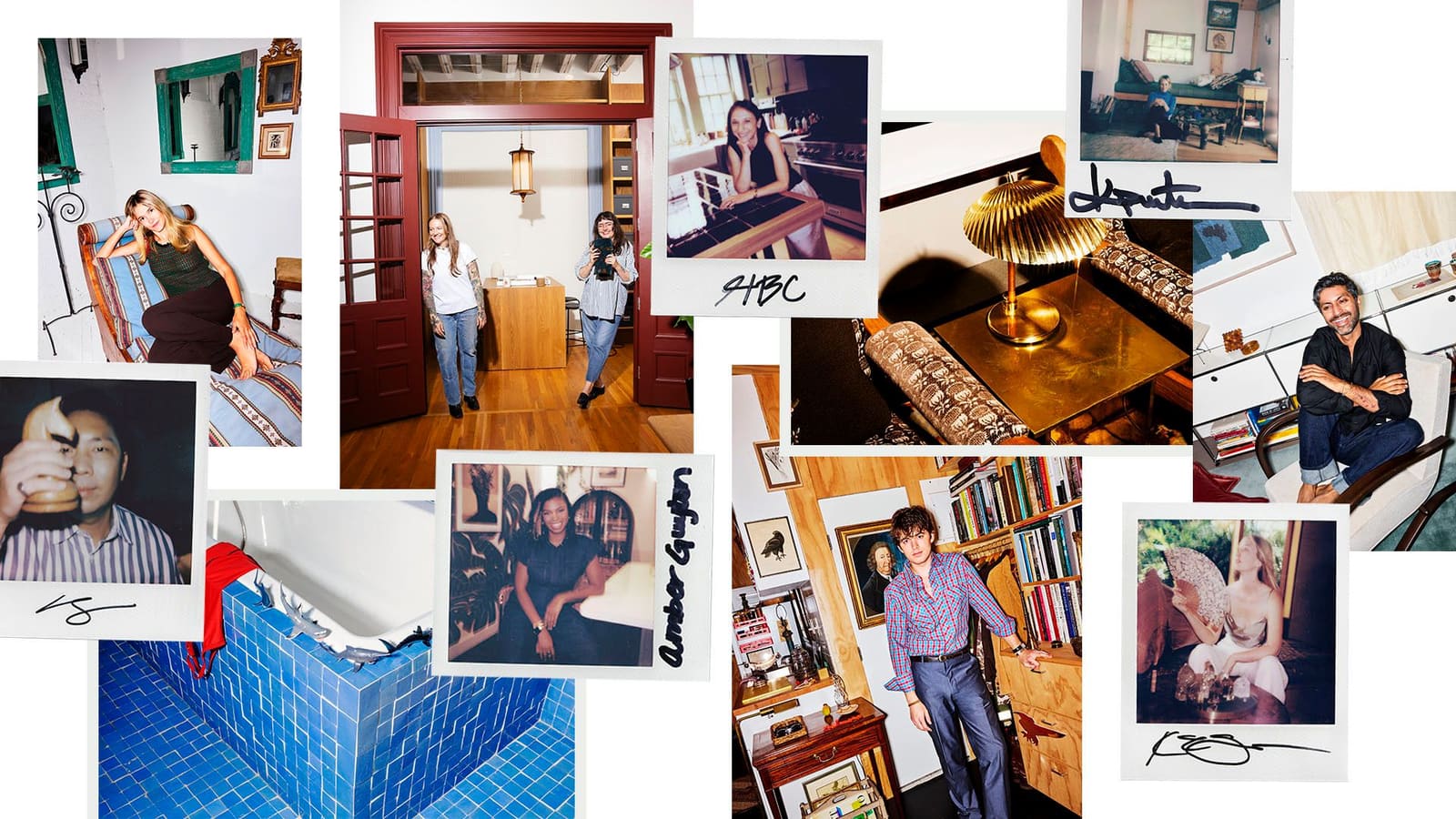
The Residential Studio Renaissance
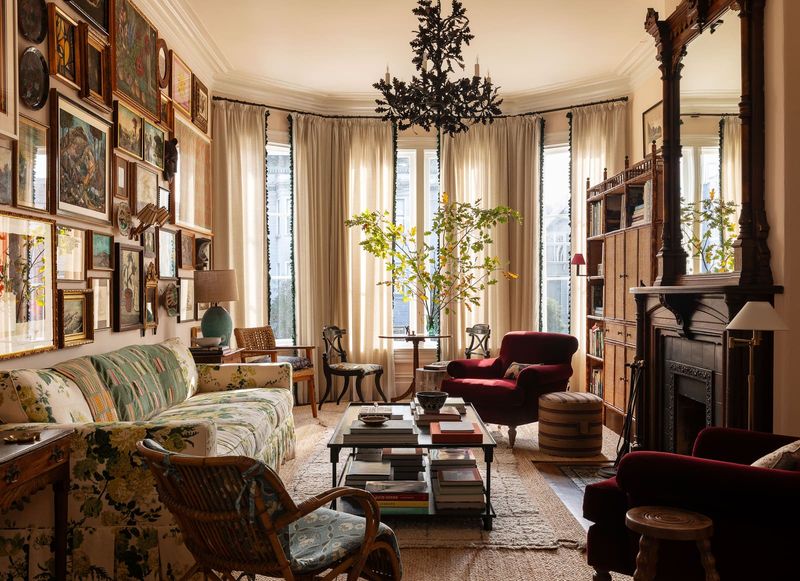
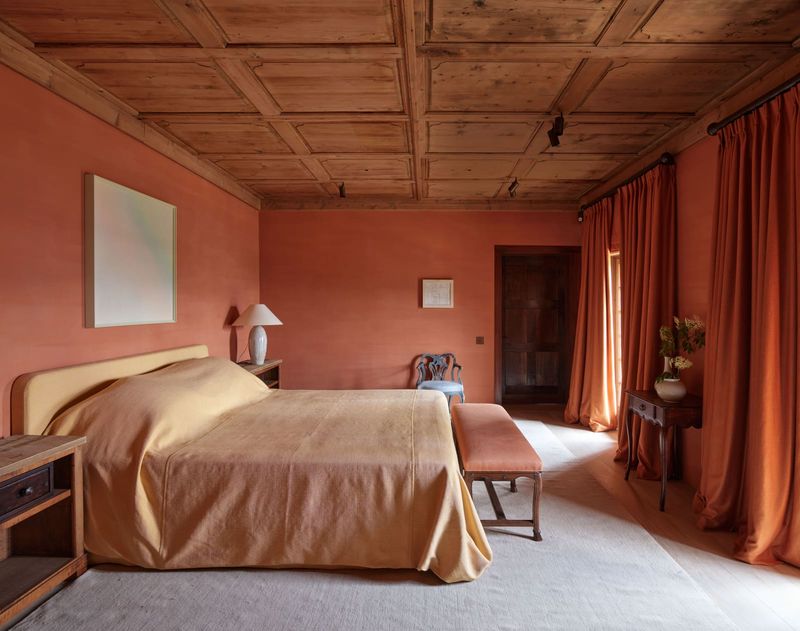
There's a question that has preoccupied those of us tracking American residential design for some time: what happens when the next wave of practitioners arrives not through traditional apprenticeship alone, but through floristry, embroidery, weaving, and advertising? The answer, it turns out, is a generation of studios whose work resists easy categorisation. Across nine practices scattered from Maine to California, we're seeing designers who treat the home less as a container for objects and more as a synthesis of memory, material culture, and spatial experience.
What unites these studios is not a shared aesthetic, a single coast, or even a common client base. It is, instead, an insistence that residential design can carry intellectual weight without sacrificing intimacy. That a room can reference Renzo Mongiardino and still feel lived-in. That craft traditions from Mumbai, Versailles, or rural South Carolina belong in the same conversation as RISD theory. At World Archi Design, we've been tracking this shift for the past three years, and the evidence is now undeniable: American residential practice is entering a quieter, more thoughtful phase.
Craft as Foundation
Rahul Ghera's path into architecture began not in a studio, but in his family's embroidery atelier, which supplied work to fashion designers and Broadway costume departments across New York and Mumbai. That technical grounding, he argues, is what allows creativity to move beyond concept into realisation. Since establishing Dyali in 2020, Ghera has specialised in the spatial puzzles that define New York residential work: combining four apartments into one coherent dwelling, or carving liveable space from a 550-square-foot studio. His projects insist on the inseparability of architecture and interiors, a stance that feels less like branding and more like structural principle.
In Austin, Matthew Tsang draws on a similarly unconventional résumé. Before founding his practice in 2014, he worked in floristry and hospitality, disciplines that taught him composition, scale, and atmospheric flow. His interiors favour sculptural forms and global objects, but the underlying sensibility is rooted in wabi-sabi: restraint, imperfection, deliberate calm. Tsang has since expanded into furniture design with his line Tissilent and a botanical studio called Tree Things, each venture reinforcing the same principle: that Asian design philosophies, particularly those emphasising intentionality and restraint, have profoundly shaped American residential thinking.
Kelsey Sundberg, who studied weaving at the Rhode Island School of Design before working under Pam Shamshiri for five years, approaches projects as narrative exercises. She begins not with mood boards but with client interviews, asking about daily rituals and cherished objects. For fashion designer Lela Becker's Pacific Palisades home, Sundberg created a contemporary reinterpretation of Lee Radziwill's tented sitting room, originally designed by Mongiardino. The reference is clear, but the execution is calibrated to Becker's life. Sundberg often spends time in Los Angeles public library archives, researching historical interiors not to replicate them but to identify emotional registers. "Spaces of the past," she notes, "can help identify how you want to feel in a room."
Geography and Hybridity
Garance Rousseau's work embodies a particular kind of transatlantic fluency. Raised between Los Angeles and Versailles, she studied industrial design and fine art at Parsons before brief tenures with Kelly Wearstler and Waldo Fernandez. Since launching her studio three years ago, she has completed a Fifth Avenue apartment facing Central Park, a Hudson Valley cottage for a stage and film actor, and a Swedish-inflected farmhouse painted cherry red in the Hollywood Hills. Her approach is intuitive rather than formulaic: she begins with the architecture and asks what the house itself wants. Vintage furnishings and custom details recur, but the overarching aim is to reflect the inhabitant, not the designer.
In Portland, Pat Austin Design, led by Candace Cohu and Ally Hasche, cultivates a similar resistance to formula. The studio's name honours Pat Austin, wife of the rosarian David Austin, and the work itself balances respect for architectural context with calculated disruptions: an unexpected material, a bold colour choice, a textural contrast that destabilises the expected. The duo has worked across Craftsman, contemporary, and Spanish Revival typologies, always emphasising refined finishes and sophisticated tonal relationships. In 2022, they co-founded Patty Studios, an atelier producing handwoven carpets in Nepal, a venture that underscores their commitment to material culture over scalability.
Marshall Neve, based in New York's Chinatown, describes his aesthetic as deliberately broad. His apartment holds an African Bwa butterfly mask, antique duck decoys, a Victorian bamboo book grabber, and a vintage Japanese fireman's jacket. He collects English furniture, Japanese and Chinese objects, folk art, and Americana without privileging any single lineage. After five years with the firm Redd Kaihoi, Neve launched his own practice with a clear principle: keep backgrounds quiet, let objects speak. He is currently completing an East Village apartment for actor and writer Benito Skinner.
Maximalism as Structure
Amber Guyton's trajectory offers a useful corrective to the assumption that design education follows a single path. Growing up in rural South Carolina, she did not encounter interior design as a profession. After studying journalism and advertising, she began documenting the renovation of a 1940s San Antonio bungalow on a blog called Blessed Little Bungalow. What began as a side project in 2016 became a full-time practice in 2021. Guyton has since expanded into bedding, a television pilot, and a book, Soulful Maximalism, published by Rock Point in October 2026. Her approach rests on four principles: joy, culture, layers, and intention. She argues that maximalism, often dismissed as undisciplined, can be balanced and deliberate. Her first priority in any project is injecting happiness into the room, a stance that positions design as accessible rather than rarefied.
Kacee Witherbee, who launched Insides Studio in 2022, hears a recurring request from creative clients: make it look like we didn't hire a designer. Witherbee studied historic preservation at the College of Charleston and apprenticed under Richard Keith Langham before moving into independent practice. Her work is layered and personal, often incorporating clients' heirlooms: kilims from a grandmother upholstering a Maine sofa, or custom bubblegum-pink shades for a Brooklyn brownstone's Murano chandelier. At her own 18th-century house in Freeport, Maine, she has embraced wonky architecture and prized objects, including an antique memory jar made from broken china. These small gestures, she argues, give a home emotion and life.
The Rigour of Installation
Hayley Cavagnolo, who founded Hayley Bridget Interiors in 2021 after seven years with Michelle R. Smith, describes her process as total. She oversees every stage, from initial concept through to the installation of clients' toothbrushes and the final organisation of the home. The results are romantic: soft, organic hues, patinated antiques, crisply edited vignettes. After graduating from the Fashion Institute of Technology, Cavagnolo has applied what she calls a "traditional yet refined" approach to projects across the United States and beyond. Her current focus is the greater New York area, where she recently refreshed a Brooklyn town house for Alice Russotti of Porta. She favours pairings of modern elements with classical design, always layered but never fussy.
A Shared Seriousness
What emerges from these nine practices is not a unified style but a shared seriousness about the home as a site of meaning. Whether through craft lineages, narrative research, or total process control, each studio insists that residential design can be both intellectually rigorous and emotionally immediate. They represent, in aggregate, a quiet rejection of the decade's dominant modes: the algorithmic feed, the shoppable interior, the house as backdrop.
Across the projects we've observed, there is a recurring emphasis on tactile experience, cultural hybridity, and the slow accumulation of objects and ideas. These are not practices built for viral imagery or rapid turnover. They are, instead, studios that treat each commission as an exercise in translation: translating a client's memory into spatial form, a historical reference into contemporary use, a craft tradition into architectural language.
The American residential landscape, long dominated by coastal tastemakers and a handful of canonical references, is beginning to reflect a wider geography and a more complex set of influences. From the embroidery ateliers of Mumbai to the wabi-sabi principles of East Asia, from the maximalist joy of the American South to the tented rooms of European aristocracy, these studios are synthesising sources that were once treated as separate. The result is a residential practice that feels less prescriptive and more exploratory, less about declaring a signature and more about listening to the architecture, the client, and the site.
The Long View
It is worth noting that none of these studios has yet reached the scale or institutional recognition of the generation that preceded them. Most were founded within the past five years; several are still working on their first major commissions. But the trajectory is clear. As the American home continues to evolve in response to shifting work patterns, climate concerns, and cultural reckonings, the designers shaping that evolution are those who understand the home not as a finished product but as a living archive. They are the practitioners who know that a room can transport, that a detail can carry memory, and that design, at its best, is a conversation rather than a declaration.
Save this story. A free account keeps your reading list and the 07:00 email in one place.
CREATE FREE ACCOUNT →SIGN IN