When Architecture Steps Back
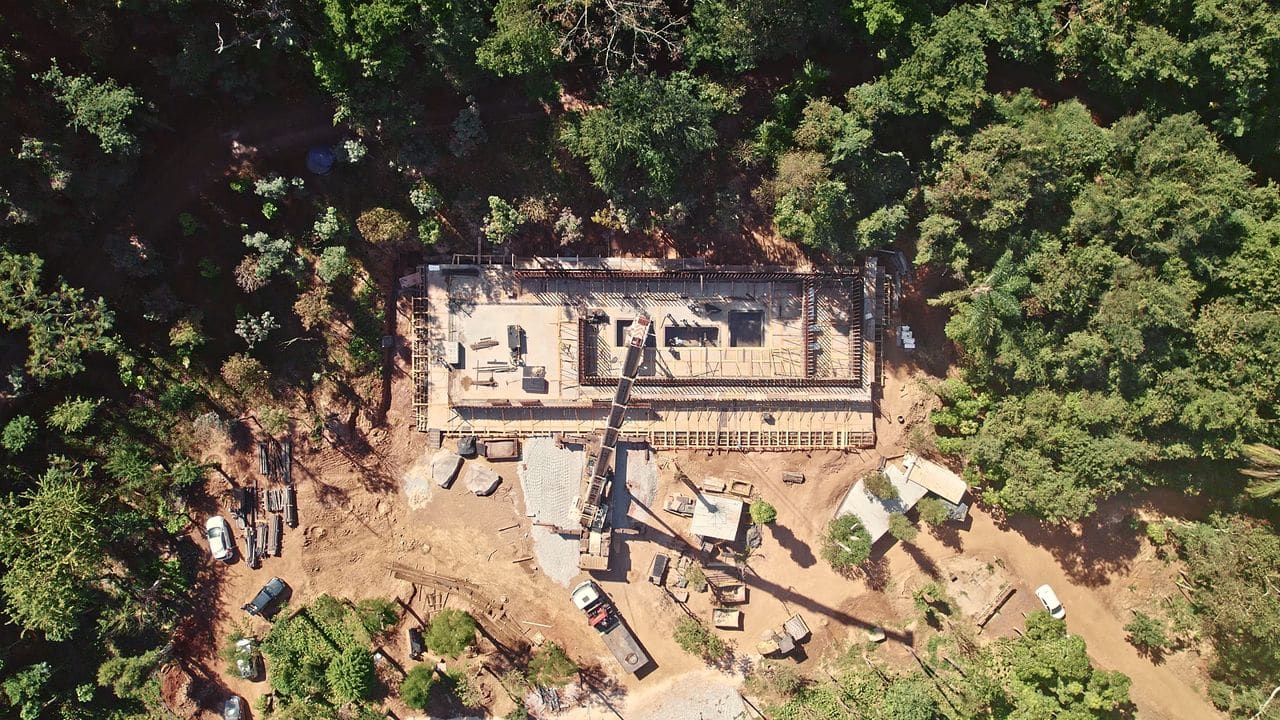
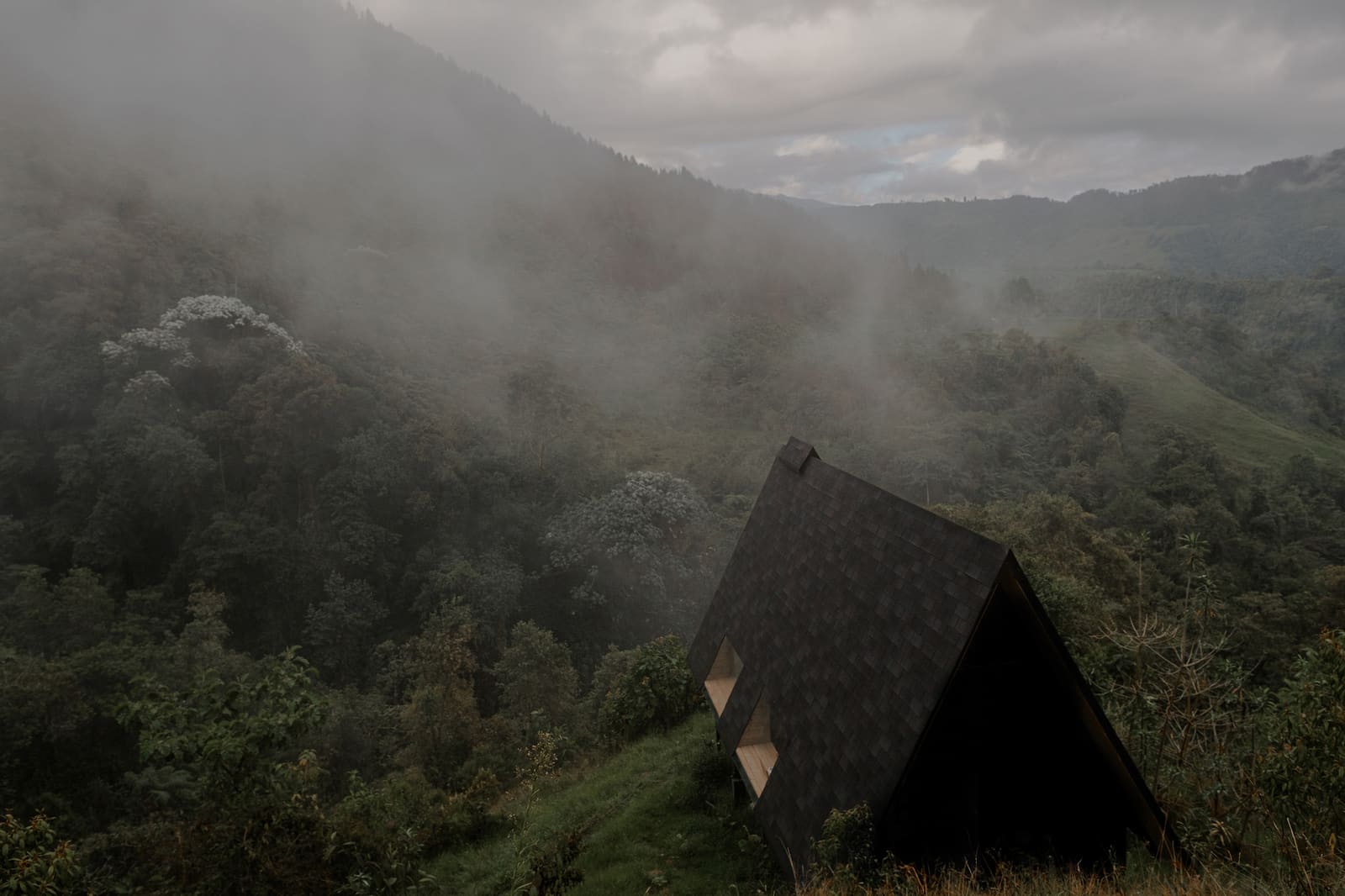
There is a kind of design restraint that feels almost subversive in an era of signature statements. At Campano Frío, a 162-square-meter intervention in the rural municipality of Villamaría, Caldas, the built elements serve as quiet witnesses rather than protagonists. AR-AR Martínez Arquitectura y Paisaje, led by Carlos Alberto Martínez Valencia, has delivered a pair of contemplation shelters that function less as destinations and more as frames for observing ecological recovery in real time.
The project sits along the Condor Route, within the Río Claro sub-basin of the larger Río Chinchiná watershed. This is cloud forest territory, or what remains of it after decades of cattle grazing stripped the native canopy to make room for invasive pasture grass. The shelters completed in 2024 are not the point. The point is reforestation, and the architecture exists to hold space for that slower, messier process.
Reading the Site: Degradation and Opportunity
Cloud forest ecosystems are among the most biodiverse and hydrologically critical landscapes in the Andes. They capture moisture from passing clouds, regulate stream flow, and support endemic flora and fauna. When converted to pasture, as this site was, the result is compacted soil, reduced water retention, and the collapse of habitat complexity. The visual evidence is immediate: monotonous grass, exposed earth, and the absence of stratified canopy layers.
Martínez Valencia's approach begins with an acknowledgment of that loss. Rather than overlay a new program onto degraded land, the studio collaborated with MEC Arquitectura (Manuela Eble Cárdenas) and Fiallo Atelier (Jesús Alfonso Fiallo Arango) to design an intervention that supports ecological succession. Native tree species are being reintroduced, invasive grasses are being managed, and the shelters provide vantage points from which to witness the incremental return of biodiversity.
Shelter as Instrument: Minimal Tectonic Presence
The two contemplation pavilions are modest in scale and material palette. Photographs by Teodoro Posada reveal lightweight structures that defer to topography and sightlines. The design avoids heavy foundations or grading that would further disturb the soil. Instead, the shelters appear to rest lightly, their forms calibrated to channel attention outward toward the regenerating landscape.
This is not new territory for Latin American landscape architecture. We see echoes of the observation platforms at Parque Explora in Medellín, where minimal structures mediate between urban visitors and riparian ecology, or the timber lookouts in Chile's Patagonia that frame distant glacial valleys without competing for visual dominance. What distinguishes Campano Frío is the integration of the shelters into an active restoration timeline. They are not endpoints but waypoints in a multi-decade process.
The material choices reinforce this temporality. Exposed timber, simple joinery, and open sides allow the structures to weather and age alongside the forest. There is no attempt to seal or preserve the architecture against natural processes. The shelters will gray, collect moss, and eventually be enveloped by the canopy they help protect.
Hydrological Context: Water as Protagonist
The Río Chinchiná basin is one of Colombia's most important water sources, feeding agricultural valleys and urban centers downstream. Cloud forests within the basin act as natural reservoirs, capturing atmospheric moisture and releasing it gradually into streams and aquifers. When pasture replaces forest, that regulatory function collapses. Runoff accelerates, erosion intensifies, and dry-season flows diminish.
Campano Frío addresses this at the micro scale. By reforesting a small parcel within the Río Claro sub-basin, the project contributes to regional hydrological resilience. The shelters serve as educational infrastructure, making visible the relationship between forest cover and water security. Visitors can observe how reintroduced tree species begin to slow runoff, stabilize slopes, and increase soil moisture.
This pedagogical dimension is critical. Across Latin America, we have seen ambitious reforestation initiatives founder because local communities lack a tangible connection to the benefits of ecological restoration. Campano Frío offers a model for embedding contemplative infrastructure within restoration zones, creating spaces where the logic of reforestation becomes experiential rather than abstract.
Precedents and Departures
The project invites comparison with other landscape interventions that prioritize ecological process over architectural spectacle. In Brazil, the Atlantic Forest restoration efforts often include interpretive trails and viewing platforms that document forest regeneration. In Costa Rica, cloud forest reserves like Monteverde have long used minimal-impact infrastructure to facilitate ecotourism without compromising conservation goals.
What sets Campano Frío apart is its scale and intimacy. This is not a national park or a large reserve. It is a rural property undergoing active transformation, and the shelters are instruments of that transformation rather than amenities grafted onto an already-protected landscape. The design team has resisted the temptation to over-program the site. There are no signage systems, no extensive trails, no visitor centers. The shelters simply exist, offering a place to sit and watch the forest return.
Implications for Practice
At World Archi Design, we have been tracking a broader shift in landscape architecture away from heroic interventions and toward projects that foreground ecological agency. Campano Frío exemplifies this ethos. The architecture is deliberate but not domineering. It provides structure without imposing narrative. It acknowledges that the real designer here is succession itself, the patient unfolding of seed dispersal, soil building, and canopy closure.
This approach demands a different kind of ambition from architects. Success is measured not in formal innovation but in the degree to which the built work enables non-human processes. The shelters will be most successful when they become difficult to photograph, when the forest has grown dense enough to obscure them, when the architecture recedes into the background it was designed to support.
There is also a temporal challenge. Reforestation operates on a timeline that exceeds professional careers and client expectations. Trees planted today will not reach maturity for decades. The full restoration of cloud forest structure and function may take a century. The shelters at Campano Frío acknowledge this duration. They are not final objects but provisional markers in a process that will outlast them.
A Quiet Radicalism
In a discipline often preoccupied with novelty and visibility, Campano Frío proposes something more radical: architecture that knows when to step aside. The shelters are beautiful in their restraint, their refusal to compete with the landscape they serve. They offer a model for how design can participate in ecological restoration without overshadowing it, how built form can support natural process without asserting dominance.
The Colombian cloud forest will not recover because of these two small structures. But the structures create conditions for that recovery to be observed, valued, and understood. They make reforestation a public act, something that can be witnessed and contemplated. In doing so, they expand the definition of what landscape architecture can be: not just the shaping of terrain, but the patient cultivation of the conditions in which terrain can reshape itself.
Save this story. A free account keeps your reading list and the 07:00 email in one place.
CREATE FREE ACCOUNT →SIGN IN