
The Afterlife of Industrial Fabric
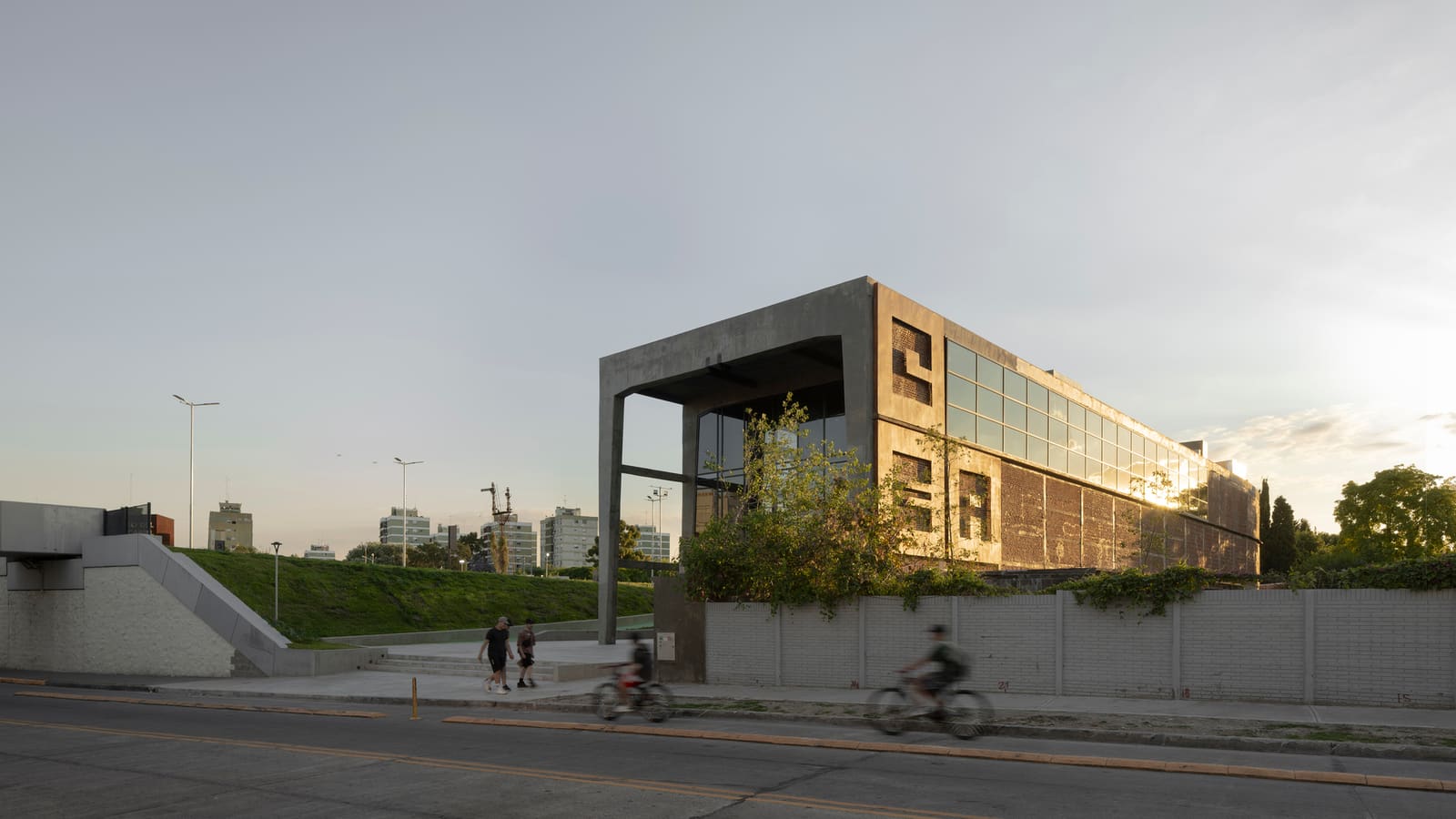
Adaptive reuse often reads as a polite euphemism for demolition-by-other-means. Strip the guts, keep the shell, sell the "heritage" as branding. Yet every so often, a project emerges that treats its inherited structure not as picturesque backdrop but as active tectonic argument. The Audiovisual Experimentation Center in Avellaneda, Argentina, completed in 2026, belongs to this rarer category. Designed by the Dirección General de Arquitectura in collaboration with the Secretaria de Planificación and the Municipalidad de Avellaneda, the 1,430-square-meter facility reoccupies a decommissioned oil mill, converting its industrial skeleton into a municipal archive dedicated to the preservation, restoration, and public dissemination of moving-image heritage.
The choice of program is quietly strategic. Audiovisual archives demand controlled environments, stable humidity, fire suppression, and precisely managed light levels. These are not trivial constraints, and they resist the easy spatial gestures that often accompany adaptive reuse work. The mill's thick masonry walls, high ceilings, and modular bay structure, however, offered a ready-made scaffolding for environmental control. Rather than fighting the building's original logic, the design team amplified it.
Tectonic Continuity and New Infrastructure
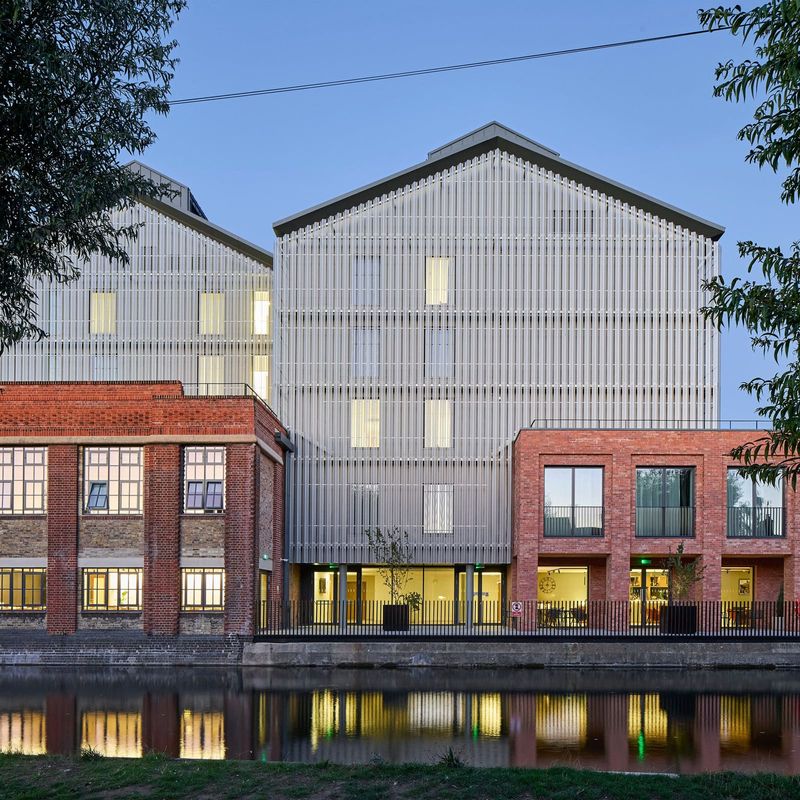
At World Archi Design, we've tracked a growing number of cultural institutions that lean into the rawness of their industrial precedents rather than smoothing them over. The CEA follows this lineage but adds a layer of specificity: the project does not fetishize decay. Exposed brick and steel trusses remain visible, but they share the composition with new interventions in galvanized steel, fiber-cement cladding, and thermally broken glazing systems. The palette is restrained, almost austere, deliberately avoiding the boutique patina that has become shorthand for adaptive reuse in the last decade.
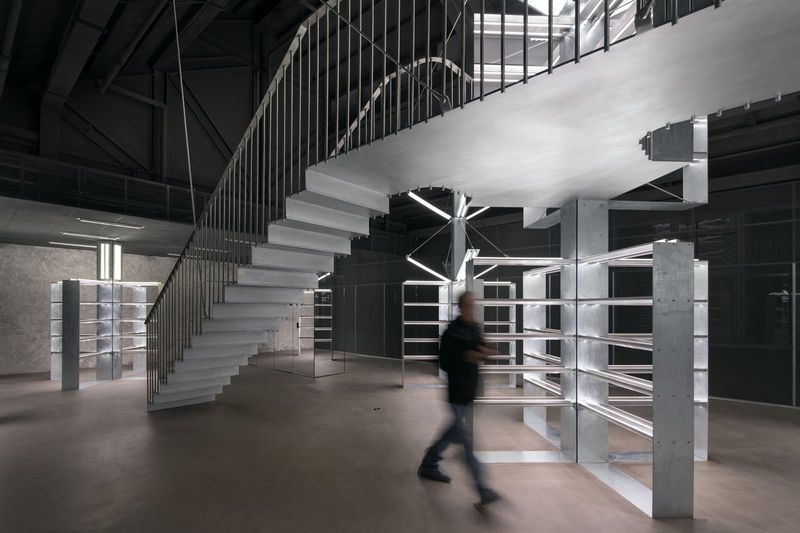
The structural bays that once housed oil-pressing machinery now contain climate-controlled vaults, digitization labs, and viewing rooms. Circulation is organized along the original axis of the mill, preserving the building's processional logic. New mezzanines, inserted within the double-height volumes, create flexible work zones without compromising the spatial legibility of the original frame. The technical systems, rather than being concealed, are threaded through the building as visible infrastructure: ductwork, cable trays, and fire-suppression piping run along the underside of the original trusses, legible as a second-order tectonic layer.
Material Specificity and Regional Precedent
The choice of materials reflects both budgetary pragmatism and a commitment to local fabrication. Aluar aluminum profiles, Knauf gypsum board, and Isover insulation are standard components in Argentine construction, but here they are deployed with an eye toward thermal performance and acoustic isolation. The envelope upgrades, including Dott.Gallina Arcowall panels and Yarlux polycarbonate infill, transform the mill from a leaky relic into a functioning repository without erasing its industrial character.
This approach has precedent in Latin American adaptive reuse, particularly in projects that resist the European model of meticulous restoration. The Museo de la Memoria in Rosario, completed by Estudio Arquitectura in 2018, similarly preserved the shell of a military detention center while inserting new program without apology. The CEA shares this ethos but applies it to a less politically charged typology. The result is a building that reads as both archive and artifact, a place where the preservation of film stock occurs within a structure that is itself a document of industrial history.
Program as Civic Gesture
The CEA is not a passive repository. Its program includes public screening rooms, educational workshops, and open-access digitization stations, positioning the archive as an active participant in the city's cultural life. This is a deliberate departure from the cloistered model of film preservation that has dominated the field for decades. The building's ground floor is permeable, with large glazed openings that allow passersby to glimpse the restoration work in progress. The upper levels, reserved for storage and climate-sensitive collections, are more opaque, reinforcing the distinction between public and technical zones.
The project also operates within a larger urban strategy. Avellaneda, located immediately south of Buenos Aires, has undergone significant deindustrialization over the past three decades. The CEA is part of a coordinated effort to reclaim former industrial sites for civic use, a pattern that echoes similar initiatives in Porto Alegre, Medellín, and São Paulo. What distinguishes the Avellaneda project is its refusal to sentimentalize the past. The building does not present itself as a monument to lost industry but as a working facility that happens to occupy an industrial shell.
Designing for Longevity
One of the more pragmatic questions facing any adaptive reuse project is whether the new program will outlast the architectural intervention. Film archives, unlike galleries or offices, have highly specific spatial and environmental requirements that do not easily accommodate future flexibility. The CEA addresses this by organizing its technical infrastructure as a modular system, with mechanical and electrical runs that can be reconfigured without structural alteration. Storage vaults are framed as freestanding volumes within the larger shell, allowing for future expansion or reconfiguration without compromising the building's envelope.
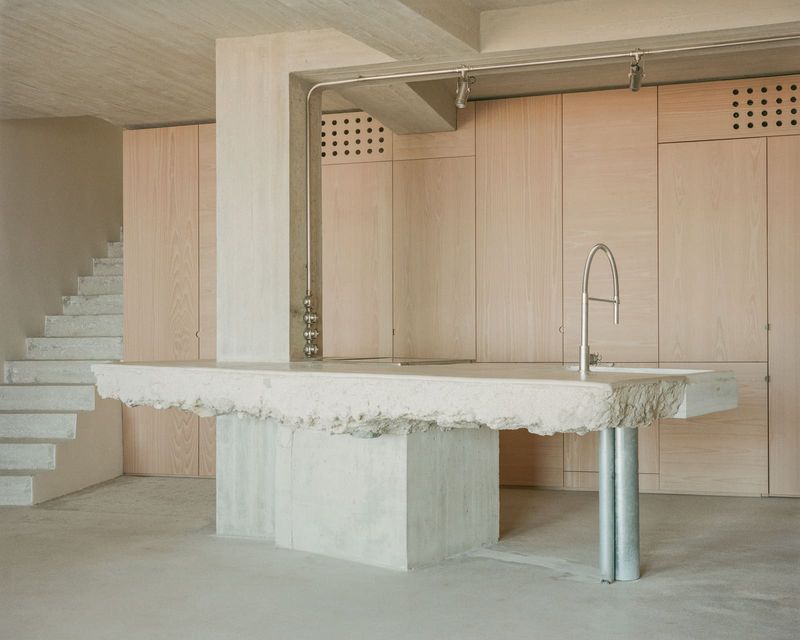
The design team also made the decision to avoid over-finishing. Floors are polished concrete, walls are left as exposed masonry or painted gypsum, and ceilings remain open to structure. This is not an aesthetic affectation but a practical strategy for long-term maintenance and adaptation. The building can absorb wear, accommodate new equipment, and evolve without requiring cosmetic renovation every decade.
A Model for Incremental Transformation
The Audiovisual Experimentation Center offers a counterargument to the dominant narrative of adaptive reuse as spectacle. It is not a dramatic transformation but an incremental one, a project that values continuity over rupture. The mill's industrial logic remains intact, but it now serves a different kind of production: the preservation and circulation of cultural memory. In this sense, the building is less a conversion than a translation, a shift in function that preserves the syntax of the original structure while allowing for new meanings to emerge.
As municipalities across Latin America grapple with the legacy of deindustrialization, the CEA provides a useful template. It demonstrates that adaptive reuse need not default to mixed-use luxury or cultural branding exercises. Instead, it can serve as a vehicle for civic infrastructure, a way of repurposing obsolete industrial fabric for contemporary public need. The project's success will ultimately be measured not by its architectural legibility but by its capacity to sustain a living archive, one that remains open, accessible, and embedded in the daily life of the city.
Save this story. A free account keeps your reading list and the 07:00 email in one place.
CREATE FREE ACCOUNT →SIGN IN