
A Question of Sequence
We have grown accustomed to treating nature as something to be accommodated within architecture, a set of considerations layered onto plans already drawn. The Oslo Architecture Triennale's ninth edition, running from September 17 through October 1, inverts that sequence. Rather than asking how buildings might become more sustainable, curator Line Ramstad poses a different question: what changes when nature becomes the starting point itself?
Ramstad, a landscape architect who serves as the Triennale's Director and Chief Curator, has organized the festival around a deceptively simple premise. By repositioning ecology at the origin of architectural decision-making, the framework shifts what gets built, what gets preserved, what gets transformed, and crucially, what remains untouched. The exhibition and accompanying two-week programme bring together more than thirty projects from across Europe and North America, each offering a concrete response to that foundational reordering.
Four Scales of Inquiry
The curatorial structure divides the inquiry into four nested scales: Materials, Structures, Territories, and Systems. This organization moves from the granular to the systemic, beginning with the physical substance of construction and expanding outward to the regulatory and economic frameworks that govern development.
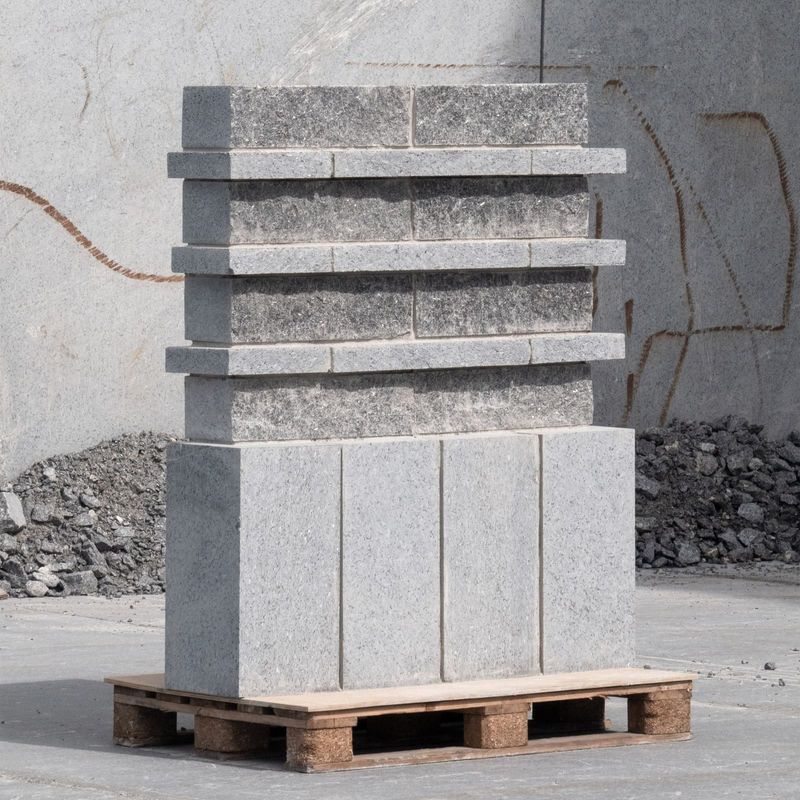
At the material scale, projects such as Carmody Groarke's Gent Waste Brick demonstrate how municipal refuse can be transformed into viable building components, closing waste streams while reducing demand for virgin resources. Nordic Circles' steel upcycling initiative similarly interrogates the flow of construction metals, treating existing material stocks as a primary resource rather than an afterthought. Zeynep Topçu of BC Materials will address natural material innovation during the opening conference on September 17, alongside Jonathan Grinham from Harvard's Graduate School of Design and Sian Ricketts of Carmody Groarke.
The structural scale examines buildings themselves as repositories of embodied energy and knowledge. Pihlmann Architects' transformation of the Thoravej 29 factory in Copenhagen exemplifies adaptive reuse that retains industrial fabric while accommodating new programmes. Built Architects' Grønn liste project takes a different approach, mapping Oslo's building stock to identify structures with latent potential for transformation, creating an inventory of existing resources that might otherwise be demolished and replaced.
At the territorial scale, SOLA Studio Oslo Landskapsarkitekter's Vollebekk Torg project appears in the exhibition, addressing how public space can be shaped by ecological processes rather than purely formal or functional imperatives. This scale considers the relationship between architecture and land use, examining how development patterns either reinforce or disrupt natural systems.
The fourth scale, Systems, broadens the lens to encompass the economic, regulatory, and cultural structures that determine what gets built. A September 22 seminar organized with Norway's Directorate for Cultural Heritage will tackle the question "How Can We Make Reuse Pay Off?" by convening architects, heritage professionals, and financial advisors to examine the barriers and opportunities within existing policy frameworks. Another session, "Nature and Economy," explores how ecological economics might reshape urban development priorities.
Sofienberg Church as Laboratory
The main exhibition occupies Sofienberg Church, an 1877 structure in Oslo's Grünerløkka neighborhood currently being converted into a cultural venue. The building itself becomes part of the argument, a 19th-century envelope being adapted rather than replaced. The exhibition design employs reused materials throughout, extending the curatorial logic into the display infrastructure itself.
Projects span ten countries, including Norway, Denmark, Sweden, Germany, France, Spain, Switzerland, Austria, the United Kingdom, and the United States. HouseEurope! appears among the featured works, alongside other initiatives that test alternative approaches to construction, material sourcing, and building lifespan.
The church's interior and exterior spaces will host both the exhibition and a dense programme of events scheduled from early morning through evening. This compressed format, adopted for the first time in the Triennale's history, aims to generate sustained dialogue rather than isolated encounters.
The Daily Sermon and Programmatic Rhythms
Beginning September 18 and continuing through the festival's final day on October 1, a recurring element called "The Daily Sermon" will unfold from the church's original pulpit. These short morning talks introduce a specific architectural or environmental challenge alongside a proposed response, using the ecclesiastical setting to frame each day's inquiry. Weekend sessions extend the format to allow for longer discussions and audience participation.
Complementing these daily addresses, the programme includes "The New Stone Age," a seminar exploring contemporary applications of stone and other natural materials in architectural practice. Film screenings and guided walks through Oslo's landscape offer additional modes of engagement, moving participants beyond the exhibition hall and into the city's existing ecological and built conditions.
The opening conference on September 17 establishes the thematic framework, with Ramstad joined by speakers including Tine Hegli of the Oslo School of Architecture and Design. A closing conference on October 1 will synthesize the festival's discussions, drawing threads across the various scales and projects presented.
Precedent and Context
Oslo's Architecture Triennale joins a crowded calendar of major international architecture events scheduled for late 2026. The inaugural Pan-African Biennale took place in Nairobi from September 7 to 11, while Tallinn's Architecture Biennale runs from September 9 through November 30 under the theme "How Much?" The Sharjah Architecture Triennial opens November 14 with the title "Architecture Otherwise: Building Civic Infrastructure for Collective Futures."
Each of these events foregrounds questions of resource use, collective infrastructure, and alternative frameworks for practice. Oslo's contribution distinguishes itself through its focus on sequence: not merely how architecture can become more ecologically responsible, but what shifts when ecology becomes the initiating condition. This is not a semantic distinction. Placing nature first alters the hierarchy of priorities, the palette of acceptable interventions, and the metrics by which success is measured.
Ramstad's curatorial statement distills one operational principle: "Materials are heavy and should stay local; knowledge is light and can be spread globally." The observation captures a central tension within contemporary practice. Physical resources carry environmental and logistical costs that argue for regional sourcing and reuse. Ideas, techniques, and frameworks, by contrast, can circulate widely without material consequence. The Triennale's structure reflects this division, gathering projects that respond to specific local conditions while disseminating the methods and principles that inform them.
Reuse as Cultural Practice
The September 22 seminar on reuse addresses a persistent friction within the field. Adaptive reuse has long been championed on environmental grounds, the embodied energy and carbon within existing structures justify their retention. Yet financial models, regulatory hurdles, and cultural preferences often favor demolition and new construction. The session aims to surface these conflicts directly, examining how policy, finance, and design practice might align to make reuse economically viable without compromising architectural ambition.
This inquiry connects to broader debates about heritage, value, and temporality. Buildings designed for one era must accommodate the needs and expectations of another. The question is not whether this is possible, numerous precedents confirm that it is, but rather how to create conditions under which it becomes the default rather than the exception.
What Remains Unbuilt
Perhaps the most provocative dimension of Ramstad's curatorial question concerns what remains untouched. By positioning nature as the starting point, the framework opens space to consider restraint as a legitimate architectural outcome. Not every site requires intervention. Not every structure demands replacement. Some landscapes and buildings serve their ecological, cultural, or social functions most effectively when left alone.
This perspective challenges a profession historically oriented toward production. Architecture, as a discipline and an industry, generates new work. Fees, reputations, and institutional structures depend on building. A framework that privileges nature from the outset inevitably questions the imperative to build at all, a stance that carries both ethical and economic implications.
The Oslo Architecture Triennale does not resolve these tensions. Instead, it creates a temporary venue within which they can be examined, tested, and debated. Over two weeks in September and early October, Sofienberg Church will host a concentrated inquiry into how architecture might operate when nature comes first. The projects, seminars, and conversations gathered there offer not a manifesto but a series of propositions, each grounded in specific conditions and responsive to particular challenges.
Whether these propositions gain traction beyond the festival will depend on forces that extend well past the discipline of architecture itself: policy frameworks, market structures, cultural values, and the willingness of clients, communities, and institutions to prioritize ecological health over other measures of success. What the Triennale can do, and what Ramstad's programme attempts, is to make visible a set of practices already underway, to articulate the principles that unite them, and to demonstrate that beginning with nature is not a constraint but a generative condition.
Save this story. A free account keeps your reading list and the 07:00 email in one place.
CREATE FREE ACCOUNT →SIGN IN