
When the Profession Sees One-Third
Women represent roughly one-third of the architectural profession globally, a statistic that frames not only demographic reality but also the structural exclusion that persists across continents. The observation is not new, yet it remains unresolved. Within that third, however, are stories that complicate the narrative further: architects who navigate not only gender imbalance but also the transnational complexities of migration, language, and cultural identity. A recently released documentary, Transnational Narratives, turns its attention to six such practitioners, all of South Asian origin, whose careers unfold across India, Pakistan, and the United Kingdom.
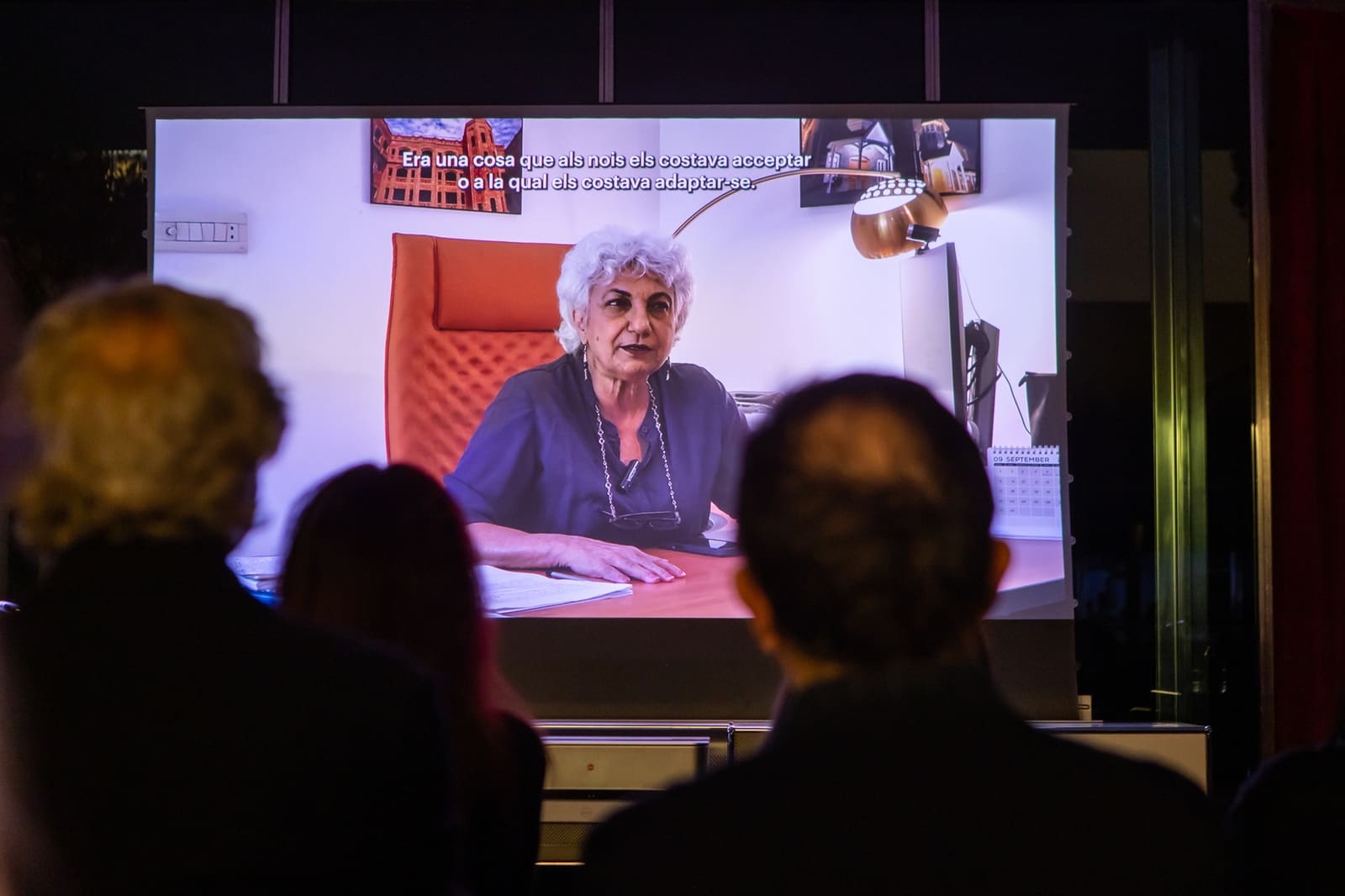
Produced through the 4th Lilly Reich Grant for Equality in Architecture, an initiative by the Fundació Mies van der Rohe, the film was developed by Dr. Igea Troiani, Professor and Director of Architecture at London South Bank University, and Dr. Mamuna Iqbal, Professor at the University of Engineering and Technology Lahore, in collaboration with artist and researcher Paula Roush and filmmaker Rime Tsujino. The grant itself is designed to promote equal access within architectural practice and to surface contributions that have been systematically overlooked. This documentary extends that mission by documenting the experiences of Sumita Singha, Chitra Vishwanath, Sara Khan, Fauzia Qureshi, Sajida Vandal, and Neelum Naz.
Architecture as Multifaceted Practice
The film structures its inquiry around three thematic questions: what it means to be an architect, the challenges these women encountered in their home countries, and how they approach feminist, inclusive, and transnational practice. The answers resist simplification. Architecture, as presented through these six voices, is not confined to design alone but extends into teaching, research, and social action. The profession becomes a site where empathy, ethics, and environmental responsibility intersect.
Each architect brings a distinct trajectory. Some emerged from bohemian or intellectually open environments; others fought for the right to education in contexts where women's access to higher learning was contested. The film captures not only their words but also their physical presence: how they dress, how they move, the accents they carry, the multiple languages they speak. These audiovisual details, according to the documentary's creators, underscore their role as transnational agents within a profession still dominated by Western and male narratives.
Navigating Patriarchal Contexts
The testimonies reveal challenges that cut across geography and generation. Several of the architects describe being the only woman in their class, often while excelling academically. Others recount balancing multiple jobs alongside domestic responsibilities, a double burden familiar to many women in the profession but compounded by cultural expectations around caregiving and family roles. First impressions, they note, frequently work against them. Presumptions about competence, authority, and technical knowledge must be actively dismantled, project by project.
Segregation emerges as both a spatial and social reality. In some contexts, the absence of dedicated spaces for women in educational or professional settings becomes a literal obstacle. In others, the segregation is more subtle, manifesting in exclusion from informal networks where commissions are discussed and partnerships formed. The architects describe strategies for confronting sexism that range from direct confrontation to strategic coalition-building. Activism, for several of them, is not separate from practice but integral to it.
Feminism as Collaborative Method
When asked about feminist architecture, the architects in the documentary describe it less as a stylistic category and more as a methodological orientation. Collective action, the sharing of power, and a commitment to collaboration emerge as recurring themes. Feminism, in this framing, is not an ideology imposed on design but a way of thinking rooted in empathy and shared decision-making. It shapes how projects are conceived, how clients and communities are engaged, and how knowledge is transmitted to the next generation.
The film opens with a shot of the male and female figures on the façade of the Royal Institute of British Architects headquarters, accompanied by a statement acknowledging that gender identity is not fixed but emerges from personal experience and an internal sense of self. This opening gesture situates the documentary within broader conversations about gender equity while grounding its inquiry in the specific experiences of South Asian women. The result is a film that resists universal claims, instead offering a set of situated perspectives that illuminate the profession's gaps and possibilities.
Film as Medium, Architecture as Record
Troiani, Iqbal, Roush, and Tsujino chose film deliberately. The medium allows for a wider audience than academic publishing or architectural monographs typically reach. It also captures dimensions of experience that text alone cannot convey: tone, gesture, environment. The filmmakers conducted interviews and research, with Tsujino leading much of the filming and editing. The result is a documentary that functions both as oral history and as argument, making visible the ways in which architecture is practiced outside dominant institutional frameworks.
At World Archi Design, we have long observed that the most innovative practices often emerge at the margins, where necessity forces experimentation and where exclusion from mainstream networks creates space for alternative models. The six architects featured in Transnational Narratives exemplify this pattern. Their work, shaped by migration, motherhood, and resistance, offers not only role models for younger generations but also methodological insights for a profession grappling with its own homogeneity.
Love as Foundation
Near the end of the film, a recurring theme surfaces: a love for architecture that is described as essential to its practice. This is not romanticism but pragmatism. The architects acknowledge that the profession is demanding, that the obstacles are real, and that the rewards are often delayed or unequally distributed. Yet they remain committed. That commitment, they suggest, is what sustains practice over decades and across borders.
The Lilly Reich Grant, named for the architect and designer who collaborated with Mies van der Rohe, was established to address inequities that persist in the profession. By supporting projects like Transnational Narratives, the Fundació Mies van der Rohe acknowledges that visibility alone does not constitute equity, but it is a necessary precondition. The documentary contributes to a growing body of work that seeks to expand the disciplinary canon, not by adding footnotes to existing narratives but by reframing the conversation itself.
Other recent efforts to recognize women in architecture include Lesley Lokko receiving the African Cultural Icon Award for her contributions to architectural education, Barbara Buser being named the 2026 Jane Drew Prize recipient for her expertise in circular construction, and Xu Tiantian receiving the 2026 Le Prix Charlotte Perriand. These recognitions, like the documentary, signal a shift in how the profession accounts for its own history and imagines its future. Whether that shift translates into structural change remains an open question, but the documentation of these careers ensures that the record, at least, is more complete.
Save this story. A free account keeps your reading list and the 07:00 email in one place.
CREATE FREE ACCOUNT →SIGN IN