
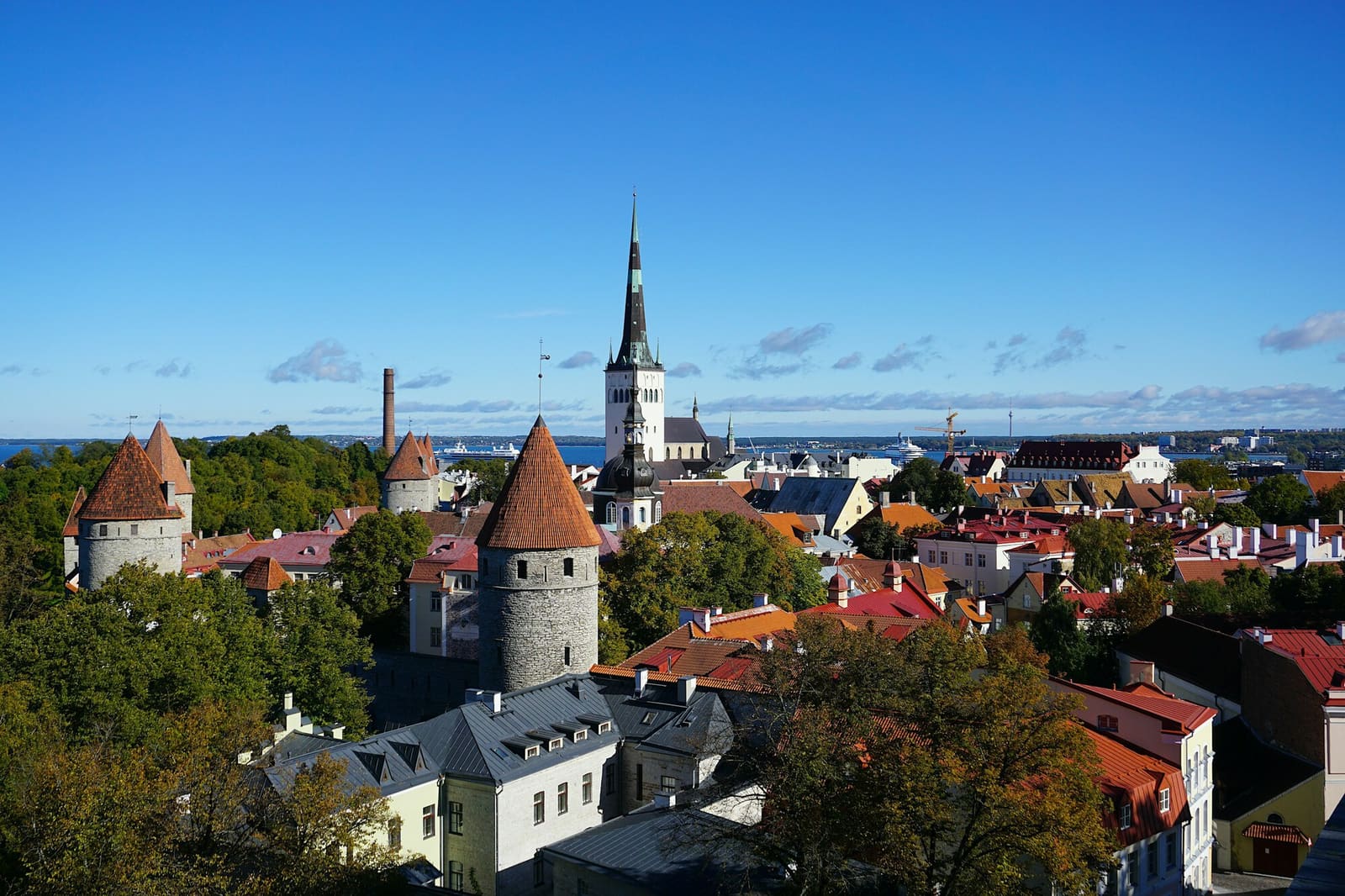
A City Turned Away from the Sea
When ships approach Tallinn from the Baltic, they encounter the silhouette of a medieval trading port: church spires, merchant houses, fortification towers. Yet this image conceals a curious historical rupture. For nearly fifty years, the Estonian capital existed in a state of estrangement from the very waterfront that had established its prosperity.
During Soviet occupation, military restrictions cordoned off much of the coastline. The harbour remained one of the rare contact points between urban fabric and sea. Even Linnahall, the monumental concrete structure erected to host sailing events during the 1980 Moscow Olympics, was sited with strategic intent: to frame and preserve the medieval skyline for arriving vessels. While other European port cities expanded toward their waterfronts throughout the twentieth century, Tallinn grew inland, turning its back on the Gulf of Finland.
When Estonia regained independence in 1991, the city inherited prime coastal real estate that had become unfamiliar territory to its own residents. What followed was not a sudden redevelopment boom but a gradual, often tentative process of reacquaintance.
Industrial Heritage as Urban Material
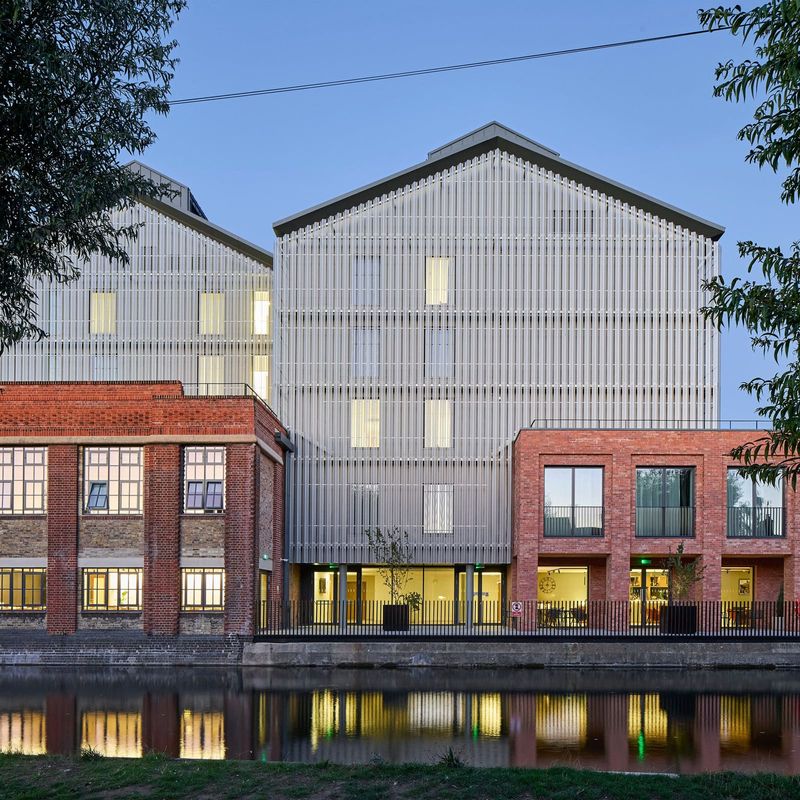
At World Archi Design, we've observed that the most compelling contemporary architecture in Tallinn emerges not from greenfield sites but from the adaptive reuse of industrial structures whose original functions have vanished. Rotermann Quarter, positioned between the medieval Old Town and the port, exemplifies this approach. The nineteenth-century flour mills and salt storage warehouses have been reimagined as mixed-use spaces, their brick and timber frames retained while new interventions in glass and weathering steel establish a dialogue across eras.
The architectural strategy here is one of restraint. Rather than imposing dramatic formal gestures, the interventions work through material contrast and programmatic layering. Courtyards that once served logistics now function as public plazas. The original massing remains legible, but fenestration has been carefully reconsidered to admit light into spaces now occupied by offices, galleries and ground-floor retail.
Further along the coast, the Noblessner district presents a parallel narrative. These former submarine shipyards, operational throughout the Cold War, represent a more austere industrial typology. The conversion here has embraced the raw concrete and steel of the original structures, inserting residential and cultural programs while preserving the maritime character. The scale is deliberately pedestrian-friendly, with new infill buildings kept low to maintain sight lines to the water.
Linnahall and the Question of Monumentality
Linnahall occupies a peculiar position in Tallinn's architectural consciousness. Designed to accommodate 5,000 spectators, the brutalist complex sprawls across several hectares of prime waterfront. Its terraced profile was intended to evoke waves, though the effect reads more as tectonic than biophilic. After the Olympics, it served as a concert venue, but by the early 2000s, maintenance had lapsed and the structure fell into disuse.
The building's future remains unresolved. Its sheer scale resists easy repurposing, and its aesthetic legacy is contested. For some, it represents Soviet occupation; for others, it is a significant example of late-modernist public architecture. Various proposals have circulated, from complete demolition to heritage-led restoration, but none has achieved consensus. In the interim, Linnahall has become an accidental public space: skateboarders use its ramps, photographers its vantage points, and on summer evenings, residents gather on its terraces to watch the sunset over the gulf.
This ambiguity is instructive. Unlike the incremental transformations in Rotermann or Noblessner, Linnahall poses questions about monumentality, memory and the limits of adaptive reuse. Can a structure built to project Soviet power be reclaimed as a civic asset? Does its architectural merit outweigh its political associations? Tallinn has not yet answered these questions, and perhaps the deferral itself is a form of urban strategy.
Reconnection as Design Philosophy
The thread connecting these disparate projects is the idea of reconnection. Not simply physical access to the waterfront, though that is part of it, but the reintegration of fragments that occupation and obsolescence had severed from the city's lived experience. The architecture is often understated, favouring material honesty and programmatic flexibility over iconic form-making.
This approach has precedents. The transformation of Copenhagen's Carlsberg brewery district or the adaptive reuse projects along Barcelona's Poblenou waterfront share similar logics: respect for existing structures, insertion of mixed uses, creation of public realm. What distinguishes Tallinn is the compressed timeline. Where other cities undertook waterfront redevelopment incrementally over decades, Tallinn is attempting to recover half a century of lost relationship with the sea in little more than thirty years.
The results are uneven. Some projects, particularly in Rotermann, have achieved a balance between preservation and contemporary intervention. Others feel tentative, as though developers and planners are still negotiating the terms of engagement. But this unevenness may be preferable to the wholesale redevelopment that has homogenised waterfronts elsewhere. Tallinn's architectural identity is still being written, and the presence of ambiguity, incompletion and even failure keeps the process open.
The Shoreline as Contested Ground
The physical geography of Tallinn's waterfront complicates redevelopment. Much of the coastline is rocky and shallow, unsuitable for large-scale construction without significant engineering. Infrastructure, both historical and contemporary, fragments the shoreline: rail lines, port facilities, roads. The boundary between city and sea is not a clean edge but a zone of negotiation, where remnants of industrial use, transport corridors and new development coexist in uneasy proximity.
Recent projects have begun to address this condition. Promenades and boardwalks establish continuity where none existed, threading between obstacles. Parks and plazas occupy interstitial sites. The vocabulary is modest: timber decking, native planting, minimal lighting. The intent is not to impose a singular vision but to stitch together a fragmented edge, allowing residents and visitors to move along the coast in ways that were impossible a generation ago.
This incremental approach contrasts with the master-planned waterfronts common in other post-industrial cities. There is no grand gesture, no signature building by an international starchitect to anchor the transformation. Instead, Tallinn's waterfront is emerging through accretion, a process that reflects both pragmatic constraints and a deliberate editorial stance.
Looking Forward
Tallinn's waterfront architecture raises questions relevant beyond the Baltic. How do cities reclaim space that was lost not to natural disaster but to political circumstance? What is the role of adaptive reuse when the structures in question carry contested meanings? How can contemporary interventions respect industrial heritage without becoming theme-park nostalgia?
The city's approach, hesitant and incremental as it may be, offers one possible answer. By prioritising reconnection over spectacle, material honesty over formal bravado, Tallinn is constructing an architectural identity rooted in its specific history. The result is not always elegant, but it is genuine, a quality increasingly rare in an era of globalised urban design.
As more of the coastline becomes accessible, as the remaining industrial sites are converted or demolished, Tallinn will continue to define what it means to be a city on the water. The architecture emerging from this process may not appear on many international award shortlists, but it is doing the essential work of rebuilding the relationship between a capital and the sea that made it possible.
Save this story. A free account keeps your reading list and the 07:00 email in one place.
CREATE FREE ACCOUNT →SIGN IN