The Material Language of British Modernism
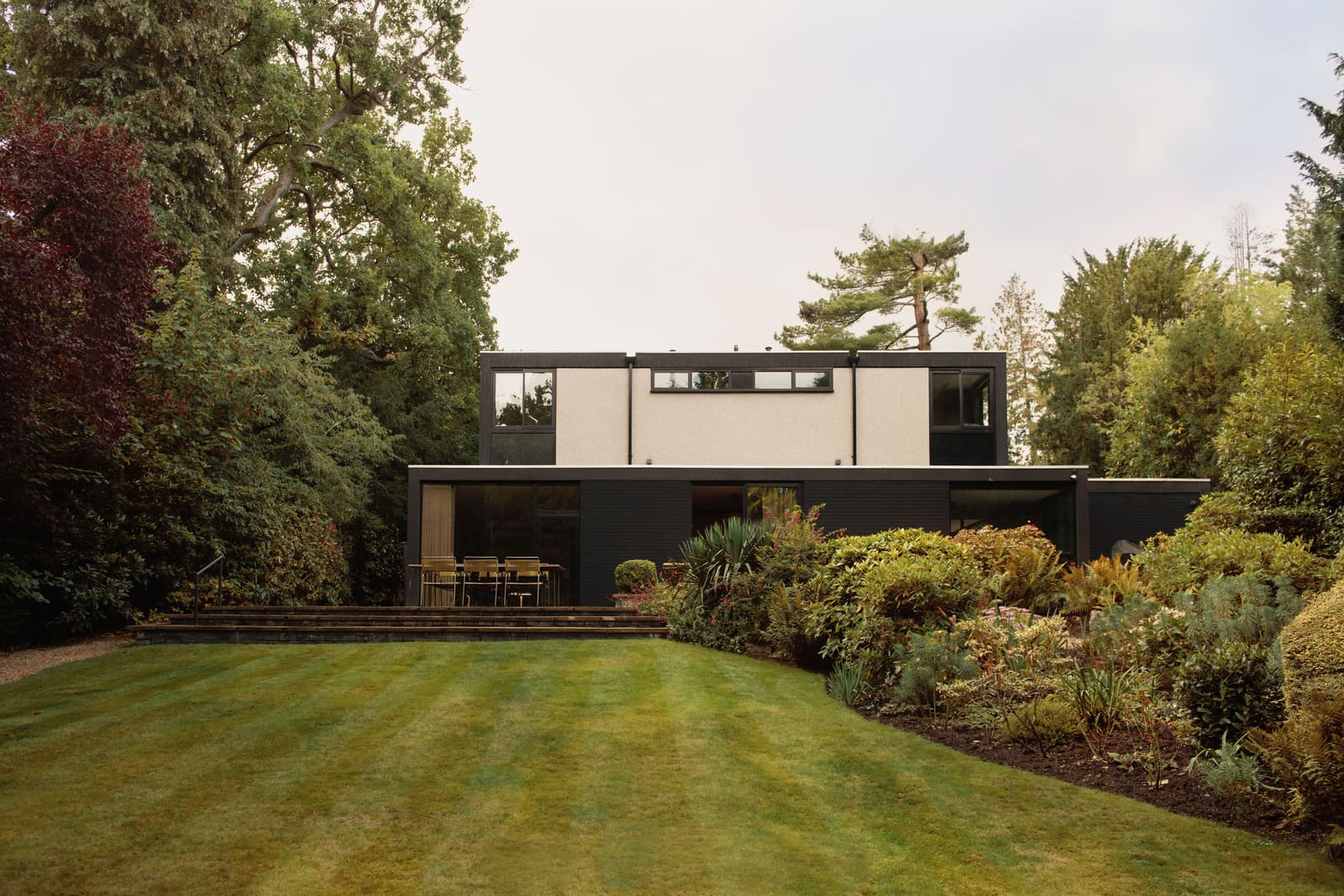
There exists a particular restraint in British postwar architecture that distinguishes it from its Continental and American counterparts. Where Neutra pursued transparency and Niemeyer celebrated sculptural drama, figures like Patrick Gwynne employed a quieter vocabulary: brick, terrazzo, pine, and carefully proportioned glass. His 1960s residence on a secluded Hampstead lane exemplifies this approach. The split-level dwelling, now protected under Grade II listing, showcases flat rooflines, stuccoed concrete, and floor-to-ceiling glazing that dissolves boundaries between interior and garden. When a young family acquired the property, they engaged Daytrip Studio, the London-based practice led by Iwan Halstead and Emily Potter, to guide a second phase of restoration. The directive was clear: honor Gwynne's tectonic logic while accommodating contemporary domestic life.
Preservation as Interpretation
Daytrip's mandate extended beyond conservation. The house had already undergone one renovation, yet certain elements required further attention. The original kitchen, though conceptually intact, had deteriorated. Its orange mosaic tiles needed meticulous restoration, a process that demanded both archival research and material sourcing to match the hue and glaze of 1960s ceramic work. The built-in cabinetry, including a fold-down desk in the study, remained structurally sound but required refinishing. Gwynne's interest in integrated storage, evident throughout The Homewood, his celebrated Surrey residence, informed these details. Daytrip chose to retain every operable hinge and sliding panel, understanding that such joinery represented a broader ethos of spatial economy.
The staircase presented a different challenge. Composed of open treads in terrazzo and glass, it functions as both vertical circulation and sculptural centerpiece. Overhead daylight washes the treads, casting geometric shadows that shift throughout the day. Terrazzo, that composite of marble chips and cementitious binder, was widely adopted in postwar Britain for its durability and cost-effectiveness. Here, its mottled surface contrasts with the smooth transparency of glass balustrades, creating a play of opacity and lightness. Daytrip left the staircase untouched, allowing its original materiality to anchor the home's narrative.
A Steel and Marble Partition as Spatial Hinge
One of the residence's defining features is a large steel-and-glass partition separating the living and dining zones. Embedded within this structure are shelves clad in Verde Alpi marble mosaic, a material choice that speaks to Gwynne's affinity for luxurious yet understated surfaces. Verde Alpi, quarried in the Italian Alps, displays a characteristic green veining that ranges from sage to near-black. Its mosaic application here, rather than slab form, adds texture and visual weight without overwhelming the surrounding transparency. Daytrip undertook careful restoration of these shelves, addressing minor chips and re-grouting where necessary. The partition operates as both divider and display, a tectonic gesture that organizes the plan without imposing rigidity.
Adjacent to this element stands a hand-lacquered bar finished in black and gold. The treatment evokes chinoiserie motifs, a decorative thread Gwynne explored in other commissions. While such ornamentation might seem at odds with modernist purity, it reflects a broader British tendency to hybridize styles, blending International Style rigor with craft traditions and historicist reference. Daytrip elected to preserve the bar's lacquer finish, understanding its role in the home's layered identity.
Furnishing Across Eras
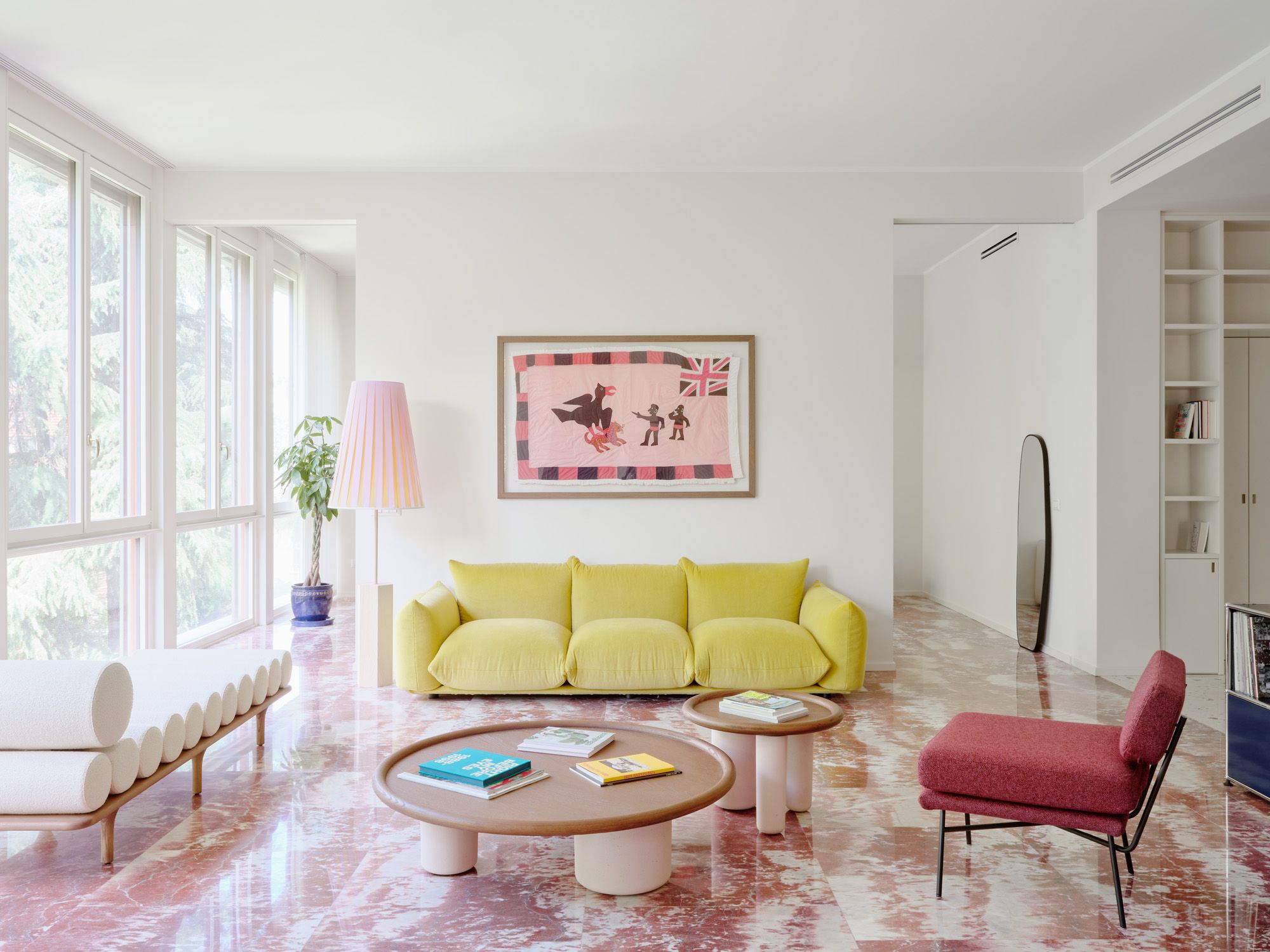
Halstead and Potter approached the interiors as a curatorial exercise, assembling pieces that resonate with Gwynne's aesthetic while introducing contemporary makers. They commissioned a sixteen-foot sofa upholstered in rust-orange fabric, positioning it atop a fawn alpaca rug. The length of the sofa responds to the room's generous proportions, while the material palette echoes the warmth of the original pine paneling and timber flooring. Brass accents, including an Encchi lamp by Matthew Verdon, punctuate the space without disrupting its calm.
In the dining area, chairs by Danish designer Niels Møller surround a rosewood-and-brass table attributed to Angelo Mangiarotti. The Italian architect-engineer's work, characterized by elemental joinery and material honesty, aligns with Gwynne's own principles. A bronze and marble sculpture by Gianna Dispenza rests atop the steel partition, its weight grounding the otherwise airy composition. Nearby, a crimson silk rug with ivory trim introduces a bold chromatic note, recalling the saturated hues favored in 1960s interiors.
Daytrip also sourced a Cloud coffee table from Swedish studio Veermakers and a glass table by British architect John Pawson. The latter's work, defined by reductive geometry and material refinement, shares conceptual ground with Gwynne's modernism. A pair of Bruno Mathsson chaise longues, upholstered in sheepskin, occupy a corner of the living room. Mathsson, a Swedish furniture designer, championed ergonomic form and natural materials, values that resonate throughout this project. The interplay between Italian rationalism, Scandinavian craft, and British restraint produces a coherent yet varied interior landscape.
Textiles and Surface Treatments
The residence's warmth derives in part from its textile strategy. Daytrip selected sheer curtains in a natural silk blend, their delicate sheen diffusing light from the expansive windows. The fabric's subtle luster emphasizes the home's midcentury character without resorting to pastiche. In the principal bedroom, plant-fiber wallpaper replicates the original 1960s design, a pattern that adds tactile depth to otherwise minimal surfaces. The bed, custom-designed by Daytrip in collaboration with Treeslounge, features a silk-upholstered headboard and rosewood frame. Rosewood, prized for its density and grain, appears throughout the house, from Mangiarotti's table to the bespoke sofa, establishing material continuity.
On the bedroom balcony, furniture in muted brown and anthracite tones creates an intimate threshold between interior and garden. This layering of outdoor rooms, a hallmark of Gwynne's planning, extends the dwelling's usable area while maintaining visual connection to the landscape. Walter Lamb, the American designer known for bronze outdoor furniture, supplied armchairs and a table finished in moss green for the garden terrace. Lamb's patinated metalwork, developed in the 1950s, complements the verdant setting without mimicking organic forms.
The Kitchen as Archive
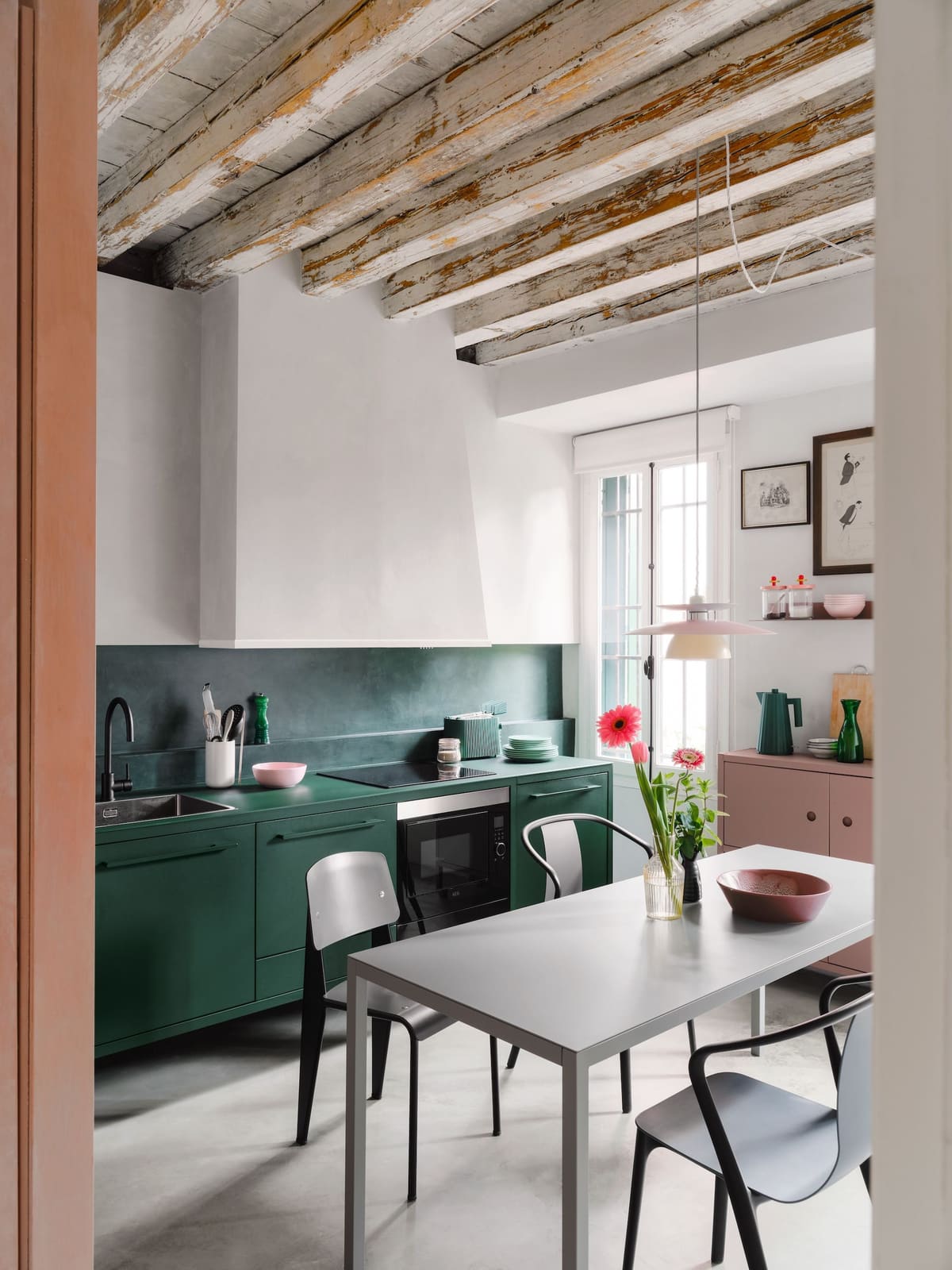
Midcentury kitchens often suffered from subsequent remodels that prioritized function over character. Here, Daytrip confronted a space that retained its conceptual integrity but required technical updating. The orange mosaic tiles, vibrant yet faded, demanded color-matching and re-installation. The original bench, upholstered in worn vinyl, received new cushions while preserving its built-in structure. Daytrip paired this element with a Charlotte Perriand table and chairs by Pierre Chapo, both French designers whose work emphasizes materiality and craft. Perriand's furniture, with its elemental forms and honest joinery, aligns with Gwynne's sensibility. Chapo's use of solid timber and sculptural mass adds gravitas to the otherwise light-filled kitchen.
The office retains its original woodwork, including the fold-down desk that exemplifies Gwynne's interest in functional cabinetry. When closed, the desk creates additional seating area, a spatial flexibility essential in a compact plan. A woven lamp by Freddie Tuppen, sourced from Max Radford Gallery, sits atop the desk, its organic texture contrasting with the precision of the surrounding millwork.
Precedent and Continuity
Daytrip's research drew heavily on The Homewood, Gwynne's own residence in Surrey, completed in 1938. That house, now managed by the National Trust, represents a distillation of early modernist ideals: open planning, integrated storage, and a seamless relationship between interior and landscape. While the Hampstead residence dates to the 1960s, it shares The Homewood's commitment to spatial clarity and material authenticity. Both projects employ terrazzo, custom joinery, and extensive glazing. By studying The Homewood's details, Daytrip gained insight into Gwynne's design methodology, informing decisions about proportion, finish, and furnishing.
The Hampstead house also invites comparison with contemporaneous work by Erno Goldfinger, whose nearby Willow Road terrace explores similar themes of modernist domesticity within a constrained urban context. Both architects navigated the tension between avant-garde form and traditional British building culture, producing residences that feel both radical and rooted. Daytrip's intervention acknowledges this dual identity, preserving original elements while introducing pieces that extend the conversation across decades.
Materiality as Narrative
Across the projects we've covered this year, a pattern emerges: successful restoration hinges not on replication but on understanding. Daytrip Studio's work in Hampstead demonstrates how terrazzo, marble, and timber can anchor a contemporary interior without lapsing into nostalgia. These materials carry historical weight, yet their inherent qualities - durability, texture, patina - remain relevant. The terrazzo staircase and Verde Alpi shelving function as both artifact and infrastructure, linking past and present through their continued use.
This approach contrasts with projects that treat midcentury modernism as a style to be applied rather than a set of principles to be engaged. By foregrounding materiality and spatial logic, Daytrip avoids the trap of superficial reference. The result is a home that honors its architect's vision while accommodating the rhythms of family life, proof that thoughtful preservation need not preclude adaptation.
Save this story. A free account keeps your reading list and the 07:00 email in one place.
CREATE FREE ACCOUNT →SIGN IN