
When the Frame Becomes Part of the Conversation
Exhibition design occupies a peculiar position within architectural practice. It demands spatial intelligence but forbids ego. The walls, thresholds, and circulation paths must guide without dictating, support without competing. At World Archi Design, we've observed how the best exhibition architecture renders itself nearly invisible while fundamentally shaping how viewers encounter art. That paradox sits at the heart of a recent project in Monterrey, where two local studios grappled with presenting a sweeping collection of Latin American art inside one of Mexico's most prominent contemporary museums.
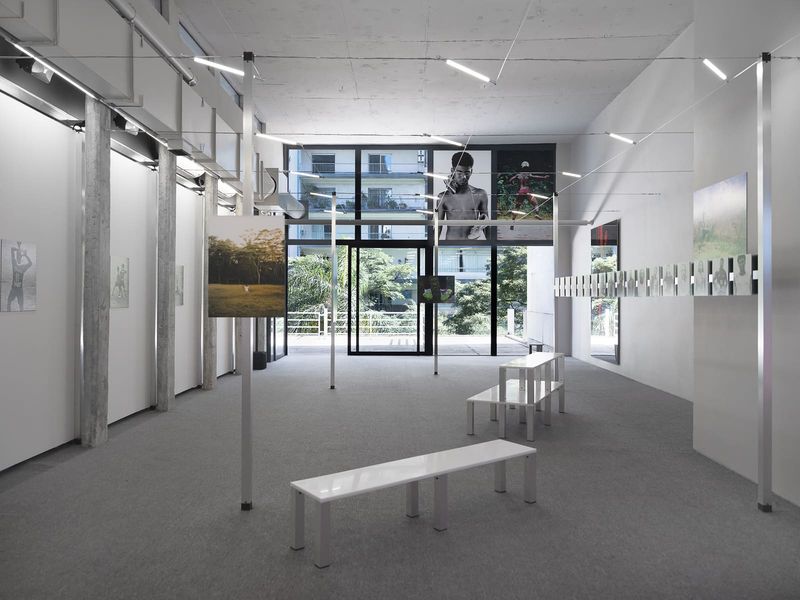
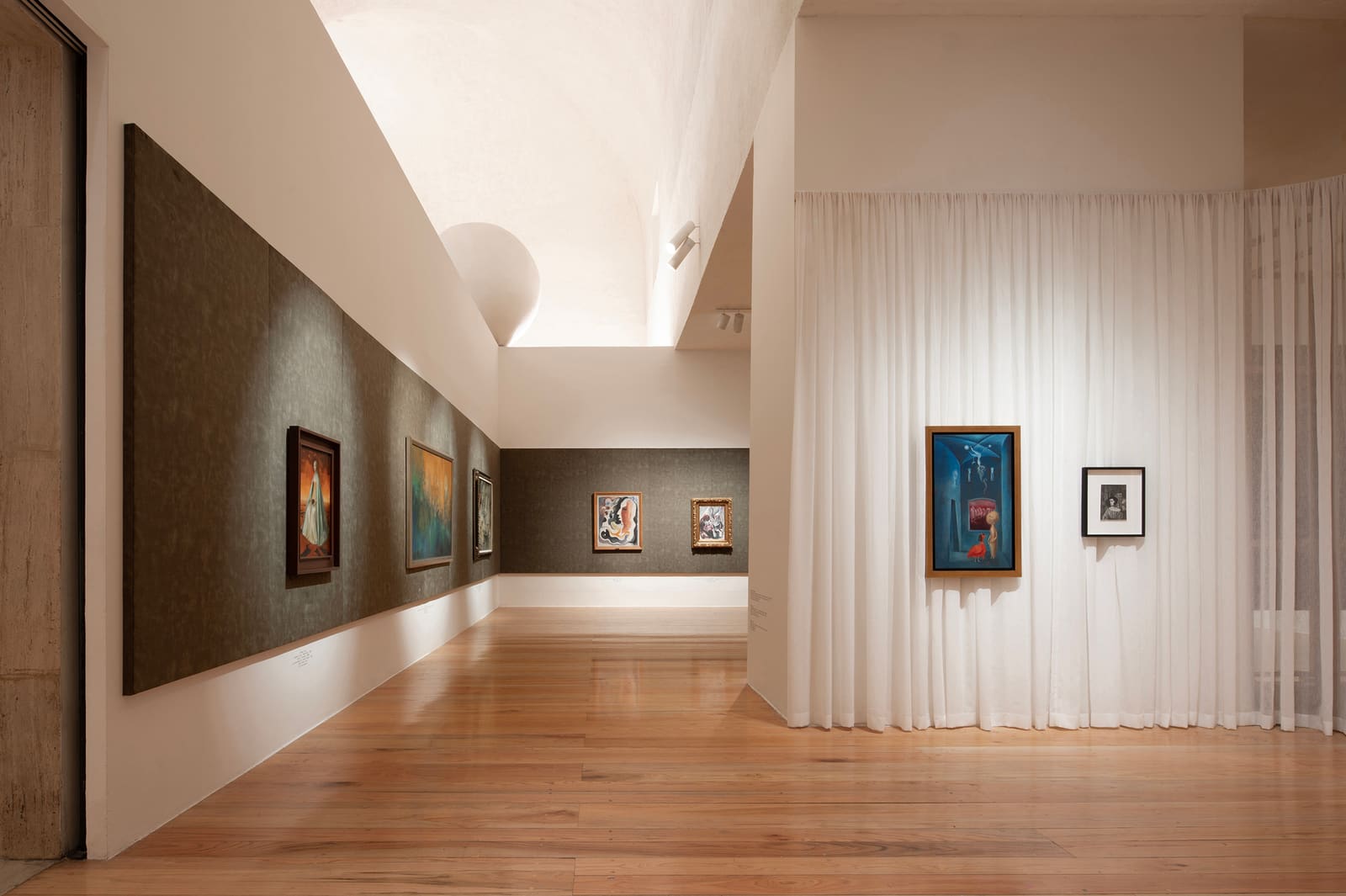
Max von Werz Arquitectos and Maurici Mesta Arquitectos designed the exhibition architecture for Constelaciones y derivas: arte de América Latina desde la Colección FEMSA, which opened at the Museo de Arte Contemporáneo de Monterrey in March 2026 and runs through August. The intervention spans 1,810 square meters within MARCO's existing galleries, a scale that required the architects to orchestrate not just individual room experiences but an entire choreography of movement, pause, and visual rhythm across multiple zones.
The project raises questions that extend beyond this single exhibition. How do architects create spatial frameworks flexible enough to accommodate diverse media, scales, and artistic voices while maintaining coherence? When does architectural intervention enhance curatorial intent, and when does it impose its own agenda? For studios working within the cultural sector, these tensions define the brief as much as square footage or budget.
Spatial Syntax and Curatorial Logic
Exhibition architecture functions as a kind of three-dimensional grammar. Walls establish clauses; openings create conjunctions; sightlines build syntax. The design team for Constelaciones y derivas worked within MARCO's modernist envelope, a building whose existing geometry already carried strong spatial opinions. Rather than fight that structure, the intervention appears to have negotiated with it, inserting temporary walls, platforms, and partitions that subdivide the generous floor plate into more intimate galleries without losing the sense of the whole.
This approach recalls the exhibition design work of studios like Office KGDVS for the Van Abbemuseum or the more restrained interventions Caruso St John executed for art institutions across Europe. The strategy prioritizes sequence and rhythm over spectacle. Visitors move through a series of spatial conditions, each calibrated to a different scale of engagement, from monumental canvases requiring distance to smaller works demanding proximity and focus.
The design team included Hiroshi Ando Ponce de León, Javier Castillo Perete, Uriel Olivares Castillo, and Carlos Ortega Arámburo, with structural engineering by Sergio López Guevara and construction by Studio 4lonso. That roster suggests a collaborative process where architectural vision had to accommodate not just curatorial needs but also the practical realities of temporary construction within an operating museum, including load constraints, climate control, lighting integration, and phased installation.
Material Restraint as Design Position
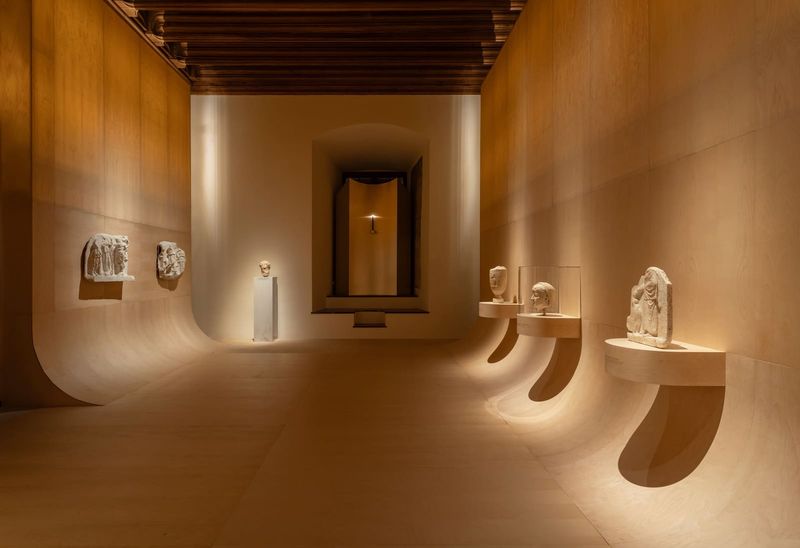
One of the defining characteristics of effective exhibition design is material discretion. The palette must recede enough to let artwork dominate while providing enough tactile and visual interest to avoid sterility. We don't yet have granular detail on the specific finishes deployed in Monterrey, but the scale and timeline suggest a reliance on modular systems, painted gypsum board, and carefully tuned lighting rather than bespoke fabrication.
This is not a limitation but a discipline. The best exhibition architecture understands that its lifespan is measured in months, not decades. Sustainability in this context means designing for disassembly, specifying materials that can be reclaimed or recycled, and avoiding the waste that comes from overly customized solutions. It also means acknowledging that the real protagonist is the collection itself, in this case a survey of Latin American art drawn from the FEMSA collection, one of the region's most significant corporate holdings.
The FEMSA collection spans multiple generations and geographies, from Mexican muralism's echoes to contemporary video and installation work. Designing a spatial envelope for such heterogeneity requires typological flexibility. Some works need white-cube neutrality; others thrive in more atmospheric settings. The architect's task is to provide a kit of parts, a spatial vocabulary that curators can inflect without structural compromise.
The Monterrey Context and Regional Practice
MARCO itself occupies an important position in Mexican cultural infrastructure. Located in Monterrey's Barrio Antiguo, the museum has been a testing ground for exhibition design since its opening in the early 1990s. The city, long defined by its industrial economy and proximity to the U.S. border, has cultivated a contemporary art scene that balances international ambition with regional specificity.
Max von Werz Arquitectos and Maurici Mesta Arquitectos are both based in Monterrey, and their involvement in this project reflects a broader pattern in which local practices are increasingly trusted with high-profile cultural commissions. This is a shift worth noting. A generation ago, major museums often imported exhibition designers from Mexico City or abroad. Now, regional studios with deep knowledge of local fabricators, craftspeople, and material supply chains are demonstrating that proximity can be an asset, not a compromise.
The collaboration between two studios also suggests a pragmatic response to the project's scale and timeline. Exhibition design operates under compressed schedules, with design, fabrication, and installation often overlapping. Splitting responsibilities allows for parallel workflows and brings complementary expertise to the table. Von Werz's office has a track record in adaptive reuse and spatial intervention; Mesta's practice is known for attention to detail and material craft. Together, they form a composite practice suited to the demands of temporary architecture.
Implications for Cultural Infrastructure
As museums worldwide reassess their physical footprints, the role of exhibition design grows more complex. Institutions are moving away from static permanent collections toward dynamic programming that requires spatial flexibility. This exhibition in Monterrey is part of that larger trend, a recognition that architecture within museums must be as mutable as the art it houses.
The challenge for architects is to design systems rather than objects, frameworks rather than monuments. That requires a different skill set than traditional building design, one rooted in modularity, reversibility, and an understanding of how people move through space when their attention is focused on something other than the space itself. It also demands humility, a willingness to let the work take center stage while the architecture operates in the background, shaping experience without announcing itself.
For Latin American architecture more broadly, projects like Constelaciones y derivas represent an opportunity to articulate regional spatial sensibilities within a global museum context. The collection on view traces artistic lineages across the continent; the architecture framing it must navigate between local material culture and the internationalized language of contemporary exhibition design. How that balance is struck, and whether it produces a distinctly Latin American approach to gallery space, remains an open question, one that will be answered not just in Monterrey but in São Paulo, Buenos Aires, Bogotá, and beyond as the region's cultural infrastructure continues to mature.
The exhibition closes in August 2026, after which the temporary walls will come down, the artwork will return to storage or travel elsewhere, and MARCO's galleries will revert to their shell condition, ready for the next intervention. That impermanence is both the limitation and the liberation of exhibition design. It allows for experimentation, for spatial ideas that would be too risky in permanent construction. And it reminds us that architecture, at its best, is not about the object but the experience it enables, however briefly.
Photo: Fabián Martínez
Save this story. A free account keeps your reading list and the 07:00 email in one place.
CREATE FREE ACCOUNT →SIGN IN