
The Case for Reconfigurable Design
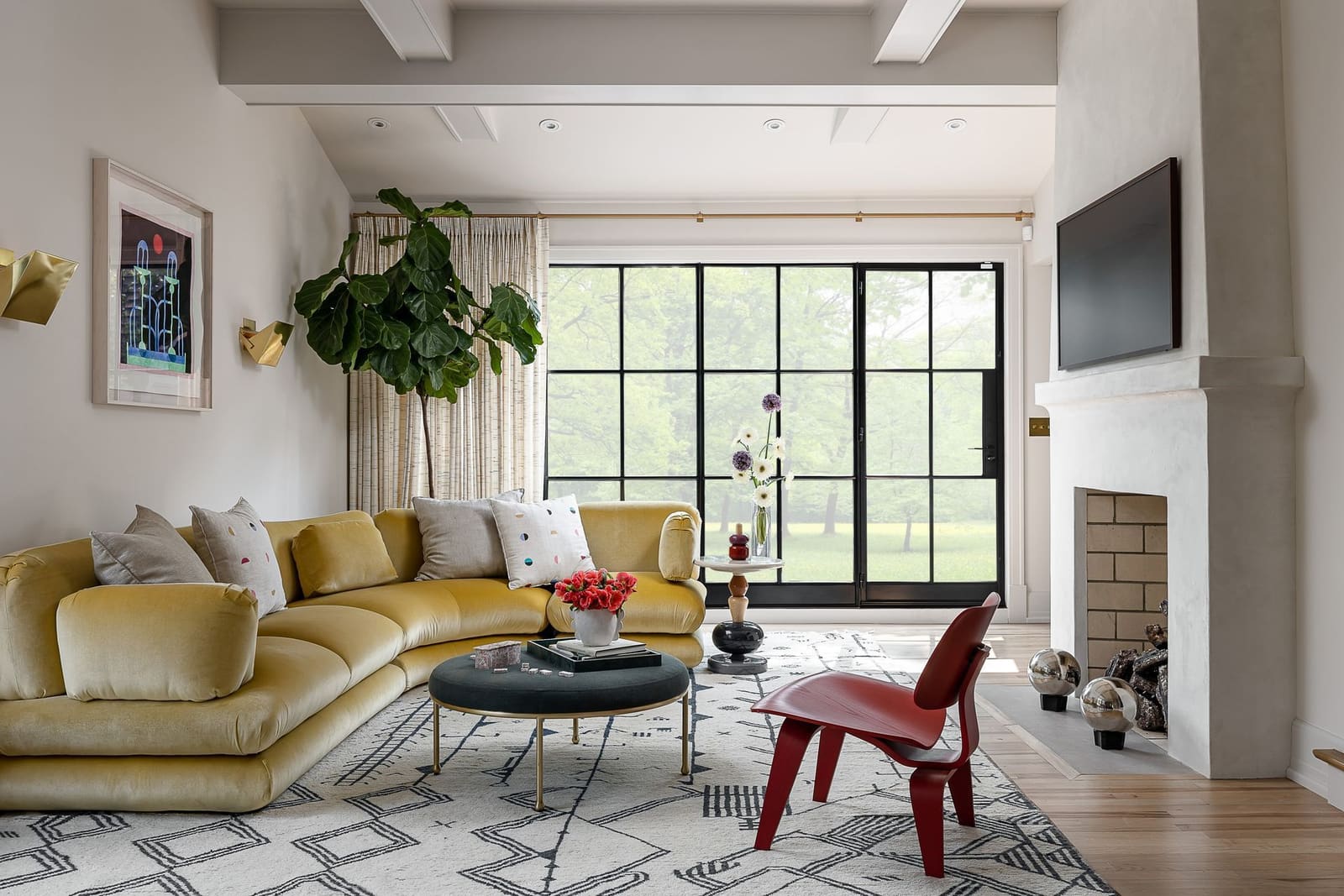
The living room has never been a static space. We gather, we entertain, we work from corners once reserved for conversation. Yet for decades, furniture has resisted this fluidity. A sectional purchased for one apartment often becomes a spatial puzzle in the next. A three-seater that anchored a suburban den feels awkward in a city loft. Modular sofas, however, propose a different relationship between furniture and inhabitant: one built on change rather than permanence.
At World Archi Design, we've been tracking the rise of modular seating systems not merely as a trend in consumer furniture, but as a reflection of broader shifts in how we conceive of domestic architecture. These pieces acknowledge that floor plans evolve, that households expand and contract, and that the same square footage might serve multiple functions within a single day. The question is no longer whether a sofa fits a room, but whether it can grow with the room's changing demands.
Material Honesty and Structural Clarity
What distinguishes contemporary modular systems from their sectional predecessors is a commitment to clarity. Each component functions independently, with its own structural frame and upholstery, rather than relying on shared cushions or backrest continuity. This approach recalls the tectonic principles of mid-century designers like George Nelson or Charles and Ray Eames, who valued legibility in how objects were assembled.
Take, for example, designs that employ solid plywood frames with high-density foam cores. The construction is straightforward: individual seat modules lock together through metal clips or interlocking brackets, creating a unified whole without compromising the integrity of each part. This modularity extends to upholstery as well. Performance fabrics, including polyester blends engineered to resist staining and wear, have become standard. Some manufacturers offer machine-washable covers, a practical consideration that also speaks to a more pragmatic design ethos.
The materiality of these pieces often leans toward restraint. Low-slung profiles with clean lines avoid visual clutter, while neutral colorways in heathered wool-like synthetics or corded velvets provide texture without pattern. This minimalism is intentional. When a sofa can be reconfigured into a dozen layouts, visual simplicity ensures it remains legible in each iteration.
Spatial Intelligence and the Urban Constraint
Modular seating has found particular resonance in urban contexts, where spatial constraints dictate ingenuity. Narrow stairwells, tight doorways, and elevator limitations have long plagued city dwellers attempting to furnish their homes. Traditional sectionals, delivered as single monolithic pieces, often require professional movers and creative maneuvering. Modular systems, by contrast, arrive in manageable components that can be carried by one or two people.
This practicality extends beyond delivery. In a one-bedroom apartment where the living area must accommodate work, leisure, and occasional overnight guests, a sofa that transforms from a compact two-seater into a sectional with storage offers genuine utility. Some designs incorporate pull-out sleeping surfaces or hidden compartments beneath seat cushions, features that echo the space-saving strategies of Japanese interior design or the efficiency-minded aesthetics of Scandinavian modernism.
Reclining configurations introduce another layer of functionality. Power-operated mechanisms, once the domain of home theater seating, now appear in modular frameworks. These allow sections to recline independently, preserving walking space while offering ergonomic support. USB and USB-C charging ports integrated into armrests acknowledge the reality of contemporary living: we are tethered to devices, and furniture must accommodate that tether.
Customization as Design Philosophy
The degree of customization available in modular systems today approaches bespoke territory. Buyers can select not only configuration and fabric, but also fill density, cushion depth, and even structural accessories like storage compartments or built-in power outlets. This level of personalization was traditionally reserved for contract furniture or high-end residential commissions. Its availability in direct-to-consumer models signals a democratization of design choice.
Yet customization introduces complexity. With hundreds of fabric options and dozens of configurations, the decision-making process can overwhelm. Some manufacturers address this through configurator tools that visualize arrangements in three dimensions, a digital analogue to the architect's model. Others offer swatches and fabric samples, encouraging tactile evaluation before commitment.
The challenge lies in balancing flexibility with coherence. A sofa that can be endlessly reconfigured risks becoming a spatial non-entity, a collection of parts rather than a deliberate composition. The most successful modular systems maintain a clear design language across components. Consistent cushion proportions, uniform arm heights, and a shared material palette ensure that even as the arrangement shifts, the piece retains formal integrity.
Durability and the Question of Longevity
Modularity raises questions about durability. Traditional upholstered furniture, built as a single unit, distributes stress across a continuous frame. Modular pieces, by contrast, rely on connection points between sections. These junctions, whether metal clips, brackets, or friction-based systems, must withstand repeated reconfiguration without loosening or failing.
High-quality modular sofas address this through engineering. Steel reinforcement at connection points, liquid-coated clips that reduce wear, and precision-milled joints all contribute to structural longevity. The goal is a piece that feels solid in use, without the shifting or separation that plagues poorly designed modular systems.
Upholstery durability matters equally. Performance fabrics, tested for abrasion resistance and stain repellency, have become standard in family-oriented designs. These materials, often polyester or acrylic blends, mimic the hand of natural fibers while offering practical advantages. Heathered finishes help conceal minor staining, and removable covers extend the usable life of the piece by allowing targeted cleaning or replacement.
Precedents in Flexible Furniture
The concept of reconfigurable seating is not new. Italian designers in the 1960s and 1970s, particularly those associated with the radical design movement, experimented with modular foam blocks that could be arranged and rearranged at will. Mario Bellini's Camaleonda sofa for B&B Italia, introduced in 1970, exemplified this approach: interlocking sections upholstered in quilted fabric that could form linear seating, corner arrangements, or sprawling landscapes.
What distinguishes contemporary modular sofas from these precedents is accessibility. Bellini's designs were produced in limited quantities and priced for the design-conscious elite. Today's modular systems, often sold direct-to-consumer, reach a broader market. Manufacturing efficiencies, streamlined supply chains, and digital retail models have reduced costs without necessarily sacrificing design quality.
This shift parallels broader trends in furniture production. Just as flat-pack furniture democratized modernist aesthetics in the late 20th century, modular seating systems make adaptable design available to renters, first-time homeowners, and anyone whose living situation defies permanence.
The Environmental Calculus
Modularity also intersects with sustainability, though the relationship is complex. On one hand, a sofa that adapts to multiple homes and configurations reduces the likelihood of disposal. Furniture waste represents a significant portion of landfill material, and pieces that remain functional across life stages mitigate this impact.
On the other hand, the materials and manufacturing processes behind modular sofas vary widely. Foam cushions, unless certified through programs like CertiPUR-US, may contain harmful chemicals. Polyester fabrics, while durable, are petroleum-derived. Plywood frames, depending on sourcing, may contribute to deforestation.
Some manufacturers address these concerns through material transparency and third-party certifications. Others offer take-back programs or modular replacement parts, allowing worn components to be swapped without discarding the entire piece. The most environmentally responsible approach, however, remains designing for longevity. A sofa that lasts two decades, regardless of its material composition, has a smaller environmental footprint than one replaced every five years.
Aesthetic Implications
From a design perspective, modular sofas challenge conventional spatial hierarchies. A traditional sectional anchors a room, defining circulation and orienting other furniture. A modular system, because it can be reconfigured, resists this anchoring role. It becomes a more fluid element, one that responds to rather than dictates spatial use.
This fluidity has aesthetic consequences. Interiors built around modular furniture tend toward minimalism, not as a stylistic choice but as a practical necessity. When seating arrangements shift regularly, decorative accents and side tables must remain adaptable. The result is often a pared-back aesthetic that prioritizes function and flexibility over permanence and ornamentation.
Yet this need not result in sterility. Texture, color, and material quality can provide visual interest without relying on formal complexity. A heathered linen-look fabric in a warm neutral, paired with solid plywood legs in a natural finish, offers tactile and visual richness. The restraint lies in form, not in sensory experience.
Looking Forward
The proliferation of modular seating systems suggests a broader rethinking of domestic furniture. As remote work blurs boundaries between professional and personal space, as urban living becomes more compact, and as household compositions diversify, the demand for adaptable furnishings will likely intensify.
Future iterations may incorporate smart technology more seamlessly: embedded sensors that adjust firmness based on posture, integrated lighting that responds to ambient conditions, or materials that self-clean through photocatalytic processes. These advances, if realized, would extend the logic of modularity from spatial flexibility to functional adaptability.
For now, the value proposition remains straightforward. A well-designed modular sofa accommodates change without requiring replacement. It fits through narrow doorways, reconfigures for guests, and adjusts as living situations evolve. In an era defined by transience, that kind of flexibility is not merely convenient. It is, increasingly, essential.
Photo: Justin Jordan
Save this story. A free account keeps your reading list and the 07:00 email in one place.
CREATE FREE ACCOUNT →SIGN IN