
From Historical Practice to Active Method
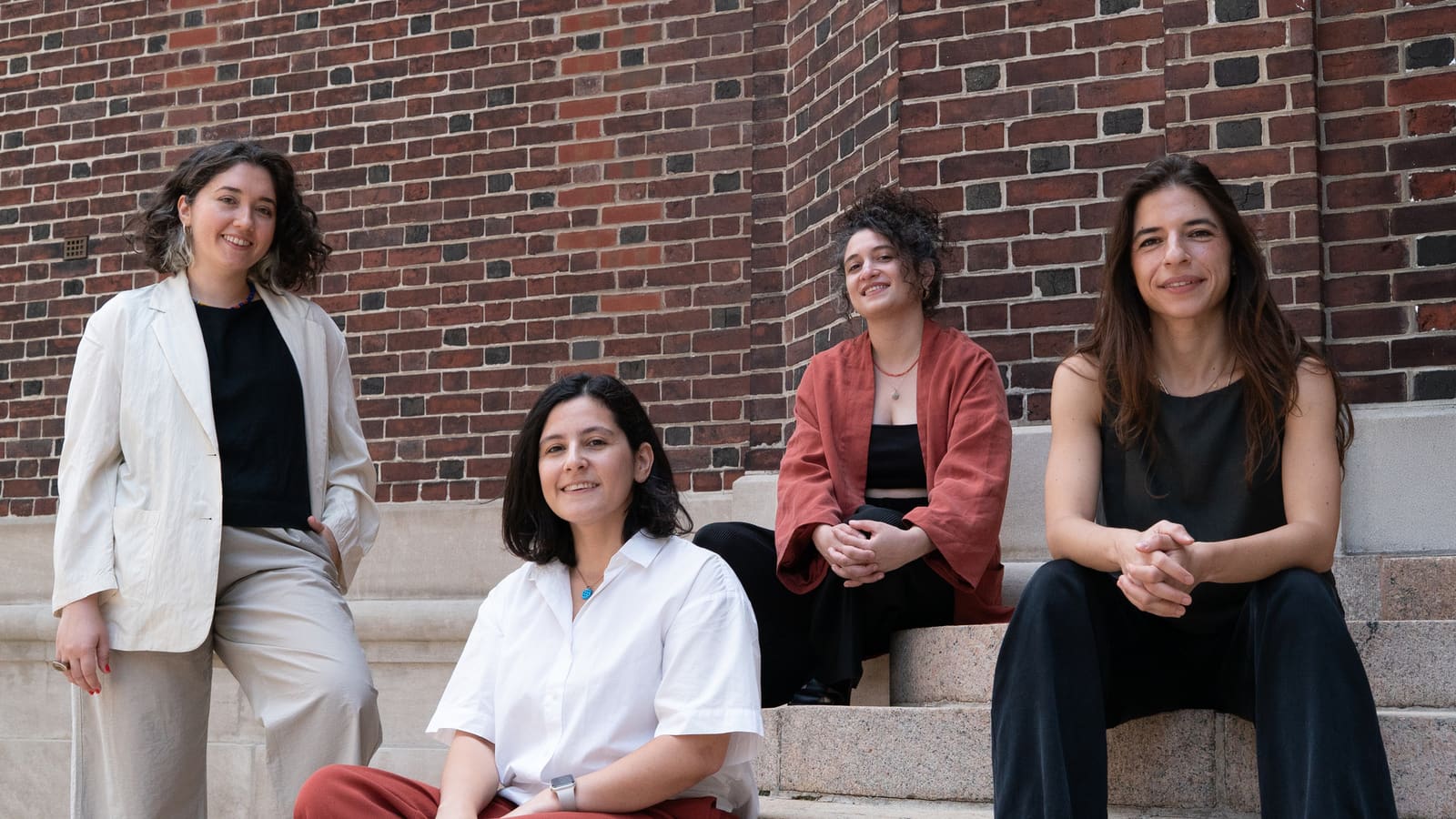
What if the architectural fragments embedded in our cities were not relics to be cataloged, but active participants in how we build forward? The question sits at the heart of "Spolia Futures," the exhibition commissioned by the Istanbul Foundation for Culture and Arts for Türkiye's pavilion at the 2027 Venice Architecture Biennale. Selected through an open call and two-stage evaluation, the proposal by ba-be commons - a research collective composed of Başak Eren, Asya Ece Uzmay, Beril Sarısakal Erkent, and Ece Yetim - will run from May 8 to November 21, 2027, under the Biennale's overarching theme "Do Architecture: For the Possibility of Coexistence Facing a Real Reality," curated by Wang Shu and Lu Wenyu.
The term "spolia" traditionally refers to the reuse of architectural elements from earlier structures, a practice visible across centuries of building in the Mediterranean and beyond. Roman columns repurposed in Byzantine churches, Ottoman mosques incorporating Byzantine capitals, or even modernist buildings salvaging industrial beams are all examples of this phenomenon. Yet ba-be commons proposes to treat spolia not as a historical curiosity but as an evolving architectural method - one that addresses present-day resource scarcity, ecological crisis, and the need for cultural continuity.
Circularity Rooted in Tradition
At World Archi Design, we have been tracking how architects are increasingly turning toward circular material economies, not as a trend but as a structural shift in how buildings are conceived. "Spolia Futures" engages this shift by drawing on Türkiye's traditions of making, repairing, and material reuse. The exhibition proposes a collective and circular approach to architectural production, standing in contrast to extractive models that treat materials as disposable inputs rather than inherited resources.
This curatorial framework is organized around five thematic strands: coexistence, archiving, slowing down, repair, and future speculation. Each strand unpacks how inherited materials and construction practices can generate new relationships between architecture, ecology, memory, and society. The concept of "slowing down," for instance, resists the accelerated cycles of demolition and new construction that characterize much contemporary urbanism. Instead, it advocates for a slower, more deliberate engagement with what already exists - an approach that echoes the work of architects like Anne Lacaton and Jean-Philippe Vassal, who have long championed transformation over replacement.
The Curators and Their Research Trajectories
ba-be commons emerged from collaborations at the Faculty of Architecture at Istanbul Technical University. Each member brings a distinct research focus that informs the collective's approach to the pavilion. Başak Eren, a PhD candidate at the University of Pennsylvania Weitzman School of Design, examines displaced architectures and archival representation, investigating how buildings and their fragments carry histories of migration, conflict, and cultural exchange. Asya Ece Uzmay, pursuing doctoral research at Cornell University, studies the histories of architecture, infrastructure, and resource management across late Ottoman and post-Ottoman geographies, tracing how material systems have been organized and reorganized across political transitions. Beril Sarısakal Erkent's doctoral work at Columbia GSAPP explores architectural knowledge, technocracy, and the political dimensions of design history, questioning who controls the narratives of building and how those narratives shape practice. Ece Yetim, who teaches at the Wentworth Institute of Technology and the Rhode Island School of Design, focuses on architectural representation, public space, and collective agency through drawing and design research.
This convergence of archival scholarship, infrastructural history, and representational practice suggests that "Spolia Futures" will operate on multiple registers - not simply as a display of salvaged materials, but as a critical inquiry into how architectural knowledge is produced, transmitted, and transformed.
Material Legacies and Ecological Responsibility
The exhibition's conceptual ambition is to position spolia as a regenerative practice. This framing moves beyond material preservation - saving a column or a beam for its aesthetic or historical value - toward a broader engagement with ecological responsibility and cultural continuity. In this sense, the pavilion aligns with emerging discourse around embodied carbon, which measures the environmental impact of producing and transporting building materials. Reusing existing materials dramatically reduces this footprint, but "Spolia Futures" appears to argue for something more: that reuse also carries forward social and cultural memory, embedding past labor, knowledge, and intention into new configurations.
The exhibition design will invite visitors to engage directly with the architectural legacies embedded in existing materials, encouraging reflection on their relevance for future forms of practice. This participatory dimension is crucial. If spolia is to function as a method rather than a nostalgic gesture, it must be accessible, legible, and applicable to a range of contexts - not just monumental buildings, but vernacular structures, infrastructure, and everyday construction.
Continuity and Context Within the Pavilion's Arc
The announcement follows Türkiye's 2025 pavilion, "Grounded," curated by Ceren Erdem and Bilge Kalfa, which examined soil as both a material and cultural agent. That exhibition explored how soil shapes ecological systems, construction practices, and collective memory through contributions from architects, artists, and researchers. The shift from soil to spolia represents a continuity of inquiry: both exhibitions engage material culture as a lens for architectural investigation, but "Spolia Futures" redirects attention toward the built environment's afterlife - how buildings and their fragments persist, transform, and inform new cycles of construction.
This thematic arc places Türkiye's pavilions within a broader conversation about material agency. Just as "Grounded" asked what soil does architecturally, "Spolia Futures" asks what fragments, remnants, and reused elements can do. It is a question with deep roots in architectural history - from the Pantheon's recycled columns to the adaptive reuse projects of Herzog & de Meuron - but one that gains urgency in an era of climate crisis and resource depletion.
Regional and Global Resonances
Türkiye's announcement joins a growing list of national participations for the 2027 Biennale. Australia's "Lived In" examines multi-dwelling housing through the Housing Atlas of Australia research initiative; Austria's "Koncesija / Konzession / Concession(e)" proposes a cooperative concession with Bosnia and Herzegovina; and Switzerland's exhibition, curated by Paola Viganò, explores water as a territorial, ecological, and political condition. Each of these proposals engages a specific material or spatial condition as a site of architectural inquiry, suggesting that the 2027 Biennale will be marked by a turn toward situated, resource-conscious practice.
For Türkiye, the pavilion also operates within a regional context where material reuse is not an abstract concept but a lived practice. Across Anatolia, the eastern Mediterranean, and the Balkans, buildings have long been assembled from the remnants of earlier structures. This vernacular tradition of spolia - born of necessity, economy, and pragmatism - offers a counterpoint to the Western European model of conservation, which often privileges preservation over transformation. "Spolia Futures" has the potential to reframe this tradition as a form of architectural intelligence, one that anticipates contemporary concerns about sustainability and circularity.
Forward-Looking Implications
The exhibition's final thematic strand, "future speculation," suggests that ba-be commons is not content to simply document or celebrate reuse. Instead, the pavilion will ask how spolia can inform new forms of architectural production - what techniques, policies, and spatial logics might emerge if reuse became the default rather than the exception. This speculative dimension is where the exhibition's most provocative contributions may lie. If buildings are designed from the outset to be disassembled and their components reused, how does that change their tectonic logic, their material palette, their relationship to site? If architectural practice is organized around repair and transformation rather than novelty, how does that reshape the profession's economic and cultural structures?
These questions are not hypothetical. Architects like Lacaton Vassal, David Chipperfield, and practices such as Assemble and Flores & Prats have demonstrated that transformation can be as creatively generative as new construction. Yet the institutional and regulatory frameworks that govern architecture still privilege the new over the reused, the singular over the incremental. "Spolia Futures" will need to engage these structural barriers if it is to move beyond curatorial proposition toward actionable method.
The pavilion opens in May 2027, and its success will be measured not only by what it displays but by what it provokes: whether it can shift how architects, clients, and publics understand the relationship between inheritance and innovation, between memory and making, between what we have and what we might build.
Save this story. A free account keeps your reading list and the 07:00 email in one place.
CREATE FREE ACCOUNT →SIGN IN