
From Capital Status to Sustained Momentum
What happens to a city after the spotlight moves on? For Valencia, the answer lies in València Design Fest, an initiative that refuses to let the energy of its 2022 World Design Capital year dissipate into memory. Scheduled across September and October annually, the festival represents a deliberate choice: to transform a moment of international recognition into recurring infrastructure.
The Design Foundation of the Region of Valencia has structured the event as an open network rather than a curated showcase. More than fifty venues across the city will host programming, from established art galleries to architecture institutions, creating what amounts to a distributed exhibition model. It's a format we've seen work well in cities like Milan and Helsinki, where design weeks function less as singular events and more as coordinated reveals of work already underway in studios, workshops, and cultural spaces.
The UNESCO Framework and Its Obligations
Valencia earned its UNESCO City of Design designation through demonstrated creative capacity, but the title carries implicit expectations. Cities in the Creative Cities Network are expected to maintain active exchange, support emerging practitioners, and keep design visible in public discourse. An annual festival satisfies those requirements while also addressing a practical concern: how to keep local talent engaged when larger markets in Madrid and Barcelona exert constant gravitational pull.
The festival's timing, spanning five weeks from mid-September into October, coincides with the European design calendar's autumn season. It positions Valencia as a viable stop between the summer lull and the flurry of fairs that cluster around Milan, London, and Paris in the later months. Whether international visitors will integrate it into their circuits remains to be tested, but the infrastructure is being laid.
Open Doors as Curatorial Strategy
The festival employs what its organizers call "open door routes," a format that invites public access to working studios and design offices. This approach carries risk: it exposes process rather than polish, and not every studio environment translates well to visitor experience. But it also offers something exhibitions cannot: context. Seeing where decisions are made, where materials are tested, and where collaboration happens provides a different kind of education than finished objects under gallery lighting.
At World Archi Design, we've tracked similar initiatives in Rotterdam and Eindhoven, where studio visits during Dutch Design Week often yield more substantive insight than the pavilion displays. The success hinges on participation breadth. If only a handful of established names open their doors, the routes become predictable. If emerging practices and cross-disciplinary collaborators join in, the map becomes genuinely exploratory.
Talks, Exhibitions, and the Trap of Over-Programming
The festival agenda includes the expected components: panel discussions, exhibitions, and presentations on current trends. These elements are necessary but also where design events tend to homogenize. The challenge for València Design Fest will be avoiding the circuit speaker phenomenon, where the same voices rotate through European festivals offering slight variations on familiar themes.
What might distinguish the programming is its connection to Valencia's specific design culture, which has historically been stronger in ceramics, textiles, and product design than in the digital and speculative work that dominates discourse in northern European cities. If the festival leans into that material heritage while also creating space for experimental practices, it could carve out a distinct identity. If it chases trends set elsewhere, it risks becoming another stop on a generic tour.
The Branding Question and Institutional Memory
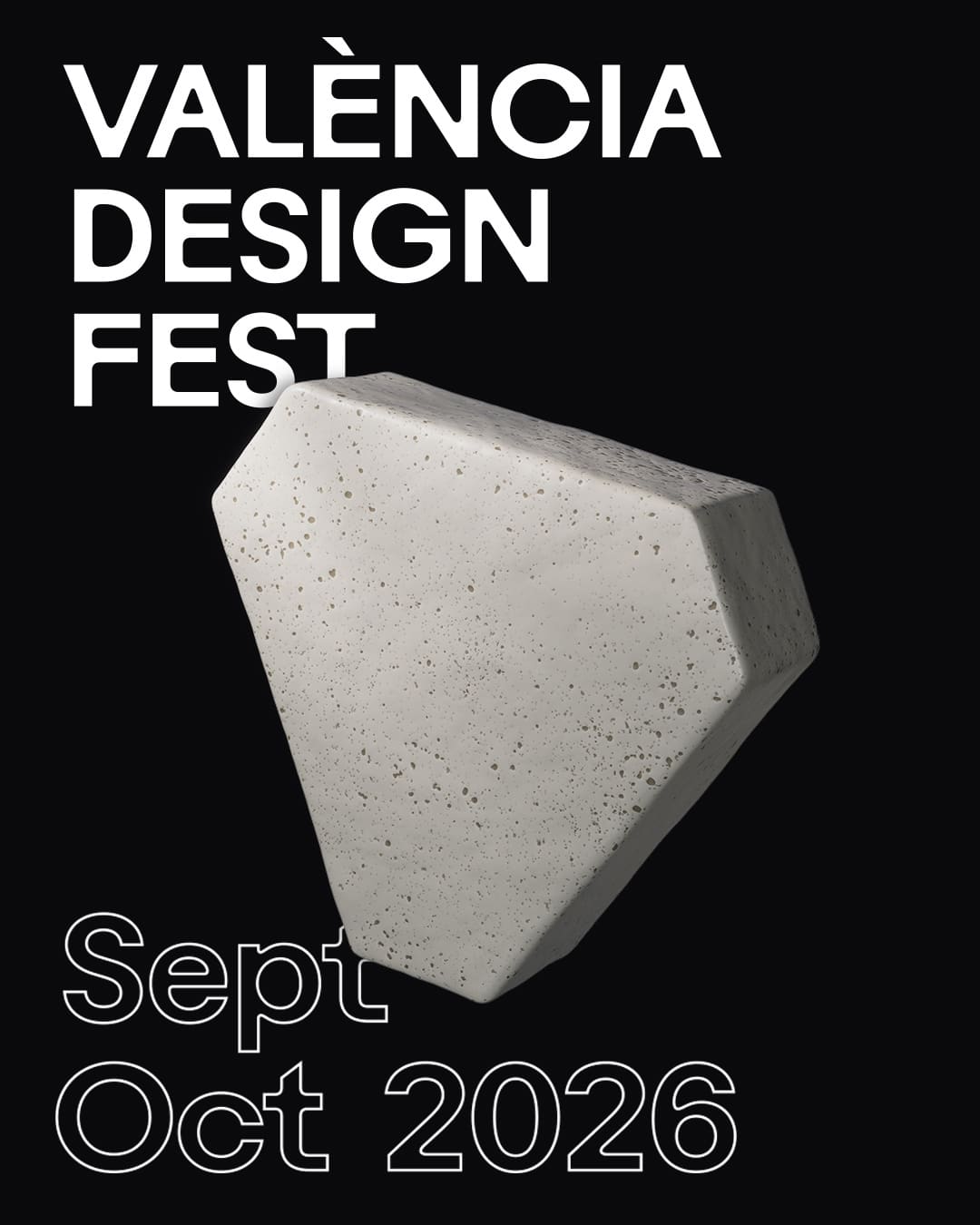
València Design Fest is described as a brand that inherits the spirit of the 2022 World Design Capital year. That language is telling. It suggests an awareness that festivals require not just content but recognizable identity, something that accumulates value over repeated iterations. The poster for the 2026 edition, designed by Chavo Roldán, will be the first visual marker of whether the festival can establish a coherent aesthetic language that persists across years.
Institutional memory is fragile in the cultural sector. Festivals collapse when funding shifts or founding organizers move on. By anchoring the event to the Design Foundation and framing it as a continuation of World Design Capital momentum, Valencia is attempting to build durability into the structure. The test will come in year three or four, when novelty fades and the event must justify itself on merit rather than legacy.
A City Negotiating Its Creative Identity
Valencia has long existed in the shadow of Barcelona's design prominence and Madrid's institutional weight. The UNESCO designation and the World Design Capital year were opportunities to rewrite that narrative, but opportunities require follow-through. An annual festival is one form of follow-through, but only if it serves the local ecosystem first and international visibility second.
The most successful design festivals function as mirrors for their cities, reflecting what is actually being made rather than what organizers wish were being made. València Design Fest will reveal, over the coming years, whether Valencia's creative community has the depth and diversity to sustain a recurring event, or whether the festival becomes an annual reminder of a peak moment already passed. The architecture is in place. The substance will emerge in September.
Save this story. A free account keeps your reading list and the 07:00 email in one place.
CREATE FREE ACCOUNT →SIGN IN