
The Opacity Problem
Most waste infrastructure operates behind fences, buried in industrial zones where the public rarely ventures. The logic is straightforward: keep unpleasant processes out of sight. Yet this spatial segregation reinforces a psychological disconnect. We generate waste daily, but the systems that handle it remain abstract, almost mythical in their invisibility.
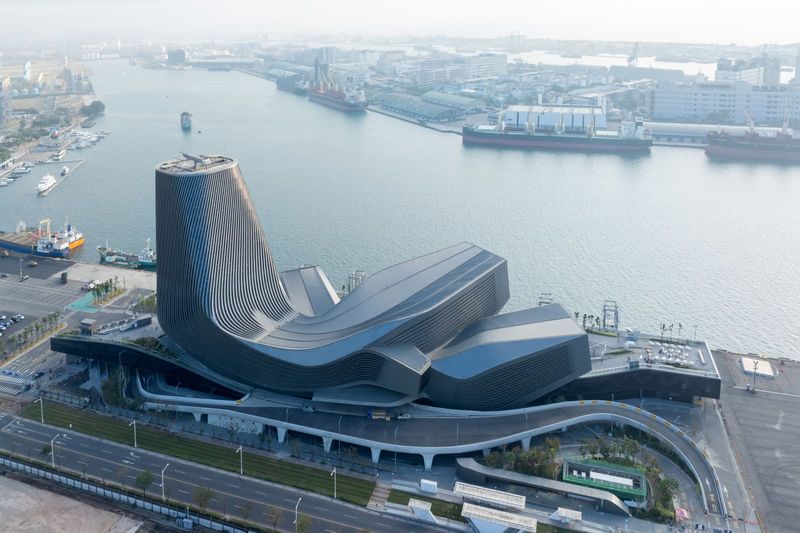
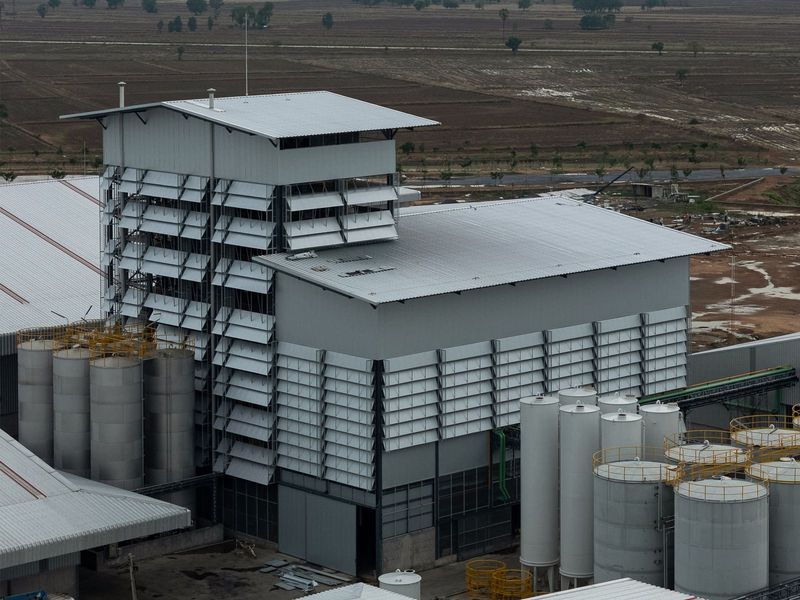
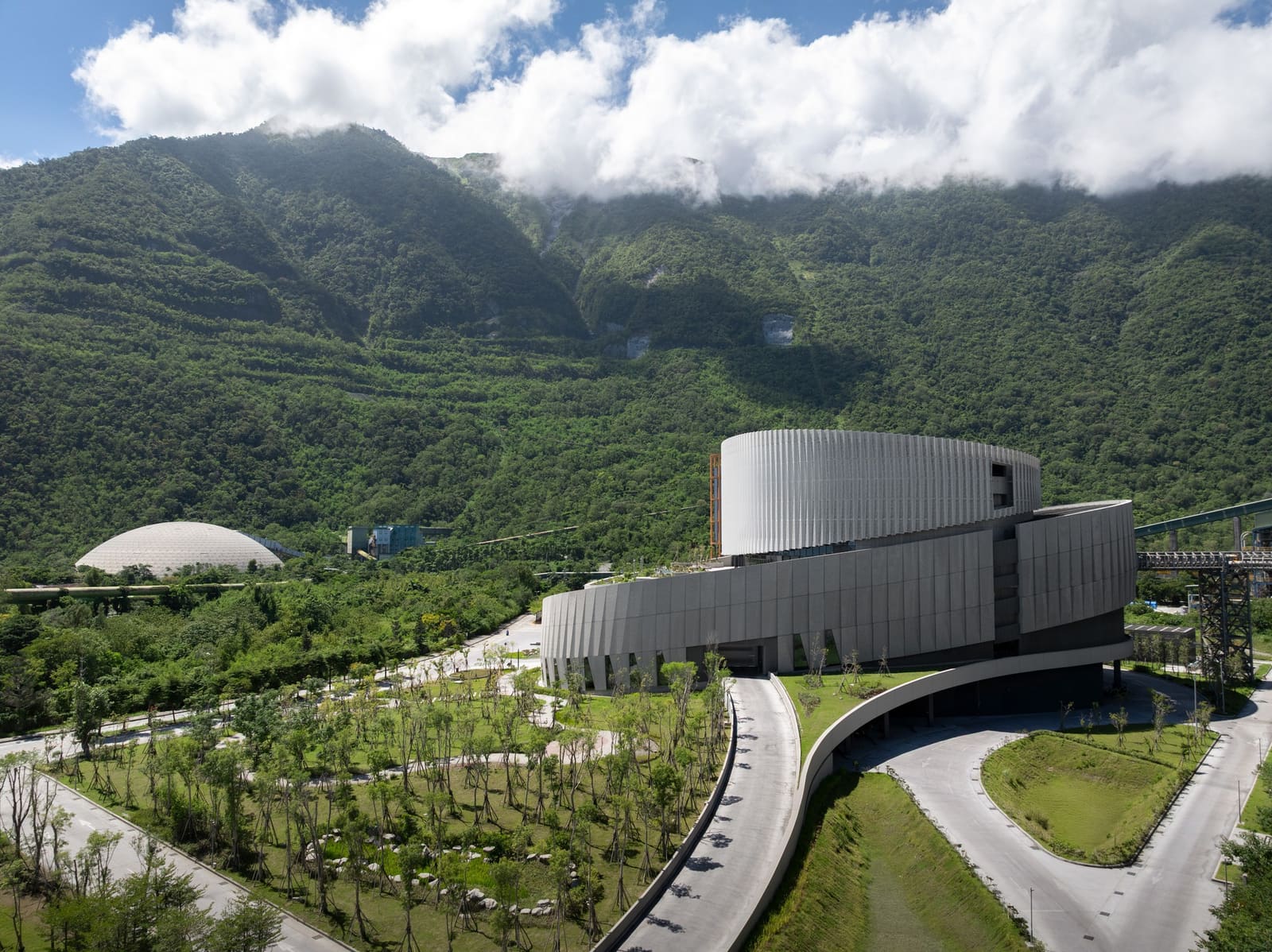
KPF's recently completed TCC DAKA Renewable Resource Recycling Center in Taiwan starts from the opposite premise. Completed in 2025 across 6,500 square meters, the facility integrates high-efficiency waste recovery operations with a nature and cultural center open to the public. The design treats industrial function not as something to conceal but as an opportunity for transparency and education.
Lead architects Bruce Fisher and Bob Graustein anchored the project around a simple spatial strategy: wrap the processing core in accessible program. Rather than relegating cultural and educational spaces to an adjacent site or a separate building, the design folds them directly into the facility's envelope. Visitors move through galleries, landscaped terraces, and exhibition zones while the waste recovery machinery operates at the building's heart.
Material Honesty, Spatial Generosity
The architecture itself resists the utilitarian aesthetic typical of industrial plants. Working with Trinity Architects & Planners and a consortium that included JMH + Design, PKD Engineering, and Fu-Tai Engineering, the team developed a facade system that balances operational requirements with civic presence. Large glazed apertures offer sightlines into select processing areas, demystifying the recovery cycle without compromising efficiency or safety.
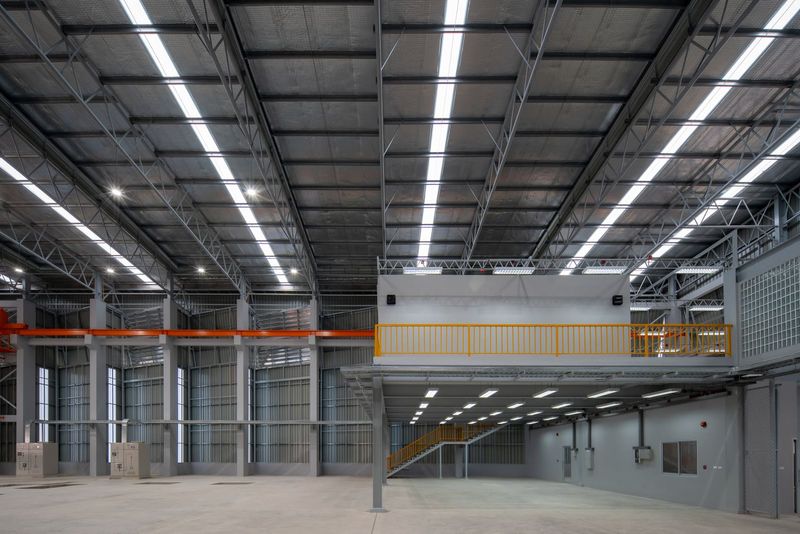
Interior spaces, designed by OMOMO, maintain a material palette that echoes the facility's environmental mission. Exposed structural elements, raw concrete, and reclaimed timber communicate a tectonic honesty that aligns with the building's programmatic transparency. Concept Lighting Design Consultants layered ambient and accent lighting to distinguish public circulation from operational zones, ensuring legibility without resorting to heavy-handed zoning.
Frameless Landscape Architects extended the project's ethos into the surrounding terrain. Rather than treating the site perimeter as residual buffer space, the landscape design integrates native plantings, bioswales, and outdoor gathering areas. The result is a campus where waste recovery becomes one element within a broader ecological and social network.
Pedagogy Through Proximity
At World Archi Design, we've tracked a handful of projects that attempt to merge industrial process with public engagement. Most falter by treating education as an afterthought, a placard-heavy exhibit tacked onto an otherwise opaque facility. DAKA's strength lies in its spatial commitment: the building's section and circulation are designed to stage encounters with waste recovery as a lived reality, not a sanitized narrative.
The design team incorporated viewing galleries positioned at key moments in the processing sequence. Visitors observe material sorting, energy recovery, and reclamation in real time. This proximity reframes waste not as an endpoint but as a resource stream, a shift in perception that static displays rarely achieve.
The cultural program further diversifies the building's constituency. Exhibition spaces host rotating shows on sustainability, circular economy principles, and regional environmental challenges. Community meeting rooms and event zones ensure the facility serves multiple publics, from school groups to industry professionals to residents seeking green space.
Precedent and Departure
The project invites comparison to other infrastructure-as-architecture experiments. Bjarke Ingels Group's Copenhill in Denmark similarly wraps a waste-to-energy plant in public amenity, most famously a ski slope. Yet where Copenhill leans toward spectacle, DAKA pursues a quieter integration. The Taiwanese facility prioritizes educational depth over iconic gesture, embedding its civic mission in spatial organization rather than a singular experiential flourish.
Closer precedents might include Renzo Piano's work on industrial retrofits or the adaptive reuse strategies pioneered by Herzog & de Meuron, though DAKA differs in being purpose-built rather than adapted. The design doesn't romanticize industrial heritage; it argues that new infrastructure can be culturally generative from inception.
The Civic Bargain
Industrial architecture typically negotiates with communities through mitigation: setbacks, screening, noise abatement. DAKA proposes a different exchange. By opening the facility to public use and making its operations legible, the project asks visitors to reckon with the material consequences of consumption. In return, it offers space for gathering, learning, and recreation.
This isn't greenwashing. The waste recovery operations are genuine and necessary, addressing local disposal needs while recovering energy and materials. The cultural programming doesn't exist to distract from industrial function but to contextualize it, embedding waste management within a broader conversation about resource stewardship.
The success of this model depends on sustained programming and maintenance. A building can stage civic engagement, but institutions must animate it. Whether DAKA evolves into a genuine community anchor or becomes a novelty destination will hinge on how TCC and local stakeholders steward the facility over time.
What Comes Next
If DAKA signals anything, it's that the boundary between infrastructure and public architecture is more porous than zoning codes and typological conventions suggest. We've long accepted that museums, libraries, and transit hubs merit architectural investment because they serve civic functions. Waste recovery, water treatment, and energy generation perform equally essential roles, yet they're rarely afforded the same design attention or spatial generosity.
The challenge moving forward isn't technical. Engineers know how to build efficient waste recovery plants. The question is whether clients, regulators, and publics are willing to treat infrastructure as an opportunity for placemaking rather than a logistical necessity to be hidden. KPF's Taiwanese project demonstrates that the two need not be mutually exclusive, that a facility can process waste and cultivate civic life simultaneously.
As cities confront the twin pressures of resource scarcity and urban densification, hybrid typologies like DAKA may become less exceptional and more necessary. Infrastructure will need to work harder, occupying less land while serving more functions. The alternative is continued sprawl and segregation, industrial zones pushed ever further from the communities they serve, perpetuating the illusion that waste simply disappears once the bin is emptied.
Save this story. A free account keeps your reading list and the 07:00 email in one place.
CREATE FREE ACCOUNT →SIGN IN