
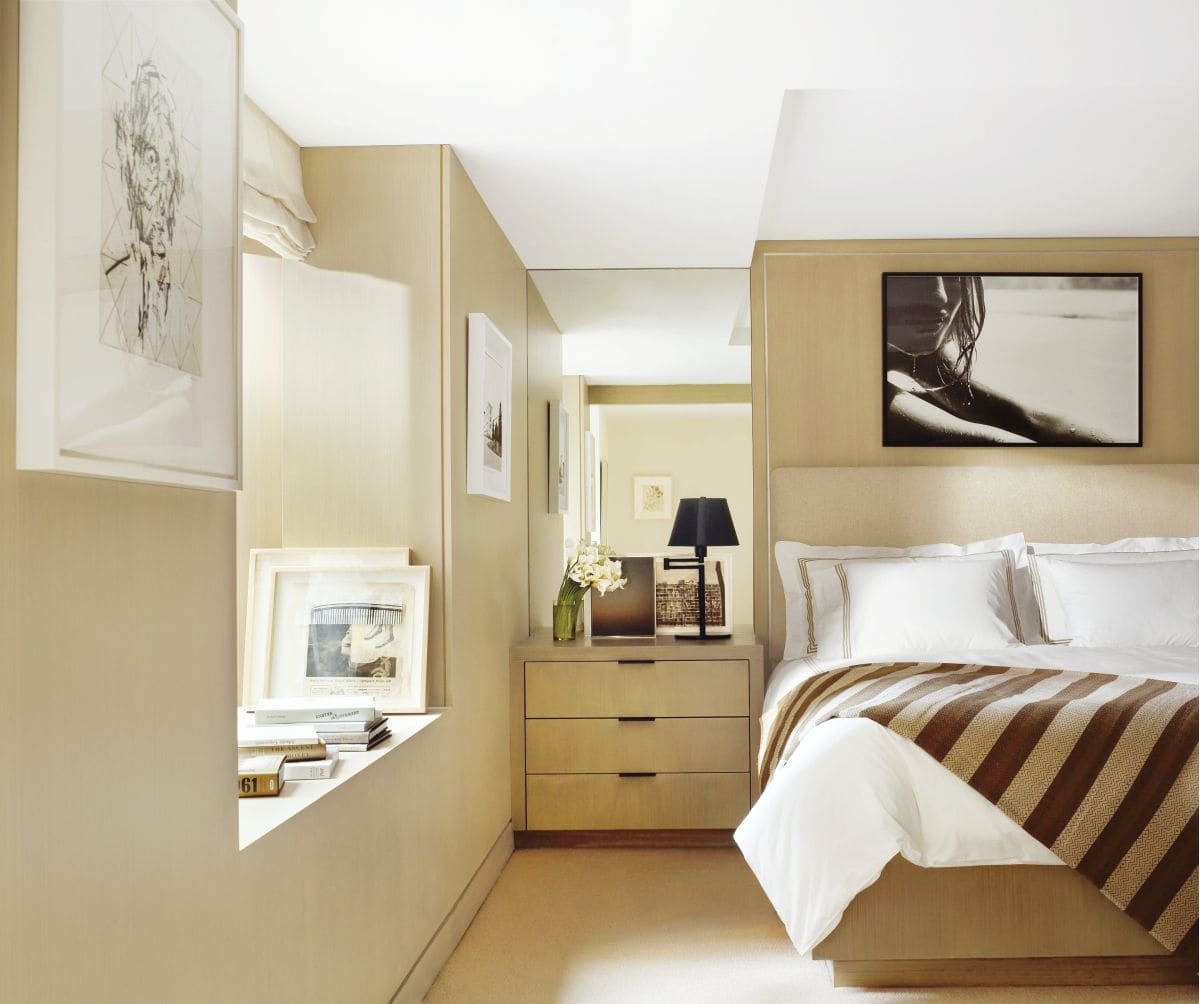
The Dresser as Architectural Element
We rarely think of storage as a spatial proposition, yet the dresser occupies a curious position in residential design. It mediates between the human body and the built envelope, translating our daily rituals of dressing and organizing into a tangible form that can anchor or reshape an entire room. Unlike a bed, which commands floor area through sheer horizontal mass, or a wardrobe that reads as a secondary partition, the dresser negotiates height, width, and depth in ways that respond directly to architectural constraints and personal habit.
Consider the vertical dresser in a Manhattan studio, where ceiling height becomes the only expandable dimension. Or the low-profile horizontal piece positioned beneath a window wall, respecting sightlines while maximizing drawer capacity. These are not decorative choices but spatial strategies, ones that architects and designers have long understood but that furniture makers are only recently articulating with clarity.
Modularity and the Upcycled Frame
Thuma's Nest system represents a shift in how we conceptualize bedroom storage. Rather than offering a fixed typology, the design presents a kit of parts: stackable drawer units constructed from upcycled wood that can be configured into seven distinct arrangements, ranging from a 33-inch-wide low console to a 99-inch-wide lateral credenza. Each drawer unit weighs roughly 52 pounds, and the entire assembly is limited to five stacks, or 47 inches in height, ensuring structural stability without additional bracing.
The approach recalls the modular storage experiments of the 1960s, when designers like Vitsœ and Dieter Rams explored adaptable shelving systems that could grow or contract with a household's needs. Thuma extends this logic to the bedroom, where spatial demands shift as wardrobes expand, children arrive, or living arrangements change. The soft-close mechanism on each drawer, paired with the furniture's Greenguard Gold certification, signals a commitment to both tactile refinement and low-VOC material sourcing.
What distinguishes Nest from earlier modular precedents is its aesthetic restraint. The design occupies a middle ground between Scandinavian minimalism, mid-century American joinery, and 1970s California craft, avoiding overt stylistic signaling. The upcycled wood construction, available in walnut, natural, espresso, and grey finishes, carries subtle grain variation that reads as honest materiality rather than engineered uniformity.
Compact Footprints and Vertical Storage
In dense urban environments, floor area is the most contested resource. The West Elm Mid-Century five-drawer dresser addresses this constraint through verticality: 27 inches wide, 52 inches tall, and 18 inches deep. The proportions are deliberate, allowing the piece to fit along narrow walls while maintaining structural integrity through kiln-dried solid wood and engineered wood construction.
The tapered legs, a hallmark of mid-century modern furniture, reduce visual weight at the base and create a sense of lift. This formal gesture also serves a practical function in small apartments, where furniture that appears to float off the floor can make a room feel less congested. Each drawer is deep enough to accommodate folded garments without buckling, and the frame remains stable despite its height-to-width ratio, a testament to careful engineering of internal support structures.
This dresser has earned Greenguard Gold and Fair Trade certifications, indicating third-party verification of emissions standards and labor practices. For designers working on residential projects with sustainability mandates, such certifications provide a measure of accountability that extends beyond marketing claims.
Texture as Architectural Detail
Lulu and Georgia's Suzette tall dresser introduces grasscloth paneling as a surface treatment, wrapping the drawer fronts in woven natural fiber that contrasts with the oak wood frame. The material choice is more than decorative; grasscloth carries a tactile roughness that disrupts the smooth planes typical of contemporary case goods, introducing a layer of visual complexity without ornament or applied molding.
At 54 inches tall, Suzette occupies a similar vertical territory as the West Elm piece, but its 36-inch width and 17-inch depth create a different spatial presence. The soft-close drawer mechanism, now standard in higher-end cabinetry, eliminates the jarring sound of wood-on-wood contact, a small but meaningful detail for those who value acoustic comfort in domestic environments.
The brass knobs, delicate in scale, act as punctuation rather than focal points. This restraint allows the grasscloth and oak to establish the primary material narrative, a compositional strategy that recalls the layered textures in Peter Zumthor's interiors, where surface variation creates depth without competing elements.
Millwork and Relief
The Hanson dresser from Lulu and Georgia takes a different approach, using carved relief to animate its facade. Constructed from solid Sungkai wood, a hardwood species native to South Asia, the piece features a gridded pattern of recessed squares that create shadow lines across the drawer fronts. Six push-open drawers are concealed within this geometric composition, their edges flush with the surrounding framework.
This integration of storage and ornamentation has precedents in traditional cabinetry, where joinery itself becomes the decorative language. The design draws from architectural millwork traditions, where repetitive geometric patterns create rhythm and scale on otherwise flat surfaces. In a bedroom context, the Hanson dresser functions less as furniture and more as a built-in element, the kind of piece that could anchor a custom millwork package in a high-end residential renovation.
The push-open mechanism eliminates visible hardware, maintaining the continuity of the gridded facade. This detail reflects a broader trend in contemporary furniture design toward concealed operation, where mechanical function is subordinated to formal purity.
Horizontal Massing and the Low Profile
Not every bedroom can accommodate vertical storage. In spaces with expansive windows or low ceilings, a horizontal dresser becomes the more appropriate typology. The Crate & Barrel Anneli nine-drawer dresser spans 72 inches in width, 20 inches in depth, and just under 32 inches in height, creating a low-slung profile that can sit beneath a window sill or serve as a base for a wall-mounted mirror.
The curved edges, executed in grained oak veneer, soften the rectilinear mass and reference the organic modernism that has gained traction in residential interiors over the past several years. Burnished brass knobs provide tactile contrast against the wood surface, their warm metallic finish echoing the material palette of fixtures and lighting throughout the room.
This horizontal configuration offers a different organizational logic than vertical storage. Rather than stacking garments by category within a single column, the wide format allows for lateral zoning, where each drawer can correspond to a specific function or household member. For couples sharing a bedroom, this lateral division can reduce morning congestion and clarify spatial ownership.
Material Juxtaposition
CB2's Dover dresser pairs a white lacquered case with a Turkish travertine top, bringing together two materials with distinct formal and cultural associations. Travertine, a sedimentary stone formed by mineral precipitation in hot springs, has re-emerged in contemporary interiors after decades of relative obscurity. Its porous surface and natural banding provide organic variation that contrasts sharply with the smooth, reflective lacquer of the dresser body.
The six-drawer configuration is straightforward, but the material pairing creates spatial depth. Lacquer reflects ambient light and adjacent colors, while travertine absorbs and diffuses it, grounding the composition. This interplay between reflective and matte surfaces recalls the material strategies in minimalist architecture, where texture variation compensates for formal simplicity.
The absence of visible hardware reinforces the clean geometry, allowing the material boundary between lacquer and stone to function as the primary visual event. For interiors dominated by neutral tones and natural materials, Dover offers a way to introduce contrast without color or ornament.
Precedents and Adaptability
Sarah Sherman Samuel's Lee dresser for Lulu and Georgia draws inspiration from custom door designs, translating architectural detailing into furniture scale. The blockwork drawer fronts, composed of rectangular panels in varying grain orientations, create a subtle pattern that references the Arts and Crafts tradition of expressive joinery. A fluted plinth base adds vertical articulation at the ground plane, a classical detail reinterpreted in a contemporary context.
At 72 inches wide and 32.5 inches high, the Lee dresser occupies similar proportions to the Anneli, but its solid Sungkai wood construction and push-to-open drawers position it within a different material and operational lineage. The design philosophy reflects Sherman Samuel's documented approach to residential interiors, where West Coast informality meets craft-driven detailing.
The fluted base, in particular, demonstrates how historical architectural elements can be adapted to furniture without pastiche. Fluting, originally used on classical columns to create vertical emphasis and shadow play, here serves to lift the heavy horizontal mass off the floor, creating a visual transition between the dresser body and the ground plane.
Assembly and Longevity
IKEA's Hemnes dresser, with its six drawers of varying depths and solid wood construction, represents a different value proposition. The piece requires assembly, a labor investment that many flat-pack furniture buyers accept in exchange for lower cost and immediate availability. The top two drawers are intentionally shallow, designed for accessories and smaller items, while the lower compartments accommodate bulkier garments.
The quick-ship model, available in black-brown and white stain finishes, addresses a practical reality: not everyone can wait weeks for custom furniture delivery. For renters, students, or those in transitional living situations, immediate availability and ease of transport can outweigh concerns about heirloom quality or unique design.
Yet even within this utilitarian framework, Hemnes demonstrates thoughtful proportion. The 42.5-inch width and 51.6-inch height create a balanced vertical composition, and the solid wood construction, while basic, offers durability that exceeds particleboard alternatives. The design proves that accessibility and spatial intelligence need not be mutually exclusive.
Rethinking the Case Piece
At World Archi Design, we've observed a shift in how storage furniture is conceived and specified. The dresser is no longer a neutral receptacle but an active participant in spatial composition, one that can establish material palettes, modulate room proportions, and express design values through construction and detailing.
Whether through modular adaptability, textured surfaces, or material juxtaposition, contemporary dressers demonstrate that functional furniture can carry architectural intent. The challenge for designers and manufacturers is to continue refining these spatial strategies while addressing the practical realities of cost, assembly, and longevity. The pieces that succeed in this balance are the ones that remain relevant long after trends shift, becoming part of the built environment rather than disposable objects within it.
Save this story. A free account keeps your reading list and the 07:00 email in one place.
CREATE FREE ACCOUNT →SIGN IN