
A Brand Built on Restraint
In a market saturated with algorithmic ads and Instagram-friendly maximalism, Article has taken a different route. The Vancouver-based furniture company, founded in 2013, operates on a simple premise: deliver well-proportioned, midcentury-leaning pieces that don't demand a decorator's eye to place. That philosophy has carried the brand from online-only sales to physical retail, with showrooms now open in Vancouver and expansion planned for California and Washington later this year.
At World Archi Design, we've been tracking Article's trajectory not because it reinvents the wheel, but because it doesn't try to. The brand's inventory spans living, dining, bedroom, and outdoor categories, all unified by a design language that privileges clean lines, functional joinery, and materials that age gracefully. It's furniture that recedes when it should and anchors when it must.
The Krossa Shelf: Joinery as Visual Interest
Shelving units often fall into two camps: utilitarian wire racks or overly styled statement pieces. The Krossa shelf occupies a middle ground. Its tapered, ladder-like silhouette widens at the base, offering deeper storage for baskets or larger objects, then narrows as it ascends. This isn't just aesthetic variation; it's spatial logic translated into form.
The joinery deserves attention. Rather than relying on hidden brackets or metal hardware, Article exposes the connections, turning structural necessity into a subtle design detail. It's a move borrowed from Scandinavian workshop traditions, where craft and economy are rarely at odds. The result is a piece that reads as considered without tipping into preciousness.
Priced at $699, the Krossa competes with mass-market offerings from IKEA or Target, but the material quality and attention to joinery push it closer to mid-tier studio work. For small apartments or home offices where every piece needs to earn its footprint, the shelf's vertical orientation and graduated depth make it a practical choice.
The Lenia Bed Frame: Platform Logic Meets Midcentury Form
Platform beds have become shorthand for minimalist bedrooms, but not all platforms are created equal. The Lenia frame, starting at $1,099, brings a midcentury sensibility to what is often a utilitarian typology. Available in four configurations including a four-poster variant and an under-bed storage option, the frame adapts to different spatial and aesthetic needs without requiring custom fabrication.
The white oak finish offers a neutral palette, though Article also provides walnut and black ash options for interiors with deeper color schemes. The platform design eliminates the need for a box spring, reducing visual bulk and lowering the overall height, a consideration for rooms with standard ceiling heights or those seeking a more grounded spatial feel.
What distinguishes the Lenia from comparable offerings is its structural clarity. The frame doesn't disguise its construction; instead, it uses the platform's mass and the leg geometry to create visual rhythm. It's a tectonic approach, one that prioritizes honest material expression over decorative flourish.
The Sanders and Sven Sofas: Upholstery That Earns Its Price
Seating is where many DTC brands stumble. Cushions sag, frames creak, and what looked elegant in a lifestyle photo reveals itself as flimsy in person. Article's Sanders and Sven models, however, have held up to extended testing. The Sanders, priced at $1,099, features smoked oak legs and a velvet upholstery that manages to feel substantial without the stiffness that often accompanies budget-friendly fabrics.
The sofa's rounded edges and plush cushioning nod to the softer geometries favored by designers like Pierre Paulin or Verner Panton, though Article stops short of full-blown organic curves. It's a restrained reference, executed in jewel tones like Pacific green or mustard yellow, colors that carry visual weight without overwhelming a room.
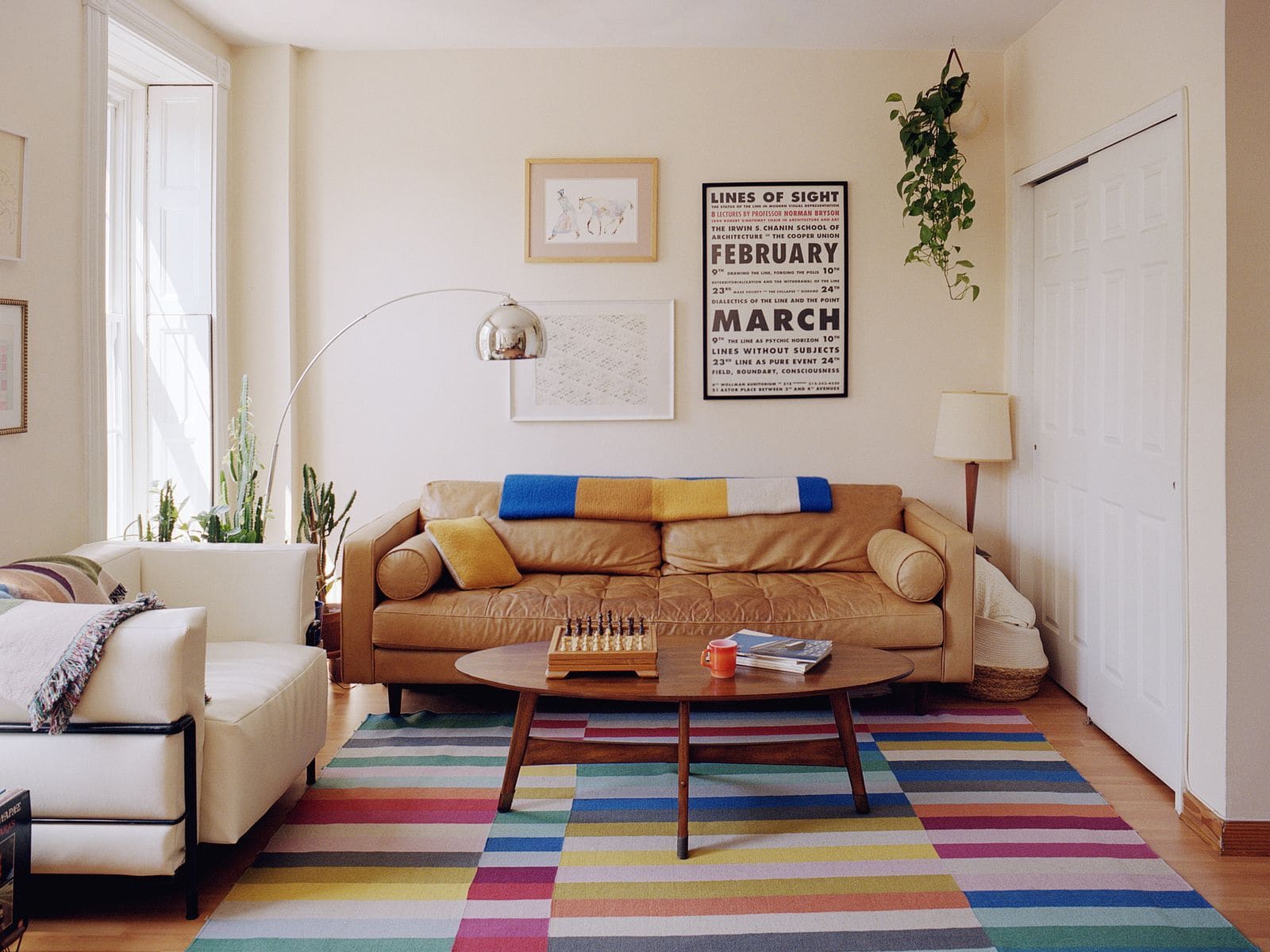
The Sven sectional, meanwhile, has become something of a modern classic within Article's catalog. Available in leather, fabric, or velvet, with or without a chaise, the Sven offers modularity without sacrificing coherence. Its silhouette echoes midcentury precedents, particularly the low-slung, wood-legged designs of the 1960s, but the proportions have been adjusted for contemporary living. At $2,699 for the Oxford blue leather version, it sits below Herman Miller or Design Within Reach pricing while delivering comparable durability.
One notable detail: the leather ages visibly. This isn't a flaw but a feature, aligning with Scandinavian and Japanese design philosophies that prize patina over pristine surfaces. For buyers accustomed to synthetic materials that either look new or ruined, the Sven's leather offers a middle path, one that rewards use rather than punishes it.
Outdoor Furniture: Testing Durability in Real Climates
Outdoor furniture often suffers from a design-durability trade-off. Pieces that look elegant tend to weather poorly, while weather-resistant options rarely win aesthetic awards. Article's Lubek outdoor sectional, priced at $2,599, attempts to split the difference. The design borrows from both Scandinavian restraint and the casual, low-profile seating common in Southern California outdoor spaces.
The sectional's real test came not in temperate climates but in Colorado winters. Extended exposure to snow and temperature fluctuations revealed no significant structural degradation, a testament to material selection and construction quality. The cushions, while not fully waterproof, dry quickly and resist mildew, a common issue with outdoor upholstery in humid or snowy regions.
The Lubek's scale is generous, seating up to six adults comfortably, which makes it suitable for entertaining but potentially overwhelming for smaller patios. The modular configuration allows for spatial flexibility, though buyers should measure carefully; the sectional's footprint can dominate a deck or terrace if not properly proportioned to the space.
Multi-Functional Designs: Sleeper Sofas and Dining Tables
Space constraints drive much of contemporary furniture design, and Article's sleeper sofa and dining table offerings reflect that reality. The Nordby sleeper sofa, priced at $1,599, converts from seating to a full-size bed via a pullout mechanism that slides adjacent to the main seat. The mattress is firm, a preference that won't suit everyone but aligns with the minimalist aesthetic.
The trade-off is seat depth. At rest, the sofa's shallow profile can feel restrictive for taller users or those who prefer lounging over upright seating. It's a compromise inherent to dual-function furniture, one that favors spatial efficiency over ergonomic indulgence.
The Adel round dining table, meanwhile, addresses a different spatial challenge: how to maximize seating in a compact footprint. Round tables eliminate the hierarchy of head and foot, creating a more democratic dining experience while fitting into corners or alcoves that rectangular tables cannot. The white oak surface, priced at $999, is heavy enough to feel substantial but simple enough to serve multiple functions, from dining to work surface to craft table.
The table's diameter accommodates five to six diners comfortably, a sweet spot for urban apartments or small homes where a full dining room is a luxury. The sleek grain and natural finish mean the table doesn't require a cloth to look complete, reducing maintenance and allowing the material to speak for itself.
What Article Gets Right About Material and Scale
Article's success isn't rooted in innovation but in execution. The brand doesn't chase trends or attempt to redefine furniture typologies. Instead, it refines existing forms, paying attention to proportion, joinery, and material quality in ways that many DTC competitors overlook. The result is a catalog that feels cohesive, with pieces that can mix across collections without clashing.
The brand's commitment to flat-pack shipping and customer assembly keeps costs down while maintaining quality. Assembly times are reasonable, typically under an hour for most pieces, and the instructions are clear. This approach democratizes access to well-designed furniture without the markup associated with white-glove delivery services.
Article also offers a 30-day satisfaction guarantee and one-year warranties, policies that reduce the risk inherent in buying furniture sight unseen. As the brand expands into physical retail, it will be interesting to see whether the in-person experience alters the product line or simply serves as a showroom for pieces still purchased online.
Where Article Fits in the Broader Landscape
In the spectrum of contemporary furniture retail, Article occupies a middle tier. It's more expensive than IKEA but far less costly than Design Within Reach or Room & Board. The brand's aesthetic is narrower than West Elm's eclectic range but broader than the hyper-specific offerings of niche studios. This positioning, neither budget nor luxury, allows Article to serve a wide audience: young professionals furnishing first apartments, families seeking durable pieces that won't embarrass in five years, and design-conscious buyers unwilling to spend Knoll prices.
The brand's Scandinavian leanings are both a strength and a limitation. For interiors that embrace minimalism, natural materials, and restrained color palettes, Article is a natural fit. For spaces that lean maximalist, baroque, or heavily ornamented, the catalog offers less. This focus, however, is precisely what keeps the brand legible. Article knows what it does well and doesn't stray far from that territory.
As direct-to-consumer furniture brands proliferate, Article's longevity suggests that consistency and quality still matter. The brand doesn't rely on viral moments or influencer partnerships to drive sales; instead, it builds a reputation piece by piece, year by year. In an industry often driven by hype and disposability, that approach feels increasingly rare.
Photo: Meghan Marin
Save this story. A free account keeps your reading list and the 07:00 email in one place.
CREATE FREE ACCOUNT →SIGN IN