
The Freedom of Impermanence
There is a reason why some of the most radical ideas in residential architecture appear first in places where their occupants spend only a few weeks each year. Vacation homes operate under a different set of assumptions. They do not need to accommodate school runs, storage for winter coats, or proximity to workplaces. They exist, instead, as deliberate pauses in routine, and this freedom from the everyday allows designers to explore propositions that would be impractical, uncomfortable, or simply too indulgent for full-time living.
At World Archi Design, we have been tracking how holiday retreats function less as dwellings and more as architectural laboratories. Where a primary home must balance pragmatism with aspiration, a vacation house can foreground the latter almost exclusively. The result is a body of work that tests new spatial languages, material assemblies, and tectonic expressions with a boldness that urban and suburban typologies cannot match.
Site as the Primary Programme
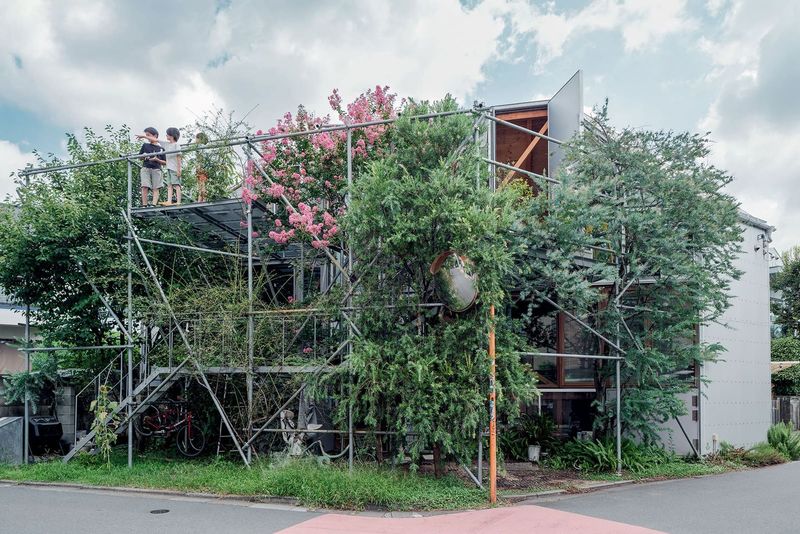
One does not orient a bedroom around a single tree, suspend a living room over a ravine, or carve a bathtub into bedrock in a house occupied year-round. The cost, both financial and experiential, is too high. But in a retreat, the site itself becomes the programme. The architecture is less about enclosing activities and more about framing, amplifying, or mediating landscape.
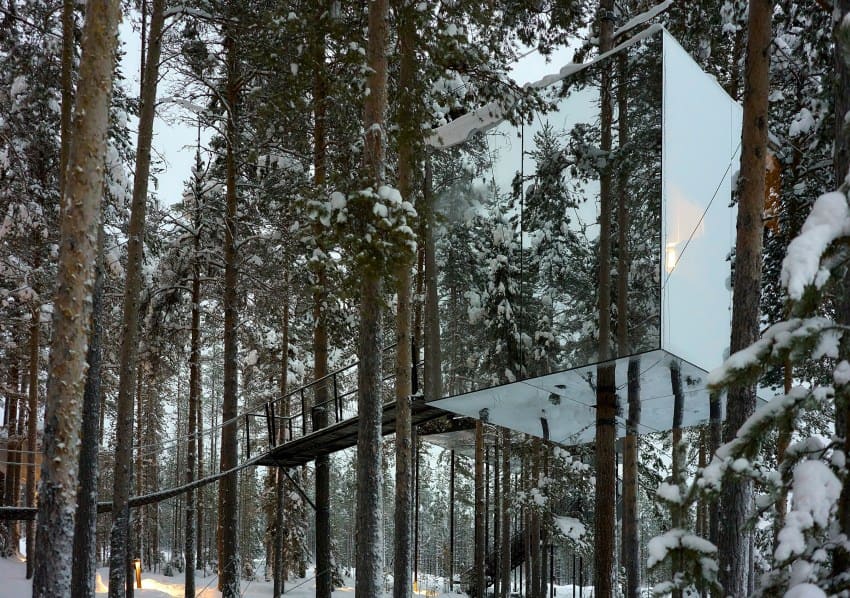
Consider the proliferation of cantilevered volumes in contemporary vacation architecture. Projects such as Farnsworth House by Mies van der Rohe or Casa Malaparte by Adalberto Libera were early experiments in this approach, where the building becomes a viewing device as much as a shelter. More recent examples, from glass pavilions perched on cliffsides to timber cabins bridging forest clearings, continue this lineage. The massing is often reductive, the fenestration expansive, and the relationship between interior and exterior deliberately porous.
This is not possible in a home where thermal performance, acoustic privacy, and security must be maintained across all seasons. A vacation house, occupied intermittently and often in mild weather, can afford to prioritise prospect over protection.
Material Experimentation Without Consequence
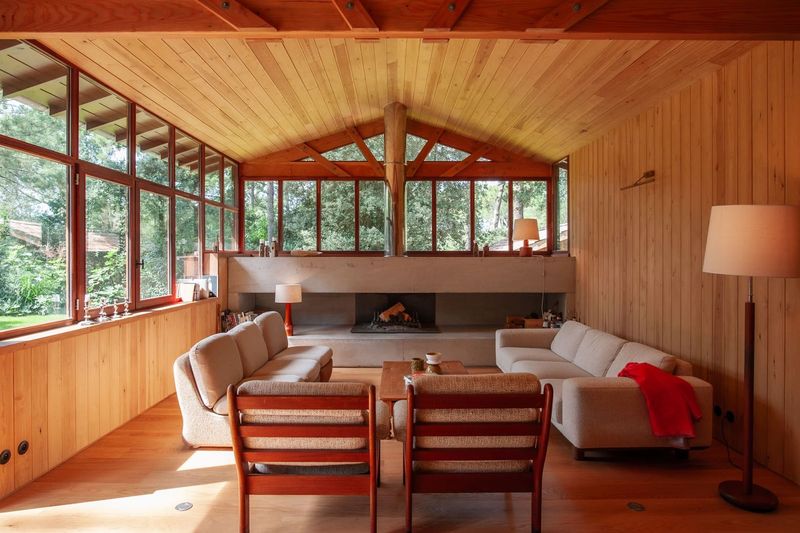
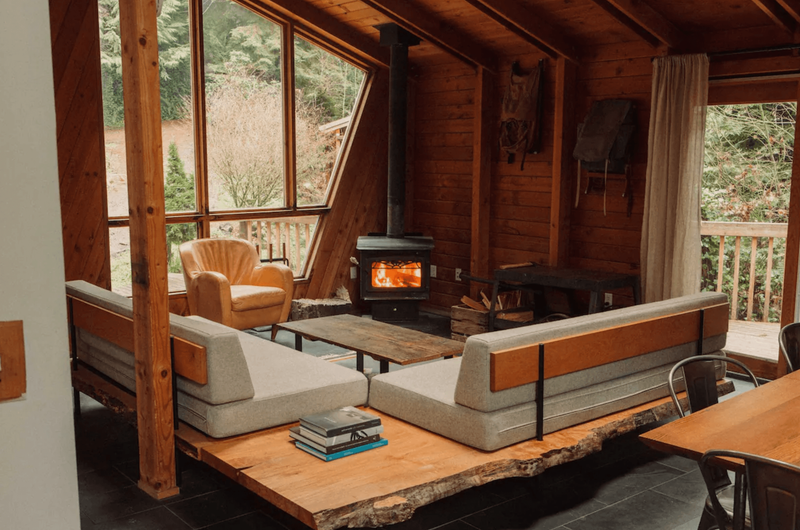
Vacation architecture also permits material choices that would be untenable in a primary residence. Exposed concrete floors, raw steel cladding, unfinished timber interiors: these are surfaces that demand tolerance for patina, temperature fluctuation, and maintenance. In a retreat, such materials are read as honest, even poetic. In a year-round home, they would be cold in winter, hot in summer, and acoustically unforgiving.
The ability to use materials in their elemental state, without the layering required for comfort, allows designers to explore tectonic expression more directly. The structure becomes the finish. The envelope becomes the interior. This reduction strips away the need for applied decoration and foregrounds the logic of construction itself.
We have seen this in projects that employ board-formed concrete, weathering steel, or rammed earth, materials that change over time and require little intervention. In vacation architecture, ageing is not a liability but an intended outcome, a way of registering the passage of seasons and the influence of climate.
Spatial Drama Over Daily Function
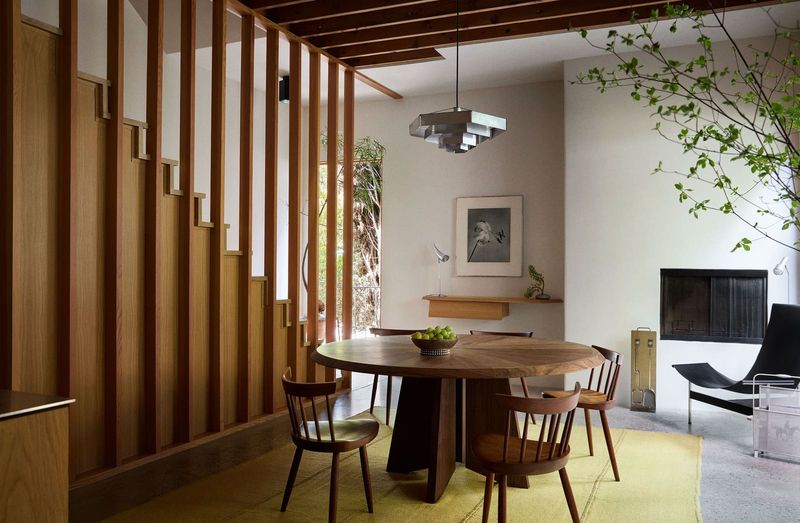
A primary home must accommodate overlapping routines, storage, and the mundane choreography of domestic life. A vacation house does not. It can be organised around a single gesture: a double-height space that captures morning light, a corridor that compresses before releasing into a panoramic view, a stair that becomes a sculptural event rather than mere circulation.
This is where the parti, the generative idea of a project, can be expressed with unusual clarity. There is less need to compromise the conceptual diagram with functional adjacencies or code-driven planning. The result is architecture that reads more like a manifesto than a dwelling.
In some cases, this leads to projects that are wilfully uncomfortable. Bedrooms without doors, bathrooms open to the elements, kitchens reduced to a single counter. These are not failures of planning but deliberate choices that prioritise experience over convenience. The discomfort is temporary, and therefore acceptable.
Precedent and Influence
The influence of vacation architecture on the broader residential discourse cannot be overstated. Many ideas that first appeared in retreats, experimental cabins, and weekend houses have migrated into mainstream practice. Open-plan living, floor-to-ceiling glazing, the blurring of indoor and outdoor space: all were tested in holiday homes before becoming standard expectations in urban apartments and suburban villas.
The Case Study Houses, though not strictly vacation architecture, operated under a similar ethos. They were laboratories for post-war domestic life, built with the assumption that new materials and construction techniques could reshape how people lived. Vacation homes today serve a parallel function, testing ideas about sustainability, prefabrication, and site-specific design that will eventually inform other typologies.
The Limits of the Laboratory
There is, of course, a risk in treating vacation architecture as a model for broader practice. What works for a structure occupied a few weeks each year may not translate to full-time habitation. The open bathroom that feels liberating in summer becomes unbearable in winter. The uninsulated pavilion that celebrates lightness becomes a thermal liability when occupied continuously.
Yet the value of the vacation house as an experimental typology lies precisely in its exemption from these constraints. It allows designers to isolate variables, to test one idea without the compromises that other programmes demand. The lessons learned, both successes and failures, inform future work in more constrained contexts.
A Typology Without Apology
What distinguishes vacation architecture from other residential work is its refusal to apologise for being impractical. It does not pretend to solve housing crises or address affordability. It is, by definition, a luxury, and it operates openly within that constraint. This clarity of purpose allows it to explore questions that other typologies cannot.
The vacation house asks: what happens when we strip away the functional requirements that govern most architecture? What remains when a building is no longer required to accommodate the full complexity of daily life? The answer, across decades of practice, is a body of work that is more formally adventurous, materially honest, and spatially generous than almost any other residential typology.
At World Archi Design, we continue to observe how these experiments shape the language of contemporary practice. The holiday house may be a niche typology, but its influence is anything but marginal. It remains one of the few contexts in which architecture can still afford to be, in the best sense, experimental.
Save this story. A free account keeps your reading list and the 07:00 email in one place.
CREATE FREE ACCOUNT →SIGN IN